The most persistent misunderstanding in valve procurement is treating a class number as a pressure. A Class 150 carbon-steel valve is good for roughly 285 psi at room temperature — and barely 80 psi at 425 °C. The class is a *designation*, and the actual allowable pressure comes from the pressure–temperature tables of ASME B16.34 (valves) and B16.5 (flanges) for the specific material group. Here is how the system works.
What a class number actually is
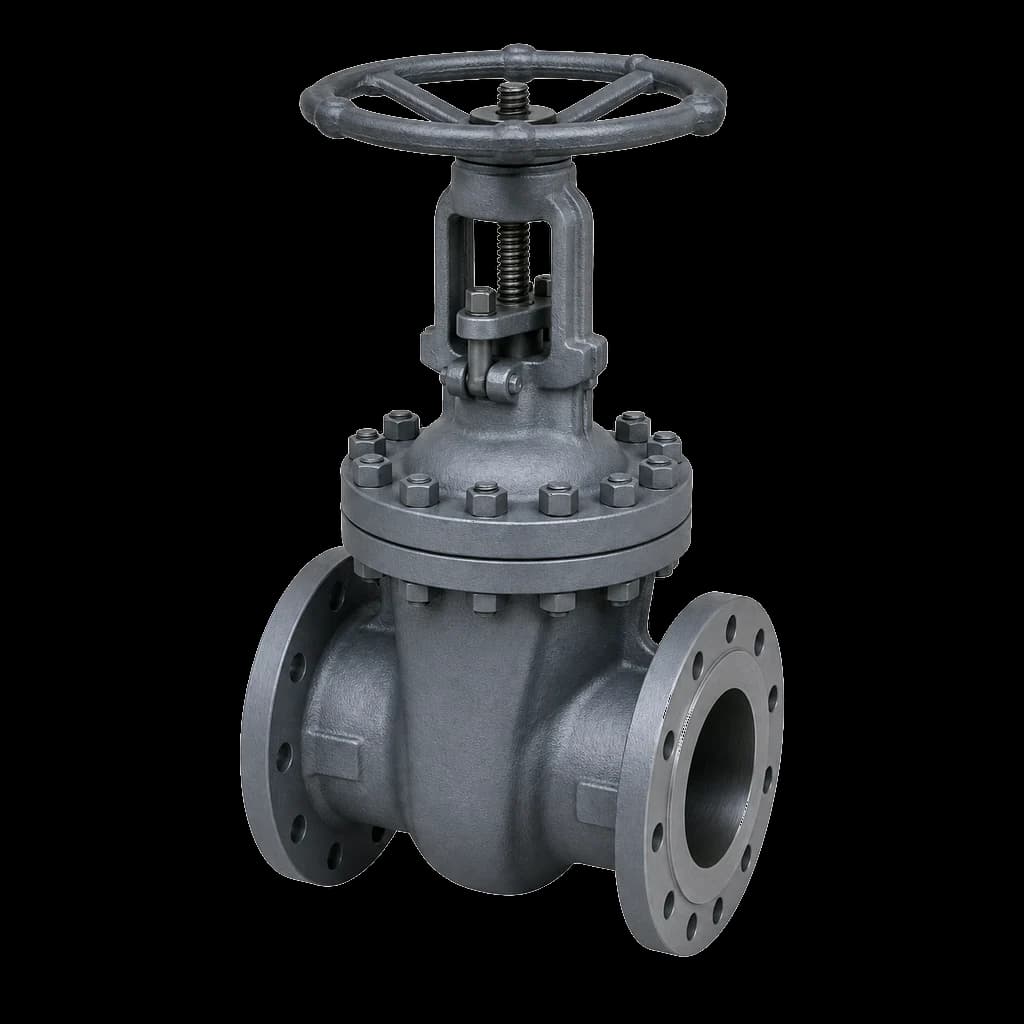
ASME defines standard classes — 150, 300, 600, 900, 1500, 2500 — each corresponding to a set of pressure–temperature curves. For every listed material group, the standard tabulates the maximum allowable working pressure at each temperature. Two facts follow: the same class carries different pressures in different materials, and every class loses capacity as temperature rises. Wall thicknesses, flange dimensions and bolting all scale with class, which is why a Class 600 valve is visibly heavier than a Class 150 of the same size.
| Class | at 38 °C | at 200 °C | at 300 °C | at 425 °C |
|---|---|---|---|---|
| 150 | 19.6 | 13.8 | 10.2 | 5.5 |
| 300 | 51.1 | 43.8 | 39.8 | 28.8 |
| 600 | 102.1 | 87.6 | 79.6 | 57.5 |
| 900 | 153.2 | 131.5 | 119.5 | 86.3 |
| 1500 | 255.3 | 219.0 | 199.1 | 143.8 |
| 2500 | 425.5 | 365.0 | 331.8 | 239.7 |
Read the table vertically and horizontally. Vertically: at any temperature, class steps roughly double capacity from 300 upward. Horizontally: a WCB valve at 425 °C keeps barely half its cold rating. Selecting class from operating pressure alone, without checking the design temperature column, is how undersized valves reach site.
Where Class 800 comes from
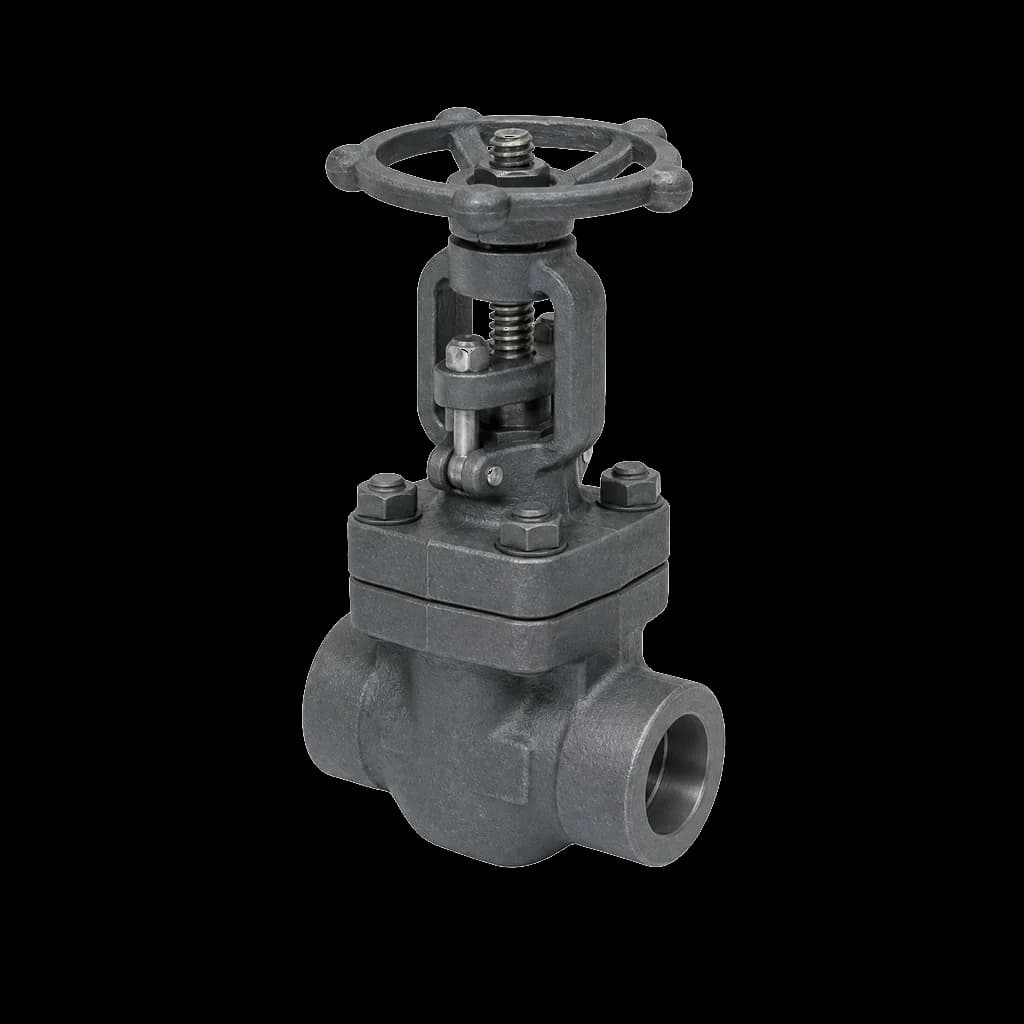
Class 800 is not an ASME B16.34 standard class — it is an intermediate rating established by API 602, the design standard for small forged gate, globe and check valves. Forged bar stock in small bores yields wall sections comfortably beyond Class 600 needs, so the industry standardized an intermediate class that prices between 600 and 900. It exists only in the forged small-bore world (½"–2"), which is why you see DL forged valves offered in Class 800 but never a 24" cast valve.
Material group changes the numbers
The same Class 300 designation carries different tabulated pressures for WCB (group 1.1), WC6 (1.9), CF8M (2.2) and duplex grades — austenitic stainless ratings sit below carbon steel at low temperature but hold on far better as temperature climbs, and alloy steels (WC6/WC9) extend serviceable temperature toward 593 °C where WCB stops being permitted. The procurement rule: never transfer a pressure number between materials; always re-read the table for the actual body grade.
PN ratings and the crossover
European and Indian water-sector specifications use the PN system — PN-10, PN-16, PN-25, PN-40 — where the number is the nominal pressure in bar at ambient temperature. The systems are not exact equivalents, but the working crossovers are: PN-16 ≈ the duty zone of Class 150 at ambient; PN-40 ≈ Class 300 territory. Butterfly valves for water transmission, like the ZED range, are typically rated PN-10/PN-16 alongside a CL-150 option for process-adjacent duty.
The five-step selection method
- Fix design conditions: design pressure and design temperature — not operating values — from the line list.
- Fix the body material from the fluid, temperature and corrosion allowance.
- Enter B16.34 for that material group; find the lowest class whose allowable pressure at design temperature exceeds design pressure.
- Check system events: surge, pump shut-off head, thermal excursions — the class must cover the worst credible case.
- Match the flanges: valve class and mating flange class must agree; a Class 300 valve between Class 150 flanges is limited by the flanges.
One last distinction: class covers the pressure boundary, not seat tightness. Seat leakage classes (API 598, ISO 5208, FCI 70-2 for control valves) are specified separately. A valve can be correctly classed and still wrong for the job if the seat standard is ignored.