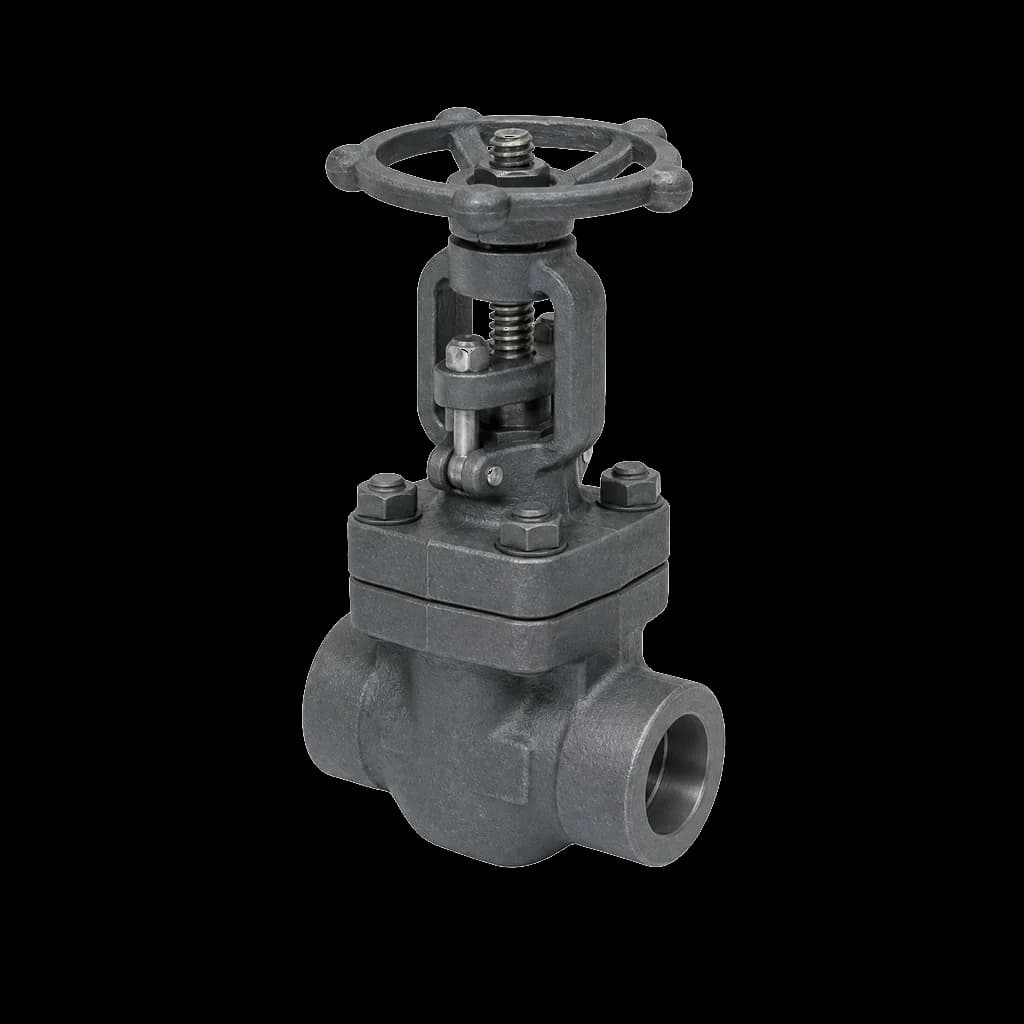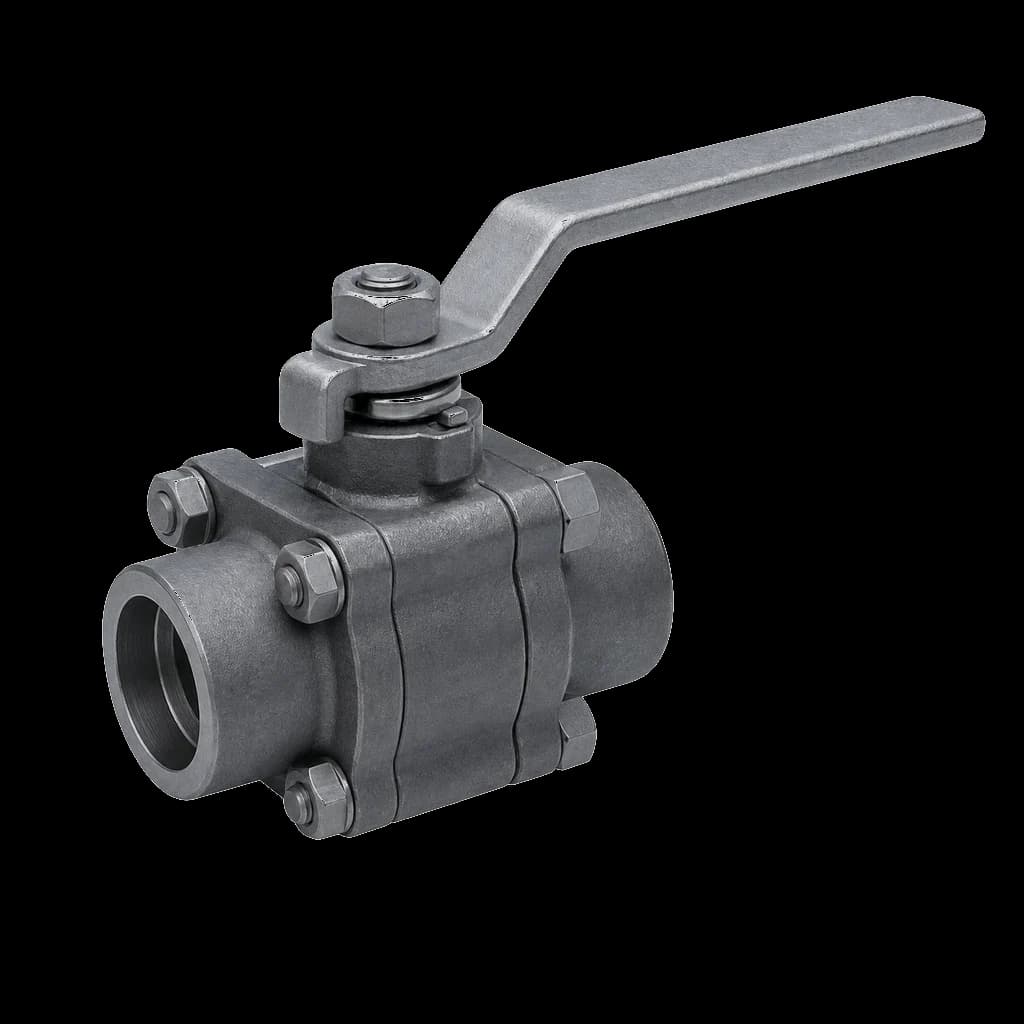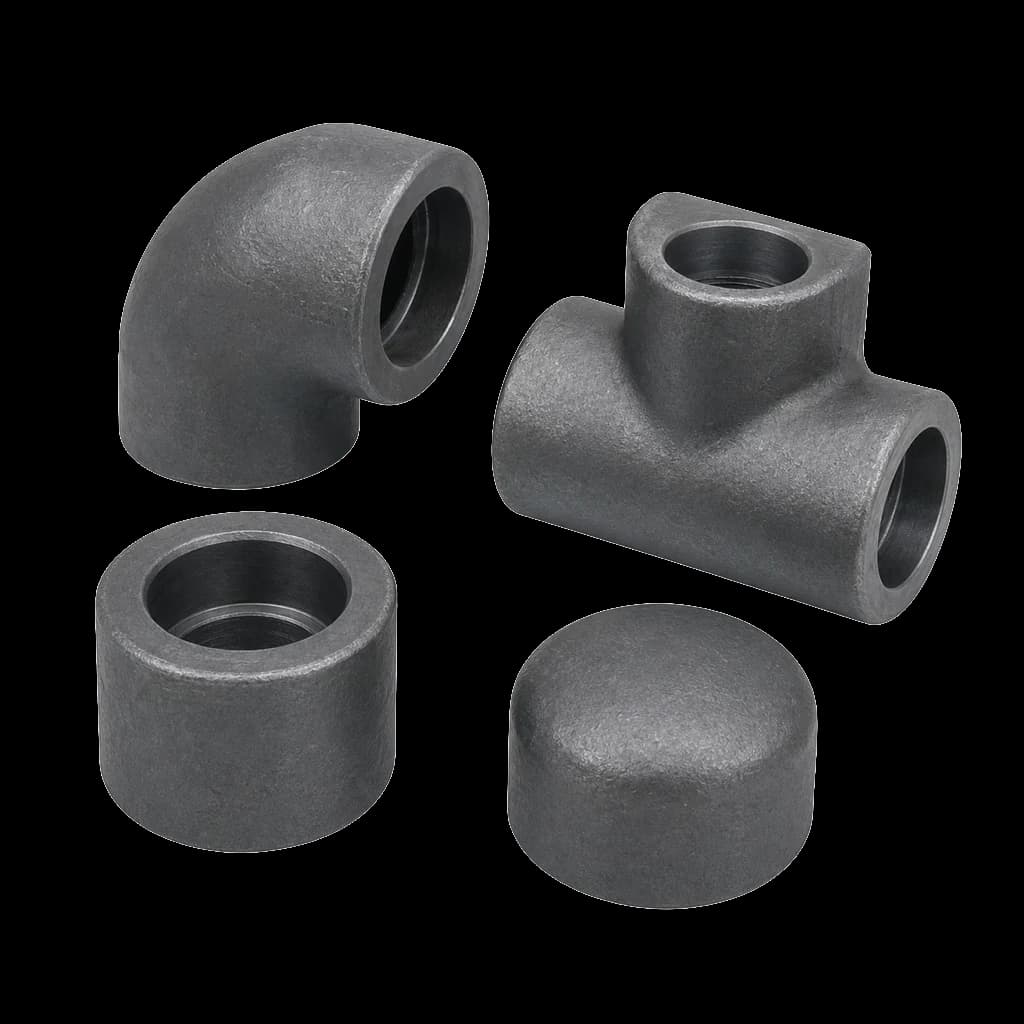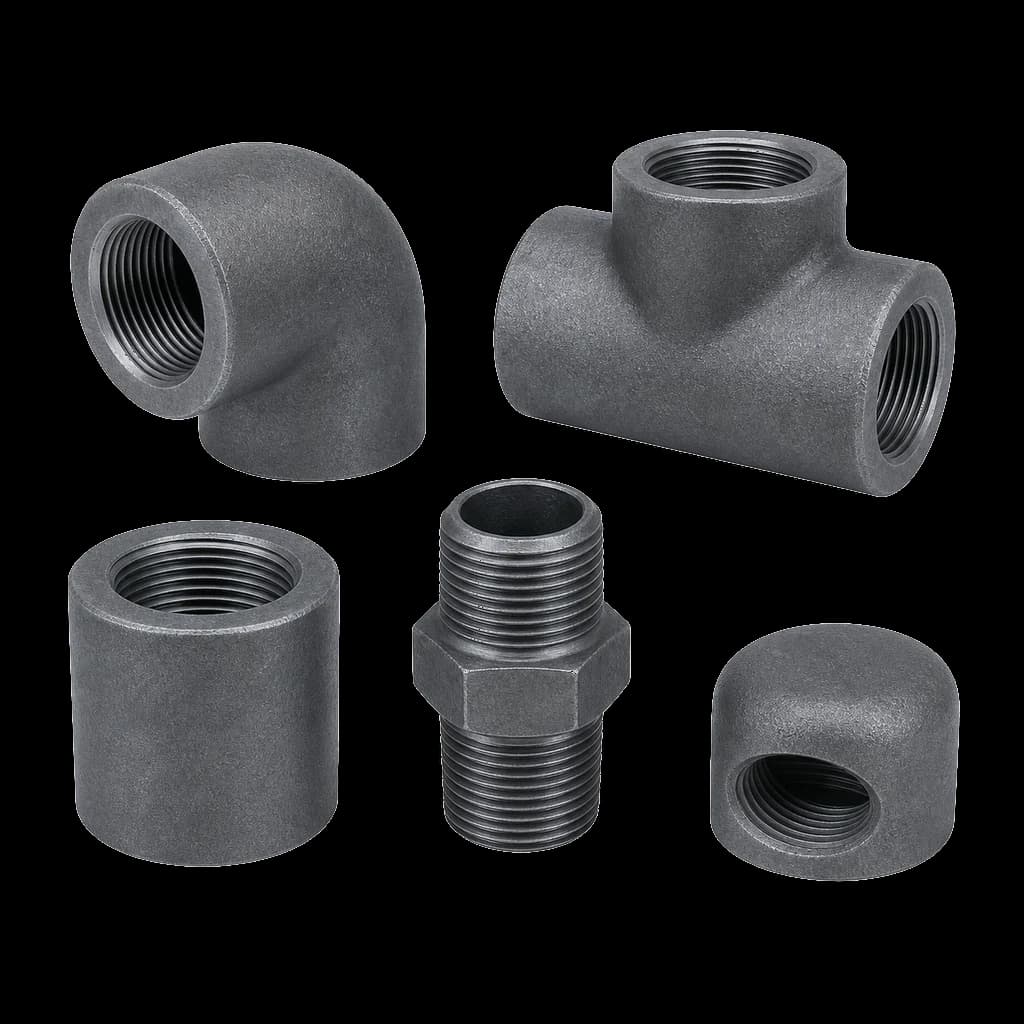
Every forged valve and fitting on a purchase order carries a material call-out — A105, A182 F316, A350 LF2 — and that single designation fixes the component's chemistry, strength, heat treatment and service envelope. These are ASTM/ASME forging specifications, the wrought counterparts of the casting grades used on larger valves. Choosing among them is a service-conditions decision, not a catalog preference, and the logic fits on one page.
A105: the carbon-steel default
ASTM A105 is the standard carbon-steel forging grade for ambient- and moderate-temperature service — the material of the vast majority of forged gate, globe, check and ball valve bodies and B16.11 fittings in hydrocarbon, steam and utility piping. Its working envelope mirrors WCB: usable to roughly 425 °C, with progressive de-rating above ~370 °C where prolonged exposure risks carbide graphitization. One detail worth writing into the PO: A105 is commonly supplied normalized for pressure applications — heat-treated condition should appear on the MTC, and Charpy impact values are not required by the base grade, which is exactly why cold climates need the next grade down the list.
A350 LF2: when the thermometer goes negative
A350 LF2 is chemically close to A105 but supplied normalized (or quenched and tempered) and impact-tested at −46 °C. It exists because carbon steel loses toughness as temperature drops — a brittle fracture risk the Charpy test screens out. Specify LF2 for hill-route pipelines, cryogenic-adjacent utilities, blowdown and depressurization service where auto-refrigeration occurs, and any line whose minimum design metal temperature sits below the −29 °C floor commonly applied to untested A105. The cost premium is modest; the failure mode it prevents is not.
A182 stainless grades: F304, F316 and the L-question
ASTM A182 collects the alloy and stainless forging grades. F304 (18Cr-8Ni) and F316 (adds ~2% Mo) are the austenitic workhorses — corrosion resistance, no low-temperature embrittlement, full cryogenic capability. F316's molybdenum buys measurably better resistance to chlorides and process acids, which is why coastal plants and food & beverage duty default to it.
The L-grades (F304L/F316L, carbon ≤0.030%) exist for welding: standard-carbon austenitics welded and left un-annealed can sensitize — chromium carbides precipitate at grain boundaries and the heat-affected zone loses corrosion resistance. Socket-weld construction is welded construction, so SW valves and fittings in stainless are normally bought as L-grade or dual-certified (F316/F316L). Dual-certified material meets the L chemistry with the standard grade's strength — the pragmatic default worth writing on the RFQ.
A182 alloy grades: F11, F22, F51
- F11 (1¼Cr-½Mo) — hot steam and hydrogen-adjacent service; the forged counterpart of WC6, serviceable toward ~565 °C in the class tables.
- F22 (2¼Cr-1Mo) — higher-temperature and hydrogen service; counterpart of WC9, extending toward ~593 °C. Standard in steel-plant and refinery hot loops.
- F51 (duplex 2205) — twice the yield strength of 316 with strong chloride-pitting and stress-corrosion resistance; specified for aggressive produced-water, brine and selected process duties. Watch the service ceiling: duplex embrittles above ~250–300 °C.
Selection at a glance
| Grade | Type | Typical service | Temperature guide |
|---|---|---|---|
| A105 | Carbon steel | General hydrocarbon, steam, utilities | −29 °C to ~425 °C |
| A350 LF2 | Impact-tested CS | Low ambient, depressurization | −46 °C to ~425 °C |
| A182 F304/L | Austenitic SS | Corrosive, cryogenic, hygiene-adjacent | Cryogenic to ~540 °C |
| A182 F316/L | Austenitic SS + Mo | Chlorides, acids, coastal, F&B | Cryogenic to ~540 °C |
| A182 F11 | 1¼Cr-½Mo | Hot steam, hydrogen-adjacent | To ~565 °C |
| A182 F22 | 2¼Cr-1Mo | Hotter steam/hydrogen | To ~593 °C |
| A182 F51 | Duplex 2205 | Chloride-rich, high-strength duty | −46 °C to ~250 °C |
Pairing forged and cast on one line
Piping classes pair each cast body grade with its forged equivalent so the whole line shares metallurgy: WCB headers with A105 small-bore valves and fittings; WC6 with F11; CF8M with F316. The DL forged valves and VS socket-weld fittings VKS supplies cover the full CS/SS/alloy/duplex set, so a single RFQ can hold one material basis across valves and fittings — which is also what keeps the MTC file coherent at handover.
Writing the call-out correctly
The clean format is specification + grade, with condition where it matters: "A105N" (normalized), "A182 F316L" or "A182 F316/316L dual-certified," "A350 LF2 Cl.1." Avoid bare shorthand like "SS body" or "CS forged" — each hides a decision the vendor must guess. And match the trim call-out to the body: an F316 body with 13Cr trim is legitimate but must be deliberate, a topic our trim materials guide covers in detail.