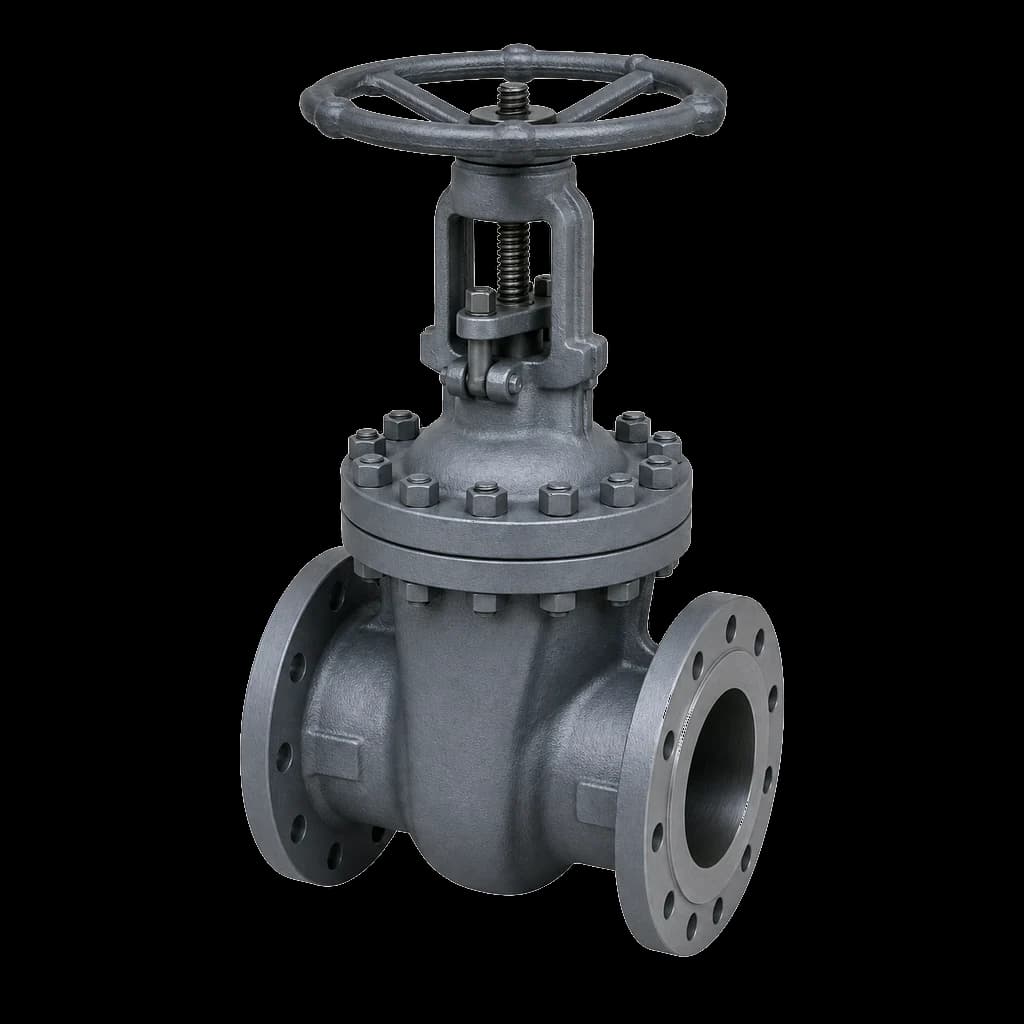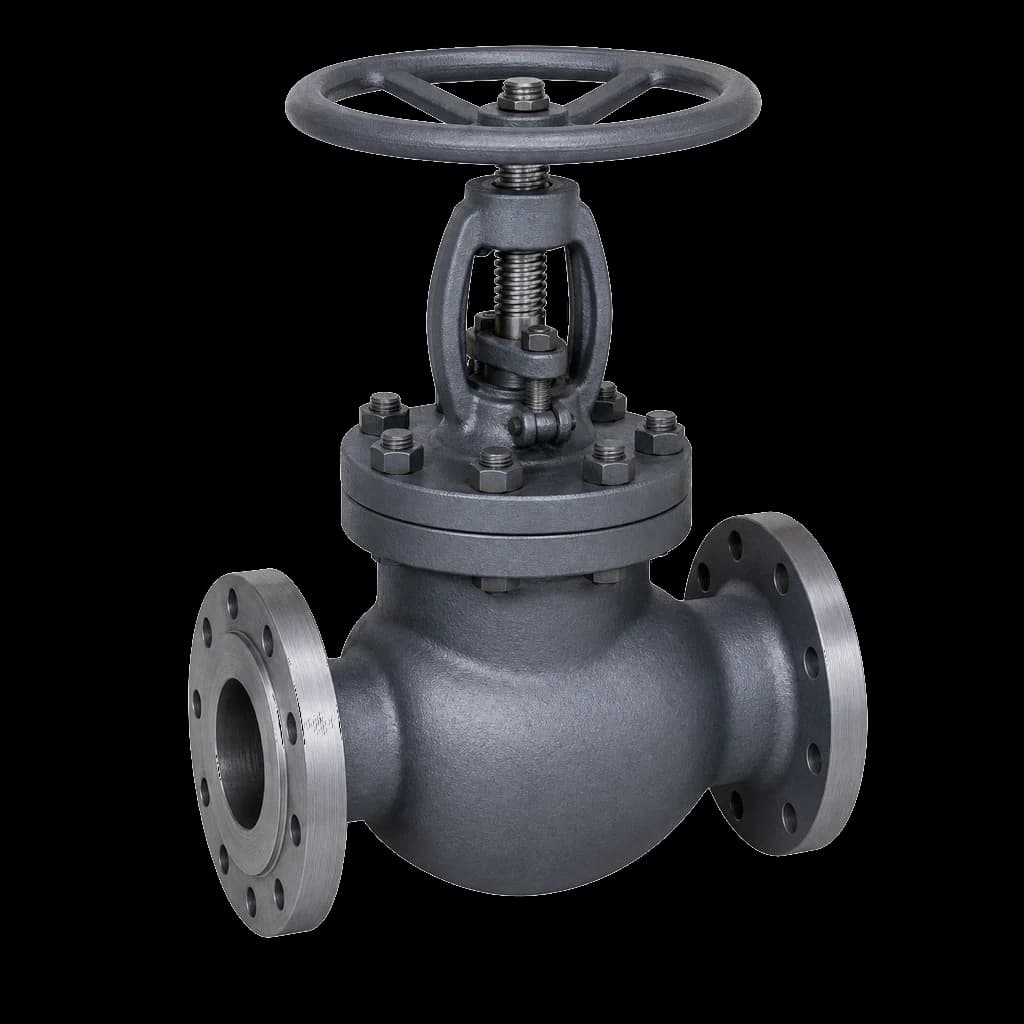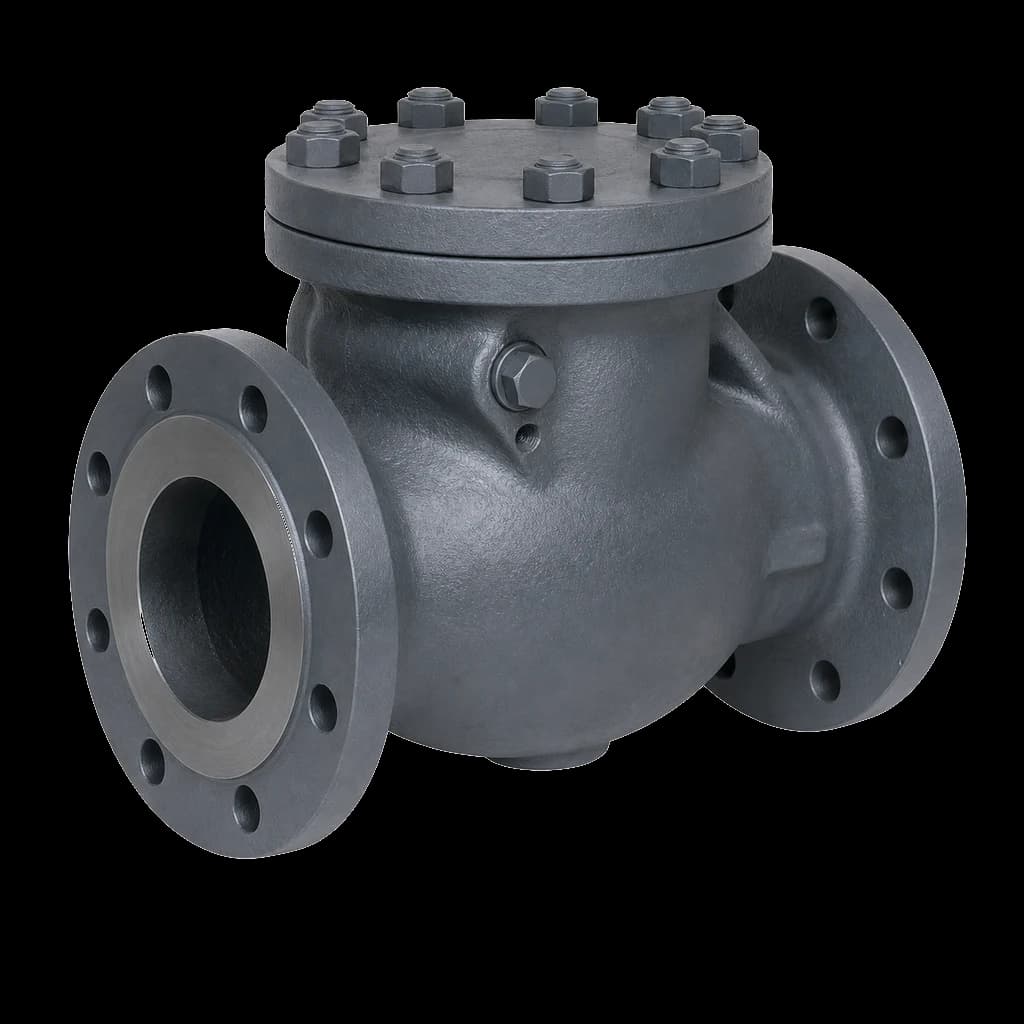
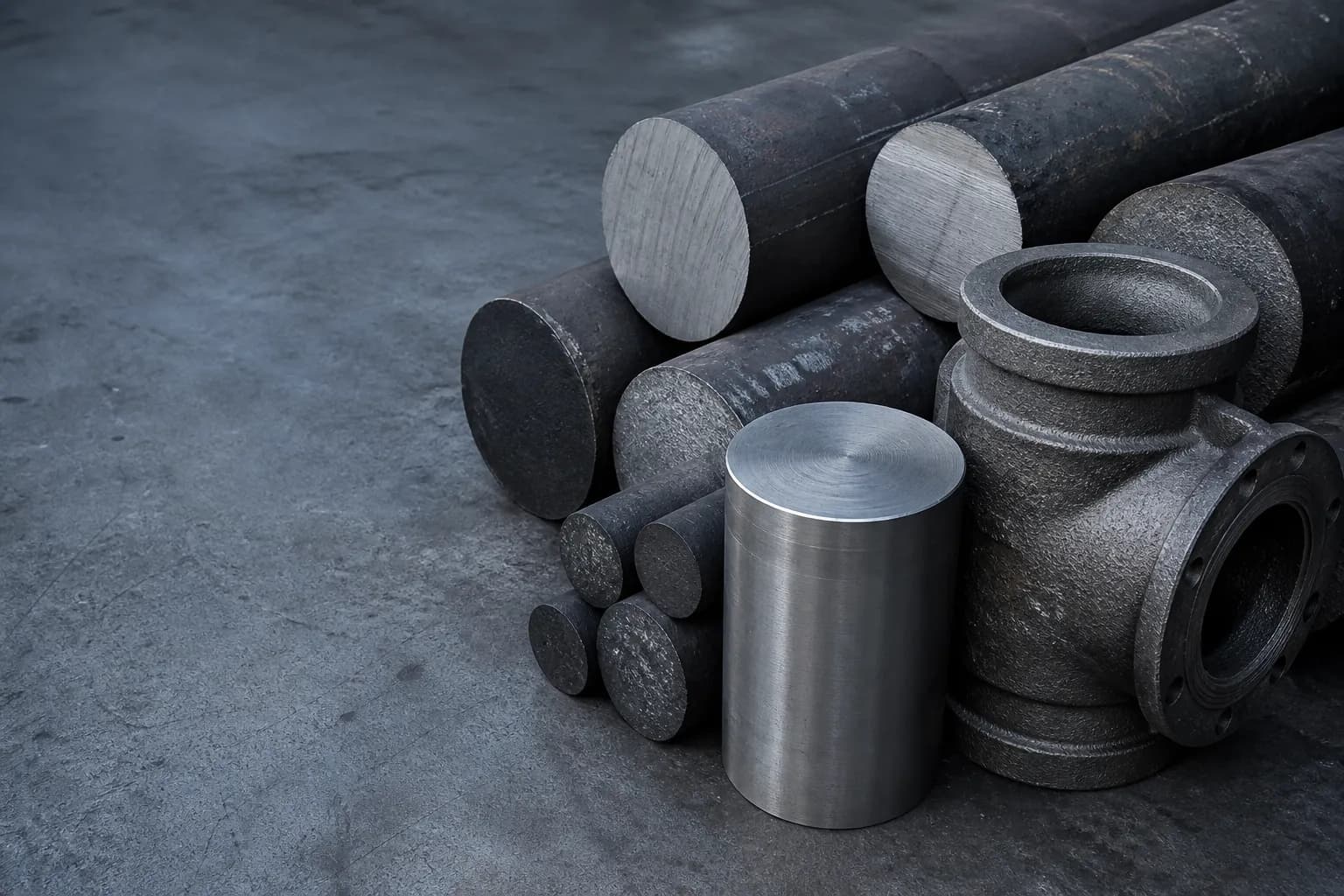
A valve datasheet that reads “Body: ASTM A216 Gr. WCB” is telling you two things: the casting specification (A216) and the grade within it (WCB). Most cast valve bodies in Indian process plants come from just three ASTM casting families — A216 for carbon steels, A217 for heat-resisting alloy steels, and A351 for austenitic stainless — plus A995 for duplex. Learn what each grade is for and 90% of body-material decisions become mechanical. Here is the working map.
The three casting families
ASTM A216 covers weldable carbon-steel castings for moderate and elevated temperature: grades WCA, WCB and WCC. ASTM A217 covers martensitic and ferritic alloy-steel castings for high-temperature, pressure-containing parts: WC1, WC6, WC9, C5, C12 and others. ASTM A351 covers austenitic castings — CF8, CF8M, CF3, CF3M, CF8C — the cast counterparts of the familiar 300-series stainless steels. Duplex castings sit in ASTM A995, where grade 4A is the cast equivalent of 2205 and 5A is a super duplex. A separate spec, ASTM A352 (LCB, LCC, LC3), covers carbon and low-alloy castings impact-tested for low-temperature service.
WCB: the workhorse, and its limit
WCB (max 0.30% carbon) is the default body material for water, steam, air, oils and non-corrosive hydrocarbons. It is cheap, weldable, and every foundry pours it. Its practical ceiling is about 425 °C: above that, prolonged exposure converts the carbide phase to graphite and the steel slowly loses strength, which is why long-term service beyond ~425 °C is not recommended even where rating tables list higher temperatures. WCC offers slightly higher strength with lower carbon (better weldability) and is increasingly specified in place of WCB on new projects. For cold duty — LPG bullets, blowdown, cold-climate sites — the A352 low-temperature grades LCB and LCC carry Charpy impact testing down to −46 °C, which plain WCB does not.
WC6 and WC9: chrome-moly for hot service
When steam or hot hydrocarbon service pushes past the WCB ceiling, the A217 chrome-moly grades take over. WC6 (1¼Cr-½Mo) and WC9 (2¼Cr-1Mo) hold useful creep strength to roughly 593 °C, with WC9 the stronger of the two at the top of that range and the standard choice against high-temperature hydrogen attack. These are the body grades of main steam lines, boiler feed circuits and refinery heater piping. Two procurement consequences: welding demands preheat and post-weld heat treatment, and any boiler-connected steam application in India will also need IBR Form III-C certification alongside the material certificate.
CF8 and CF8M: cast stainless for corrosion
CF8 is cast 304; CF8M is cast 316, the molybdenum addition (2–3%) buying resistance to chlorides and a wider range of acids. Their low-carbon versions CF3/CF3M resist sensitization where the body will be welded in the field. Austenitic castings serve from cryogenic temperatures up to roughly 538 °C in routine practice, though pressure ratings derate steadily with temperature. One nuance worth knowing: cast austenitics deliberately contain a few percent ferrite for castability and weldability, so a CF8M body is metallurgically close to — but not identical with — wrought 316. Where chlorides are severe or strength matters, duplex grades 4A/5A (A995) add roughly double the yield strength and far better chloride stress-corrosion resistance, at the cost of a service ceiling of about 250–300 °C.
Selection by temperature and fluid
| Grade | Spec | Nominal type | Typical range | Typical service |
|---|---|---|---|---|
| WCB | A216 | Carbon steel | −29 to 425 °C | Water, steam, air, non-corrosive hydrocarbons |
| LCB / LCC | A352 | Low-temp carbon steel | −46 to 340 °C | LPG, cold climates, blowdown |
| WC6 | A217 | 1¼Cr-½Mo | −29 to ~593 °C | High-temperature steam, boiler circuits |
| WC9 | A217 | 2¼Cr-1Mo | −29 to ~593 °C | Hotter steam, hydrogen service |
| CF8 | A351 | Cast 304 | −196 to ~538 °C | General corrosive, water treatment, food-adjacent |
| CF8M | A351 | Cast 316 | −196 to ~538 °C | Chlorides, chemicals, marine atmospheres |
| 4A / 5A | A995 | Duplex / super duplex | −46 to ~250 °C | Seawater, high-chloride, high-strength duty |
Matching the wrought equivalents
A cast body never travels alone. Its trim, companion flanges, small-bore root valves and fittings are forged or wrought, and the grades must correspond: WCB pairs with A105, WC6 with A182 F11, WC9 with F22, CF8 with F304, CF8M with F316, and duplex 4A with F51. Getting this pairing right keeps weldability, strength and corrosion behaviour consistent across the line — the full logic is covered in our forged materials guide. On cost, the representative ordering is WCB < WCC < WC6 < WC9 < CF8 < CF8M < duplex, though stainless and alloy positions can swap with nickel and molybdenum market swings — treat the sequence as indicative, not fixed.
Common specification mistakes
- WCB above 425 °C. Rating tables extend further, but sustained service above ~425 °C invites graphitization. Step up to WC6/WC9.
- CF8 where the fluid carries chlorides. Without molybdenum, 304-family material pits. Specify CF8M (or duplex for severe brines).
- Writing “SS316 body” on a casting PO. The correct casting call-out is A351 CF8M. Foundries and inspectors work to the ASTM grade, not the wrought name.
- Ignoring the low-temperature end. WCB has no impact-test requirement; for design temperatures below −29 °C, specify LCB/LCC or move to stainless.
- Class transferred between materials. A class rating is material-group specific — re-check the B16.34 table whenever the body grade changes.
- No L-grade where the body will be field-welded. For stainless bodies welded on site, CF3/CF3M avoids sensitization in the heat-affected zone.
The discipline that prevents all of these is simple: fix design temperature and fluid chemistry first, pick the casting grade from those two facts, then confirm the pressure class for that grade. Bodies like the ZED cast steel gate valve range are poured in WCB, WC6/WC9 and CF8/CF8M precisely so the same pattern can follow the service up the temperature and corrosion scale.