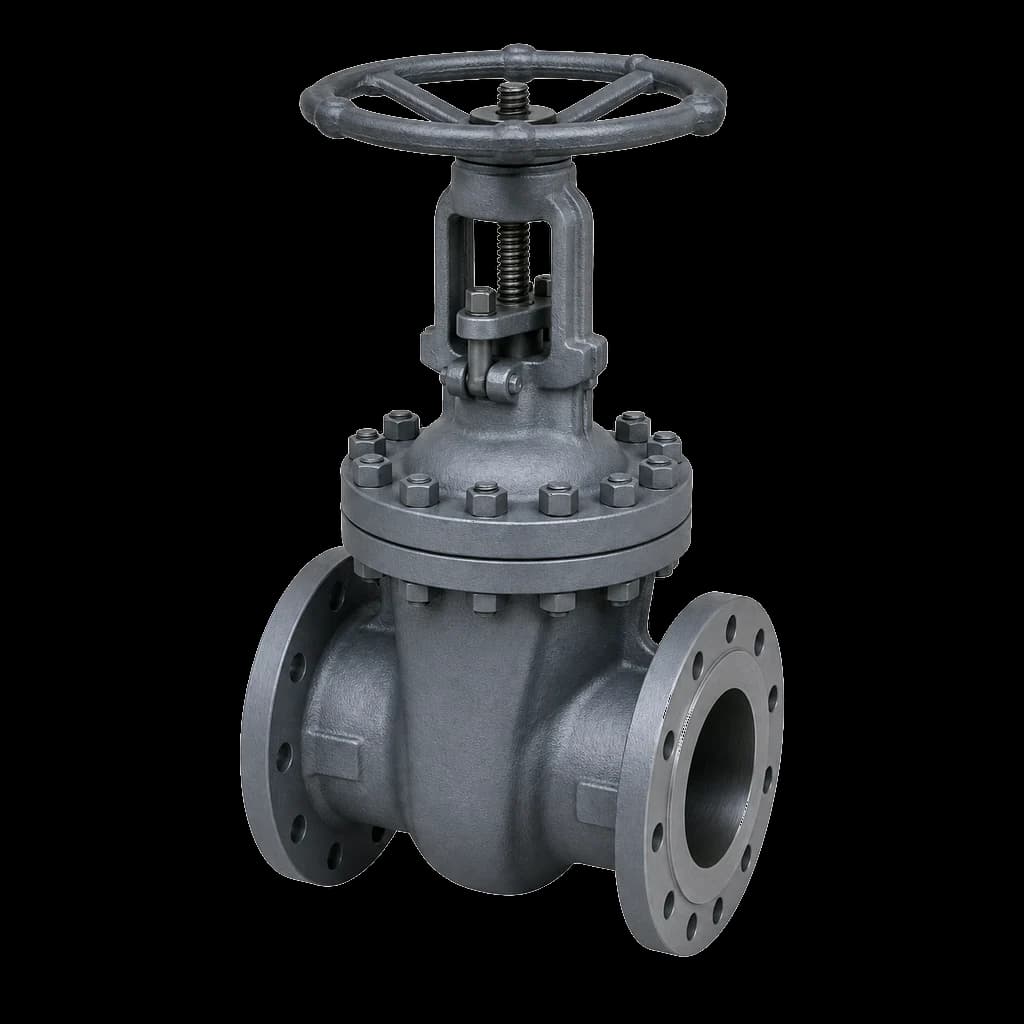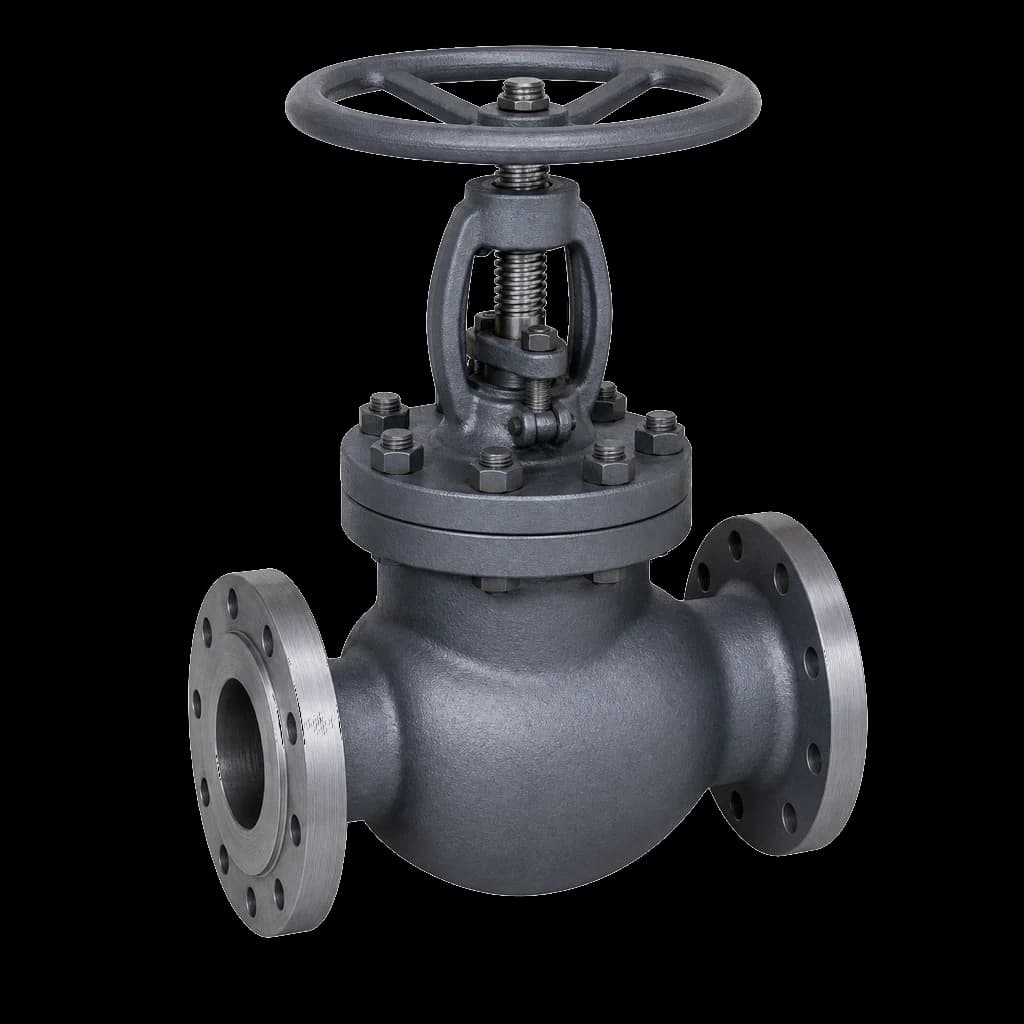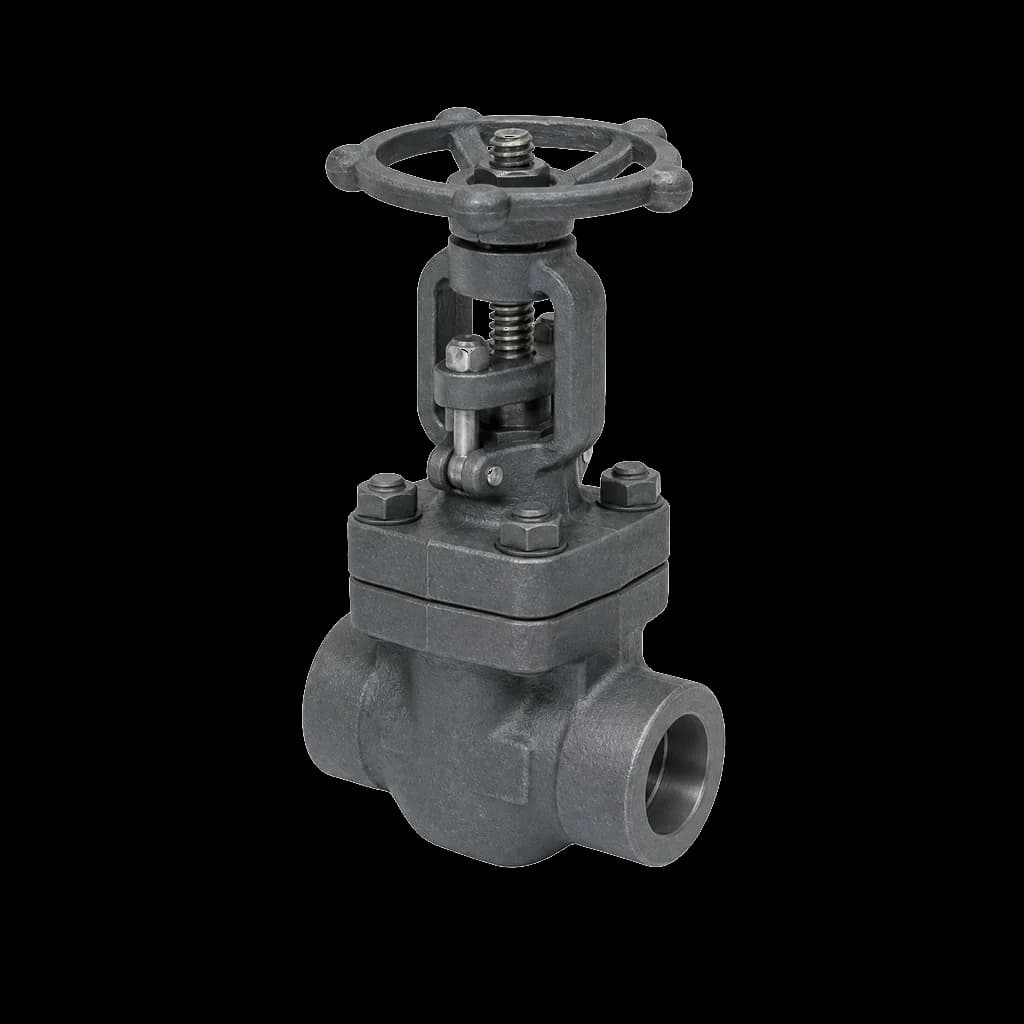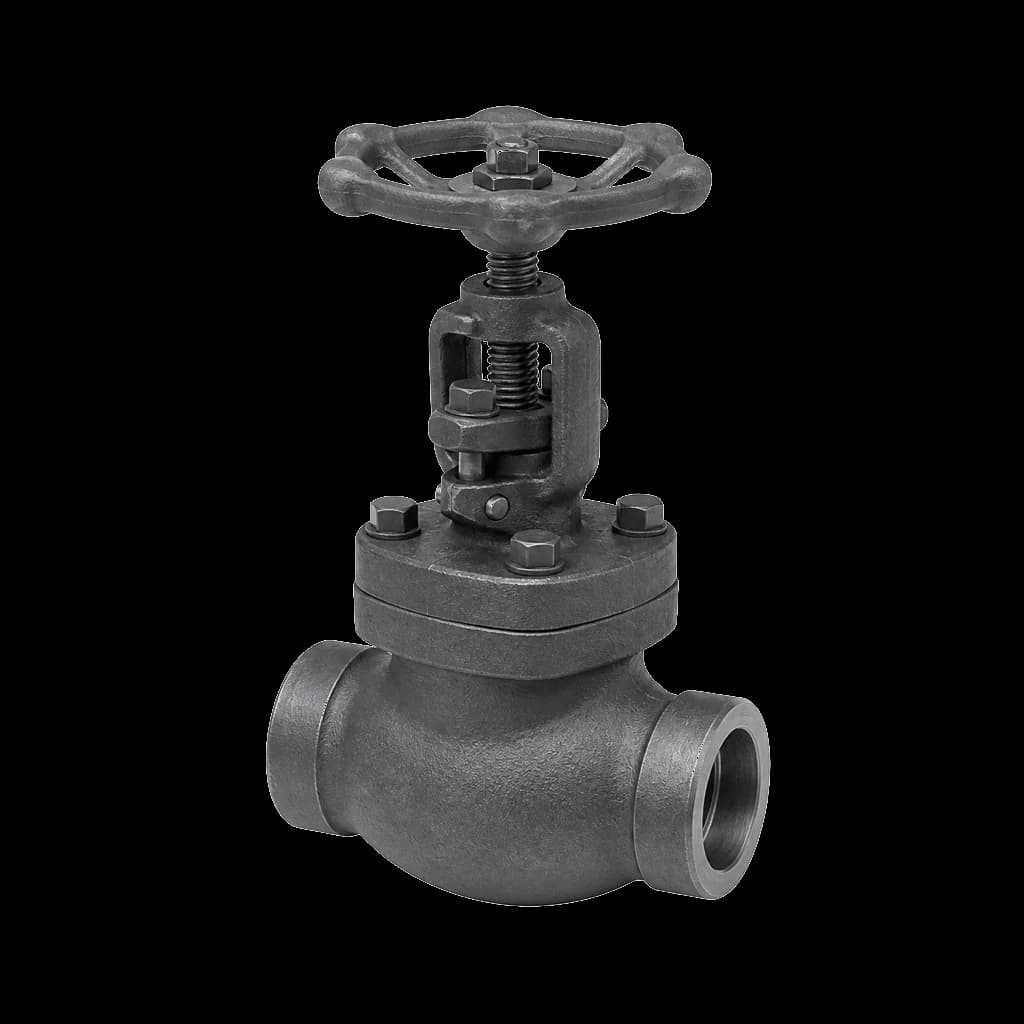
Two gate valves can share a body grade, a class and a price bracket — and one will still be seat-leaking after a year of steam service while the other runs a decade. The difference is usually trim: the set of internal, wetted working parts that do the valve's actual sealing and moving. Body material gets the attention on datasheets; trim determines how the valve dies. API's trim-number system compresses the choice into a single digit or two, and knowing five of those numbers covers most of Indian process purchasing.
What counts as trim
For a gate or globe valve, trim conventionally means the stem, the seat surfaces (integral or renewable rings), the wedge or disc facing, and the backseat bushing — the parts that touch the line fluid and carry the sealing and guiding duty. Bolting, packing and gaskets are specified separately. Because trim parts are small relative to the body, upgrading trim is cheap insurance: moving a 6" Class 300 valve from plain 13Cr to hardfaced trim changes the price by a fraction of what a body-material upgrade would cost.
The API trim number system
API 600 (with API 602 following the same convention for forged valves) assigns numbers to standardized trim combinations. The ones that matter in practice:
| Trim No. | Nominal composition | Seat surfaces | Typical duty |
|---|---|---|---|
| 1 | 13Cr (F6/410 SS) | 13Cr | General hydrocarbon & steam, the default |
| 5 | Hardfaced (Stellite) | Stellite on seat & wedge | Severe steam, erosive, frequent cycling |
| 8 | 13Cr + hardfaced seats | Stellite seats, 13Cr stem/wedge | Steam headers, boiler service — the workhorse upgrade |
| 10 | 316 SS | 316 | Corrosive process, low-temp |
| 12 | 316 + hardfaced seats | Stellite seats, 316 stem | Corrosive + erosive combined duty |
Trim 1 is the commodity default and perfectly adequate for clean, moderate service. Trim 8 is the pragmatic steam upgrade — Stellite where the wear happens, 13Cr where it doesn't. Trim 10/12 follow body corrosion logic: a CF8M body almost always carries 316-family trim. The system's value is unambiguity — "Trim 8" on an RFQ says in two characters what a paragraph of material call-outs would.
Galling: why identical hard-on-hard isn't the answer
Sliding metal seal faces under load can gall — cold-weld and tear, destroying the seat in a handful of strokes. Austenitic stainless on itself (316-on-316) is notoriously galling-prone. The classic defenses: run a hardness differential between mating faces, or put Stellite (a cobalt-chromium hardfacing alloy, deposited by welding and ground flat) on one or both faces — Stellite resists galling even against itself and holds hardness at steam temperatures where martensitic 13Cr softens. This is why Trim 12 exists: 316's corrosion resistance with Stellite doing the actual rubbing.
When hardfacing pays for itself
- Steam above roughly 250 °C — 13Cr seats erode (wire-draw) under flashing steam; Stellite seats hold. Boiler-house valves under IBR scope are routinely Trim 8. See our steam service guide.
- Frequent cycling — every stroke is a sliding-wear event; hardfacing multiplies seat life on valves operated daily.
- Entrained solids — catalyst fines, scale, sand: soft seats cut, 13Cr scores, Stellite survives longest.
- High differential pressure throttling on globe valves — seat velocity does the damage; hardfacing buys campaign life.
- Conversely: clean water, air and static isolation duty rarely justify the premium — Trim 1 is the honest choice there.
Stems, backseats and the parts nobody reads
The stem carries thread load and packing friction — 13Cr is standard, 17-4PH or Monel appear for strength or seawater. The backseat bushing matters on OS&Y gate valves because it is a sealing face used exactly when things are already wrong. Renewable seat rings (threaded or welded-in) versus integral seats decide whether a future overhaul is a workshop job or a weld shop job — worth one line on a datasheet for valves destined for two decades of refinery or paper-mill service.
Writing trim on the datasheet
Simplest and safest: name the API trim number — *"Gate valve, API 600, 8", Class 300, A216 WCB, Trim 8, flanged RF, API 598."* If the project's material engineer specifies part-by-part instead, keep the combination galling-aware (never bare 316-on-316 seats) and consistent with the body grade. And make trim part of receipt inspection: the MTC package should identify seat and stem materials, and hardfaced valves normally show the overlay called out on the drawing. For the forged small-bore population, the same numbers apply — DL forged valves quote Trim 1/5/8 exactly as their cast siblings do.