Steam punishes valves in ways cold water never will. The same Class 150 carbon steel body that carries about 19.6 barg at ambient is down to roughly 7 barg at 260 °C (representative ASME B16.34 values). Add thermal cycling on every startup, condensate slugs hammering the internals, and the erosive knife of wire-drawing across a barely-open seat, and steam becomes the duty where cheap valves fail fastest. This guide covers selection logic, class ratings, trim, and the Indian Boiler Regulations paperwork that boiler-connected lines cannot skip.
Why steam is a hard duty
Three mechanisms do the damage. Temperature derating: pressure class is a cold number; at steam temperature the allowable pressure of every body material falls steeply, so class must be selected at the working temperature, never the nameplate. Thermal cycling: each startup swings the valve through 150 °C or more of metal temperature. Bolted bonnet joints relax, glands loosen, and differential expansion between wedge and body can seize a gate shut — which is why steam lines are warmed through slowly and drained. Wire-drawing: steam throttled across a nearly-closed seat accelerates to high velocity, and the wet fraction machines fine grooves into the seating faces. A wire-drawn seat never seals again. The selection rules below exist to defeat these three mechanisms.
Gate for isolation, globe for regulation
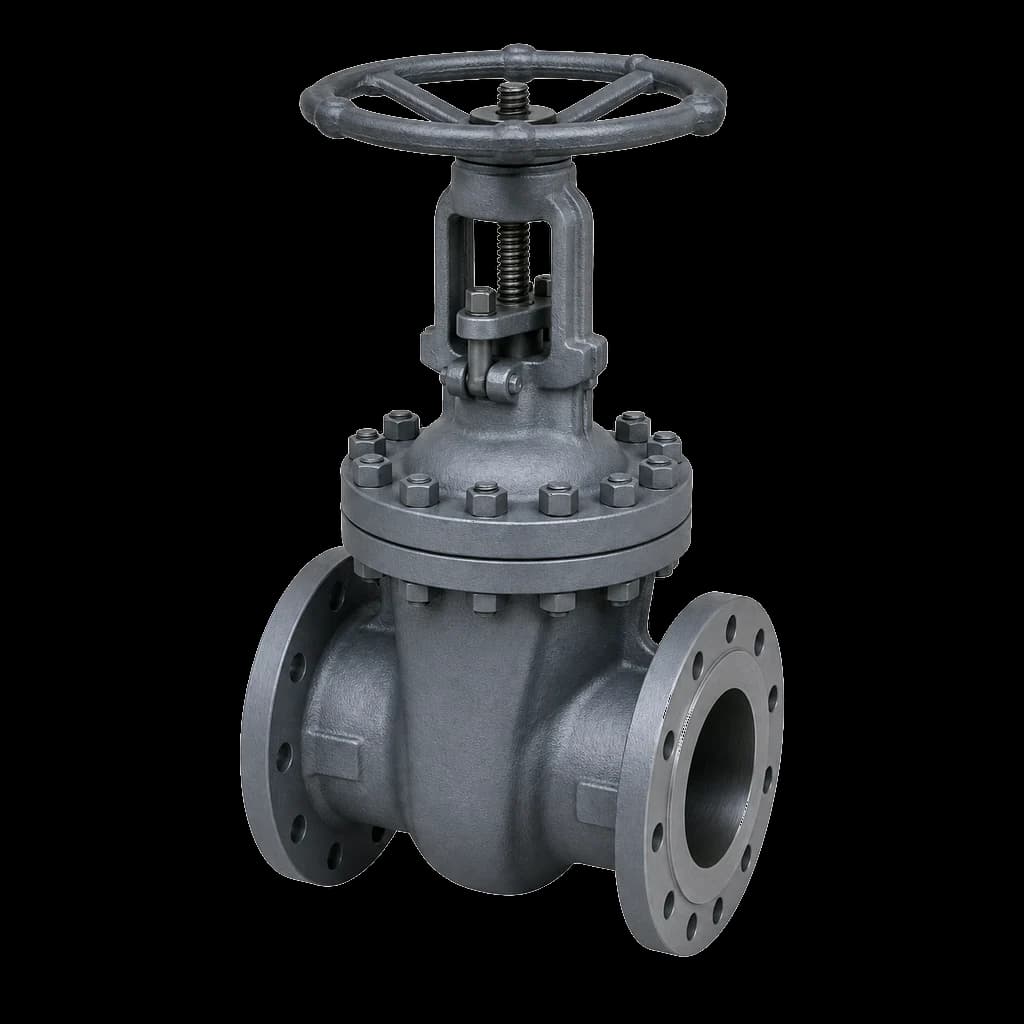
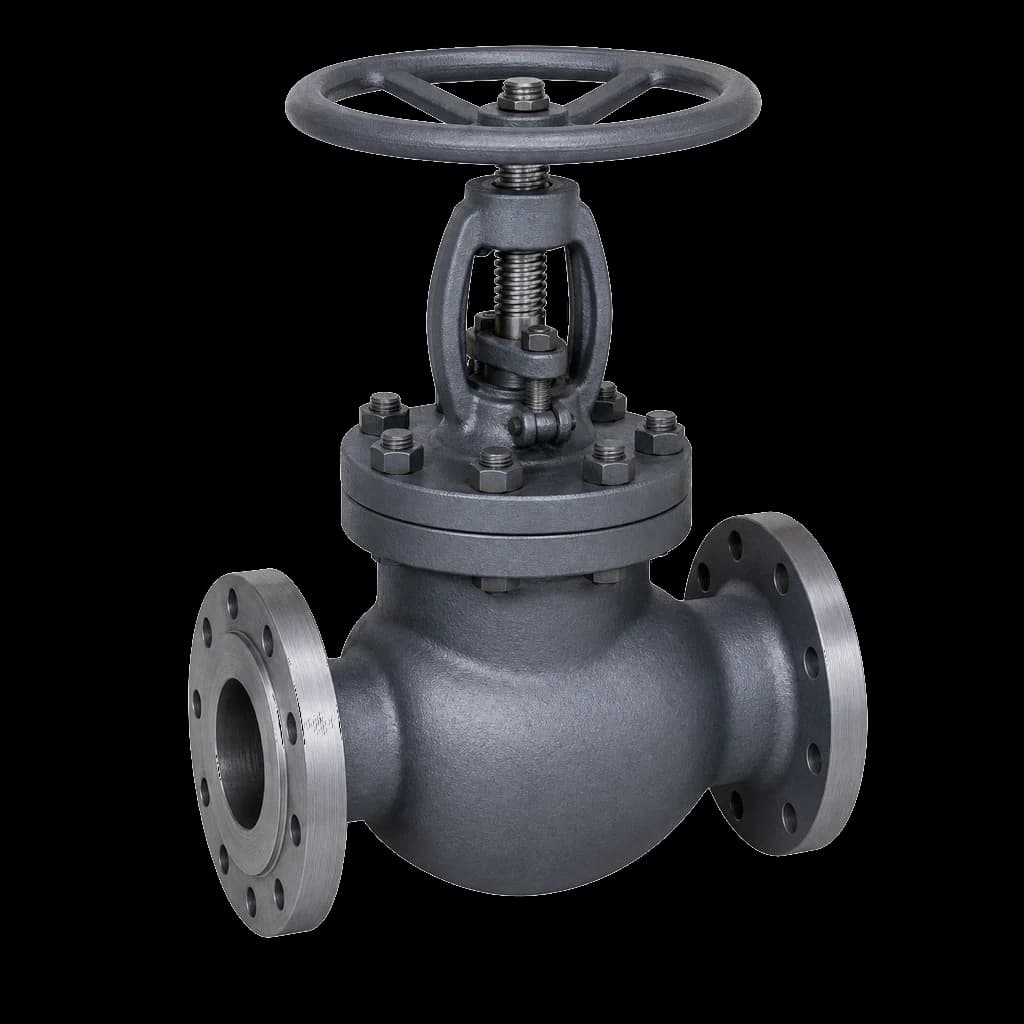
The division of labour on steam is strict. Gate valves isolate: full open or full closed, straight-through flow, minimal pressure drop across long headers. Used half-open they wire-draw their own seats and vibrate the wedge against its guides. Globe valves regulate: the seat geometry tolerates throttling, the disc can be hardfaced for erosion, and shutoff against flow direction is positive. Boiler bypass and warm-up lines, PRS bypasses, and any line that must be brought in gradually take globes. Boiler main stops are traditionally globe-pattern stop valves for the same reason — controlled opening against a cold, condensate-filled header.
Choosing the class from the steam tables
The method is mechanical. Take the line design pressure. Read the saturation temperature from the steam tables and add any superheat. Then check the ASME B16.34 pressure–temperature table for the body material at that temperature — the rating there, not the cold rating, must exceed design pressure. Worked through, this is why Class 150 almost disappears from steam service: at typical saturated-steam temperatures its carbon steel rating has fallen so far that Class 300 becomes the practical floor for anything beyond low-pressure heating steam. The full rating logic is covered in Valve Class Ratings Explained.
| Steam pressure | Saturation temp (approx.) | Typical class | Typical body |
|---|---|---|---|
| 3.5 barg | ≈ 148 °C | Class 150 (low-pressure only) | WCB / A105 |
| 7 barg | ≈ 170 °C | Class 300 | WCB / A105 |
| 10.5 barg | ≈ 185 °C | Class 300 | WCB / A105 |
| 17 barg | ≈ 208 °C | Class 300 | WCB / A105 |
| 40 barg | ≈ 252 °C | Class 300–600 | WCB |
| Superheated > 425 °C | Per superheat | Class 600+ | WC6 / WC9 alloy steel |
One material rule stands above the table: prolonged service above about 425 °C graphitizes carbon steel. Beyond that point, WCB gives way to chrome-moly grades — WC6 and WC9 — regardless of what the pressure alone would allow.
Trim: hardfacing earns its cost
Standard steam trim starts at 13% chromium stainless (SS 410) for stem, wedge and seats — API 600 Trim 1. The upgrade that pays for itself is hardfaced seating: Stellite-type cobalt alloy deposited on seat rings and wedge faces (Trim 5). Hardfacing resists wire-drawing, galling between sliding faces, and erosion by wet steam, and it is the difference between a header gate that seals after five years and one that passes after five months. Complete the package with die-formed graphite packing and spiral-wound graphite bonnet gaskets — PTFE has no business at steam temperature. Our valve trim materials guide maps the trim numbers in full.
IBR scope and the Form III-C requirement
In India, steam piping connected to a boiler falls under the Indian Boiler Regulations, 1950. IBR defines a steam pipe as one carrying steam from a boiler at above 3.5 kg/cm², or exceeding 254 mm bore — and every valve on an IBR line must be IBR-approved, supplied with Form III-C: the certificate issued for the valve under the maker's Inspecting Authority, documenting material chemistry, physical tests and hydraulic test. The state Boiler Inspectorate will not register a steam line whose valves lack Form III-C, and retro-certifying an installed valve is somewhere between painful and impossible. State the IBR requirement on the RFQ, line by line. The mechanics of the certificate are covered in What is IBR Form III-C.
Condensate and check valves
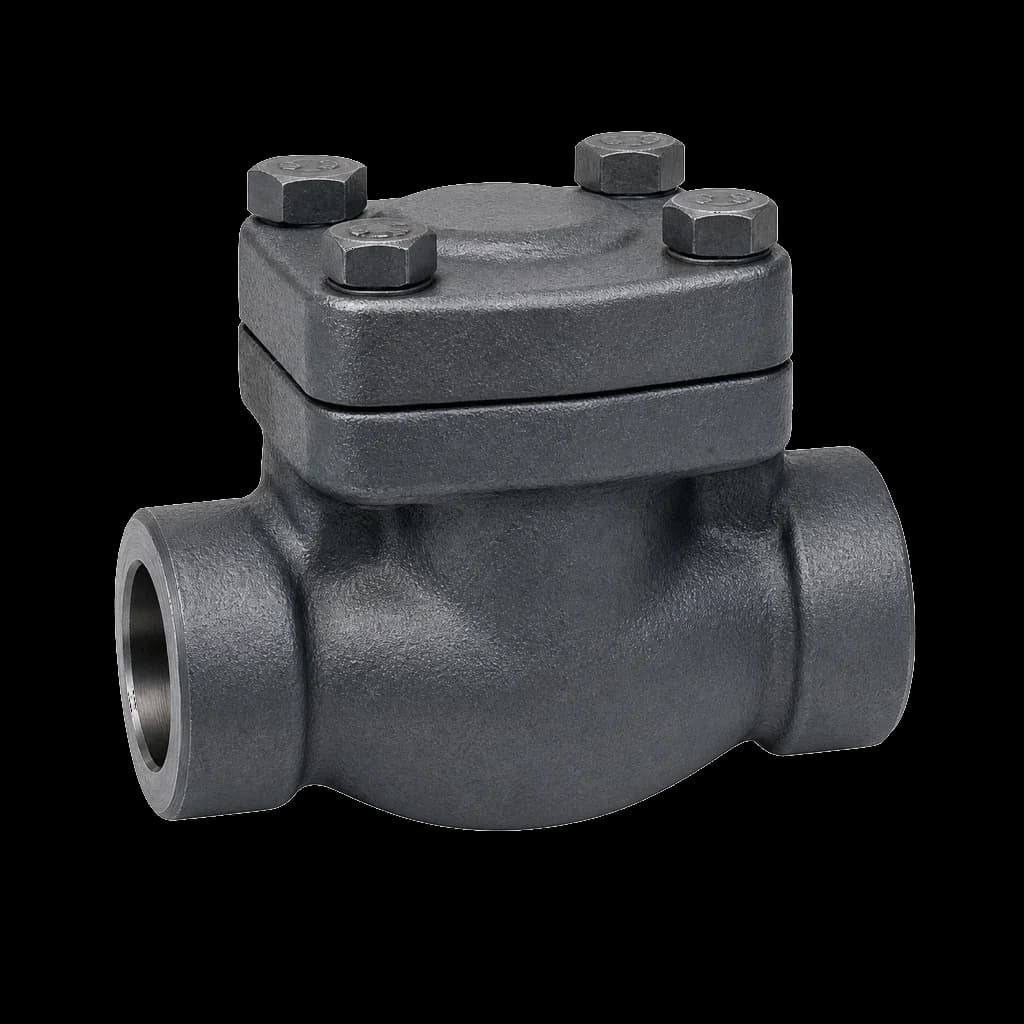
Steam's other half is condensate. Every drip leg and trap station needs an isolation gate, a Y-strainer ahead of the trap, and a check valve at the trap discharge to stop return-line condensate backing into an idle branch. Compact disc checks are the standard fit at trap outlets; piston and swing patterns serve larger condensate returns and boiler feed lines — the boiler feed check valve being a statutory mounting in its own right. Undersized or missing checks announce themselves as water hammer at every plant startup.
A boiler house bill of materials
- Boiler main steam stop — globe-pattern stop valve, Class 300, hardfaced, IBR Form III-C.
- Feed line — globe for regulation plus feed check valve, IBR certified.
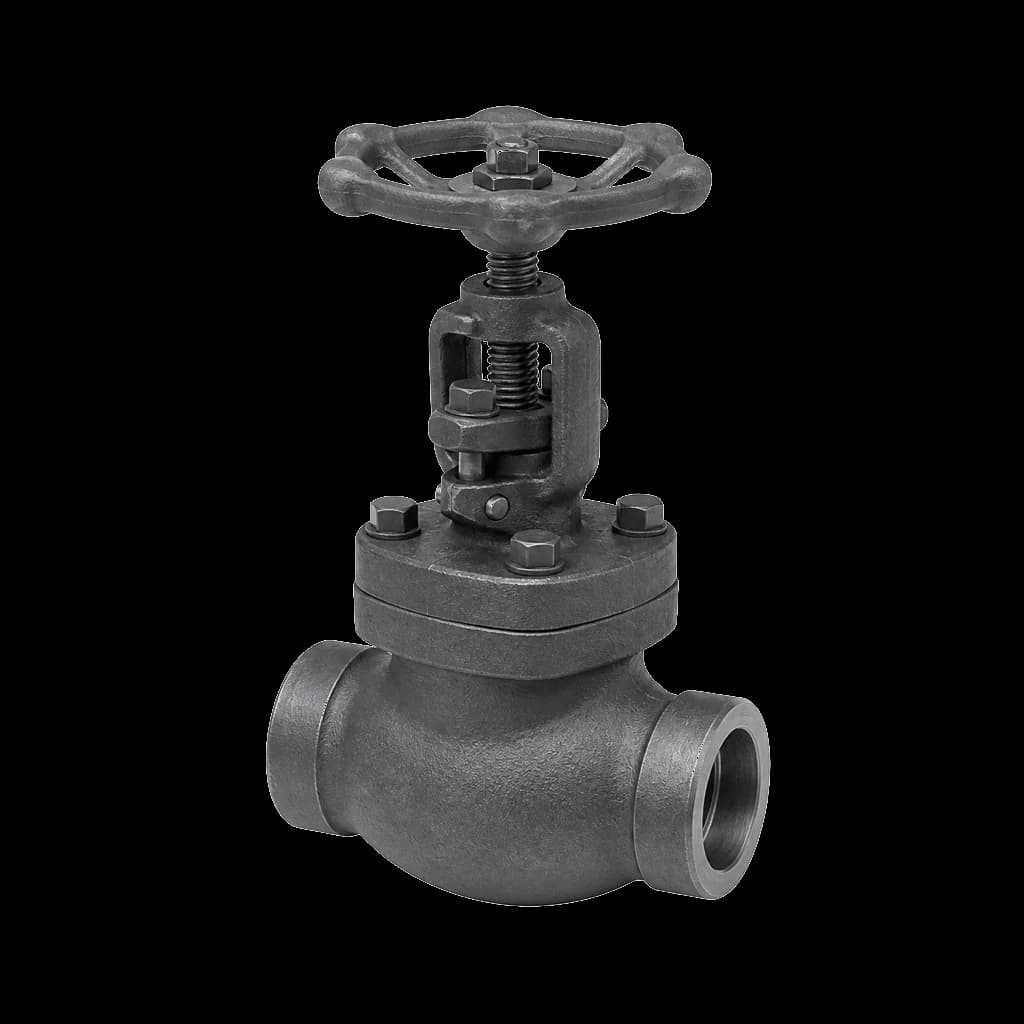
- Blowdown — forged gate or globe rated for intermittent flashing service, IBR.
- Steam headers — cast steel gate valves, Class 300, Stellited seats, for branch isolation.
- PRS — upstream/downstream gates, bypass globe, strainer; safety valve per statute.
- Trap stations — forged gate + Y-strainer + trap + disc check, ½"–1" typical.
Common failures and what prevents them
Four failures dominate steam valve maintenance logs. Gland leaks — cured by graphite packing, live-loading on cycling duty, and not over-tightening a cold gland. Seat erosion — almost always a gate used for throttling or a valve left passing; fix the operating practice, specify hardfacing. Bonnet joint weeps — thermal cycling relaxes bolting; spiral-wound graphite gaskets and controlled bolt-up torque hold the joint. Hammer damage — cracked discs and bent stems trace to undrained lines and fast warm-ups, not to the valve. A steam valve specified per this guide and operated with patience routinely outlives the boiler inspection cycle.