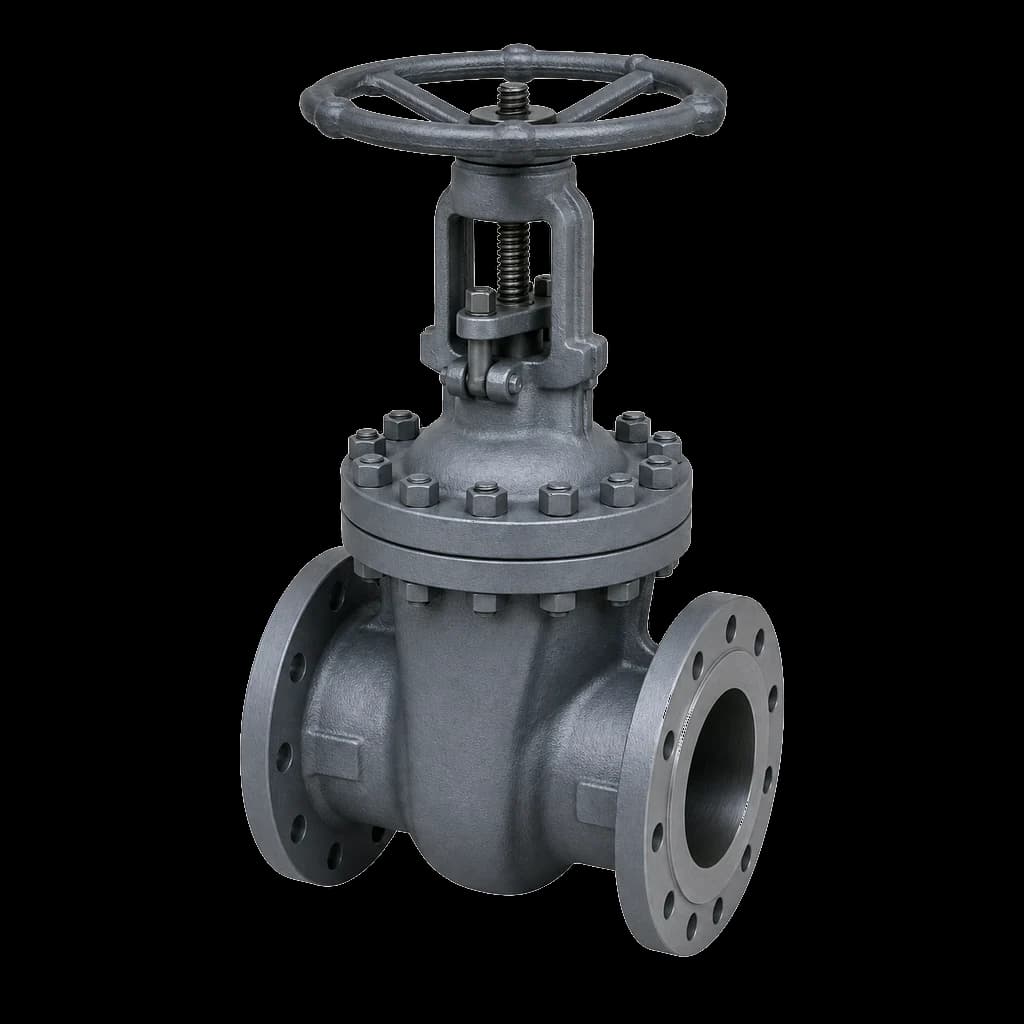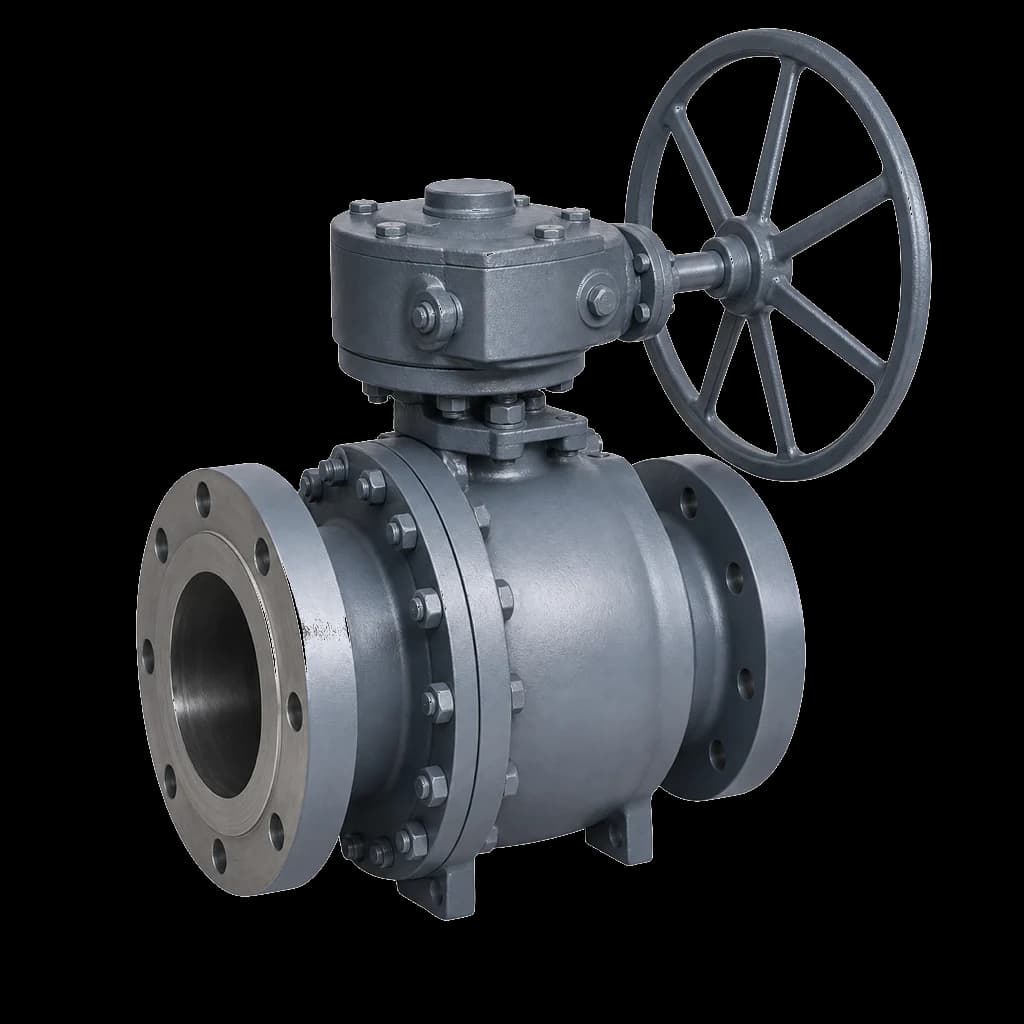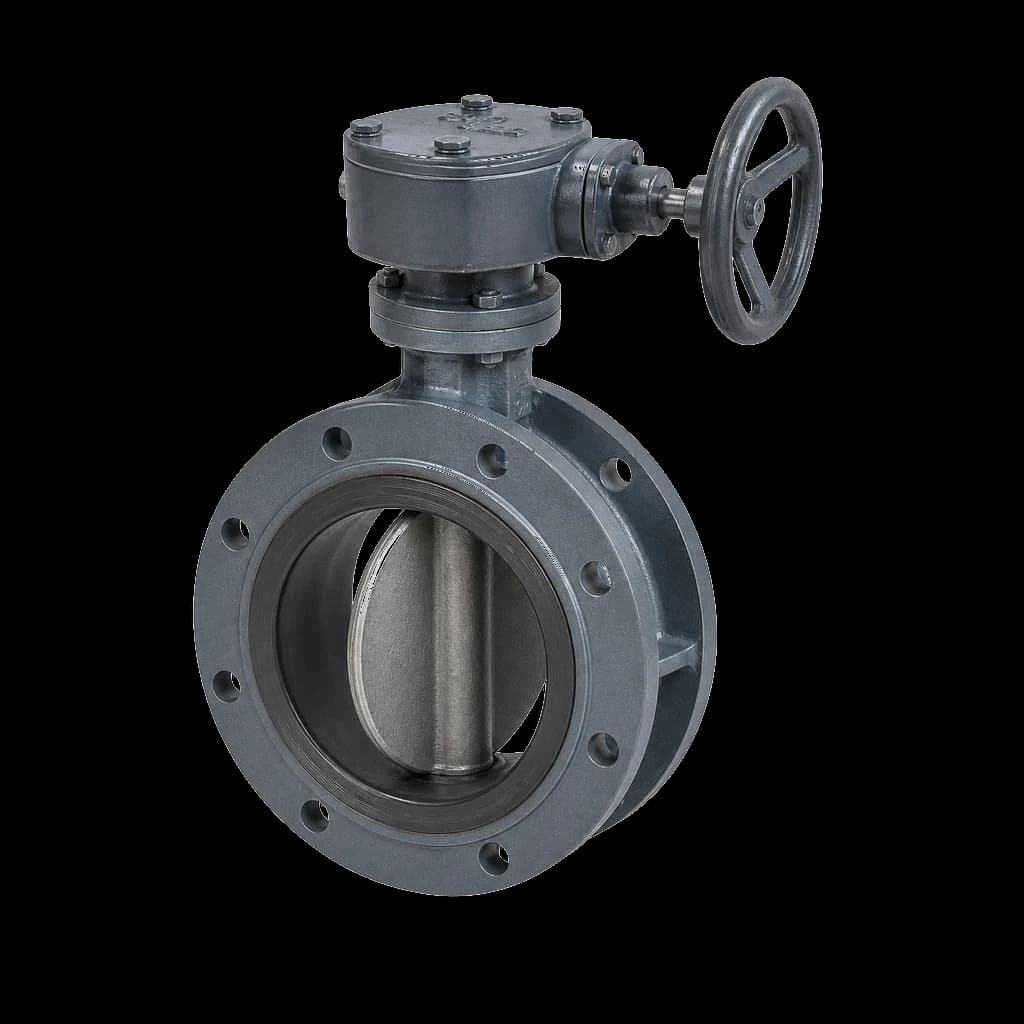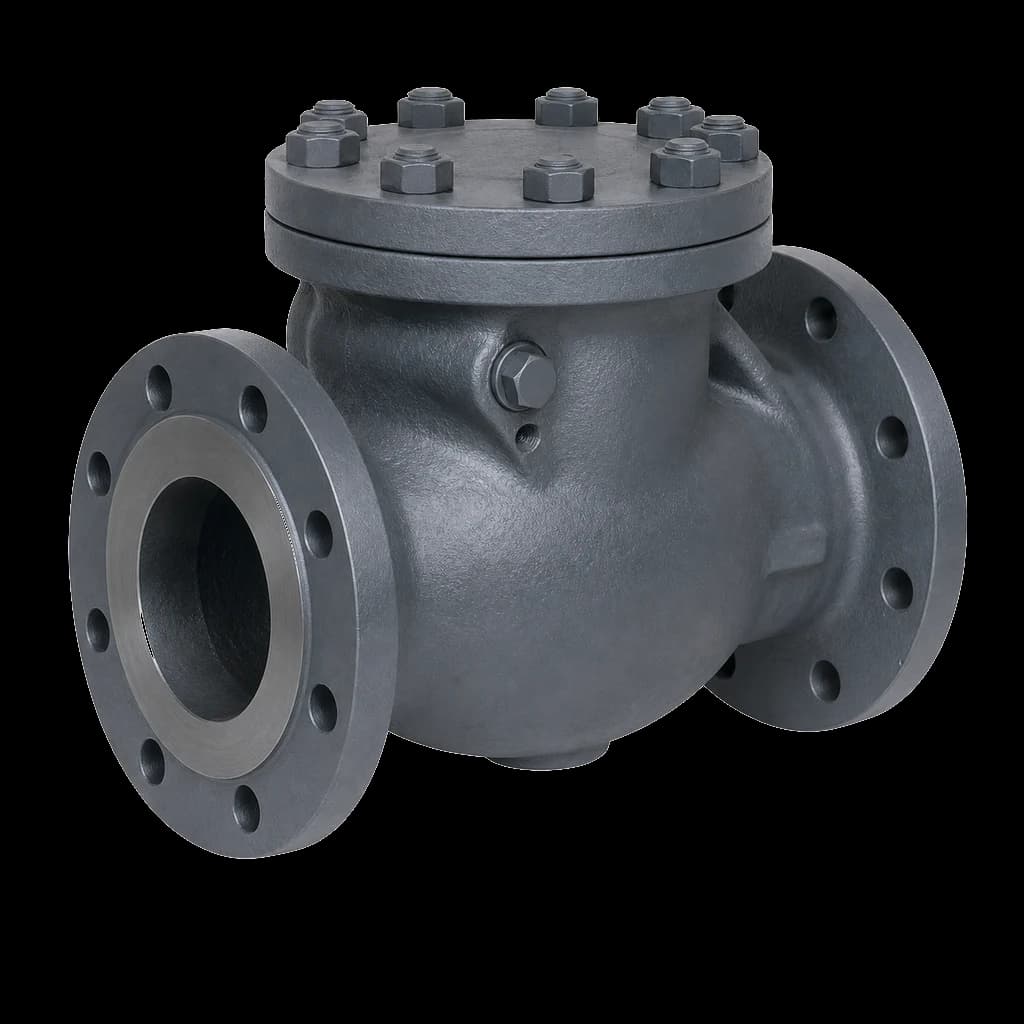
A flanged valve arrives with the right body material, a clean hydro report and a face-to-face dimension that checks out — and then the joint is held up because the bolting was ordered as an afterthought. ASTM A193 Gr B7 studs with ASTM A194 Gr 2H heavy hex nuts are the default pairing for carbon and low-alloy steel flanged joints across refinery, CGD, power and utility piping, and that default is usually right. Money and schedule go on the exceptions: the sour line that needed B7M, the cold loop that needed A320 L7, and the purchase order that said "stud bolts as required" without a nut grade, a coating or a length.
What ASTM A193 Gr B7 actually specifies
ASTM A193 covers alloy-steel and stainless bolting for high-temperature or high-pressure service. Grade B7 is a chromium-molybdenum steel from the AISI 4140 / 4142 / 4145 family, quenched and tempered at not less than 620 degC (1150 degF). The heat treatment is the grade: it is what holds strength at flange operating temperature, where an ordinary carbon-steel bolt would relax.
The stud: what each element is doing
| Element | Range, % | What it buys |
|---|---|---|
| Carbon | 0.37 – 0.49 | Hardenability — must be quenched and tempered, never as-rolled |
| Manganese | 0.65 – 1.10 | Hardenability through section |
| Silicon | 0.15 – 0.35 | Deoxidation |
| Chromium | 0.75 – 1.20 | Temper and scaling resistance at temperature |
| Molybdenum | 0.15 – 0.25 | Suppresses temper embrittlement, holds strength hot |
| Phosphorus | 0.035 max | Restricted: drives temper embrittlement |
| Sulphur | 0.040 max | Capped to protect ductility and toughness |
The nut: A194 Grade 2H
ASTM A194 covers nuts for high-pressure and high-temperature bolting. Grade 2H is a quenched and tempered carbon steel heavy hex nut, proof-loaded to 175 ksi — deliberately stronger than the stud it runs on, so an overloaded joint fails by stud stretch rather than by stripping threads inside a nut where nobody can see it. Heavy hex is not optional: the extra across-flats and thickness are where the thread engagement lives. Every stud carries its grade symbol B7 on the end and every nut its 2H on a face, each beside the maker's mark. Unmarked bolting is untraceable bolting — nothing ties it to a heat number, so nothing ties it to a certificate. Reject it at receipt, and settle the 3.1 versus 3.2 mill certificate question before the order goes out.
B7 strength falls as diameter grows
There is no single tensile figure for B7. A193 steps the minimums down across three diameter bands, because a thicker section quenches more slowly and cannot be hardened through. Size preload off a half-remembered 125 ksi and you will over-torque a 3 in stud badly.
| Stud diameter | Tensile, min | Yield 0.2%, min | Elongation, min | Hardness, max |
|---|---|---|---|---|
| Up to 2-1/2 in | 125 ksi (860 MPa) | 105 ksi (725 MPa) | 16% | 321 HBW / 35 HRC |
| Over 2-1/2 to 4 in | 115 ksi (795 MPa) | 95 ksi (655 MPa) | 16% | 321 HBW / 35 HRC |
| Over 4 to 7 in | 100 ksi (690 MPa) | 75 ksi (515 MPa) | 18% | 321 HBW / 35 HRC |
For scale against Indian fastener practice: IS 1367 class 8.8 is nominally 800 MPa tensile and 640 MPa yield, class 10.9 is 1000 / 900 MPa, and B7 below 2-1/2 in sits between them. The site substitution defended as harmless — "we used 8.8 high-tensile, it is stronger anyway" — is wrong twice: 8.8 is the weaker of the two at the same diameter, and property-class bolting is defined at room temperature, with no elevated-temperature or impact requirement behind it. On a Class 300 hydrocarbon flange that is not a substitution, it is a deviation.
When B7 is the wrong grade
Sour service: B7M studs and 2HM nuts
NACE MR0175 / ISO 15156 caps carbon and low-alloy steels at 22 HRC for sour exposure. B7 is permitted up to 35 HRC, so it cannot qualify on hardness alone. B7M is the same chemistry tempered higher and deliberately softened: 100 ksi tensile minimum, 80 ksi yield minimum, 235 HBW (99 HRB) maximum hardness, and A193 requires hardness testing on every production item, not on a sample. Its companion nut is A194 Gr 2HM.
The nuance many project specs have quietly lost: MR0175 governs bolting exposed to the sour environment — submerged, buried, insulated or otherwise wetted by the process. External flange bolting standing in open atmosphere generally falls outside that scope, so blanket B7M across a sour unit is inherited habit rather than a code requirement, and B7M is the lower-volume, dearer item. Check your own bolting specification and push back when the clause has simply been copied forward. Our sour service valve guide applies the same logic to bodies, trim and welds.
Low temperature: A320 L7, not A193
B7 carries no impact-test requirement of its own, so the cold limit comes from the piping code. ASME B31.3 allows B7 bolting down to -48 degC (-55 degF) without impact testing; most project specifications switch earlier, at -29 degC, so the bolting matches the LTCS body it sits on. Below whichever line the spec draws, the grade is ASTM A320. Grade L7 is B7 chemistry with a Charpy V-notch acceptance at -101 degC (-150 degF), matched with impact-tested A194 Grade 4 or Grade 7 nuts. L7 stops at 2-1/2 in diameter; above that the specification routes you to L43 and its AISI 4340-type chemistry, which hardens through the larger section. Bolting follows the body: buy LTCS valves with A352 LCB or LCC bodies and B7 studs on those joints will be rejected. Sour and cold together lands you on L7M with Grade 7M nuts.
Hotter, or more corrosive, than B7 can handle
Push much past 400 degC and B7 is at the end of its useful range; A193 Grade B16, a chromium-molybdenum-vanadium steel, is the normal step up for steam and hot-oil flanges. Where the joint needs corrosion resistance rather than strength — chemical duty, coastal exposure, stainless bodies — use A193 B8 (304) or B8M (316) with A194 Gr 8 or 8M nuts, and read the class. Class 1 stainless studs are solution annealed and offer 75 ksi tensile and 30 ksi yield, under a third of B7's yield; Class 2 is strain hardened to recover strength (125 ksi tensile, 100 ksi yield up to 3/4 in, falling with diameter). Dropping B8 Class 1 into a B7 joint without recalculating preload under-seats the gasket, which is why gasket selection and bolting selection are one exercise, not two.
| Service | Stud | Nut | What triggers it |
|---|---|---|---|
| CS / low-alloy piping up to 400 degC | A193 B7 | A194 2H | Default unless something below applies |
| Sour, bolting exposed to the environment | A193 B7M | A194 2HM | MR0175 / ISO 15156 22 HRC ceiling |
| Low temperature, below the B7 floor | A320 L7 (L43 above 2-1/2 in) | A194 Gr 4 or Gr 7 | Charpy requirement follows the body |
| Steam and hot oil above B7's range | A193 B16 | A194 Gr 4 or Gr 7 | Temper stability and creep |
| Corrosive or stainless-bodied | A193 B8 / B8M, Class 1 or 2 | A194 Gr 8 / 8M | Corrosion resistance, at a strength penalty |
Size, count and length come from the flange, not the valve
ASME B16.5 sets bolt count, diameter and bolt circle for NPS 1/2 through 24; B16.47 Series A and Series B take over above that, and the two series do not share drilling — the trap set out in our B16.5 versus B16.47 comparison. Two conventions then catch buyers. Thread series changes at 1 in: UNC through 1 in, the 8-thread series from 1-1/8 in upward, so a 1-1/4 in flange stud is 1-1/4 in 8UN. And B16.5 stud lengths exclude the chamfered points, which is why a stud measured across the points never matches the table.
| NPS | Class 150 (bolts x dia) | Class 300 (bolts x dia) |
|---|---|---|
| 2 in | 4 x 5/8 in | 8 x 5/8 in |
| 3 in | 4 x 5/8 in | 8 x 3/4 in |
| 4 in | 8 x 5/8 in | 8 x 3/4 in |
| 6 in | 8 x 3/4 in | 12 x 3/4 in |
| 8 in | 8 x 3/4 in | 12 x 7/8 in |
| 10 in | 12 x 7/8 in | 16 x 1 in |
| 12 in | 12 x 7/8 in | 16 x 1-1/8 in |
Every stud takes two nuts. One 12 in Class 300 cast steel gate valve, flanged both ends, therefore needs 32 studs and 64 nuts before spares — and count spares, because studs get damaged coming off. Ring-type joint flanges need longer studs than raised-face flanges of the same size and class, so never carry an RF length over to an RTJ line item.
Coating changes the torque, not just the finish
Bare B7 rusts, and on coastal Indian sites it rusts fast. The two protections specified in practice, hot-dip galvanizing and a fluoropolymer (PTFE-based) coating such as Xylan, both change how the joint behaves under a torque wrench.
- Hot-dip galvanizing deposits a zinc layer thick enough to matter on the thread flanks. Nuts must be tapped oversize after galvanizing; a galvanized stud with a standard-tapped nut will gall or refuse to engage.
- Electroplated zinc on a component that can reach 35 HRC brings hydrogen embrittlement into play. If it is used, insist on a post-plating bake and a record of it.
- PTFE and fluoropolymer coatings cut the nut factor from roughly 0.20 for lightly lubricated bare steel to roughly 0.10 – 0.15 — half again to double the preload for the same applied torque, enough to yield studs or crush a gasket. Torque values must be recalculated for the coating actually supplied, which is why "coating as per vendor standard" is a dangerous line on a PO.
- Assembly method belongs in the spec alongside the grade. ASME PCC-1 is the reference: a cross pattern in passes at roughly 20-30%, 50-70% and 100% of target torque, then a final rotational pass at 100% to pick up elastic interaction between studs.
What Indian tenders ask for, and where it goes wrong
Indian procurement runs two parallel worlds, and the boundary between them is where joints leak. On refinery, petrochemical, CGD, steel and power packages written to EIL or consultant specifications, A193 B7 with A194 2H is written in and nobody argues. On municipal water, CPWD and PWD work, flanges are drilled to IS 1538 or IS 6392 and the bolting is galvanised IS 1367 class 4.6 or 8.8 — right for a cast iron sluice valve on a low-pressure water main, and no case for gold-plating it.
- Mixed drilling. IS 1538 cast iron flanges and ASME B16.5 flanges of the same nominal size rarely share a bolt circle. Pump houses and fire-water systems, where an ASME-flanged pump discharge meets an IS-drilled valve, are the usual accident site. Check PCD and hole count against the drawings before buying a single bolt.
- One grade for everything. A contractor buying one grade of bolting for a whole site is buying the wrong grade for part of it. Split the take-off by line class before enquiry.
- IBR-governed steam. On boiler external piping the whole joint is scrutinised: a valve carrying a Form III-C helps nothing if the bolting beside it has no traceable certification.
- Certification as a deliverable. On PSU and GeM orders the certificate is part of the supply, not a favour. Ask for EN 10204 3.1 on studs and nuts as separate documents (different heats, usually different makers), plus hardness reports for B7M/2HM and impact reports for L7.
How to write the bolting line on the PO
Most bolting disputes trace back to an under-specified line item, not a bad supplier. A complete line reads roughly: stud bolt ASTM A193 Gr B7, 1 in UNC x 165 mm excluding points, two heavy hex nuts ASTM A194 Gr 2H per stud, PTFE coated, EN 10204 3.1. Everything below belongs there.
- Stud grade and nut grade, written separately. A quote against "stud bolts with nuts" is not comparable to anything.
- Diameter, thread series (UNC or 8UN) and length, noting that length excludes points.
- Quantity as sets per joint plus a stated spares percentage, not a loose piece count.
- Coating in full — black/oiled, hot-dip galvanized, or fluoropolymer — and who re-issues the torque table to match it.
- Facing and gasket in the same breath: RF with a spiral wound gasket, RTJ with a ring, FF with a full-face soft gasket on cast iron. Stud length and seating stress both depend on it.
- Certification level, plus any hardness or impact reporting the grade demands.
- Marking: grade symbol and maker's mark visible on every stud end and nut face at receipt.