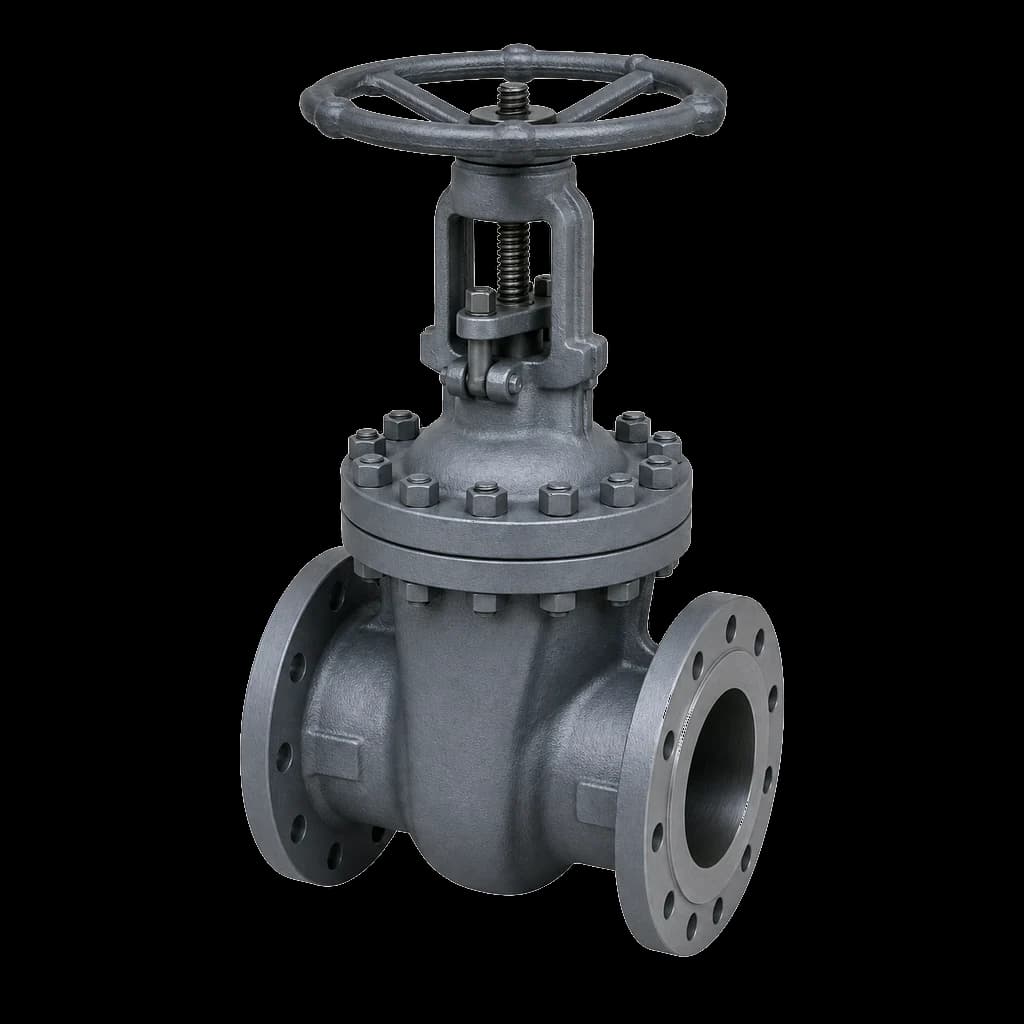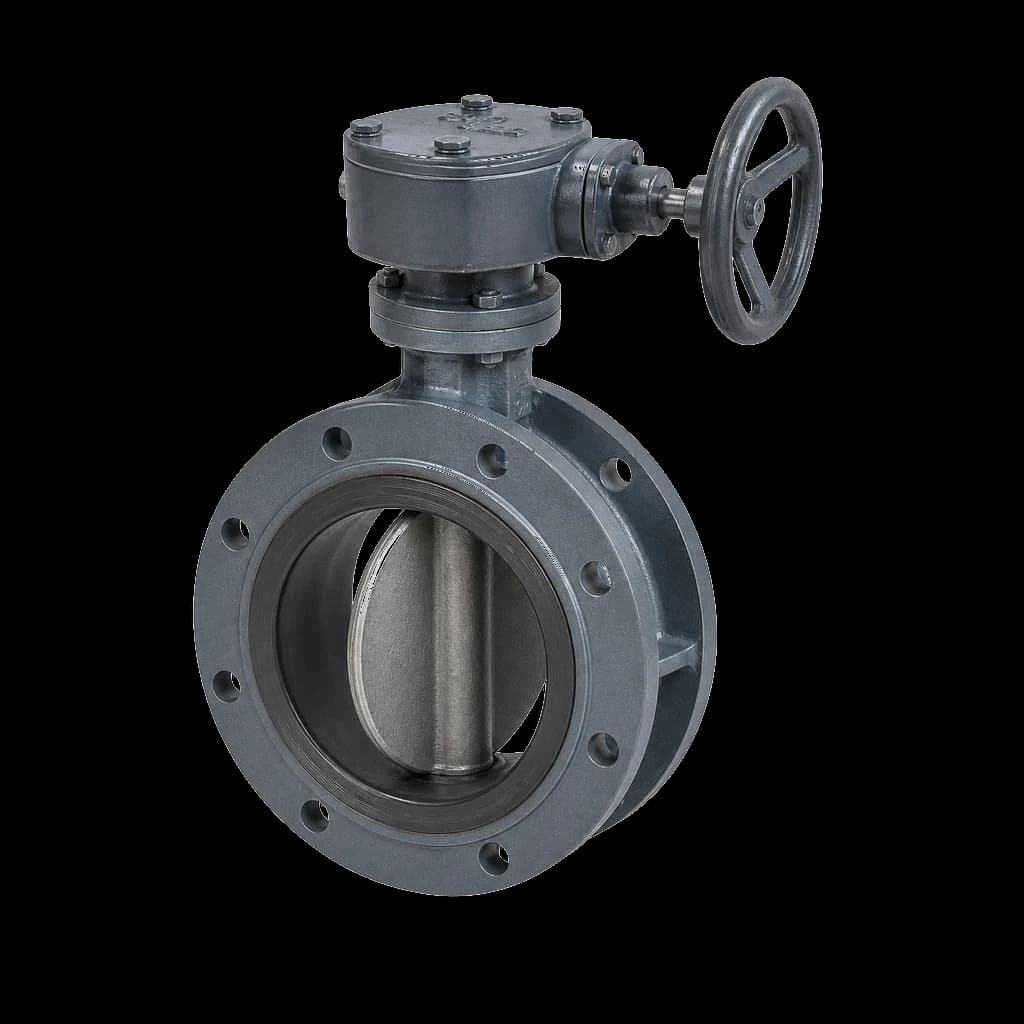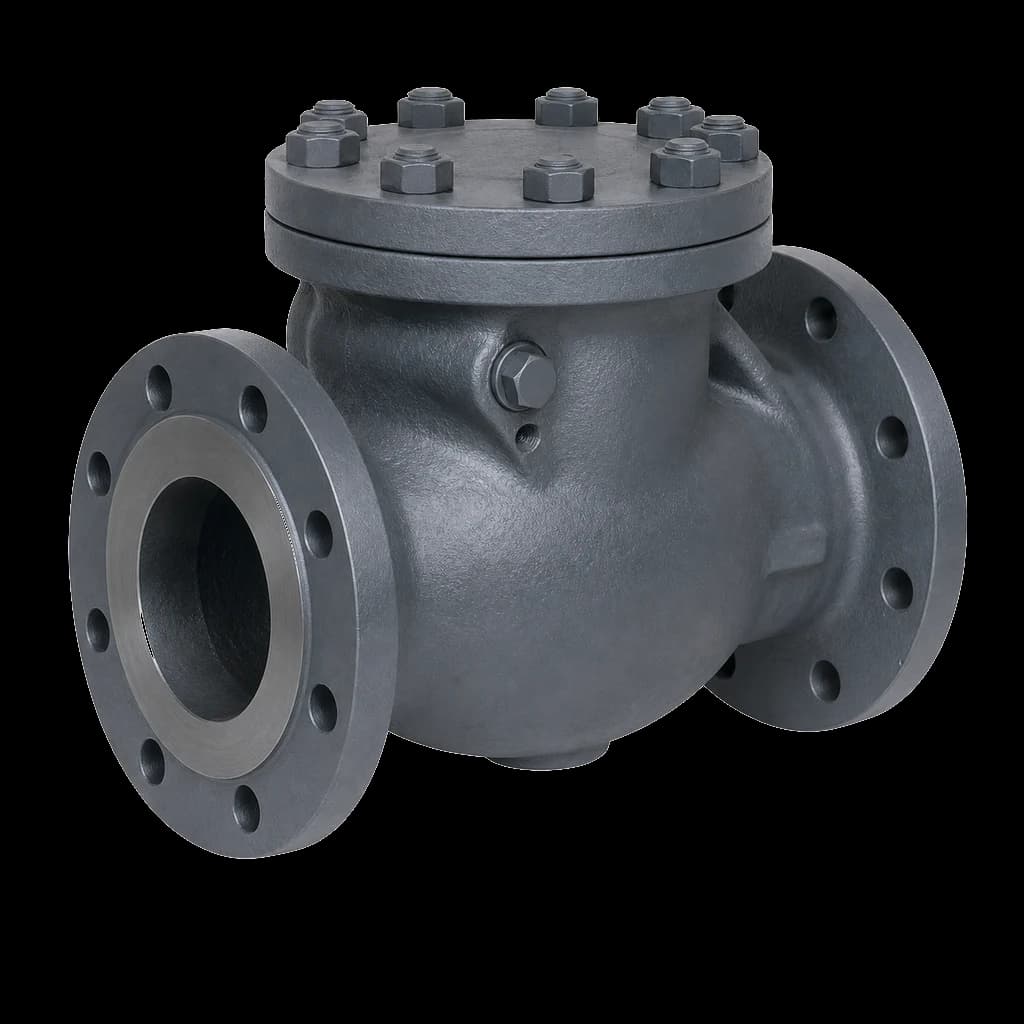
A flanged valve is only as installable as its flanges. Every flanged joint on a plant obeys one of two dimensional standards: ASME B16.5 for NPS ½ through 24, and ASME B16.47 for NPS 26 through 60. Inside B16.47 hides a further split — Series A and Series B — that has stranded more than one large valve at site, drilled for a bolt circle the mating pipe flange doesn't have. Ten minutes with the geometry saves weeks at erection.
B16.5: the standard you use every day
ASME B16.5 — *Pipe Flanges and Flanged Fittings* — defines flange dimensions, pressure–temperature ratings, facing types and drilling for NPS ½–24 in Classes 150, 300, 400, 600, 900, 1500 and 2500. When a valve datasheet says "flanged ends to B16.5 Class 300 RF," it fixes the outside diameter, thickness, raised-face diameter, bolt-circle diameter, and bolt count/size of the valve's end flanges. The pressure–temperature tables mirror the logic covered in our class ratings guide: same class, same material group, same allowable pressures.
Facing types: RF, FF, RTJ
- Raised face (RF) — the default for steel valves. A 2 mm (Class 150/300) or 7 mm (Class 600+) raised sealing surface with a serrated-concentric or smooth finish per the standard. Takes non-metallic or spiral-wound gaskets.
- Flat face (FF) — full-face contact, used against cast-iron or brittle mating flanges where an RF would crack the mate on bolt-up. Common on water-sector valves.
- Ring-type joint (RTJ) — a machined groove sealing on a metal ring gasket, specified for high pressure and high temperature hydrocarbon service (typically Class 900 and above). RTJ and RF do not mate: the facing must be stated on the PO.
B16.47: above 24", and the Series A/B split
Beyond NPS 24, B16.5 stops and B16.47 takes over (NPS 26–60, Classes 150–900). It contains two parallel dimension sets with separate histories. Series A descends from MSS SP-44, the heavier pattern used with steel pipeline and process flanges. Series B descends from API 605, developed for compact, lighter joints. For the same size and class, Series A flanges are thicker, larger in OD, and use fewer, larger bolts; Series B uses more, smaller bolts on a different bolt circle. They do not interchange. A 30" Class 150 Series A valve cannot bolt to a Series B pipe flange — the holes simply do not line up.
| Parameter | Series A | Series B |
|---|---|---|
| Flange OD | Larger (~870 mm) | Smaller (~836 mm) |
| Bolt count | Fewer (24) | More (28) |
| Bolt size | Larger (1¾") | Smaller (1¼") |
| Relative weight | Heavier | Lighter |
| Typical usage | Process/pipeline practice, most Indian EPC specs | Compact/offshore-derived specs |
In Indian process and water practice, Series A is the common default — but "common" is not "certain." The piping specification, not habit, decides. Any RFQ for a 26"+ flanged valve that does not state the series is incomplete, and a diligent vendor will ask before quoting.
What this means when buying large valves
- State the flange spec explicitly for every flanged valve line: standard, class, facing, and — above 24" — series. Example: *"30" Class 300, flanged ends to B16.47 Series A, RF."*
- **Large gate and check valves** in the 26"–42" band are exactly where the Series A/B trap lives — confirm against the piping isometrics, not the previous PO.
- **Wafer and lugged butterfly valves** clamp between flanges rather than carrying their own, but the lug drilling must still match the mating flange standard and series.
- Bolting and gaskets scale with the flange, not the valve: a Series A joint needs different studs and a different gasket OD than Series B. Erection materials are ordered off the flange spec.
- Mixed-standard brownfield sites deserve a flange survey before ordering replacements — decades of projects leave both series in the same plant.
A one-line specification that never fails
For any flanged valve: size — class — standard — series (if >24") — facing — finish. "12" Class 300 B16.5 RF, serrated finish" or "36" Class 150 B16.47 Ser. A RF" leaves a vendor nothing to assume and a site nothing to discover. The habit costs one line on the RFQ; the omission can cost a re-drilled flange or a re-ordered valve on a critical path.