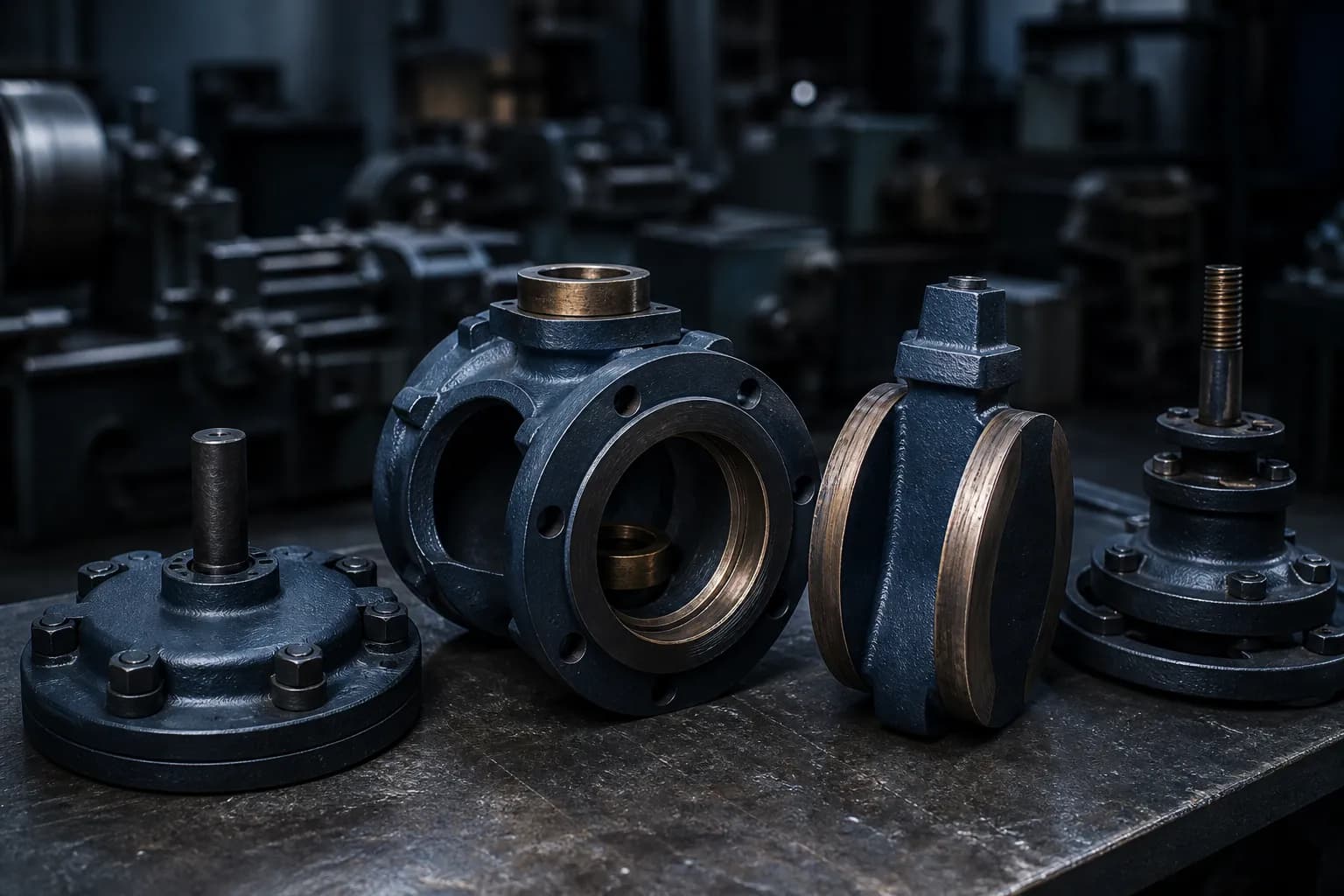
IS 14846 is the Indian Standard for sluice valves for water works purposes, 50 mm to 1200 mm, and it sits behind almost every PHED, municipal corporation and Jal Jeevan Mission tender in the country. It is also the clause most often written badly. A schedule item reading only "CI sluice valve to IS 14846" leaves the pressure rating, seat material, spindle grade, coating and certification route open — and the lowest bidder settles every one of them downward.
What IS 14846 covers, and what sits beside it
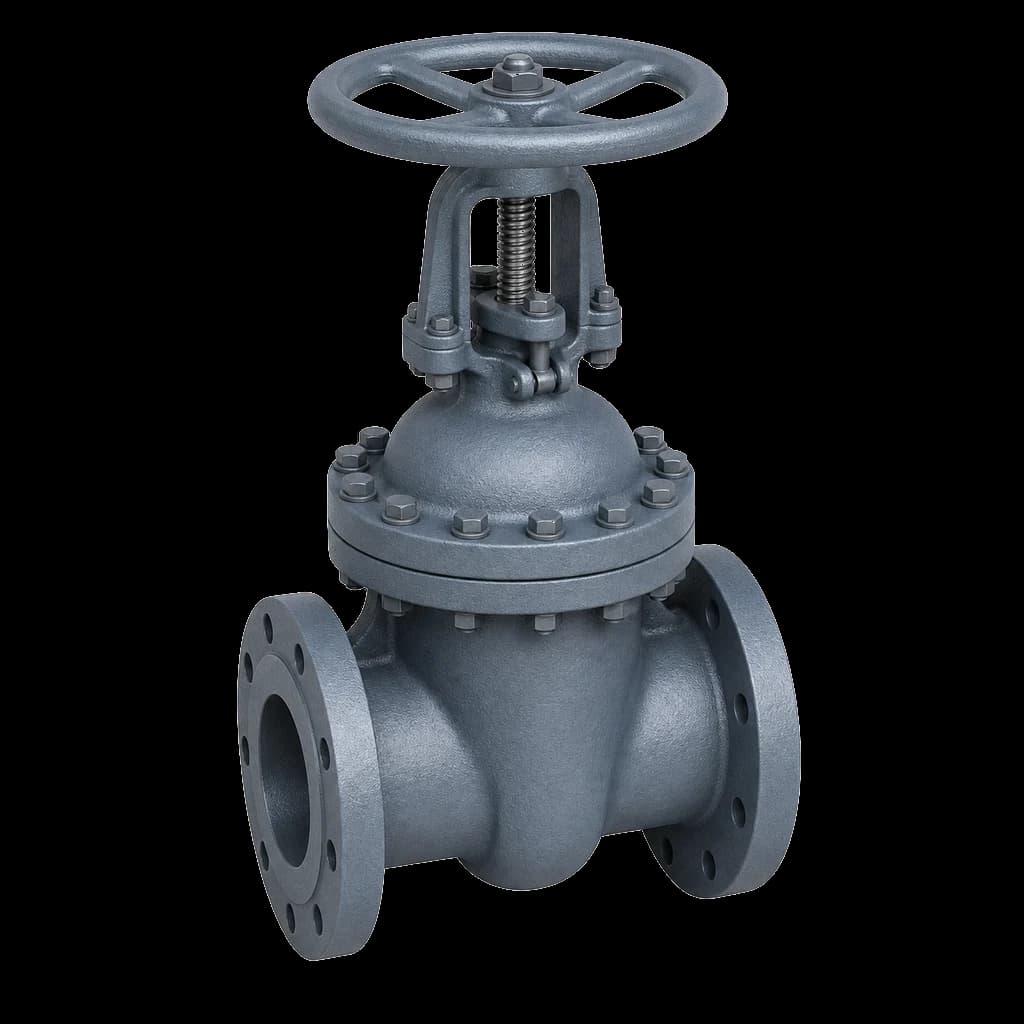
The standard describes a metal-seated wedge gate valve: cast iron body and bonnet, bronze seating faces on both body and wedge, flanged ends, and by default an inside-screw non-rising spindle. Face-to-face length, flange dimensions, wall thickness, spindle sizing, test pressures and marking are all fixed against size and pressure rating. It is dimensionally prescriptive, which is why it is worth citing rather than paraphrasing.
It does not stand alone. Two older size-split standards remain in circulation and still carry their own BIS licences — IS 780 for 50–300 mm and IS 2906 for 350–1200 mm — and many Indian foundries are licensed under those instead. That is the origin of most certification disputes on water contracts: a works legitimately marking under IS 780 is not thereby entitled to mark a valve tendered to IS 14846. Name one standard and do not let a bid substitute the other in the deviation column.
PN 1.0, PN 1.6 and PN 2.5: reading the rating correctly
Ratings are written in megapascals: PN 1.0, PN 1.6 and PN 2.5 — 10, 16 and 25 bar. European valves write the same three as PN 10, PN 16 and PN 25, and schedules get transcribed by people who assume PN 1.0 is a typo. The ratings are identical; the flanges are not. A cast iron flange drilled to IS 1538 will not mate with an ASME B16.5 Class 150 drilling, so read how class ratings and PN designations differ before assuming anything bolts up at site.
| Designation | Rated pressure | Shell test (1.5 x PN) | Seat test (1.1 x PN) | Typical use |
|---|---|---|---|---|
| PN 1.0 | 10 bar | 15 bar | 11 bar | Gravity mains, low-head distribution |
| PN 1.6 | 16 bar | 24 bar | 17.6 bar | Pumping mains, WTP headers, urban networks |
| PN 2.5 | 25 bar | 37.5 bar | 27.5 bar | High-head pumping, hilly transmission |
Select the class against surge pressure, not static head. Sixty metres of head sits comfortably inside PN 1.0 on paper, but the transient when a pump trips against a closed reflux valve can double line pressure for a fraction of a second, and grey cast iron has no ductility to absorb it. On a pumped main, go one class up unless a surge analysis says otherwise.
Materials: FG 200, FG 260 and the gunmetal seat
Body, bonnet and wedge
Grey cast iron to IS 210 carries the body, bonnet and wedge — FG 200 is the minimum grade the standard allows, FG 260 the grade to name at the higher pressure ratings, and most competent foundries now pour FG 260 throughout. Grey iron gives castability, damping and cheap heavy sections, and almost no impact toughness. That is its defining limit: sound buried in a chamber, poor anywhere a slung load or a vehicle can reach it. Where toughness matters, specify a ductile iron body to IS 1865 and say so explicitly — you have then left the construction the standard is written around.
Seating faces, spindle and protection
The seal is metal to metal on bronze: leaded tin bronze rings to IS 318 in the body pockets and on both wedge faces. That tolerates silt far better than an elastomer and stays rebuildable. What it will not give you is bubble-tight shut-off — a metal-seated sluice valve is a line isolation device with an allowable seat leakage rate, so if you need drop-tight closure at a bulk meter chamber, change the valve rather than argue with the test result.
- Body, bonnet, wedge: grey cast iron to IS 210, FG 200 minimum. "CI body" is not a material specification.
- Seat and wedge rings: leaded tin bronze to IS 318, LTB 2 the workhorse grade, mechanically secured rather than weld overlay.
- Spindle: stainless steel, and the grade decides its life — a 12–13% chromium martensitic grade suits clean treated water, while chlorinated or coastal duty wants an austenitic grade. Write the grade, not "SS spindle".
- Spindle nut: bronze, and the designed wear part. On a non-rising spindle it sits in the wetted bore, which is why periodic exercising matters.
- Protection: base protection is a bituminous coating to IS 158. The fusion-bonded epoxy your tender expects, typically 250 micron minimum DFT, is an addition to IS 14846 and must be written in.
IS 14846 is metal-seated, so stop specifying it as soft-seal
A recurring tender defect reads: "Resilient seated soft seal sluice valve conforming to IS 14846." The sentence contradicts itself. Resilient-seated gate valves carry a rubber-encapsulated wedge, a flat unobstructed bore with no bottom groove to silt up, and no bronze rings at all; they belong to EN 1074-2, BS 5163 or AWWA C509 and C515. Every bidder then files a deviation and a clarification decides by accident what should have been decided on merit.
Decide deliberately. Metal-seated buys grit tolerance, a rebuildable seat and a clean ISI licensing route across the full size band; resilient-seated buys tighter shut-off and lower head loss, at the cost of an elastomer whose life is set by water chemistry. Our sluice valve versus gate valve comparison sets the two constructions side by side. Settle the spindle arrangement in the same breath: non-rising for buried chambers, rising where visible position indication is worth having.
Testing: shell, seat and what belongs in the ITP
Every valve gets two routine hydrostatic tests — a shell test with the wedge part-open, pressurising the whole envelope including bonnet joint and stuffing box, and a seat test with the wedge closed. The shell test is the higher pressure, and the release note should reference both against the valve serial number.
- Test the seat from both sides. A wedge gate valve is bidirectional, and one that seals one way while weeping the other is a common escape.
- Ask for the record, not the stamp — pressure held, hold duration, valve serial, tester. "Tested and found satisfactory" is decoration.
- Witness the large sizes. At 400 mm and above, an inspector at the works costs a fraction of returning a valve that size from a remote site.
- Measure coating DFT after testing and handling, with the gauge calibration record. Readings taken before hydro say nothing about what reaches site.
Put these into a formal inspection and test plan with hold, witness and review points — our valve inspection and FAT checklist is a usable template. The material certificate for a grey-iron body is a foundry chemistry and tensile-bar report traceable to the pour number, not a mill certificate; the EN 10204 3.1 versus 3.2 distinction still applies, and the practical 3.2 equivalent in Indian water tenders is the third-party agency's release certificate.
The ISI mark and the BIS licence trap
ISI marking on a sluice valve is voluntary certification that your tender document makes compulsory, which leaves you to verify it. The trap is scope: a licence is granted to a named factory, against a named standard, for a defined range of sizes and pressure ratings. "We are an ISI licensed manufacturer" does not answer "is this 600 mm PN 1.6 valve inside your licence?" The classic failure is a supplier licensed for 50–300 mm winning an order that includes 600 mm valves, then either delivering them unmarked or marking them outside scope.
| What to check | Where | Why it matters |
|---|---|---|
| Licence number (the CM/L reference) | BIS Care app or the licence search on the BIS site | A scanned certificate proves nothing; the portal shows live status |
| Standard named on the licence | Scope line | A licence against IS 780 or IS 2906 does not satisfy an IS 14846 clause |
| Size range covered | Scope entry, e.g. 50–300 mm | The commonest failure — larger tendered sizes fall outside it |
| Pressure ratings covered | Scope entry, PN 1.0 / 1.6 / 2.5 | A PN 1.0-only scope cannot mark a PN 1.6 valve |
| Validity and status | Operative, expired or suspended | Lapsed licences surface at inspection, not at bid evaluation |
| Factory address | Licence versus despatch address | The mark belongs to a licensed unit, not a brand or trading arm |
Do this at bid evaluation, not at pre-despatch inspection: ask every bidder to quote the CM/L number in the technical bid and verify it yourself. If the licence does not cover part of the tendered range you have three honest options — accept unmarked valves of the same construction under third-party inspection, split the order by size band, or reject. Accepting the mark applied outside its scope is not one of them.
Marking and the documents that travel with it
Marking is cast or permanently stamped on the body: manufacturer's name or trademark, nominal size, pressure rating, material designation, year of manufacture, and the ISI mark with licence number where certified. On a geared valve the closing direction should be legible too — most Indian utilities close clockwise, a few do not, and that is a works change rather than a site adjustment. Buy the standard from the official BIS portal; copies circulating as a free IS 14846 PDF are usually pre-amendment text.
- Per-valve hydro test report, shell and seat, against the valve serial number.
- Foundry chemistry and tensile-bar report for the body casting, traceable to the pour.
- Bronze grade certificate for the rings, and a spindle certificate naming the actual grade.
- Coating record — system, coats, measured DFT, gauge calibration.
- BIS licence copy with CM/L number and scope, plus guarantee certificate and spares list.
Writing the spec line and installing the valve
A complete schedule entry names size; PN class; standard and edition; body grade; seat and spindle materials; end connection with the flange drilling standard; spindle arrangement; operation — handwheel, cap-top with tee key, or bevel gear; coating system and DFT; bypass requirement; inspection regime; and the certification requirement. Twelve lines remove most of the arguments that otherwise land in technical evaluation.
- Call out the bypass on large valves. Against high differential pressure it is what makes the main valve openable by one person.
- Support the valve, do not hang it on the pipe. A 600 mm cast iron valve needs its own plinth and must never act as a pipeline anchor.
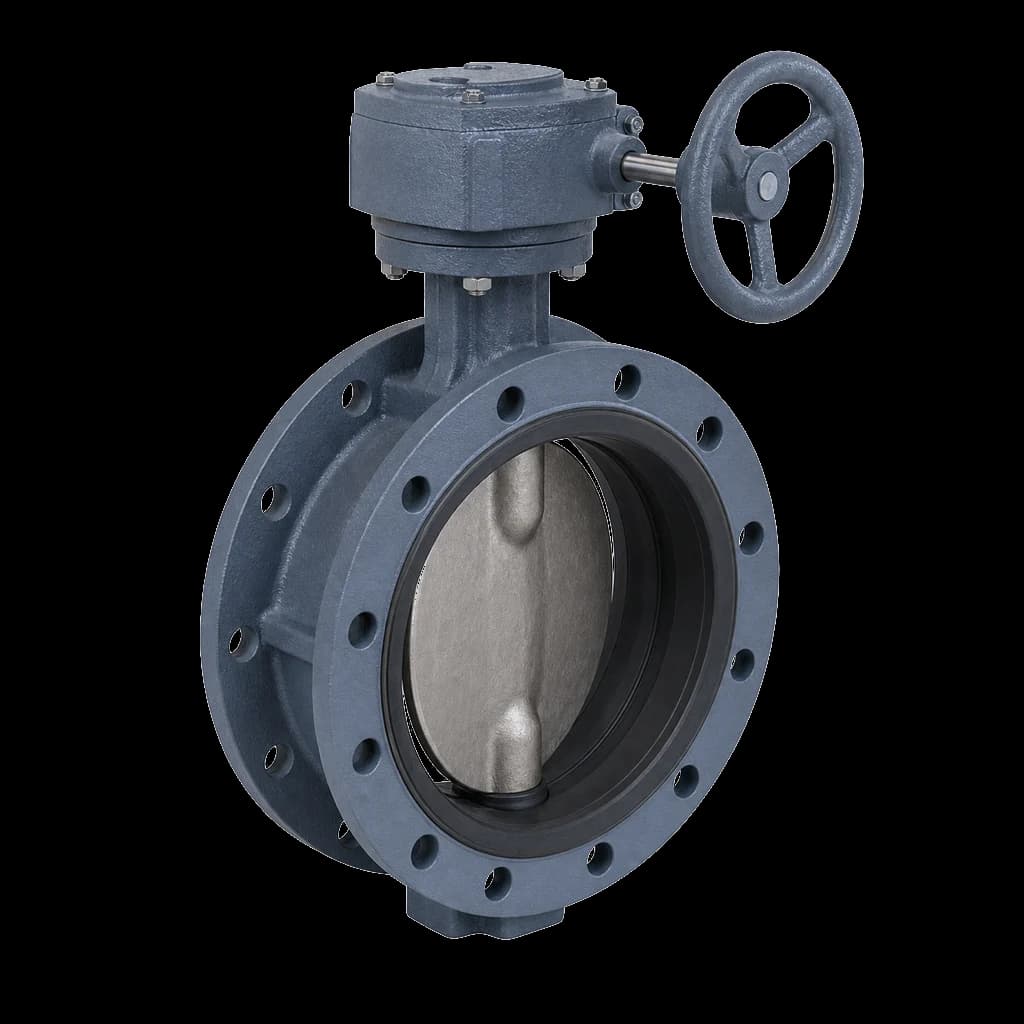
- Never throttle a sluice valve. A part-open wedge chatters and erodes the bronze faces. Regulate with a butterfly or control valve; keep the sluice valve for isolation.
- Exercise the valves on a schedule. One that has stood open for a decade will not close when the burst happens.
- Design the chamber around access — extension spindle, surface box, and clearance to lift the bonnet without excavating, the discipline that keeps a water treatment plant maintainable ten years on.