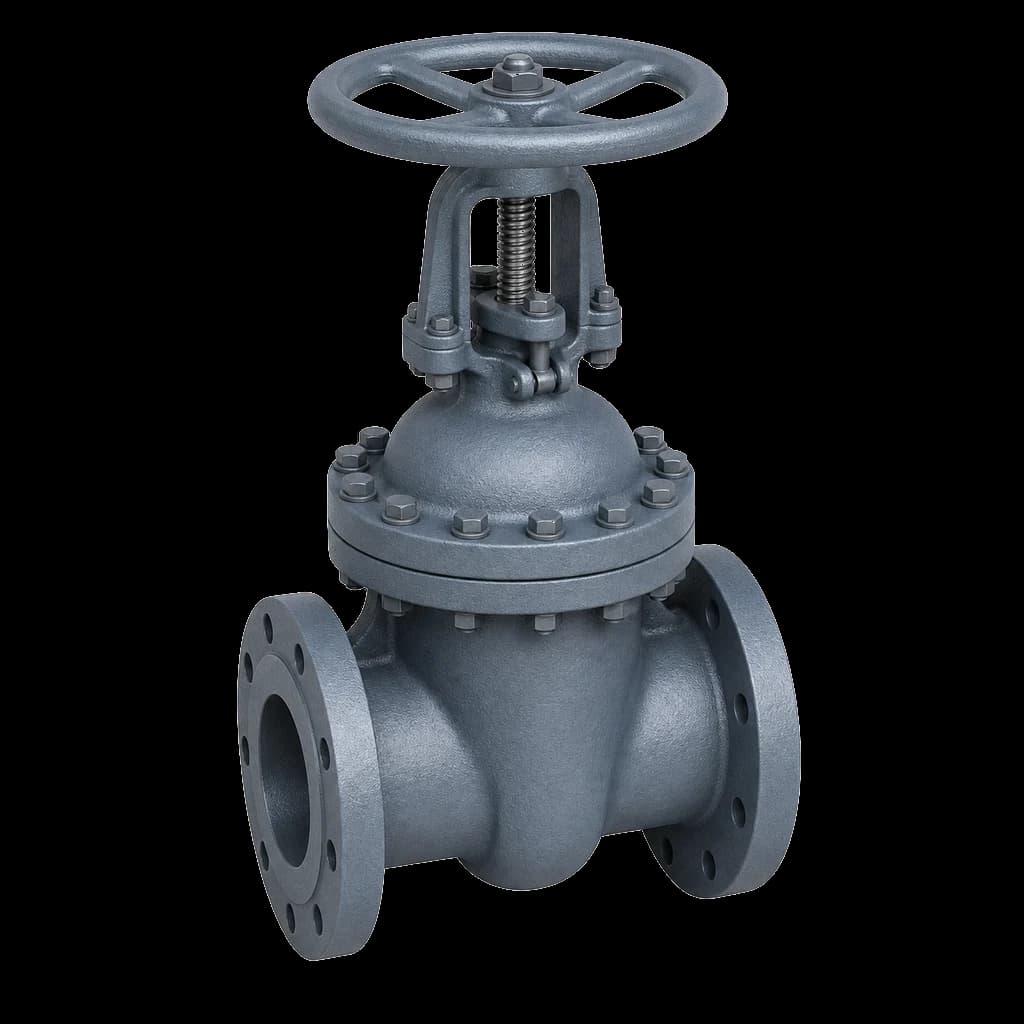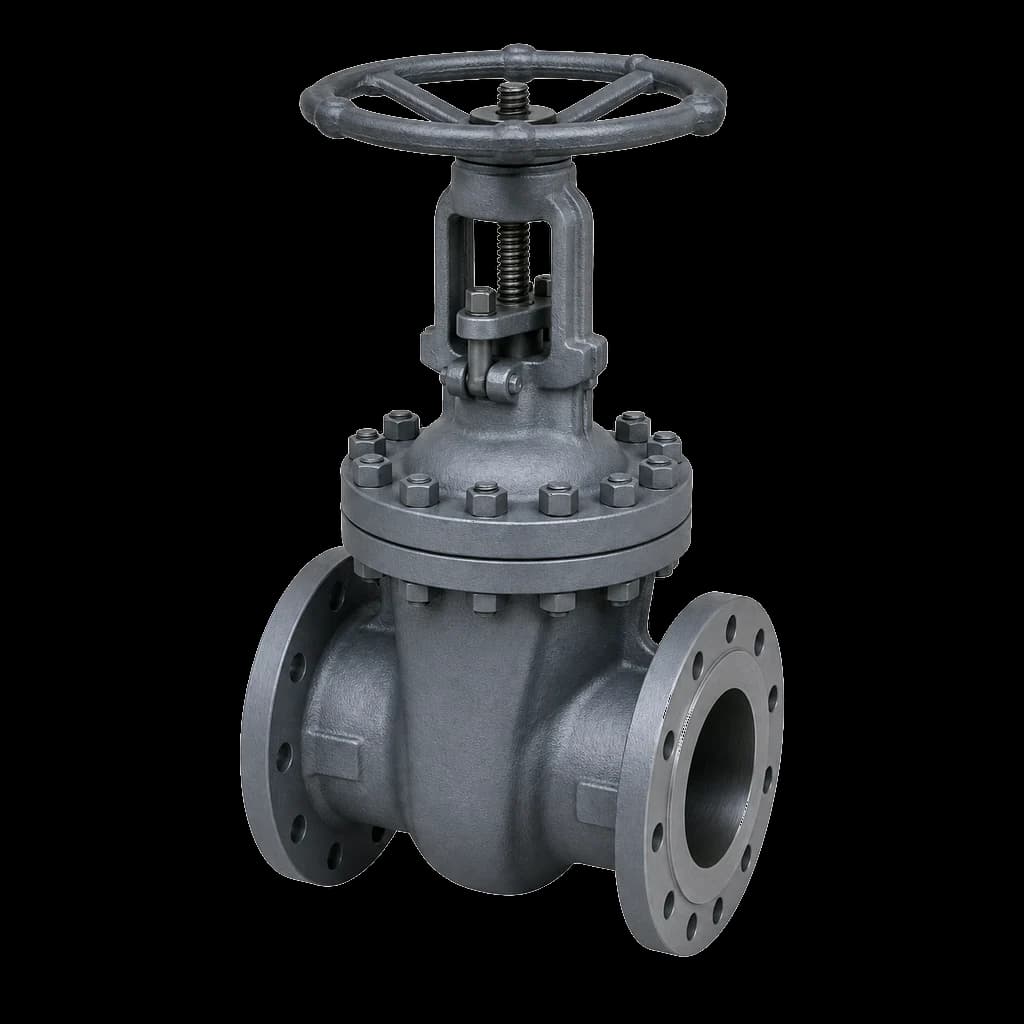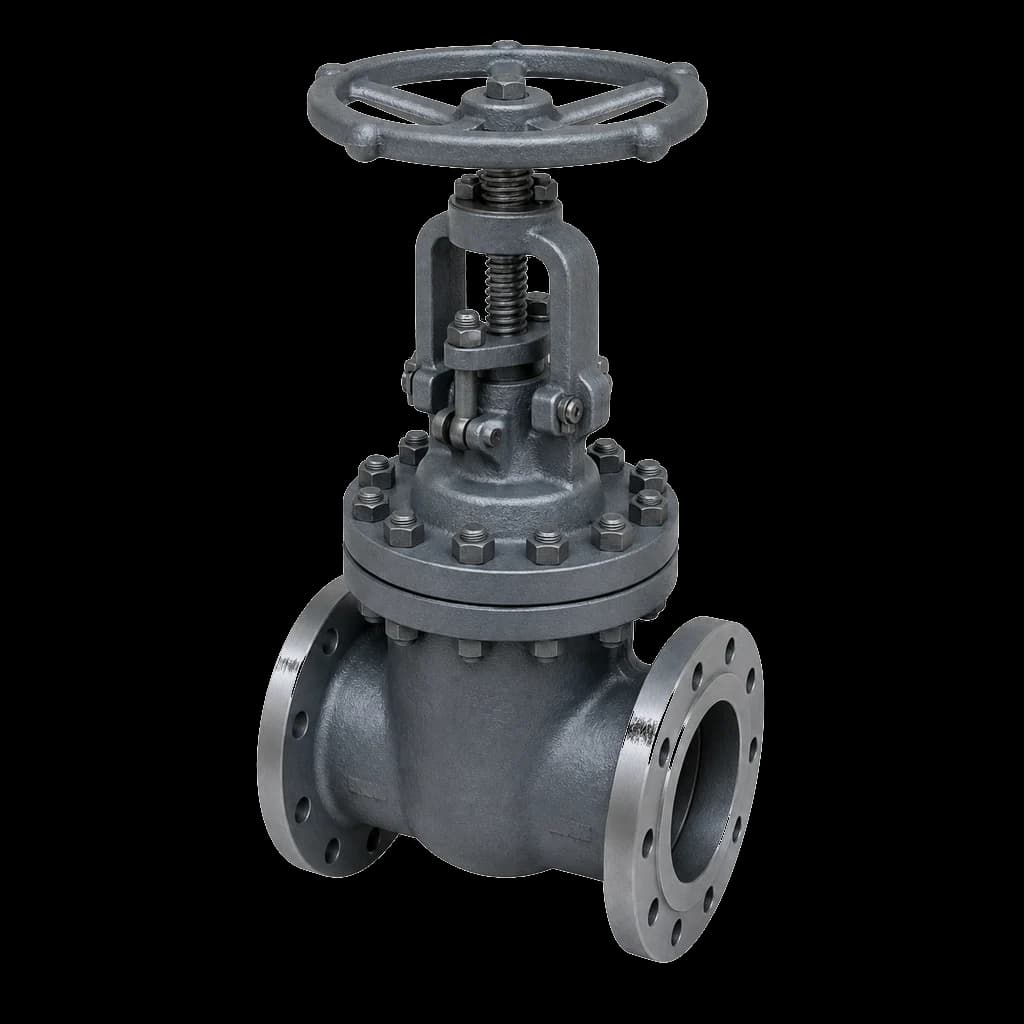
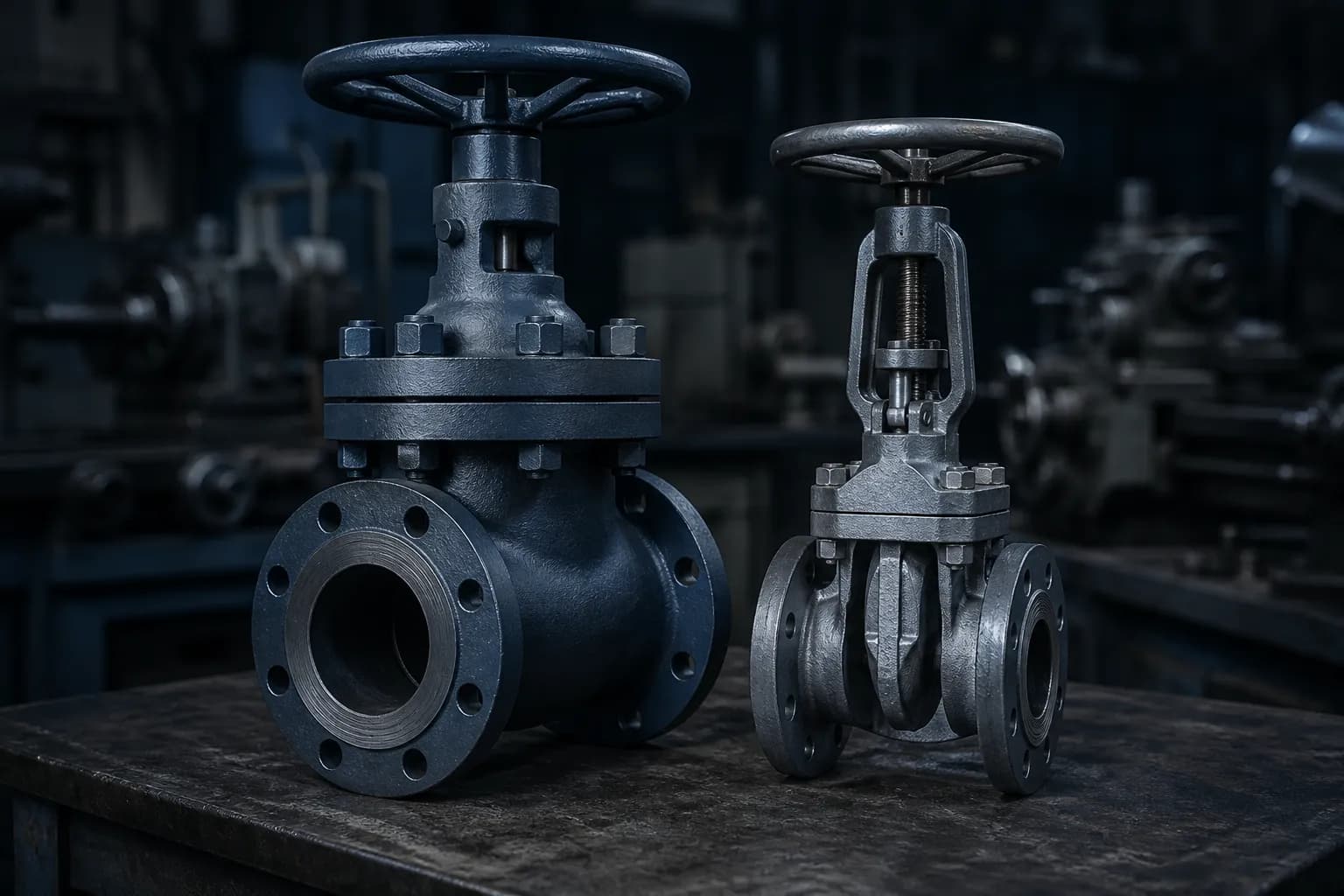
Ask a PHED or municipal engineer for a sluice valve and ask a refinery piping engineer for a gate valve, and two entirely different castings arrive on site. Yet the sluice valve vs gate valve argument has nothing to do with valve physics. Both are wedge gate valves; both isolate by driving a wedge down across a full-bore waterway; neither should ever be used to throttle. What separates them is the standard they are built to, the body material that standard permits, the stem arrangement and the flange drilling — and those four differences are enough to make a sluice valve useless in a hydrocarbon line and a Class 150 cast steel gate valve an expensive, over-specified mistake in a buried water main.
What a sluice valve actually is
"Sluice valve" is the Indian and Commonwealth waterworks name for a metal-seated wedge gate valve built to IS 14846, in sizes 50 mm to 1200 mm. The default package is highly specific: a grey cast iron or ductile iron body, double flanged ends, an inside-screw non-rising spindle, gunmetal seat rings on both body and wedge, and either a handwheel for chamber-mounted valves or a cap top operated by a tee key for direct-buried ones. That is not folklore — it is what a bidder ships against a line item that says only "CI sluice valve, DN 300, PN 1.6".
If a tender or an old drawing still cites IS 780 (50–300 mm) or IS 2906 (350–1200 mm), both were amalgamated into IS 14846. Quote IS 14846, note the supersession on your deviation sheet, and move on — arguing about a withdrawn standard at technical evaluation costs more time than the clarification is worth. The companion piece IS 14846 sluice valves explained works through the clause structure in detail.
Two things a sluice valve is not. It is not a sluice gate or penstock — an open-channel gate sliding in a frame, sealing against a seat plate at low head and bought against an entirely different specification. Nor is it a knife gate valve: the thin blade used for slurry, pulp and ash handling has no wedge, seals across a single face, and has no place in a potable water main.
Sluice valve vs gate valve: the differences that matter
Below, "gate valve" means what a process engineer means — cast steel to API 600, or forged steel to API 602 in the small bore. Read the table as the two commercial packages those words trigger in an Indian supply chain, not as a verdict on either design.
| Attribute | Sluice valve, IS 14846 | Gate valve, API 600 / API 602 |
|---|---|---|
| Body material | Grey iron to IS 210 (FG 200) or ductile iron to IS 1865 | Cast steel A216 WCB, alloy A217 WC6/WC9, stainless CF8/CF8M; forged A105 or F304/F316 at DN 100 and below |
| Pressure designation | PN 1.0 and PN 1.6, i.e. nominally 10 and 16 bar | ASME Class 150 to 2500 with a full B16.34 pressure-temperature curve |
| Stem arrangement | Inside screw, non-rising spindle by default | Outside screw and yoke, rising stem, bolted bonnet with a back seat |
| Ends and drilling | Double flanged, IS 1538 tables; EN 1092-2 PN 10/PN 16 in export and donor-funded work | Flanged to ASME B16.5 / B16.47, or butt-weld ends to B16.25 |
| Face to face | Per the IS 14846 table — it does not match B16.10 | ASME B16.10 |
| Seating | Gunmetal seat rings, typically LTB 2 to IS 318, on body and wedge | 13Cr or 316 trim, hardfaced where the service demands it |
| Service window | Ambient water, raw and treated; not steam, not hydrocarbon | Water, steam, hydrocarbon, sour service with the right trim and NACE compliance |
| Typical buyer | Municipal body, Jal Nigam, PHED, water utility, building services | EPC, refinery, petrochemical, power, steel plant |
The row that catches people out is flange drilling. PN 16 and ASME Class 150 are not interchangeable across most sizes: pitch circle diameters and bolt counts diverge, and a DN 200 PN 16 sluice valve will not bolt to an 8-inch Class 150 companion flange. Check PCD and bolt count on the general arrangement drawing before the valve leaves the works, because discovering it in a trench costs a shutdown. The same applies to length: a CI sluice valve will not drop into a gap dimensioned from B16.10.
IS 14846 in practice: what the standard actually fixes
Sizes, classes and operation
The standard covers 50 mm to 1200 mm at PN 1.0 and PN 1.6. Above roughly DN 300 the wedge and the head across it get heavy enough that manual handwheel operation becomes impractical, and spur or bevel gearing is specified; larger valves are also commonly supplied with an integral bypass so the operator can equalise pressure across the wedge before cracking the main gate. Both thresholds move between makers and between tender specifications, so state the size at which you want gearing and a bypass rather than inheriting the supplier's default.
Materials and trim
Grey iron to IS 210 grade FG 200 is the reference body material; ductile iron to IS 1865 is the upgrade, worth insisting on where valves are handled roughly, buried under traffic loading or exposed to surge. Grey iron is strong in compression and brittle in tension — it does not yield, it cracks. Spindles are martensitic stainless in the 12–13% chromium family or high-tensile brass, per the grade table in the standard; seat rings and wedge facings are leaded tin bronze, usually LTB 2 to IS 318. If your water is aggressive or chloride-bearing, say so at RFQ stage, because the default gunmetal-on-gunmetal seat is chosen for cost and machinability, not for corrosion margin.
Testing, coating and the ISI mark
IS 14846 tabulates its own hydrostatic body and seat test pressures against PN, and the certificate has to quote those figures — a report written to API 598 against an ASME class rating proves nothing about a PN 1.6 sluice valve, and no supplier should be allowed to substitute one for the other. Two more clauses decide whether the valve survives twenty years in a chamber. First, coating: "epoxy painted" is not a specification. Fusion-bonded epoxy with a stated minimum dry film thickness, commonly around 250 microns in Indian water tenders, inside and out, is. Second, the BIS Standard Mark. Municipal and state water tenders routinely make an ISI-marked sluice valve a qualifying condition, so ask the bidder for the CM/L licence number and its validity date, not a photograph of a stamp.
Where cast iron stops and cast steel starts
The body material decision is where the terminology question turns into a real engineering one. Cast iron is cheap, castable in large sections, and perfectly sound in cold water at 10 or 16 bar. It is also excluded from steam and hydrocarbon service by the specifications that govern refineries, gas networks and boiler houses, and it is not a material you take in front of an IBR inspector. The moment the fluid stops being ambient water, the sluice valve is off the table and you are buying a steel gate valve.
| Duty | Body material | Buy it against |
|---|---|---|
| Buried water main, WTP, pumping station | Grey iron FG 200, or ductile iron where impact and surge matter | IS 14846, PN 1.0 / PN 1.6 |
| Fire water ring main and hydrant network | Cast iron or ductile iron for underground, cast steel for pump house headers | IS 14846, plus TAC or UL/FM listing where the insurer demands it |
| Utility water inside a plant, DN 50 and above | Cast steel WCB | API 600, Class 150 |
| Steam, condensate, boiler feed | Cast steel WCB or alloy WC6 | API 600 with IBR certification where the line is under boiler regulations |
| Hydrocarbon, gas, refinery process | WCB, LCB, CF8M as the service dictates | API 600 from DN 50 up, API 602 at DN 100 and below where the two overlap |
| Small-bore drains, vents, instrument isolation | Forged A105 or F316 | API 602, socket weld or threaded |
Two riders to that table. Ductile iron is not simply "better cast iron" — it is a different casting discipline with different tensile behaviour, and the argument for paying for it is set out in cast iron vs ductile iron valve bodies. And if the line is a process line rather than a water line, the choice between a bolted-bonnet cast valve and a compact forged one is governed by size and class, which is the subject of API 600 vs API 602 gate valves.
Non-rising spindle, gearing and why you never throttle
The non-rising spindle is not a cost compromise; it is the correct answer for a buried valve. With the stem thread inside the body, there is no exposed screw for grit to pack onto, the valve fits inside a surface box or a shallow chamber, and the overall height stays fixed regardless of position. The price is that you cannot see whether the valve is open, and the thread runs in the water. That is why process plants take the opposite view: an OS&Y gate valve shows its position across the yard and keeps the thread out of the fluid, which matters far more when the fluid is hot or flammable. The trade-off is worked through in rising vs non-rising stem gate valves.
Whichever stem you buy, do not throttle a wedge gate valve. A partly open wedge sits in a high-velocity jet, chatters against the guide slots and erodes the seat faces until the valve will no longer shut off — and a sluice valve's soft gunmetal seats give up faster than 13Cr does. Regulate with a control valve, or a butterfly valve sized for the duty, and keep the gate for isolation. The one operational virtue of a many-turn gate valve is that it closes slowly: on a long transmission main, the surge risk from slamming a large butterfly shut is precisely what the slow-closing sluice valve avoids.
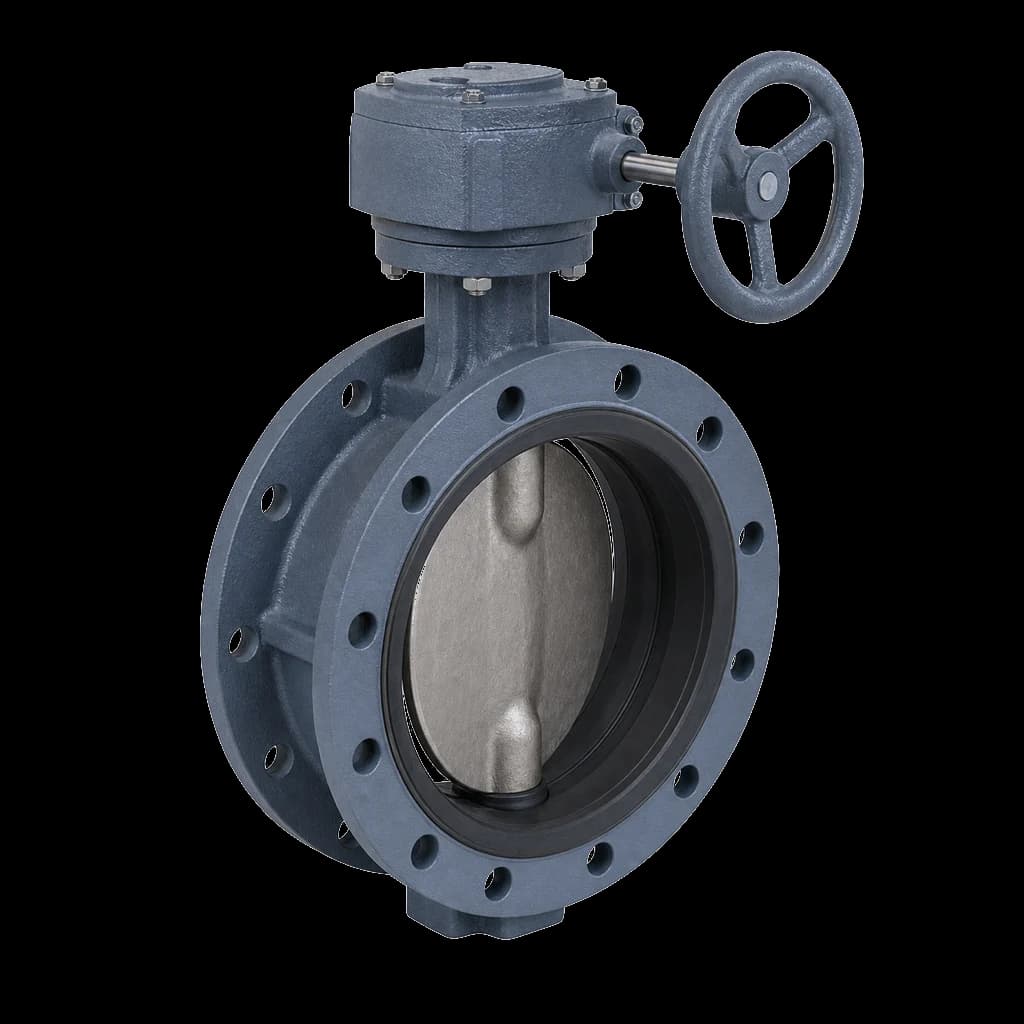
Sluice valve vs butterfly valve above DN 300
Once the main gets large, the real competitor to a sluice valve is not a steel gate valve but a resilient-seated butterfly valve to IS 13095. The economics turn between DN 300 and DN 400, and the arguments on either side of that crossover are the same on every job. A DN 600 PN 1.6 sluice valve is a casting of several hundred kilograms with a tall chamber, a long stem and a gearbox; the equivalent butterfly valve is a fraction of the weight and face-to-face length, needs a smaller chamber, and costs materially less installed.
- Choose the sluice valve where the waterway must be clear — raw water carrying rags and fibres, lines that will be swabbed, or anywhere a disc left standing in the flow is unacceptable.
- Choose the sluice valve where surge is the governing risk and slow closure is a feature, or where the utility's own standard drawings and spares holding are built around IS 14846 valves.
- Choose the butterfly valve for treated water above DN 300 in a chamber, where weight, headroom and civil cost dominate, and where the resilient seat gives a tighter shut-off than a worn metal seat ever will.
- Choose neither for regulation without checking the duty point. A butterfly used for throttling near the closed position cavitates and chews its seat; that is a control valve's job.
Writing the line item so the right valve arrives
Most disputes in water tenders come from a line item that says "sluice valve 300 mm" and nothing else. A sluice valve line item that cannot be argued about states: nominal size; PN class; body material and grade; standard, IS 14846 with the amendment number; end connection and drilling standard; spindle type, non-rising or rising; operation, handwheel, cap top or gear, and whether a bypass is required; direction of closing; coating type and minimum DFT; seat material; test and certification requirements; and whether the ISI mark is a qualifying condition. Twelve items, one line, and no clarification cycle.
For process work the equivalent list is size, ASME class, body and trim materials, API 600 or API 602, end connection, bonnet type, stem arrangement, operator, test standard and certification. The difference between the two lists is the whole difference between the two valves — which is why the sluice valve vs gate valve confusion is worth resolving before the enquiry goes out, not at the pre-despatch inspection.