Walk any refinery pipe rack and you are looking at two gate-valve populations. On the headers: heavy flanged cast steel valves, 2" to 42". On the drains, vents, instrument hook-ups and bypasses around them: compact forged valves, ½" to 2", socket-welded into the line. The first population is built to API 600, the second to API 602 — and the two standards embody different design philosophies that a buyer should understand before writing either on a purchase order.
API 600: bolted-bonnet cast steel gate valves
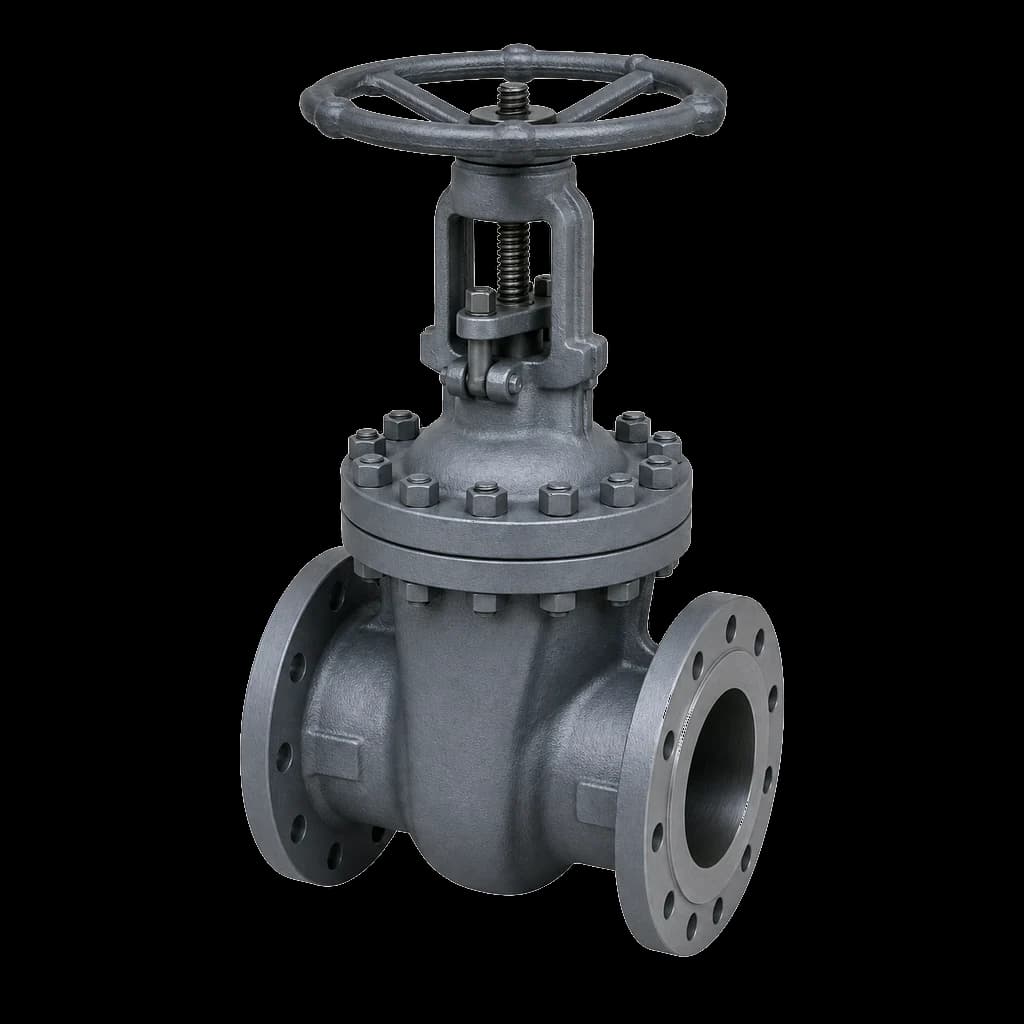
API 600 — *Steel Gate Valves, Flanged and Butt-Welding Ends, Bolted Bonnets* — governs the cast gate valve of process industry: outside-screw-and-yoke (OS&Y), rising stem, bolted bonnet, flexible or solid wedge, renewable seat rings. Its defining trait is conservative wall thickness: API 600 mandates body walls thicker than ASME B16.34 minimums, a legacy of refinery service where corrosion allowance and mechanical abuse are facts of life. It also specifies stem diameter minimums, wedge guiding, and stuffing-box dimensions deep enough for serious packing sets.
Materials are the A216/A217/A351 casting families — WCB for general service, WC6/WC9 for hot service, CF8/CF8M for corrosive duty. Ends are flanged (B16.5, or B16.47 above 24") or butt-weld. Trim is specified by API trim number. Testing follows API 598. The ZED cast steel gate valve line VKS supplies is built to this pattern, ½" through 42", Class 150–2500.
API 602: compact forged valves for small bore
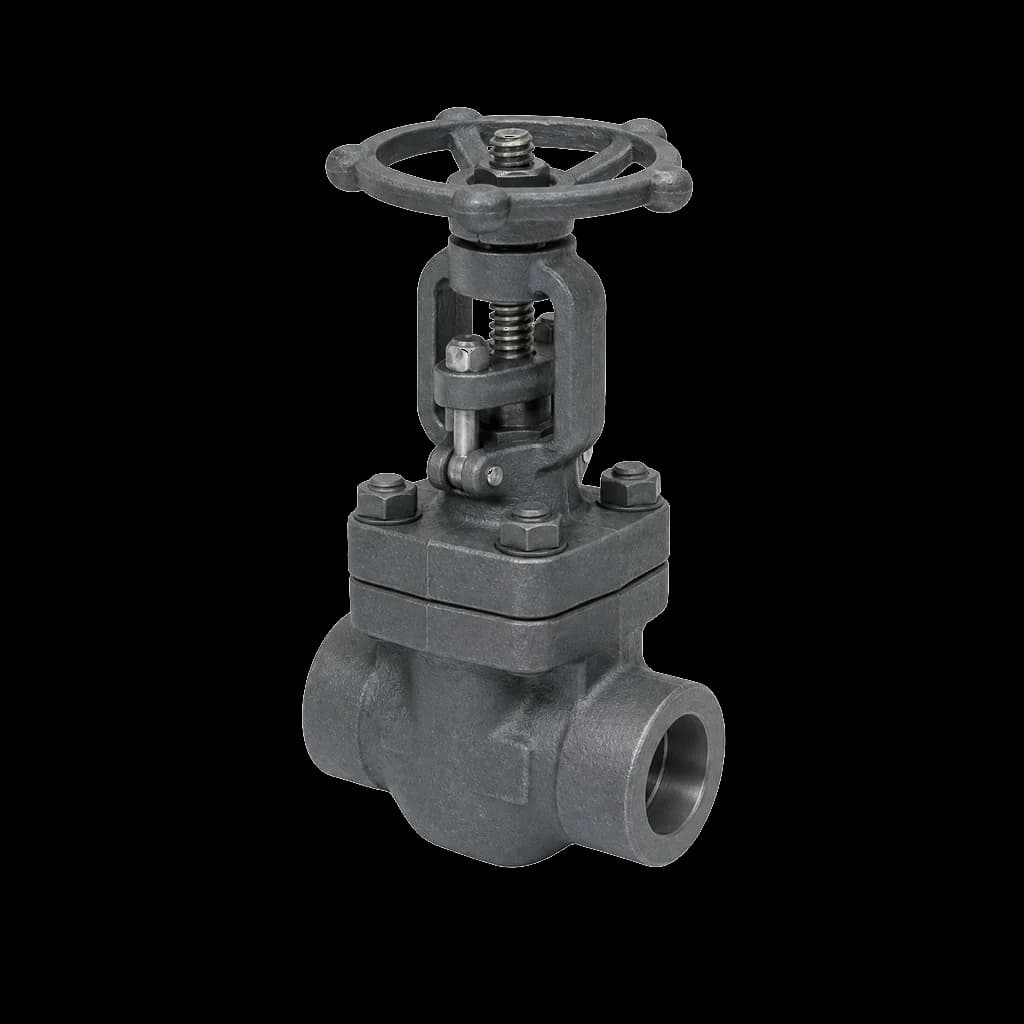
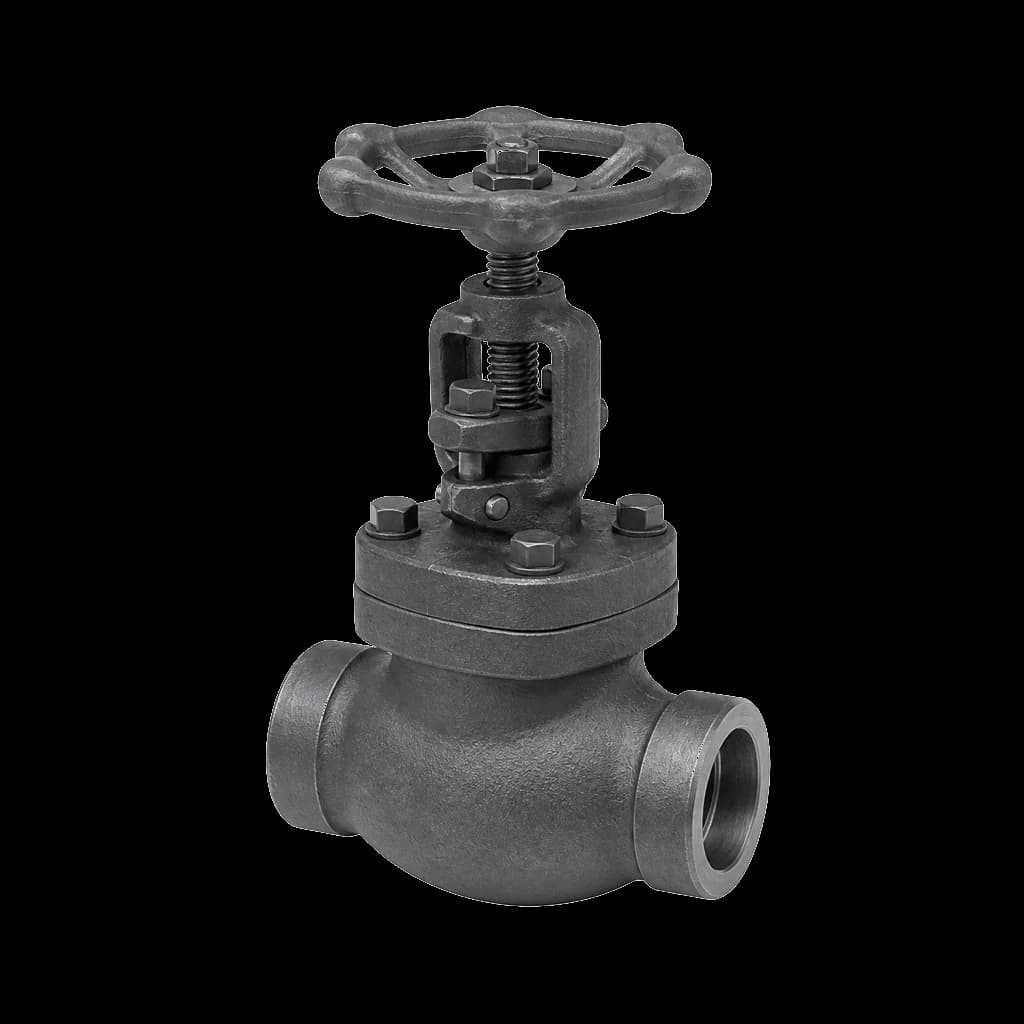
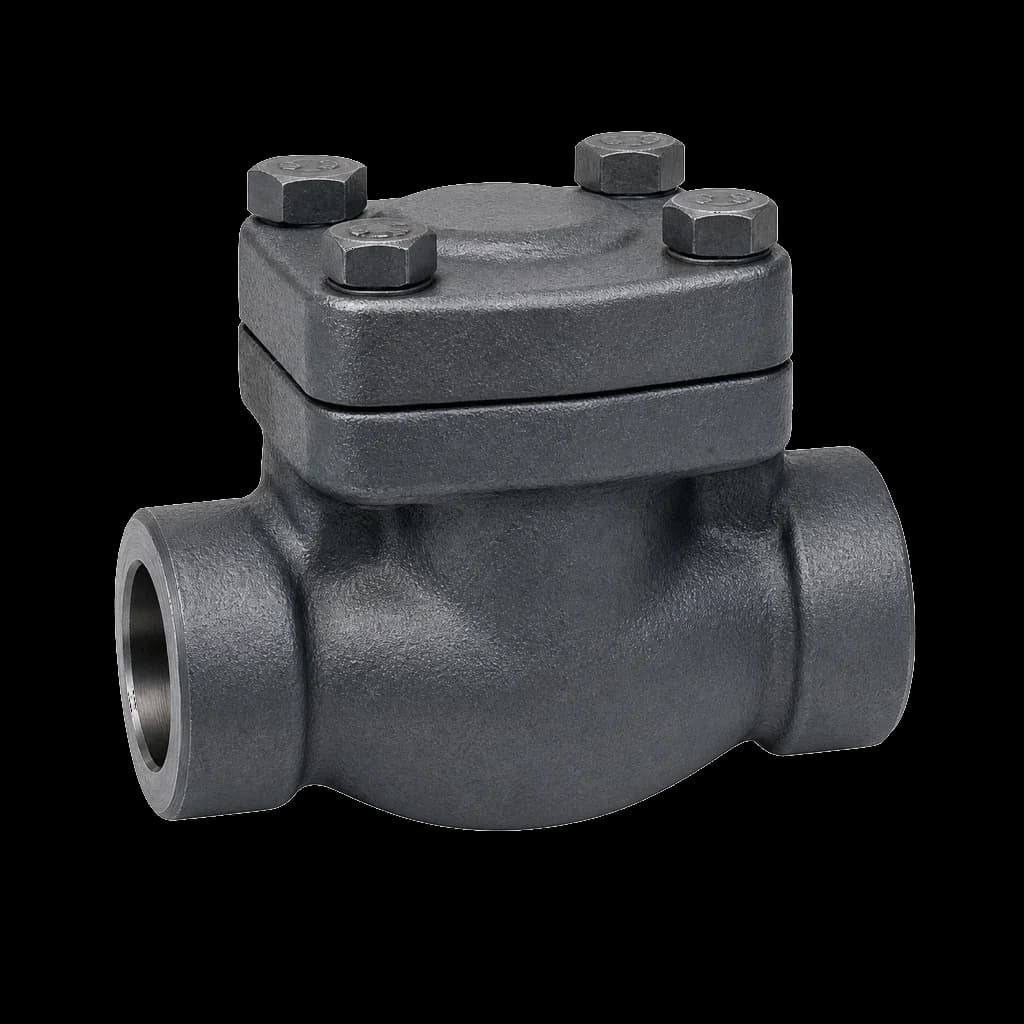
API 602 — *Gate, Globe, and Check Valves for Sizes NPS 4 and Smaller* — covers the forged small-bore workhorse. Bodies are machined from forged bar or die forgings (A105, A182 grades, A350 LF2), which is why the standard exists at all: forging small bodies is cheaper and metallurgically cleaner than casting them, with no porosity risk. Construction options include bolted, welded and pressure-seal bonnets; ends are socket-weld, threaded, flanged or butt-weld. The standard covers gate, globe and check patterns — the DL forged gate, globe and check valves in the VKS catalog are all API 602 designs.
API 602 is also the home of Class 800 — an intermediate rating that does not exist in ASME B16.34. Forged small-bore bodies dimensioned for socket-weld ends come out of the machine shop with wall thickness comfortably beyond Class 600 needs, so the industry standardized a class between 600 and 900 that prices attractively. Class 800 exists only in this forged, ≤4" world; there is no Class 800 flange, which is why Class 800 valves carry SW or threaded ends and step to Class 600 or 900 ratings when flanged.
The two standards side by side
| Aspect | API 600 | API 602 |
|---|---|---|
| Body form | Cast (WCB/WC6/WC9/CF8M…) | Forged (A105/A182/A350…) |
| Size range | Typically 2" and up, to 42"+ | NPS 4 and smaller (commonly ½"–2") |
| Classes | 150–2500 | 150–2500 incl. Class 800 |
| Ends | Flanged, butt-weld | SW, threaded, flanged, butt-weld |
| Bonnet | Bolted | Bolted, welded or pressure-seal |
| Wall philosophy | Heavier than B16.34 minimum | Compact, forged-bar economics |
| Typical duty | Headers, mainline isolation | Drains, vents, instruments, bypasses |
| Testing | API 598 | API 598 |
Where each belongs on a plant
- 2" and below: forged API 602 wins on cost, weight and weld-in convenience. A cast 1" flanged gate valve is rarely the rational buy.
- 2"–4" overlap zone: both standards can apply. Piping class usually decides — SW/threaded classes stay forged; flanged classes often step to cast.
- Above 4": API 600 territory outright.
- Severe cyclic or high-integrity small bore: API 602 welded-bonnet variants eliminate the bonnet joint as a leak path.
- Corrosion-allowance-driven specs (refinery piping classes): the API 600 heavy wall is frequently mandatory language in EPC specifications for refinery service.
Specifying without ambiguity
A clean line item names the design standard, size, class, body material, trim, ends and test standard together: *"Gate valve, API 602, ¾", Class 800, A105 body, Trim 8, SW ends to B16.11, tested per API 598, with EN 10204 3.1 MTC."* Writing "API 600" against a ¾" valve — a common copy-paste error — forces the vendor to either quote a nonstandard heavy casting or silently requote to 602; both cost time. The reverse error, "API 602" on a 12" valve, is simply unbuildable. Match the standard to the size population and the rest of the datasheet falls into place.