Nearly every industrial valve purchase order in India carries the line "testing as per API 598." Few buyers could say what that commits the manufacturer to. API 598 — *Valve Inspection and Testing* — is the default test standard referenced by API 600, API 602, BS 1873, BS 1868 and most commercial valve specifications. It defines which tests a valve must pass before dispatch, at what pressures, for how long, and with how much leakage allowed. Knowing those numbers turns a test certificate from paperwork into evidence.
What API 598 covers — and what it doesn't
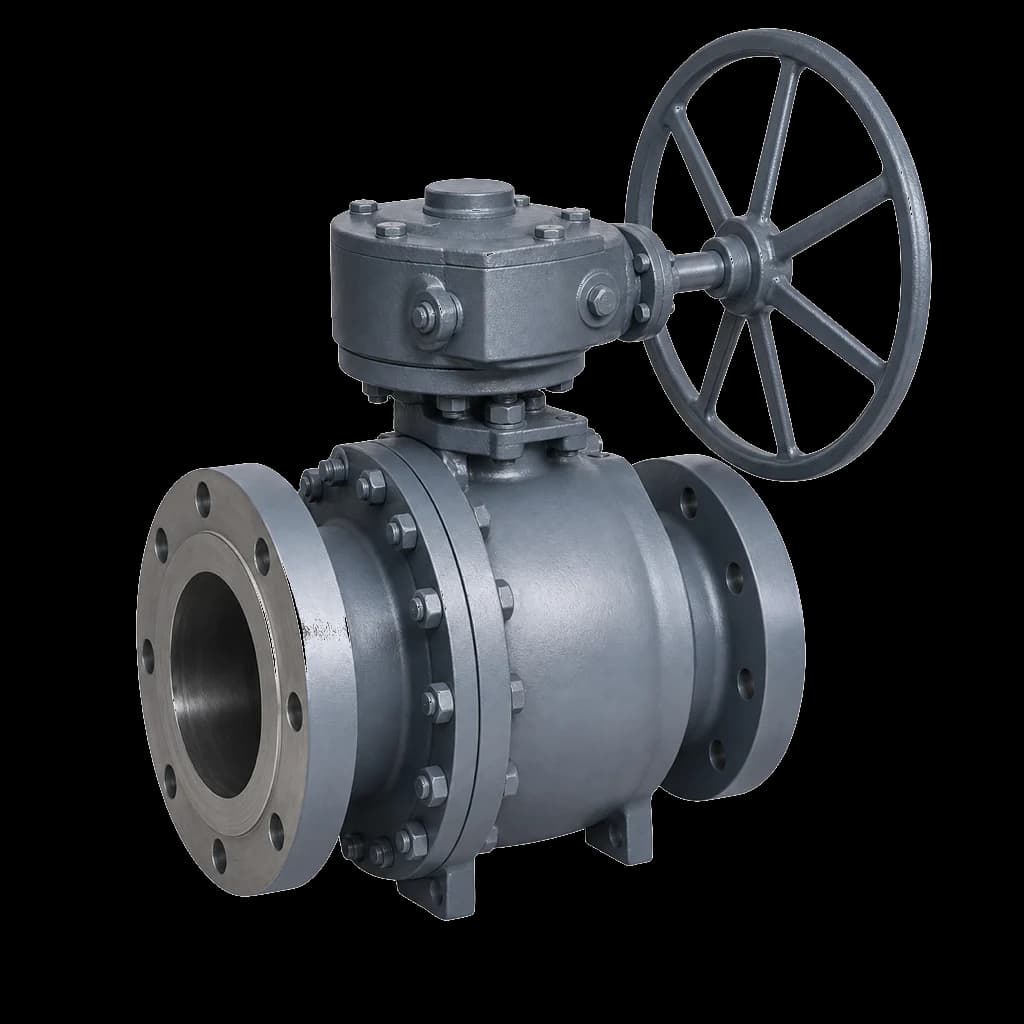
API 598 applies to gate, globe, check, ball, plug and butterfly valves supplied to the common API and ASME design standards. It governs production testing — the tests every single valve receives at the works. It is not a type-test or qualification standard: fire testing (API 607/6FA), fugitive-emission testing and design validation live elsewhere. Pipeline valves bought to API 6D follow API 6D's own testing annex, which is stricter on durations — a distinction worth checking when a CGD or pipeline PO loosely references 598.
The shell test: proving the pressure boundary
The shell test pressurizes the whole valve body–bonnet assembly, with the valve partially open, to 1.5 times the 38 °C rating of the valve class. A Class 300 WCB valve (51.1 bar cold rating) is therefore shell-tested at roughly 77 bar. Acceptance is simple: no visible leakage through the pressure boundary — body walls, bonnet joint, stem packing may be adjusted but not leak. The test proves casting or forging soundness and joint integrity, which is why heat-number traceability between the tested body and its MTC matters.
Seat tests: high-pressure closure and low-pressure air
The high-pressure closure test holds line pressure against the closed seat at 1.1 times the 38 °C rating, applied in each sealing direction the valve claims. The low-pressure closure test applies air or inert gas at 4–7 bar — deliberately gentle, because a marginal seat that seals under high pressure (which forces the disc into the seat) can leak at low pressure. For soft-seated valves one of the two closure tests may be conducted; metal-seated valves are commonly high-pressure tested, with the low-pressure air test specified by agreement. Prudent buyers specify both for critical isolation duty.
| Test | Pressure | Acceptance |
|---|---|---|
| Shell | 1.5 × 38 °C rating | No visible leakage |
| High-pressure closure | 1.1 × 38 °C rating | Per leakage table (below) |
| Low-pressure closure | 4–7 bar air/gas | Per leakage table (below) |
| Backseat (gate/globe) | 1.1 × rating, packing loosened | No visible leakage |
Test durations scale with size
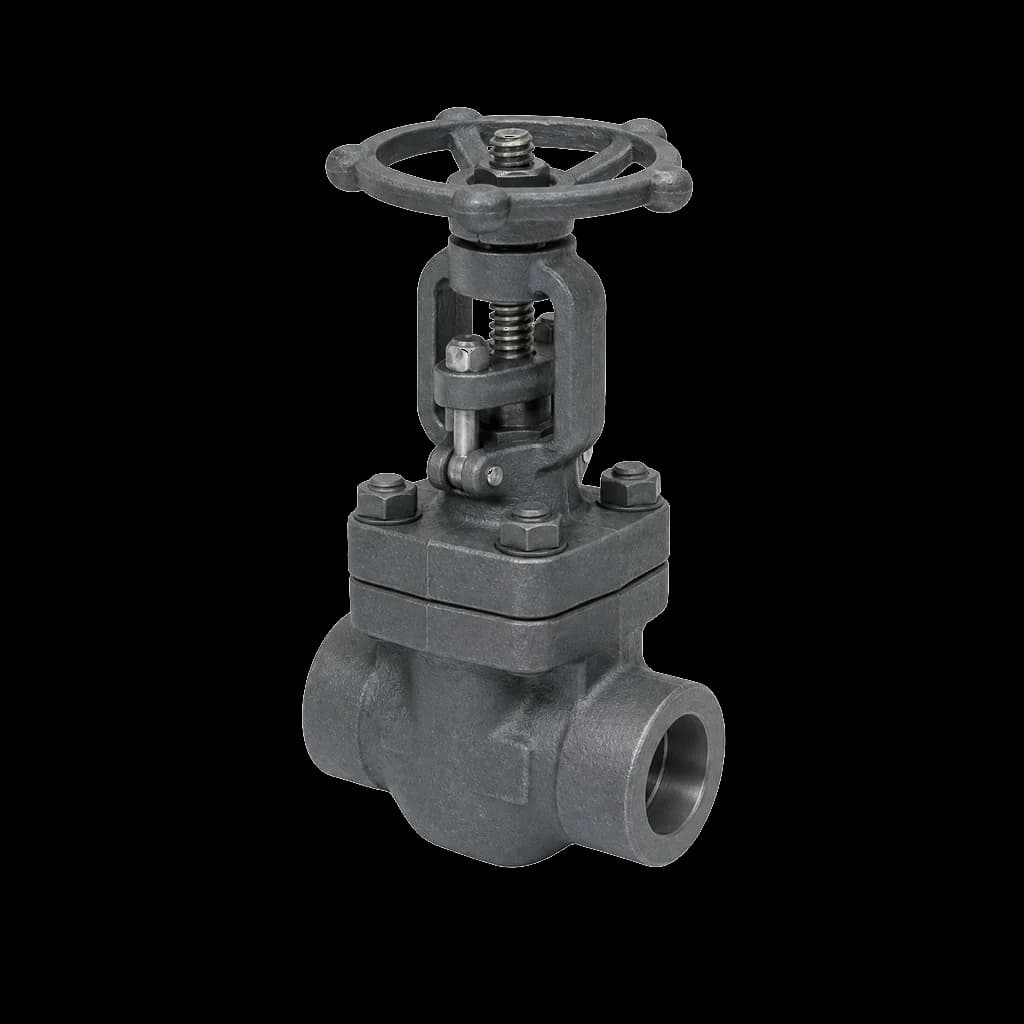
Durations are tabulated by NPS and test type. Representative minimums: valves ≤ 2" hold shell test for 15 seconds and closure tests for 15 seconds; 2½"–6" for 60 seconds; 8"–12" for 120 seconds; larger valves longer still. These are minimums — a 15-second hold on a ½" forged gate valve is legitimate, and a test bench video showing exactly that is not corner-cutting. What matters is the pressure actually reached and the leakage actually observed during the hold.
How much seat leakage is allowed
This is the number most buyers get wrong. API 598 allows zero leakage for resilient-seated (soft-seated) valves — no visible drops, no bubbles for the duration of the test. Metal-seated valves have a size-scaled allowance: as a representative guide, liquid-test leakage up to 0.18 cm³ per minute per inch of NPS, and gas-test leakage up to 1.5 bubbles per minute per inch of NPS, with values tabulated in the standard by size band. Check valves carry a larger allowance still. A 24" metal-seated gate valve showing a slow drip on test is, per the standard, compliant — a fact to internalize before rejecting material at FAT, and a reason to specify soft seats or tighter classes (ISO 5208 rates) where absolute tightness matters.
The backseat test
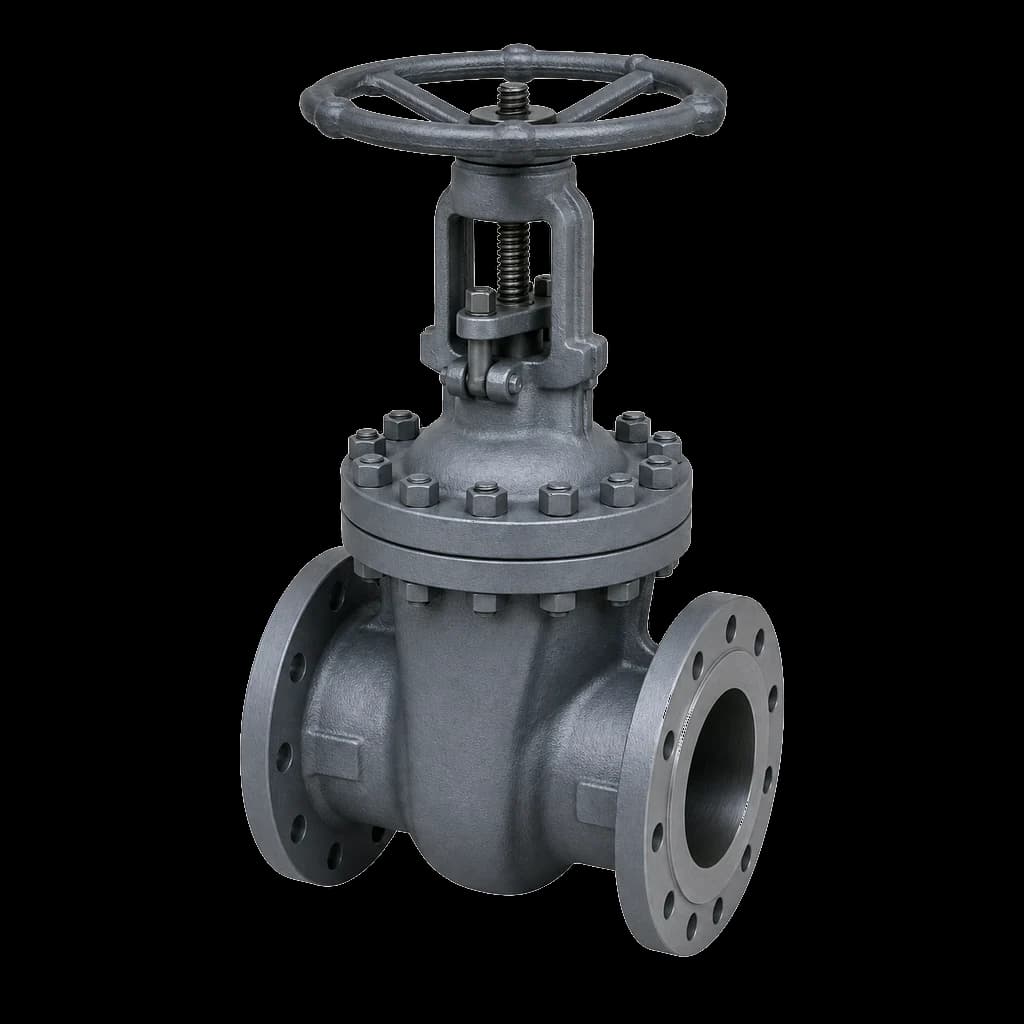
Gate and globe valves with a backseat — the shoulder that seals the stem-to-bonnet path when the valve is fully open — are tested at 1.1 × rating with the packing gland loosened. It verifies the feature that, in principle, allows packing replacement with the line pressurized. (Operationally, doing that on live hydrocarbon or steam service remains a permit-controlled last resort.) The test is required unless the purchaser waives it; DL forged gate valves and ZED cast gate valves are both OS&Y backseat designs to which it applies.
Reading the test report
- Identification: valve tag/serial, size, class, figure number — matching the body marking and the PO line item.
- Test medium and pressures: actual gauge values, not just "as per API 598" — the 1.5× and 1.1× arithmetic should be checkable against the class rating.
- Durations: stated per test, meeting the size-band minimum.
- Leakage observed: "nil" for shell and soft seats; within tabulated allowance for metal seats.
- Date, test bench identity and inspector's signature — countersigned by the third party where the PO called witness testing.