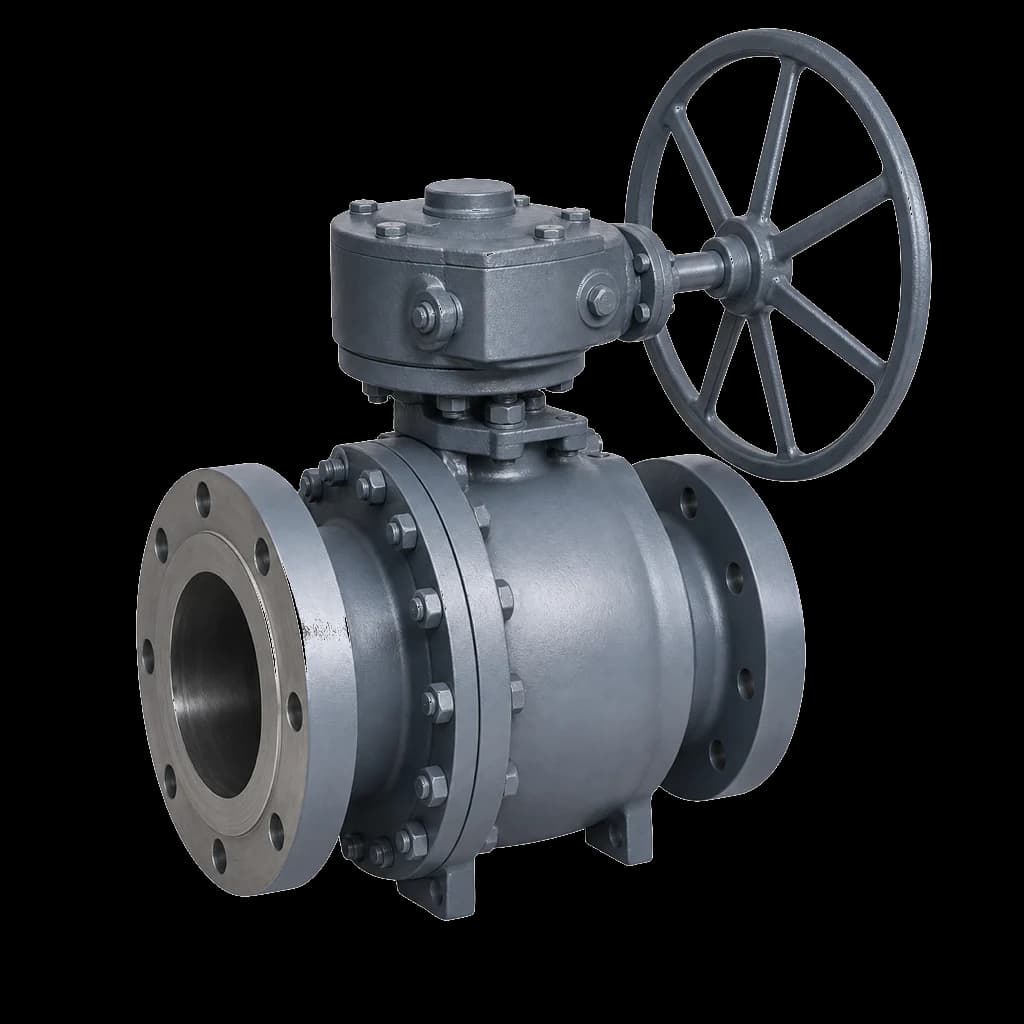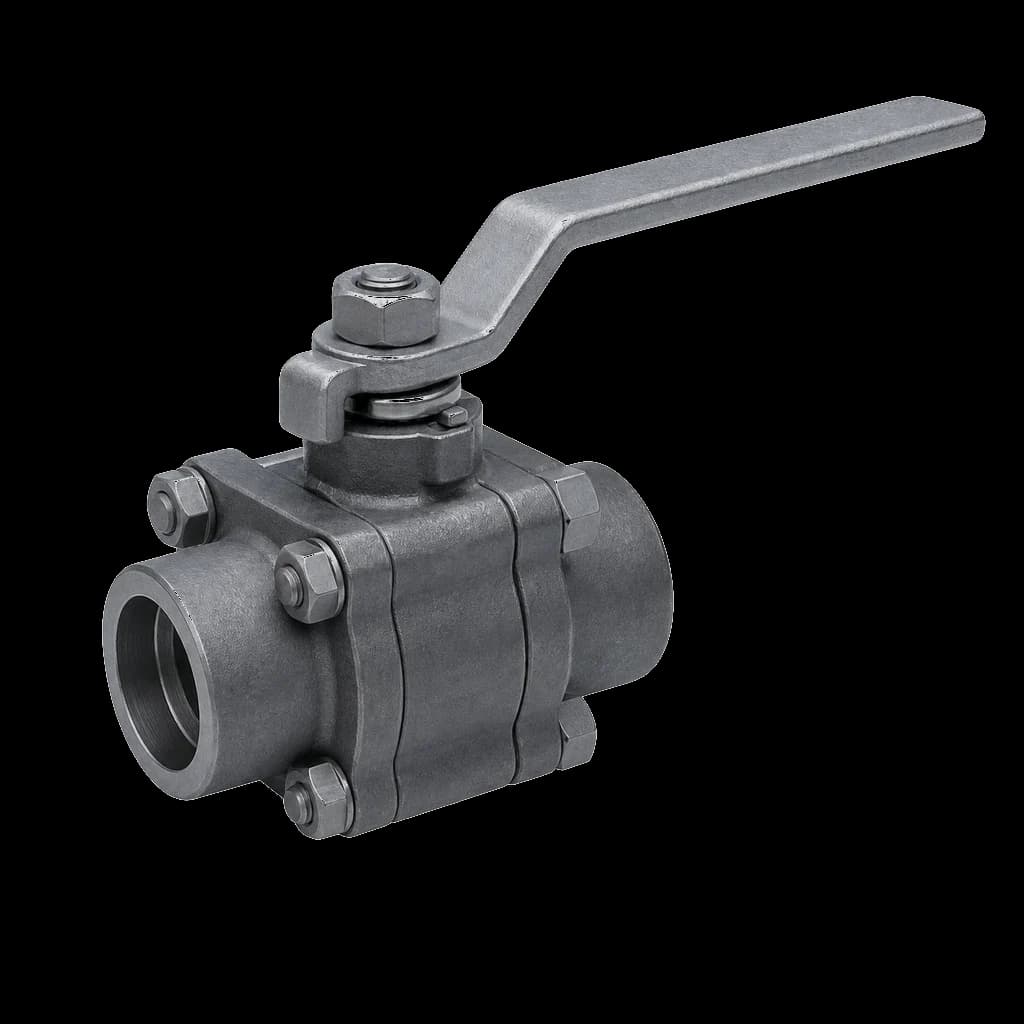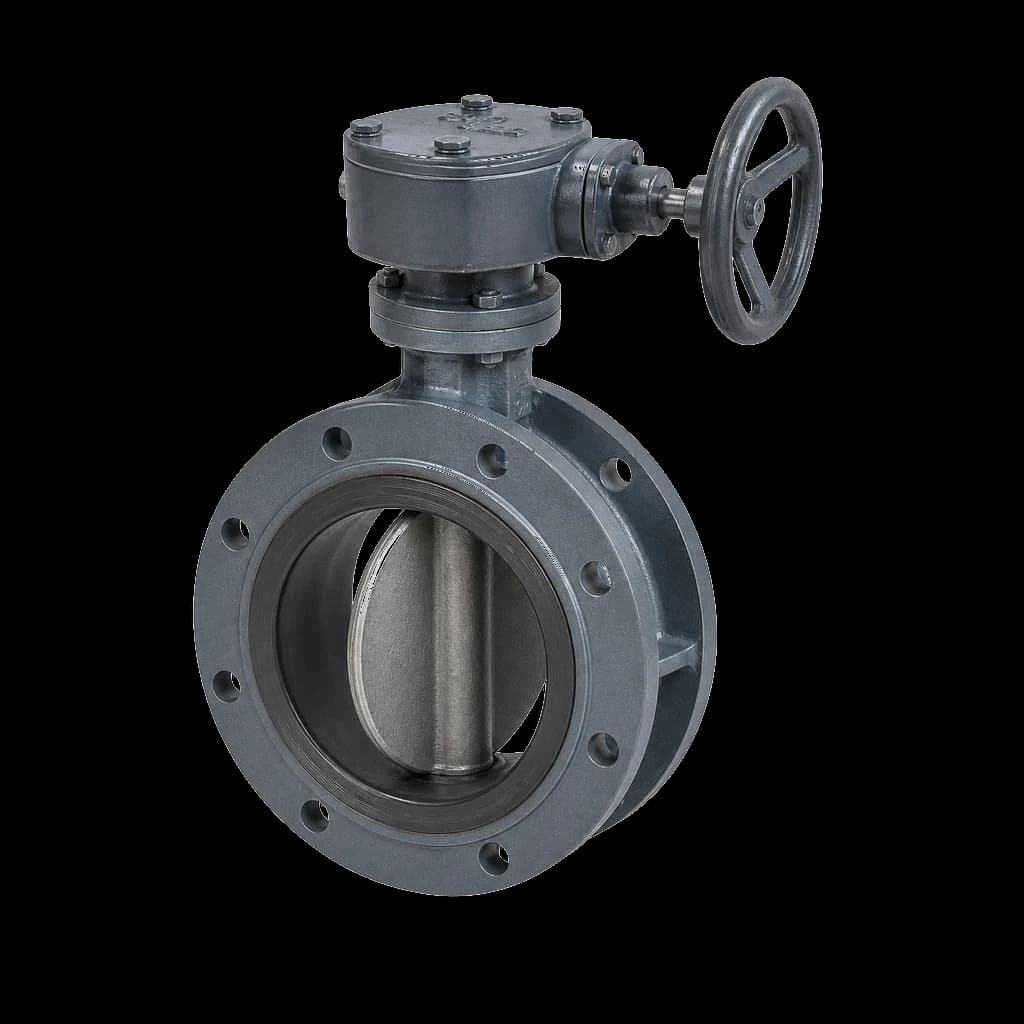
A soft-seated ball valve owes its bubble-tight shutoff to a polymer — usually PTFE or a filled PTFE grade. In a hydrocarbon fire, that polymer is destroyed within minutes, and a valve that was the isolation point for a burning inventory becomes an open path feeding it. Fire testing exists to answer one question: when the soft parts are gone, how much does the valve leak — through the bore and to atmosphere — and can it still be operated to shut the line? Two API standards dominate the certificates you will see on Indian tenders: API 607 and API 6FA. They are not interchangeable, and quoting the wrong one is a real review comment on real projects.
Why soft-seated valves need fire testing
Metal-seated valves degrade gracefully in fire; soft-seated quarter-turn valves do not. PTFE loses its sealing capability far below flame temperature, so the primary seal simply ceases to exist. What matters then is the valve's secondary architecture: whether a metal-to-metal contact takes over at the seat, whether the stem and body joints still hold against atmospheric leakage, and whether the valve can be cycled closed by an operator or actuator after the event. None of this can be verified by inspection or calculation alone — which is why fire qualification is a type test: a representative valve is burned, measured and operated under controlled conditions, and the result qualifies a defined family of similar valves. For background on why the seat insert is the vulnerable element, see the valve seat materials guide.
What happens in the fire test
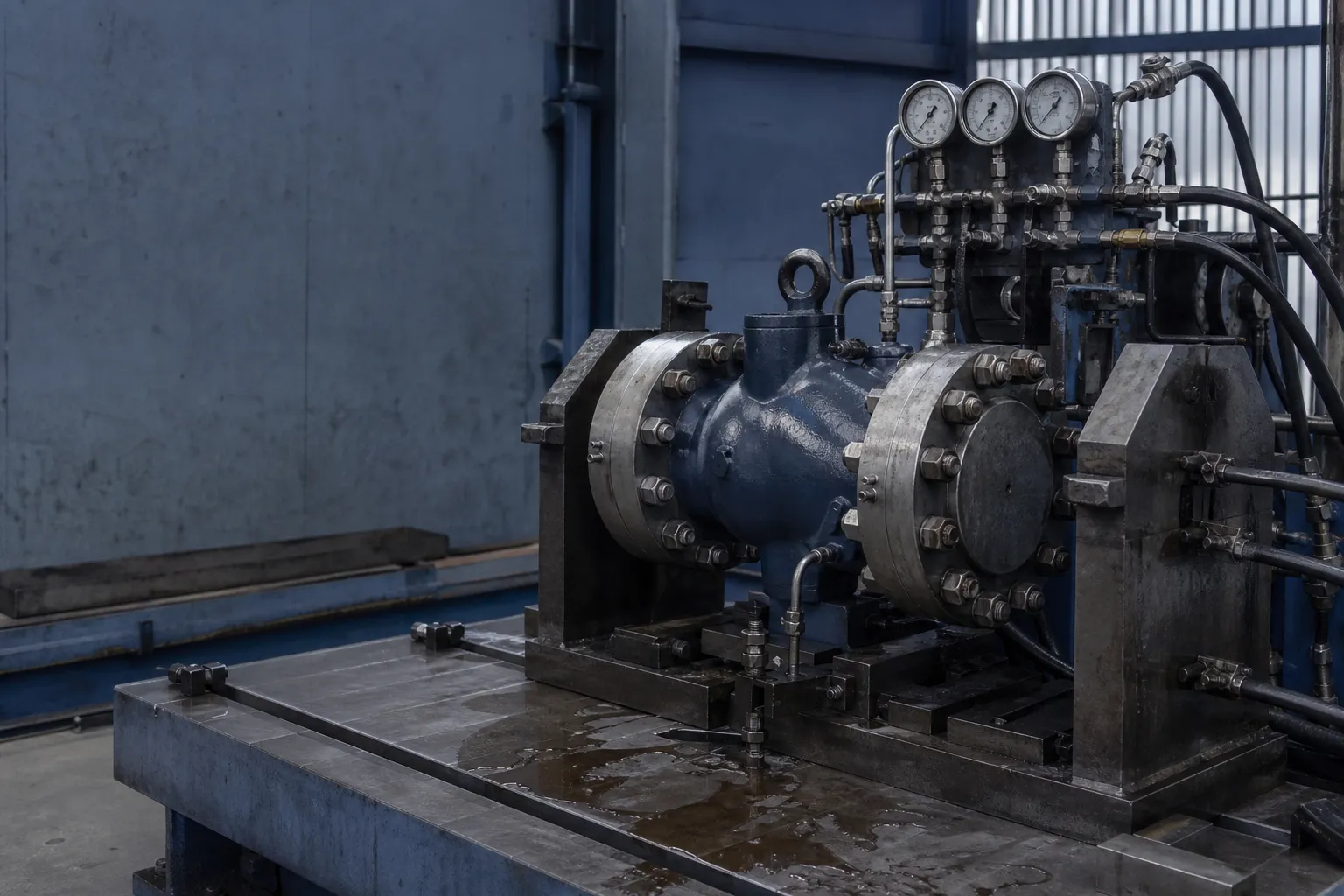
The mechanics of the burn are similar across both standards. The test valve, half-open loops aside, is installed closed and pressurised with water, then enveloped in flame for a 30-minute burn period, with the fire controlled to a flame environment in the region of 750–1000 °C, verified by thermocouples and calorimeter blocks around the valve. Pressure is maintained on the upstream side throughout the burn while through-seat leakage is collected and measured downstream, and external leakage — stem packing, body joints — is monitored separately. Both are subject to maximum rates tabulated in the standard, scaled to valve size. After the burn, the valve is cooled, then operated: it must open (and close) so that a fire-damaged valve does not lock the line, and it must then pass a post-test seat and external leakage check against the standard's limits. A valve can therefore fail three ways: leaking too much during the fire, leaking too much after it, or refusing to operate.
API 607 vs API 6FA: the scope difference
The two standards divide by valve population, not by test severity. API 607 covers quarter-turn valves and valves with nonmetallic seating — the soft-seated ball, butterfly and plug valves of general refinery and process service — and its current editions are technically aligned with ISO 10497, so certificates citing either are describing the same test regime. API 6FA is the fire test for valves built to API 6A (wellhead) and API 6D (pipeline) specifications — the trunnion ball, through-conduit gate and plug valves of upstream and transmission service. A related document, API 6FD, covers check valves. On a pipeline project the datasheet for an API 6D trunnion ball valve should reference API 6FA; on a process unit's soft-seated isolation valves, API 607/ISO 10497 is the correct citation.
| API 607 | API 6FA | |
|---|---|---|
| Valve scope | Quarter-turn and nonmetallic-seated valves | Valves to API 6A and API 6D |
| Typical valves | Soft-seated ball, butterfly, plug | Trunnion ball, through-conduit gate, plug |
| Aligned standard | ISO 10497 | API 6A/6D family (API 6FD for check valves) |
| Burn period | 30 minutes, 750–1000 °C flame envelope | 30 minutes, 750–1000 °C flame envelope |
| Typical projects | Refinery/petrochemical process units, CGD stations | Pipelines, wellheads, gas processing |
“Fire-safe design” vs “fire-tested”
This distinction decides claims disputes, so read supplier wording carefully. “Fire-safe design” (or “fire-safe construction”) means the valve incorporates the design features intended to survive a fire — but no representative valve of that design has necessarily been burned. “Fire-tested” or “type-tested” means a qualification test was actually performed and a certificate exists. Because fire qualification is a type test, one burn qualifies a defined range of sizes and pressure classes of the same basic design; the certificate states that range. When reviewing a certificate, check four things: the standard and edition cited, the size/class range covered against your line items, the seat and seal materials tested versus offered, and whether the test was witnessed by an independent agency or laboratory.
What a fire-safe valve has inside
- Secondary metal seating: a machined metal lip behind the soft insert. When the insert burns away, line pressure pushes the ball (or disc) against this metal seat, limiting through-leakage. In trunnion-mounted designs the spring-loaded seat rings drive the same contact.
- Graphite stem packing: PTFE packing is an external leak path in fire; flexible graphite survives it. Graphite or spiral-wound body-joint gaskets do the same job at the body/closure flange.
- Anti-blowout stem: internally retained so the stem cannot eject when packing softens under pressure.
- Anti-static device: maintains electrical continuity ball–stem–body so the dry, post-fire valve cannot spark against a flammable atmosphere.
When Indian buyers should demand certificates
Demand fire-test certification wherever a soft-seated valve isolates flammable inventory: refinery and petrochemical units, city gas distribution stations and skids, cross-country pipeline valve stations, tank farm and loading-gantry isolation, and fuel-gas systems in power and process plants. Most PSU and EPC tenders in these sectors call for fire-safe certification explicitly; where a tender is silent but the service is flammable, raising it costs one RFQ line. Ask for the type-test certificate itself — standard, edition, tested size/class range, seat material, witnessing agency — at bid stage, not after dispatch. A brochure logo is not a certificate, and a certificate for a 2" Class 300 valve with different seat inserts does not automatically cover your 8" Class 600 order unless the stated qualification range says so.