Every ball valve seals by pressing a ball against a seat. What separates a floating ball valve from a trunnion-mounted one is which component moves to make that contact — and that single design decision drives operating torque, practical size limits, double block & bleed capability and price. Both designs are legitimate. The mistake is buying a trunnion where a floating valve would do, or forcing a floating valve past the point where its own physics turns against it.
How each design seals
Floating ball: line pressure does the work
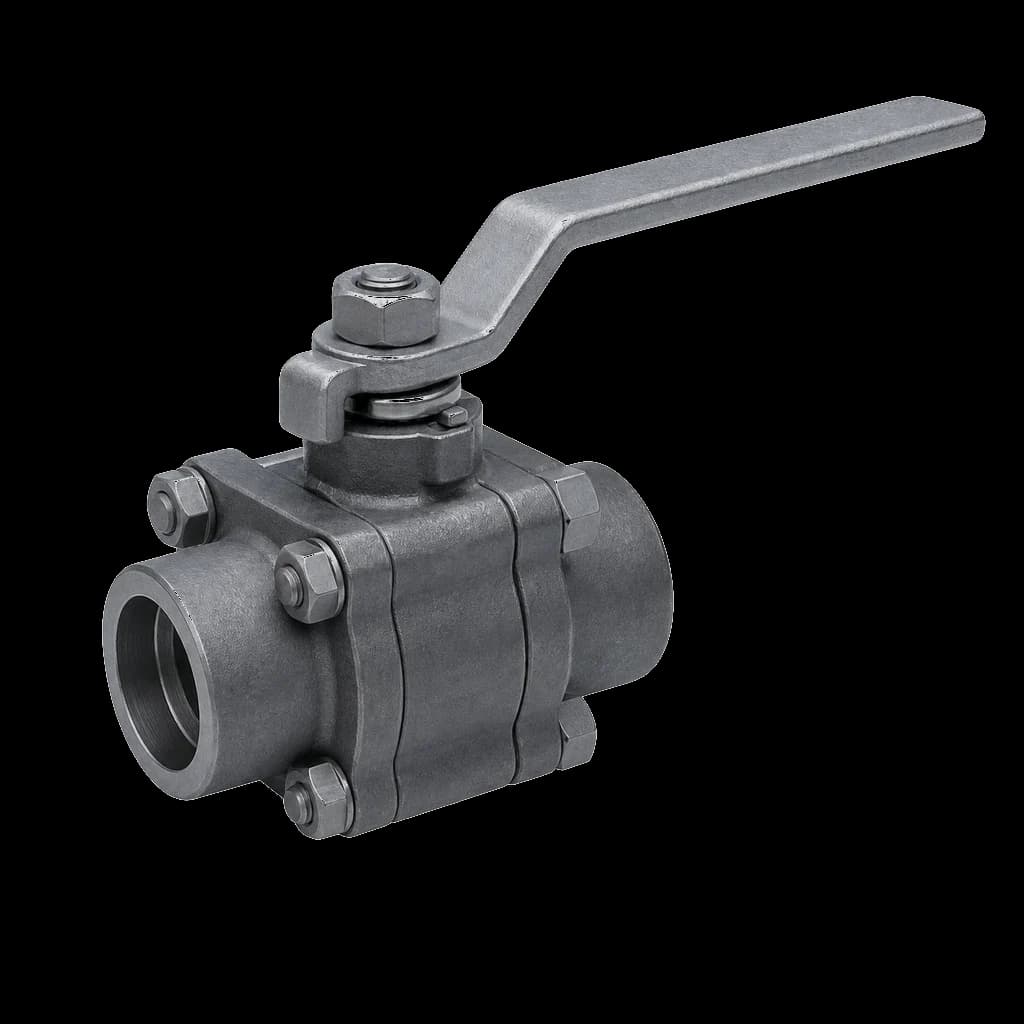
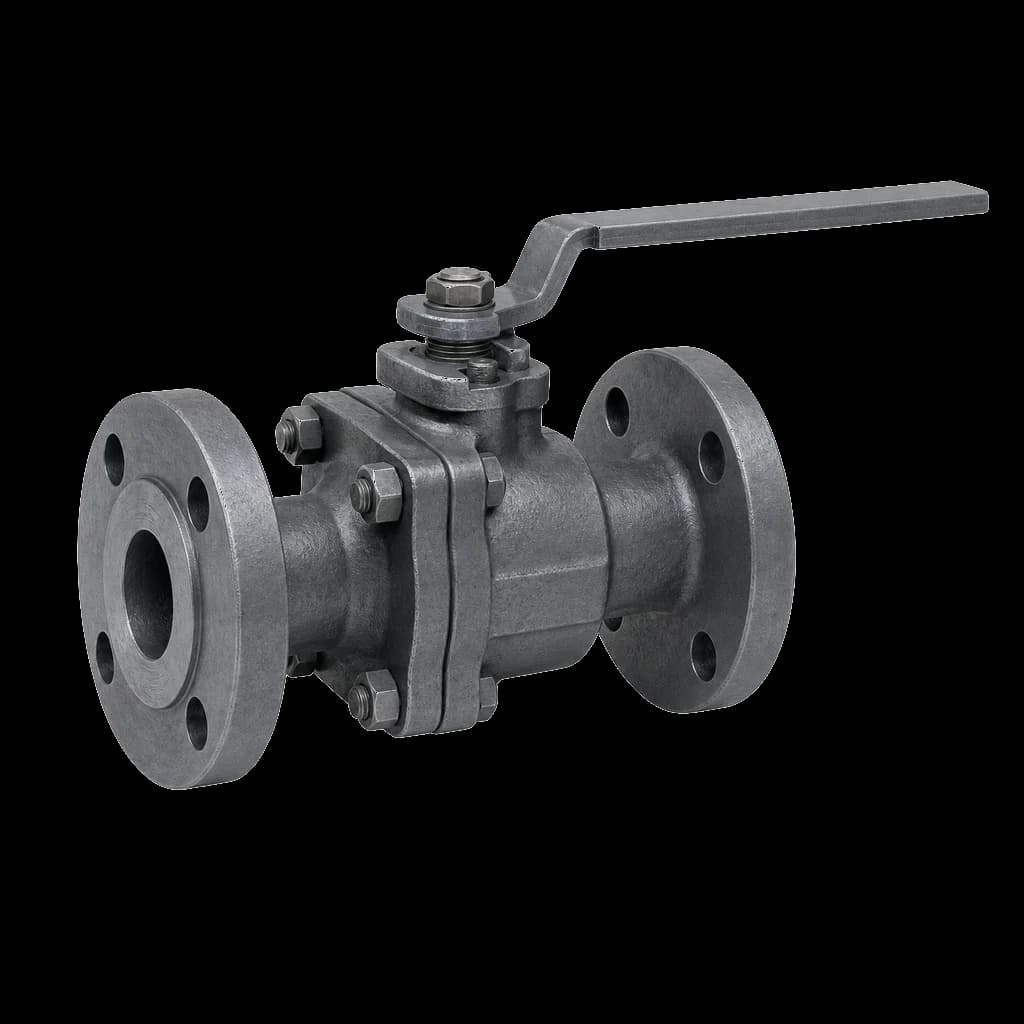
In a floating design the ball is supported only by its two seat rings — there is no shaft below it. Under differential pressure the ball shifts slightly downstream and line pressure presses it into the downstream seat. The seal is pressure-energized: the higher the differential, the harder the ball loads the seat. That is elegant and cheap — no trunnions, no bearings, fewer machined parts — but it means the entire pressure force acting on the ball's cross-sectional area is transferred into one polymer seat ring.
Trunnion-mounted: springs do the work
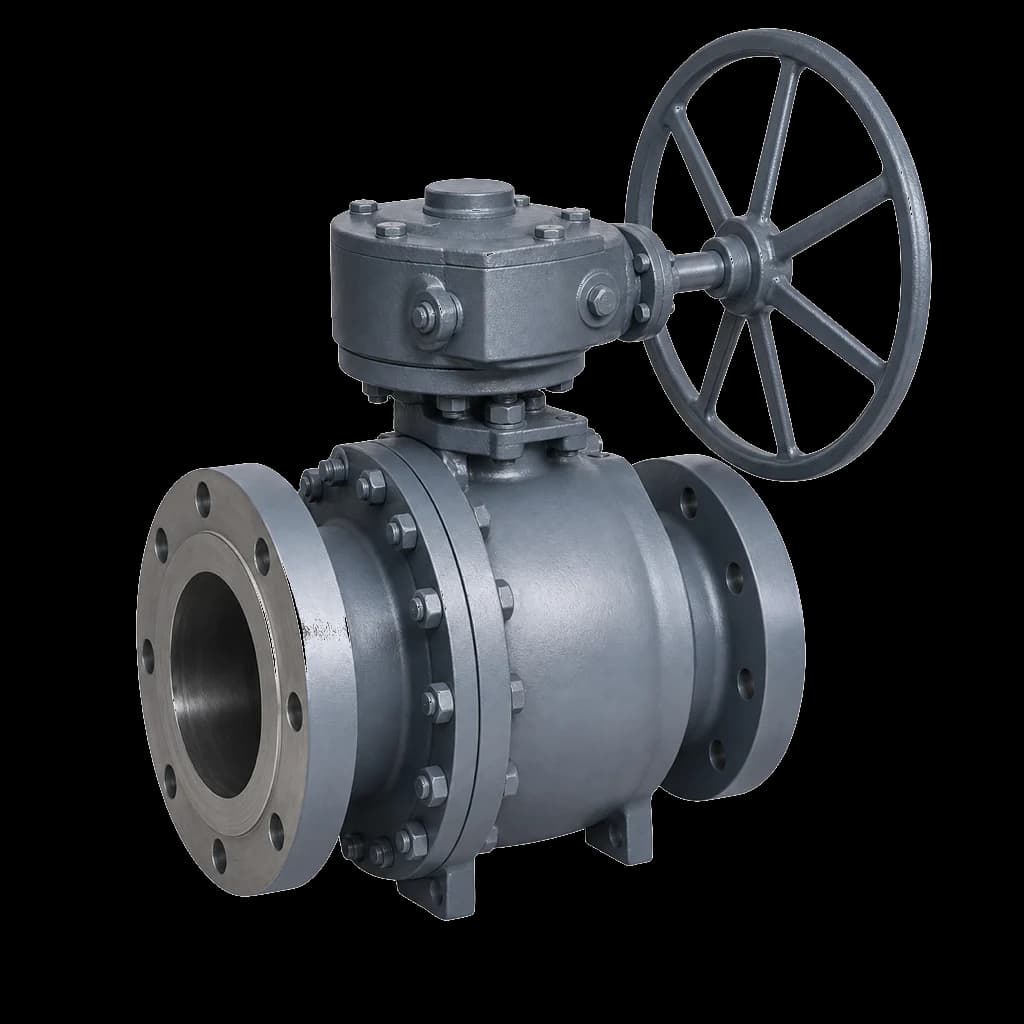
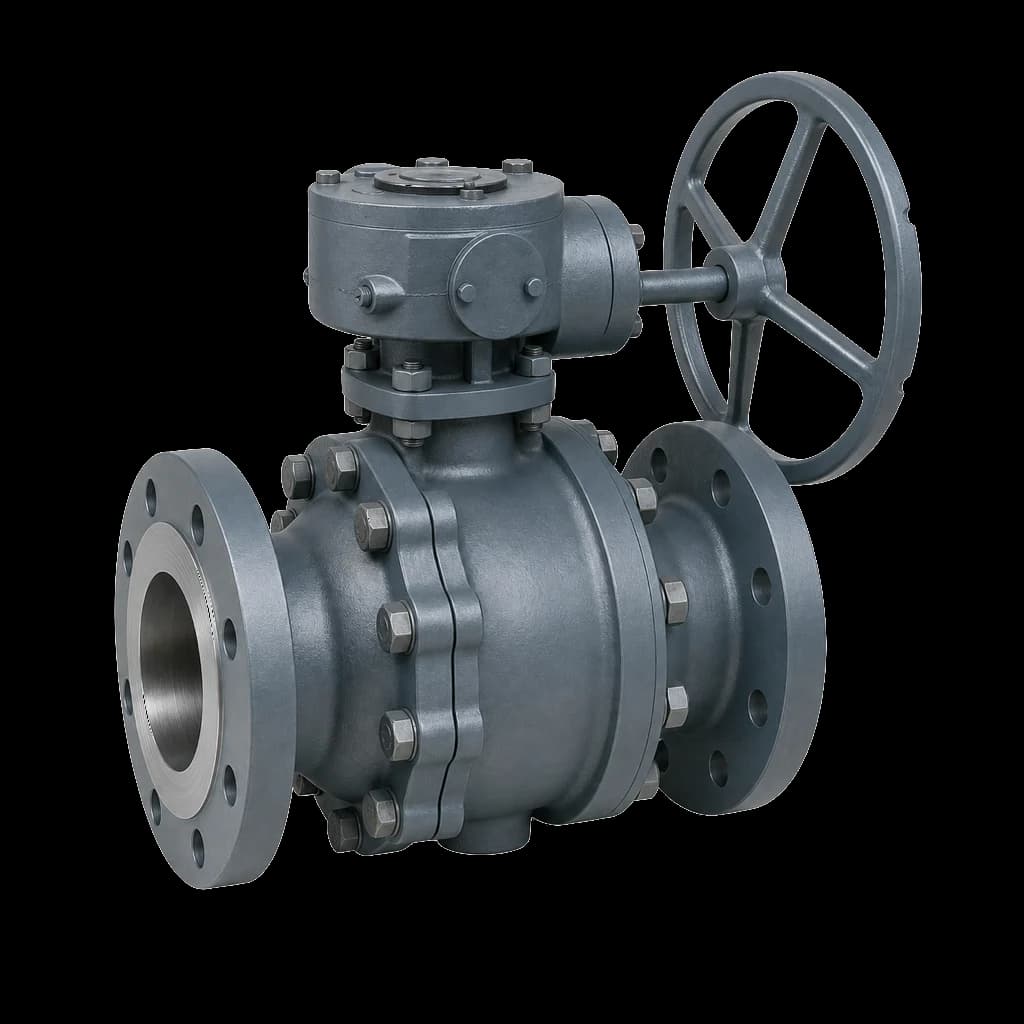
In a trunnion valve the ball is fixed on stub shafts (trunnions) running in bearings, so it cannot shift downstream. Instead, spring-energized floating seat rings are pushed against the stationary ball. At low pressure the springs alone provide seating load; as line pressure rises, it acts on the piston area of the seat ring and adds sealing force. Primary sealing is at the upstream seat, and the pressure load on the ball is carried by the trunnion bearings — not by a seat.
Why torque diverges with size and pressure
Breakaway torque in a floating valve is dominated by friction between the ball and the downstream seat, and that friction is proportional to the pressure end-load on the ball. The load grows with the square of bore diameter and linearly with differential pressure — so a floating design that operates comfortably at 2" Class 600 becomes hard to turn at 6" and impractical at 10". The trunnion design breaks this link: bearings carry the pressure load at a small radius with low friction, so torque grows far more slowly with size and class. This is also why trunnion valves take smaller, cheaper actuators — on automated packages the actuator saving often pays for much of the trunnion premium.
Where the crossover sits
There is no fixed boundary — manufacturers publish different ranges — but industry practice clusters into recognizable zones. Treat the table below as representative, and always confirm seat rating and torque at your actual differential pressure before finalizing.
| Pressure class | Floating ball — typical range | Trunnion — typical range |
|---|---|---|
| Class 150 | Up to ~8" | 6" and above |
| Class 300 | Up to ~6" | 4"–6" and above |
| Class 600 | Up to ~4" | 3"–4" and above |
| Class 900 / 1500 | Up to ~2" | 2" and above |
| Class 2500 | Small forged sizes only | Effectively all sizes |
Inside the overlap zone the decision is driven by duty: manual operation and clean service favour the cheaper floating valve; actuation, high cycle counts, pigging or DBB requirements push you to trunnion. Our API 6D ball valve selection guide walks through that specification in detail.
Double block & bleed and seat injection
A trunnion valve with two independent spring-energized seats and a body cavity vent gives genuine double block & bleed: close the valve, bleed the cavity, and verify both seats are holding before breaking containment downstream — the standard isolation philosophy on pipeline and API 6D applications. A floating valve cannot honestly offer this; it has one working seal at a time, on the downstream side.
Larger and higher-class trunnion valves also carry sealant injection fittings at the seats and stem. If a seat is damaged in service — weld slag, sand, a scored ball — injecting a viscous sealant can restore temporary tightness long enough to reach a planned shutdown. Floating valves have no equivalent; a damaged seat means the valve leaks until it is replaced.
Cavity relief: the detail that gets missed
A closed ball traps fluid in the body cavity between the seats. If that trapped liquid heats up, it expands and can over-pressurize the body. A floating ball handles this inherently — the ball can move and its resilient seats deflect, so excess cavity pressure relieves itself past a seat. In a trunnion valve, relief depends entirely on seat configuration: self-relieving (single piston effect) seats vent cavity overpressure back to the line automatically, while double piston effect (DPE) seats seal in both directions and trap it, requiring an external body relief valve. Specify which you want — DBB versus DIB in API 6D language — because the wrong combination on liquid service is a genuine overpressure hazard, not a paperwork issue.
The cost logic
- Small bore, low class: the floating valve wins outright. The trunnion's bearings, springs and extra machining buy you nothing at 1" Class 300.
- Large bore or high class: the floating valve's seat loads demand heavier seats and huge operators; the trunnion becomes cheaper in total, and above the crossover zone it is often the only design offered.
- Actuated packages: compare valve-plus-actuator price, not valve price. Lower trunnion torque shrinks the actuator, sometimes by a full frame size.
- Lifecycle: trunnion seats see spring load rather than full pressure end-load, so seat life and cycle counts are typically better in severe or frequent-cycling duty.
Class selection and body material then follow the service conditions in the normal way — see our class ratings guide — and hydrocarbon duties usually add fire-safe certification per API 607 or API 6FA on top.