API 6D — *Specification for Pipeline and Piping Valves* — is the standard that turns a ball valve into a pipeline valve. It governs design, manufacture, testing and documentation for valves in petroleum and natural gas pipeline service, and it is the specification CGD networks, cross-country pipelines and terminals in India call for. Selecting one correctly means answering six questions in order.
1. Trunnion-mounted or floating ball?
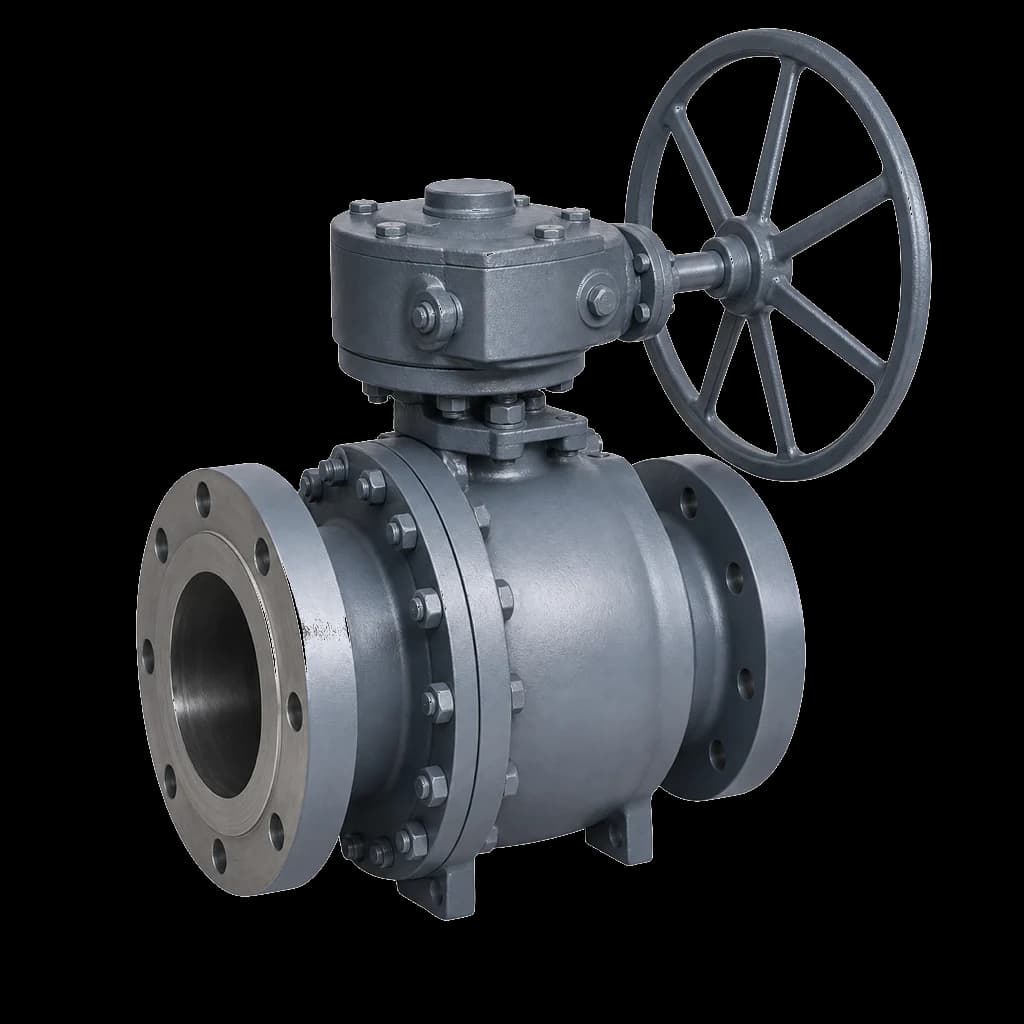
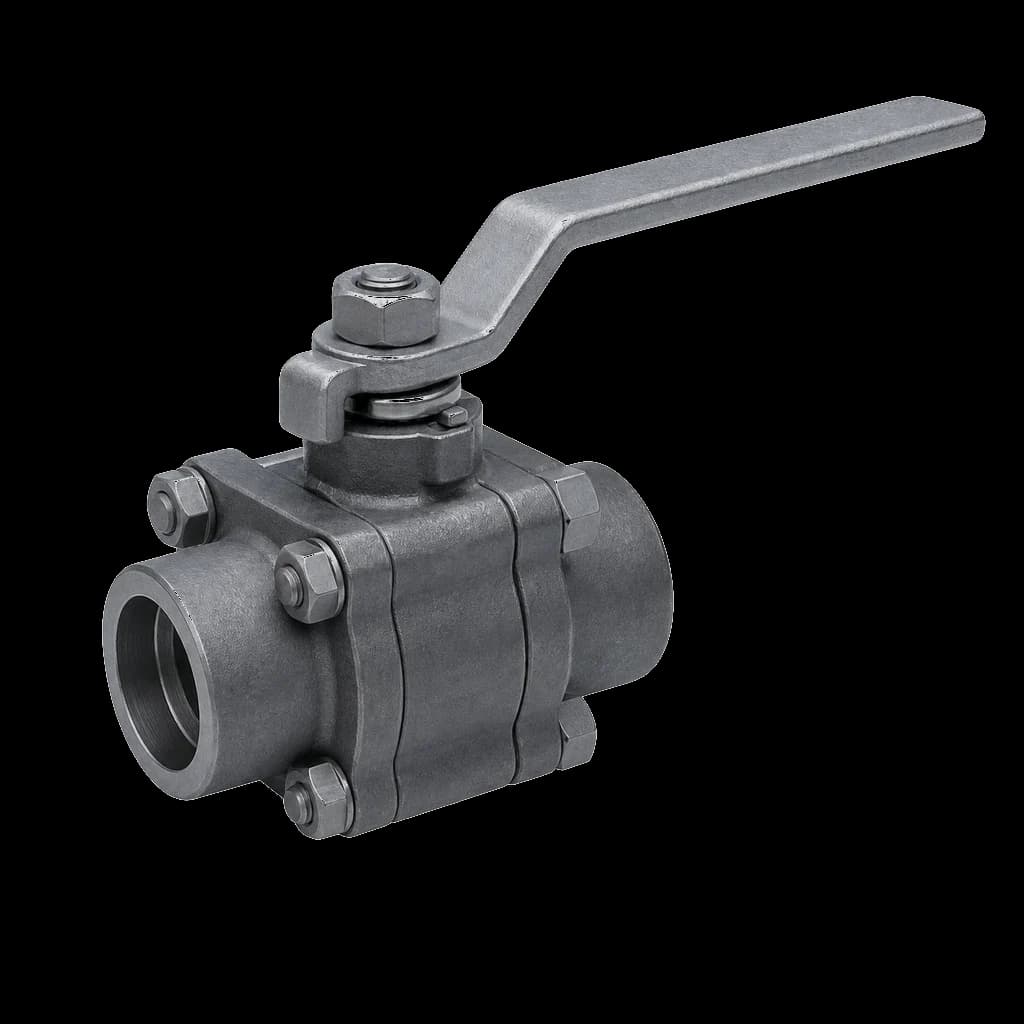
In a floating design the ball is held only by the seats; line pressure pushes it into the downstream seat to seal. Simple and economical, but seat load grows with pressure and size — beyond roughly 6" in Class 150 or 2" in Class 600, operating torque and seat stress become impractical. A trunnion-mounted ball is fixed on bearings; spring-energized seats push against the ball, so sealing force is independent of size. Pipeline practice: floating for small bore and lower class, trunnion for everything else.
| Size / class zone | Construction | Why |
|---|---|---|
| ≤ 2" — Class 150–600 | Floating | Economical, torque manageable |
| 2"–6" — Class 150–300 | Floating or trunnion | Torque/cycling decides |
| > 6" or ≥ Class 600 | Trunnion | Seat load & torque control |
| Sectionalizing / DBB duty | Trunnion | Double block & bleed capability |
2. Full bore or reduced bore?
Full bore (FB) valves match the pipe's internal diameter — mandatory wherever the line will be pigged, which in practice means all transmission and most CGD steel mains. Reduced bore (RB) saves weight and cost where pigging is never required, such as station bypasses and vents. API 6D covers both; the P&ID and pigging philosophy decide, not the vendor.
3. Pressure class from design conditions
Class selection follows ASME B16.34 pressure–temperature ratings for the body material group — the class must carry the design pressure at design temperature, not just the normal operating point. Indian gas transmission typically runs Class 300–600; CGD steel networks commonly Class 150–300; liquid terminals per tank-farm design. Our companion guide, Valve Class Ratings Explained, covers the rating tables in detail. ZED API 6D valves span Class 150 through 900.
4. Body and trim materials
| Service | Body | Trim / ball | Seats |
|---|---|---|---|
| Sweet natural gas / RLNG | A216 WCB / A105 | ENP carbon steel or SS 316 | RPTFE / Nylon / Devlon |
| Sour service (H₂S) | WCB to NACE MR0175 | SS 316 / Inconel overlay | Devlon / PEEK |
| Refined products | WCB / A105 | SS 410 / 316 | RPTFE / Viton seals |
| Low ambient (hill routes) | A352 LCB / A350 LF2 | SS 316 | Low-temp elastomers |
Two flags for the datasheet: NACE MR0175 / ISO 15156 compliance whenever H₂S is credible, and elastomer selection against the actual gas composition — rapid gas decompression shreds standard O-rings on high-pressure gas cycling.
5. Fire-safety and safety features
- Fire-safe design to API 6FA (or API 607 for soft-seated quarter-turn valves): after fire exposure, a secondary metal-to-metal seat limits leakage. Non-negotiable for hydrocarbon service.
- Anti-static device: electrical continuity ball–stem–body, preventing static discharge in gas streams.
- Blowout-proof stem: stem retained against internal pressure even with the gland removed.
- Double block & bleed (DBB): both seats seal independently with a body vent between — required for sectionalizing valves and anywhere maintenance happens on a live network.
- Sealant injection: on larger trunnion valves, emergency seat/stem sealant fittings keep a damaged valve serviceable until replacement.
6. Testing and documentation
API 6D prescribes hydrostatic shell and seat tests with defined durations and acceptance criteria — longer and stricter than commercial API 598 practice — plus optional low-pressure air seat testing. On documentation, demand: EN 10204 3.1 MTCs (3.2 with third-party witness where the project requires), full test reports, fire-safe type-test certificates, and the API monogram where the PO calls for monogrammed product. A pipeline valve without its document pack is not installable on a certified network.
| Item | Decide from |
|---|---|
| Construction (floating/trunnion) | Size, class, DBB duty |
| Bore (FB/RB) | Pigging philosophy |
| Class 150–900 | Design P&T per ASME B16.34 |
| Materials & NACE | Gas composition, ambient |
| Fire-safe / anti-static / DBB | Hydrocarbon service, network O&M |
| Ends (flanged/BW) | Piping spec |
| Operation (lever/gear/actuator) | Torque, automation plan |
| Documentation | Project certification requirements |