A quarter-turn valve's reputation for bubble-tight shutoff rests entirely on a ring of polymer most datasheets dismiss in one line. Seat material decides the valve's temperature ceiling, its pressure capability at that ceiling, its tolerance of dirt, and whether it survives a fire. The menu is short — PTFE, filled PTFE, Nylon, PEEK, elastomers, metal — and each entry trades sealing softness against temperature and strength. Getting the trade right is a five-minute decision that prevents a seasons-long leak.
Why soft seats seal so well
A polymer seat deforms microscopically around the ball or disc surface, closing the leak paths that machined metal faces can only minimize. That is why soft-seated valves test to zero visible leakage under API 598 while metal-seated valves carry a tabulated allowance. The price of that compliance is polymer physics: creep under sustained load, softening with temperature, and damage from abrasive particles the material cannot resist.
The PTFE family: virgin, reinforced, filled
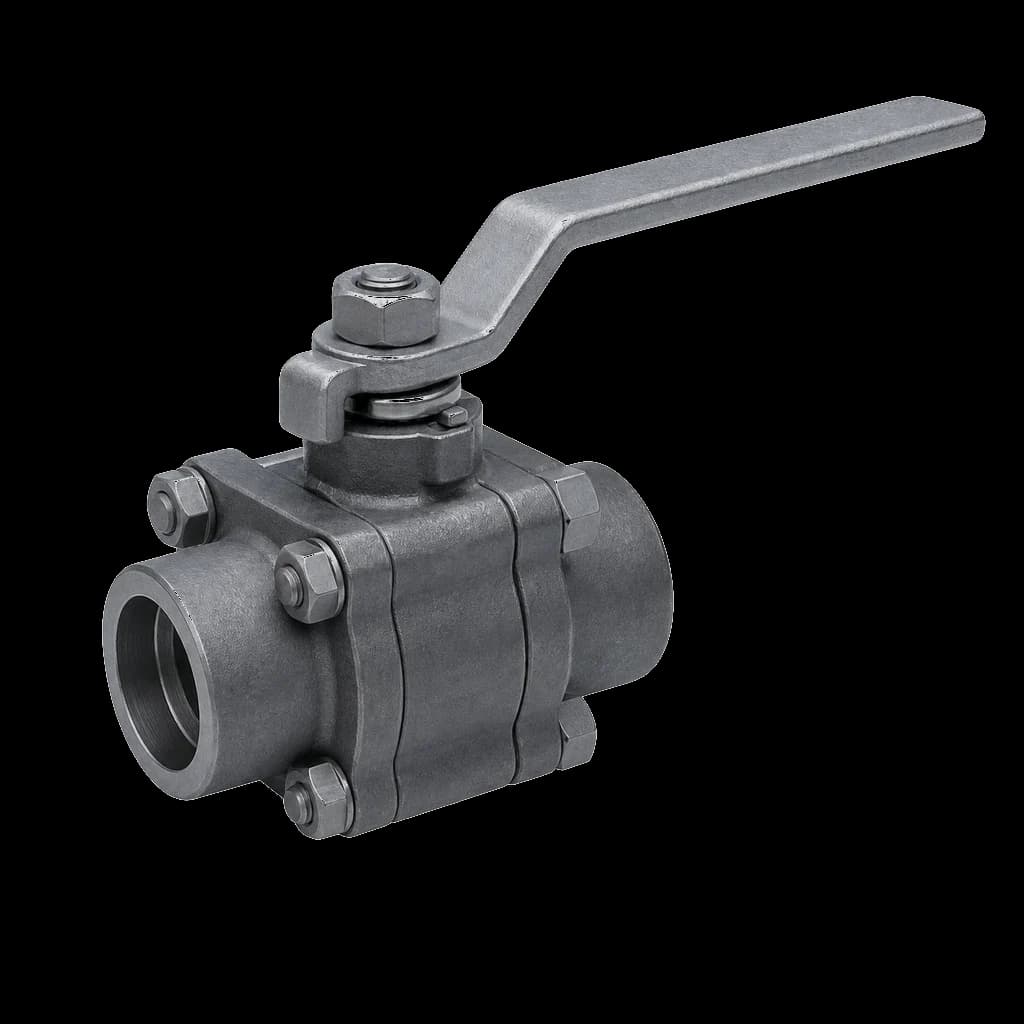
Virgin PTFE is the baseline: near-universal chemical resistance, lowest friction (lowest operating torque), sealing to roughly 180–200 °C — but it cold-flows under load, which limits pressure at temperature. RPTFE (typically 15–25% glass-filled) trades a little sealing softness for markedly better creep and wear resistance, pushing usable service modestly higher and doubling seat life in cycling duty; it is the default on DL forged ball valves and most process quarter-turn valves. Carbon- and graphite-filled PTFE variants add compressive strength for higher classes. The family's shared weakness: above ~200 °C all of them stop being seats and start being gaskets.
Nylon, Devlon and PEEK: the high-pressure tier
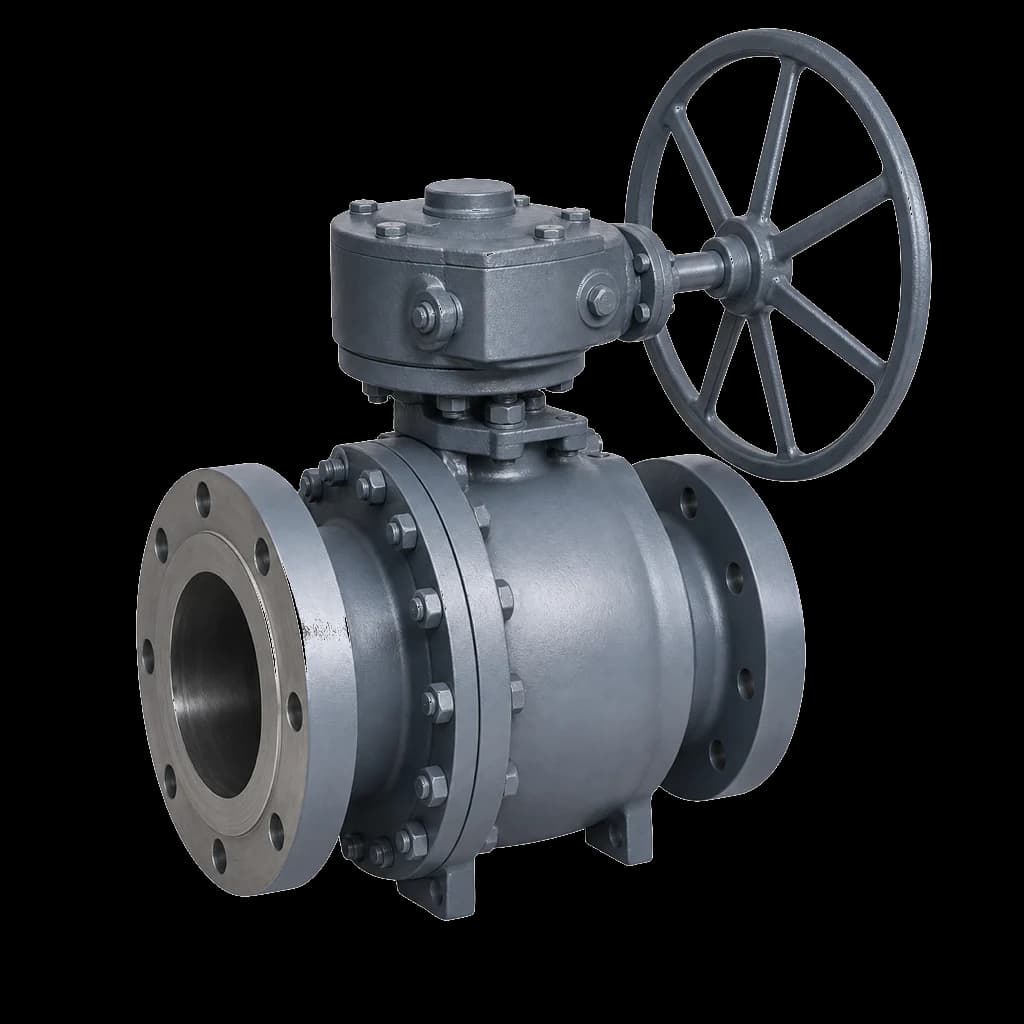
Nylon (PA) and Devlon are much stiffer than PTFE — the standard choice for high-pressure gas duty, which is why trunnion API 6D ball valves for pipelines commonly quote Devlon or Nylon seats through Class 600–900. Their limits: temperature (~90–120 °C continuous for nylon grades) and moisture absorption. PEEK is the premium answer — usable toward 250 °C and at very high seat stress, resistant to rapid gas decompression, priced accordingly. Selection inside this tier follows the class-and-temperature pair on the datasheet, not brand habit.
| Material | Temp. guide (continuous) | Strengths | Watch for |
|---|---|---|---|
| PTFE (virgin) | −50 to ~180 °C | Chemical inertness, lowest torque | Cold flow, creep at class limits |
| RPTFE (glass-filled) | −50 to ~200 °C | Wear & creep resistance | Slightly higher torque |
| Nylon / Devlon | ~−30 to ~110 °C | High-pressure gas capability | Moisture uptake, temperature |
| PEEK | to ~250 °C | Pressure + temperature + RGD resistance | Cost, torque |
| EPDM/NBR/FKM (butterfly liners) | to ~120–150 °C by grade | Economical large-bore sealing | Media compatibility, ageing |
| Metal (hardfaced, lapped) | 500 °C + | Abrasives, fire, extreme temp. | Leakage class, torque, cost |
Elastomers: liners, O-rings and decompression
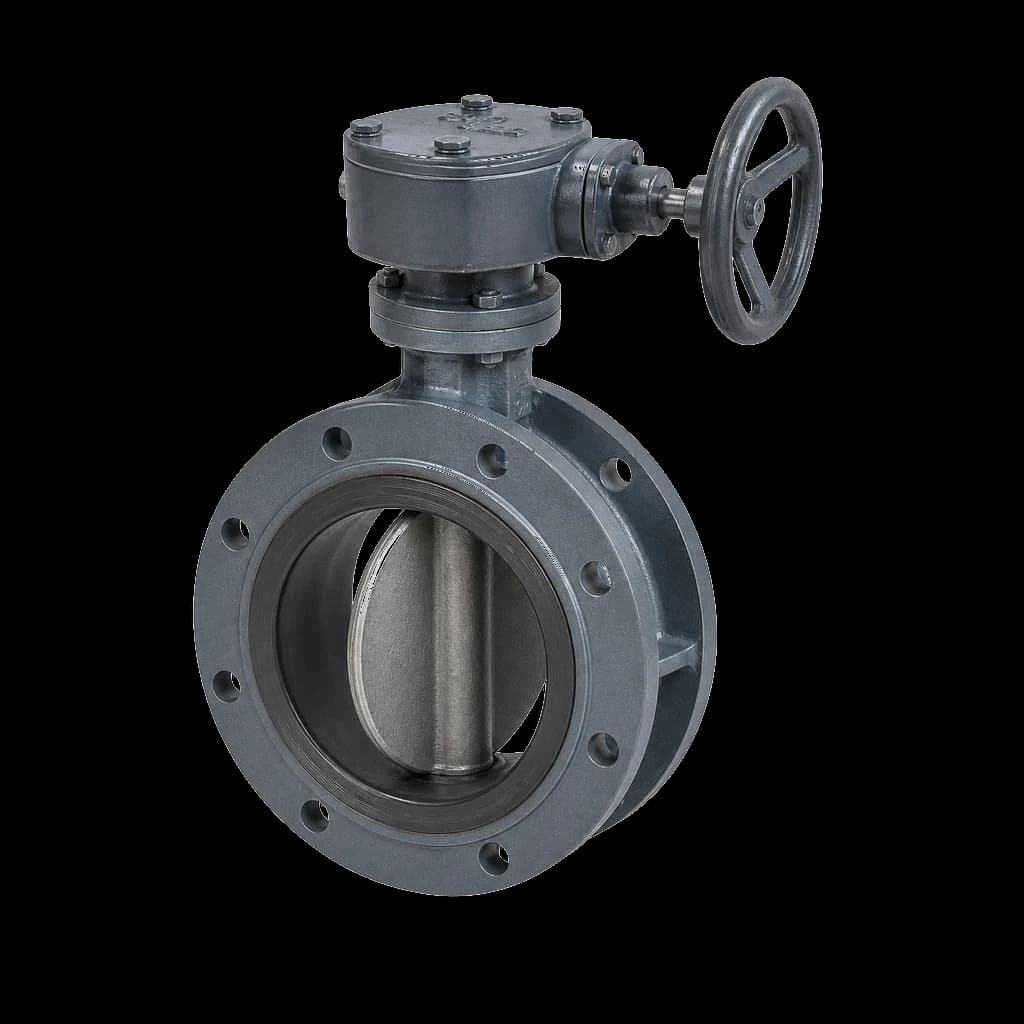
Resilient-seated butterfly valves seal on an elastomer liner — EPDM for water and fire-main duty, NBR for oils, FKM (Viton) for hydrocarbons and heat. In ball valves, elastomer O-rings back up polymer seats and seal stems. High-pressure gas adds a failure mode all its own: rapid gas decompression (RGD) — gas dissolved in the elastomer expands on sudden blowdown and blisters the seal from inside. Pipeline and CGD specifications therefore call RGD-resistant compounds; on gas duty, confirm the O-ring compound, not just the seat.
Metal seats: when polymer physics runs out
Above ~250 °C, in abrasive slurries, or where fire integrity dominates, seats become metal: hardfaced (Stellite, tungsten-carbide or chrome-carbide overlays) and lapped to fit. The cost is honest — higher torque (bigger actuators), a measurable leakage class instead of bubble-tight, and precision-machining money. The trim materials guide covers the hardfacing logic; the buying rule is simpler: specify metal seats because the service demands them, never as a generic "upgrade," because on clean moderate duty a metal seat is strictly worse at the one job a seat has.
The fire-safe interaction
Soft seats burn. Fire-safe design — certified to API 607 or API 6FA — accepts that, and backs the polymer with a secondary metal seating lip that limits leakage after the seat is destroyed, plus graphite packing and gaskets for the external envelope. On hydrocarbon service the certificate is not optional paperwork: an uncertified soft-seated valve in a fire zone is a fuel line waiting for its moment. Specify "fire-safe certified" alongside the seat material, and file the type-test certificate with the valve dossier.
A five-line selection checklist
- Temperature first: continuous service temperature picks the family — PTFE/RPTFE to ~200 °C, PEEK to ~250 °C, metal beyond.
- Then pressure at that temperature: seat ratings de-rate with heat faster than body classes; check the vendor's seat P–T curve, not the body class.
- Then the medium: gas at high pressure → Nylon/Devlon/PEEK + RGD elastomers; chlorides/acids → PTFE family; abrasives → metal.
- Then duty cycle: frequent cycling favors RPTFE/PEEK over virgin PTFE.
- Then fire exposure: hydrocarbon zones demand certified fire-safe construction regardless of seat choice.