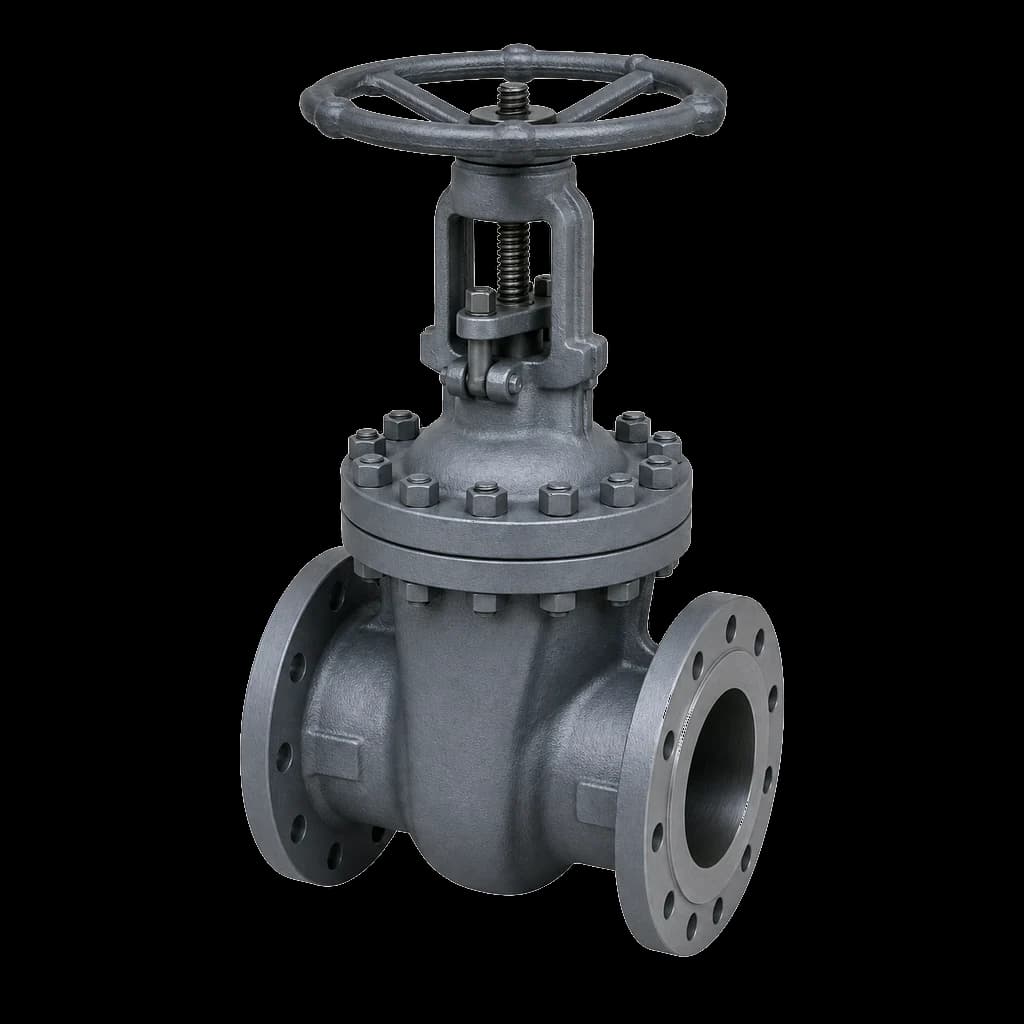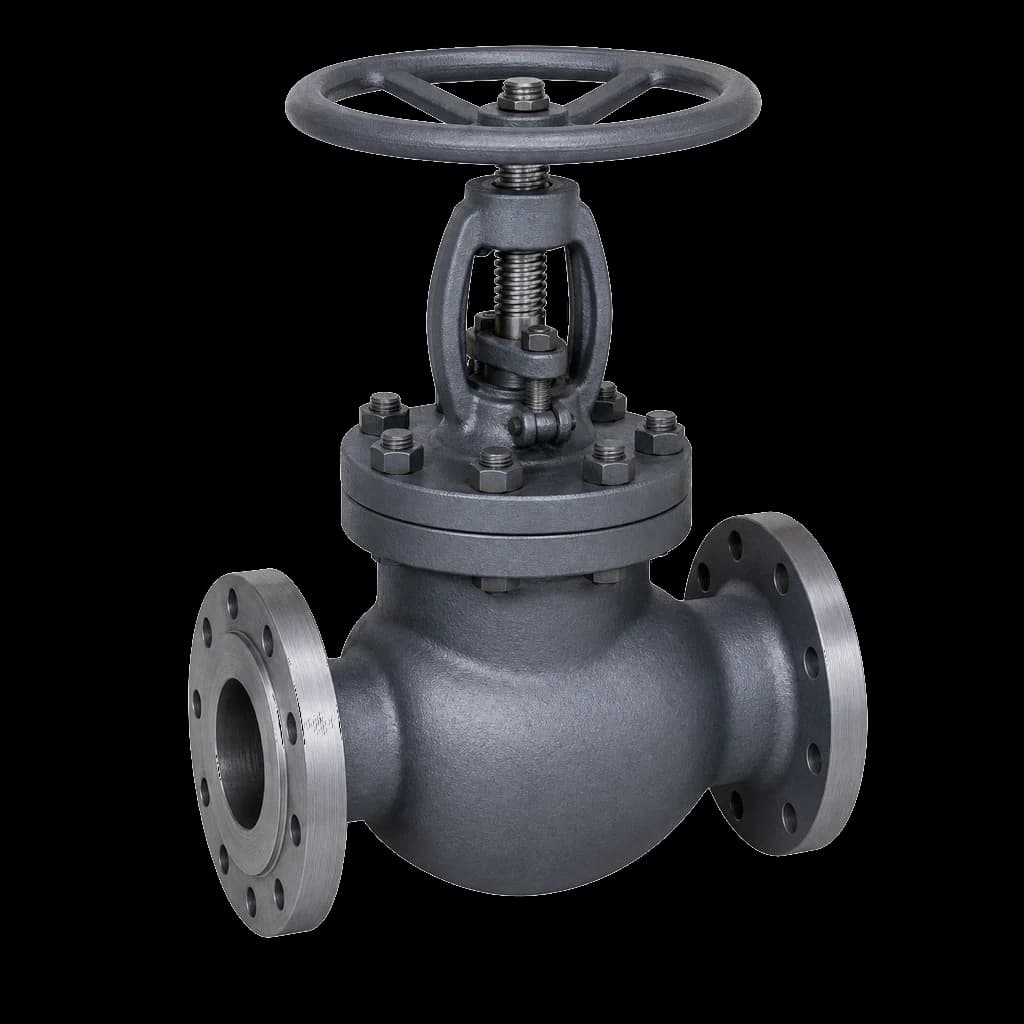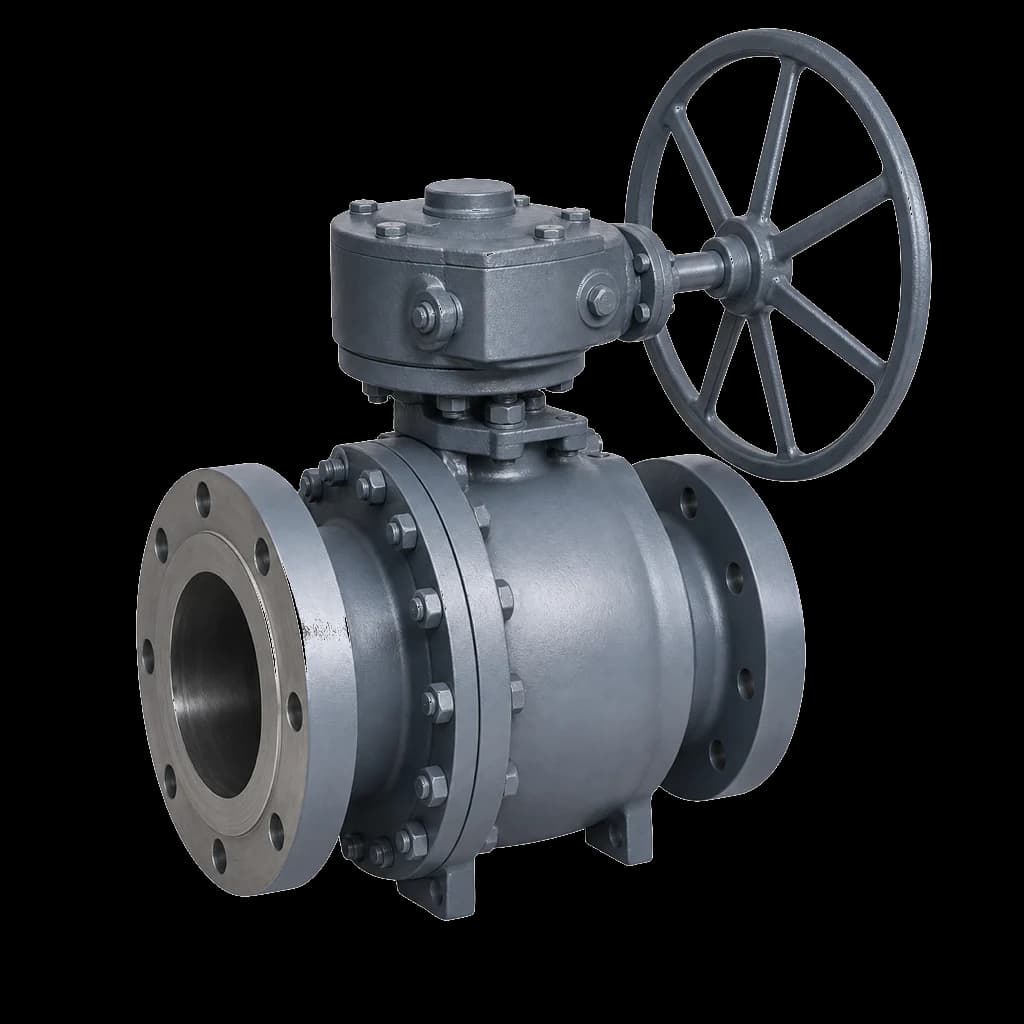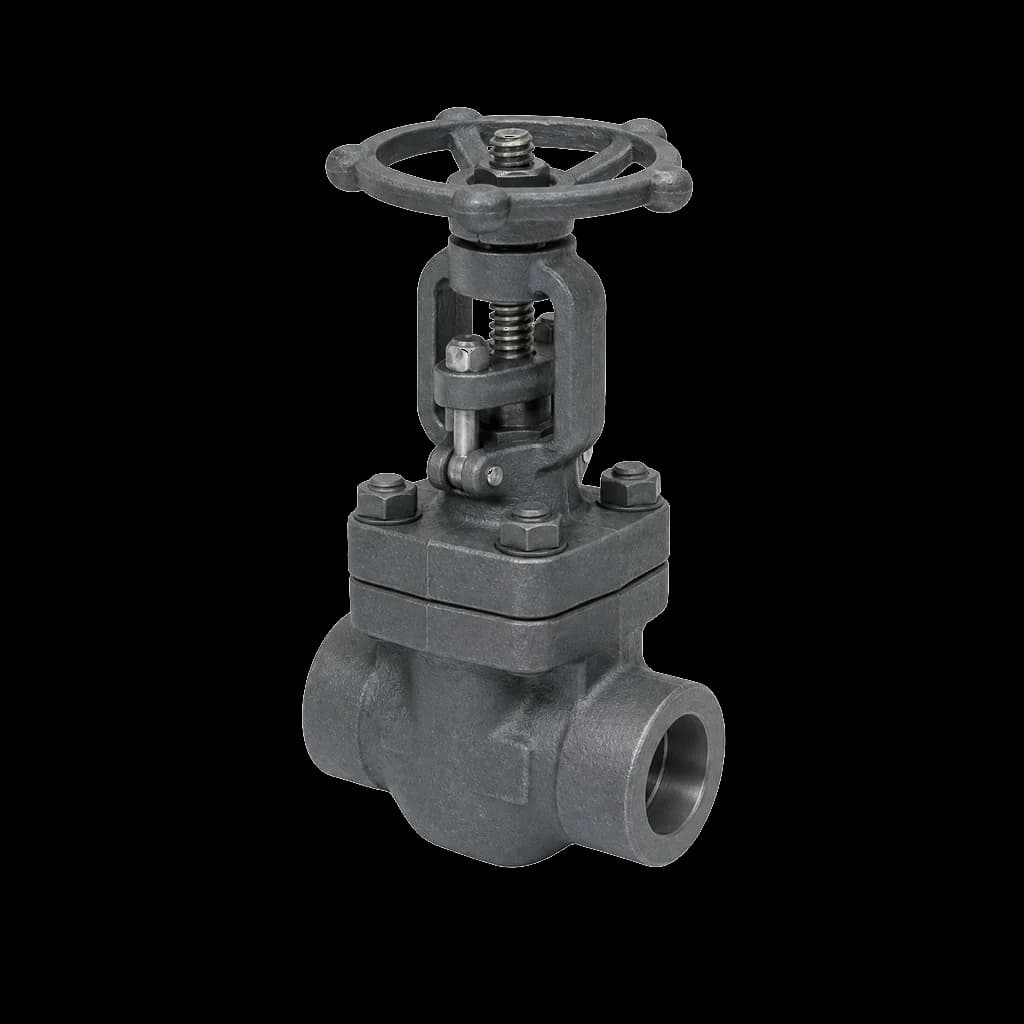
A CF8 body and a CF8M body look identical. Same paint, same weight, same nameplate. The only difference is two to three percent molybdenum, and in a chloride-bearing line that decides whether the valve survives or pits through long before its first turnaround. Positive material identification catches the swap before the valve is welded in: an instrument reading of the metal actually in front of you, tied to a heat number and a certificate that agree with each other.
What positive material identification actually proves
PMI is verification, not qualification. It answers one question: does this component contain the elements the specified grade requires, in the proportions that grade allows? Heat treatment condition, mechanical properties and casting soundness belong to the certificate and to NDE, not here. API RP 578, the recommended practice for material verification programmes, is what most refinery owners cite when they write a PMI clause, and Indian EPCs have adopted the same logic. An alloy claim therefore stands or falls on three documents agreeing with each other: the EN 10204 3.1 or 3.2 mill certificate, the heat number on the body, and the PMI report.
- Confirms: the alloying and residual elements present — Cr, Ni, Mo, Nb, Ti, V, W, Co, Cu and the tramp elements a specification caps.
- Does not confirm: carbon on a conventional XRF gun, heat treatment condition, mechanical properties, hardness or ferrite number.
- Does not replace: the mill certificate, hydrostatic and seat testing, or the checks in your factory acceptance test.
XRF and OES: two instruments, two jobs
Handheld XRF
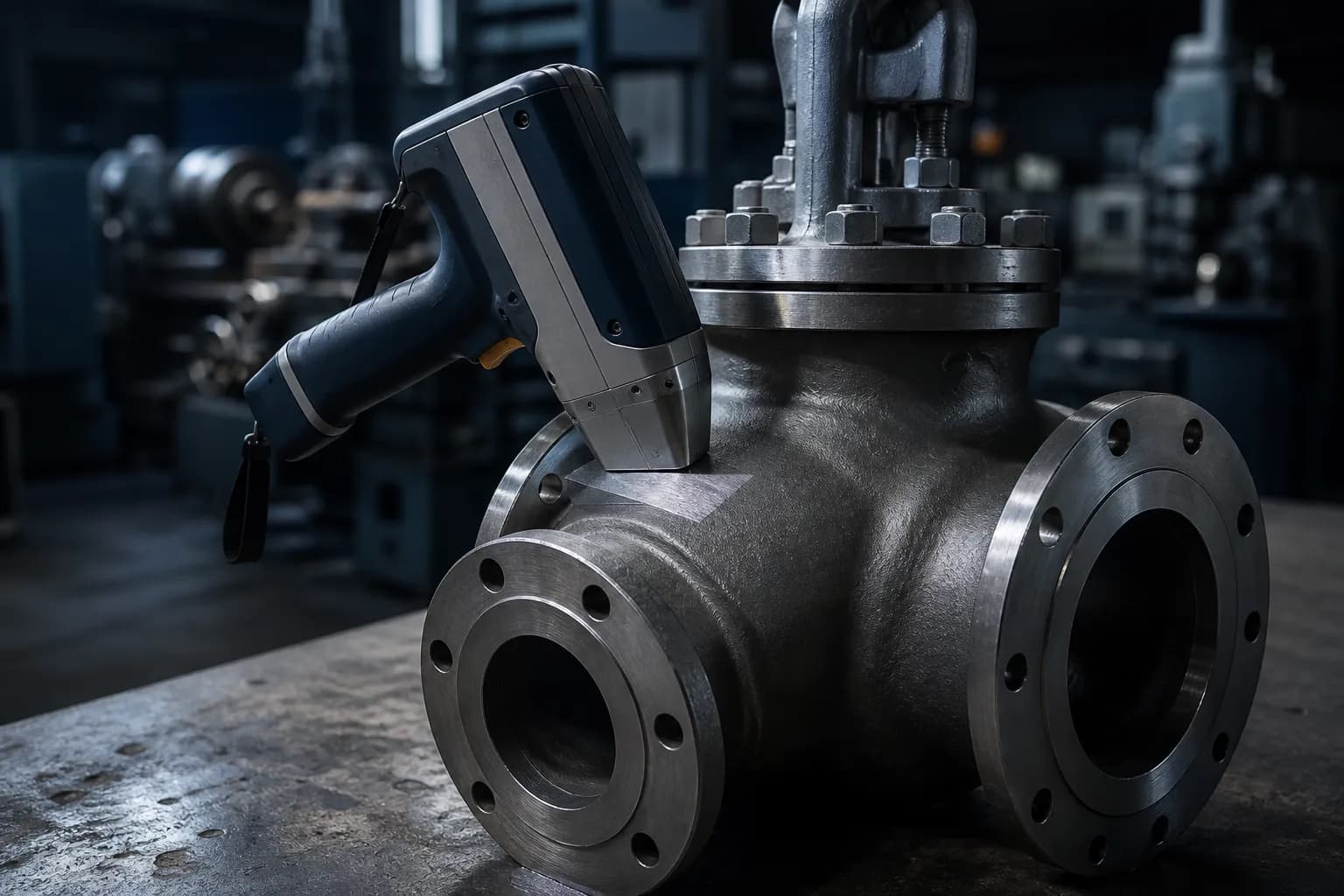
An XRF analyser excites the surface with X-rays and reads back the characteristic fluorescence of each element. In seconds you get a weight-percent breakdown of the alloying metals — titanium upward on a standard alloy analyser — plus a library match to a grade name. The elemental table is the evidence; the grade name is an inference from a library that may be thin, and a gun will cheerfully call an F22 forging WC9 — the chemistry overlaps. Read the numbers, not the label.
Analysis depth is a few tens of microns, so surface preparation is not optional. Paint, galvanising, nickel plate and scale all sit inside the analysed volume. Grind to bright metal, or you are certifying the coating rather than the casting.
Spark OES and LIBS
Carbon is the one element XRF cannot see — far too light to fluoresce usefully. That is why 316 and 316L, or CF8M and CF3M, are indistinguishable on a gun despite behaving differently in welded service. Separating them needs spark optical emission spectrometry, covered by ASTM E415 for carbon and low-alloy steel and ASTM E1086 for austenitic stainless. It leaves a burn scar, so agree its location before anyone touches a machined face. Handheld LIBS analysers do measure carbon, but many specifications still name spark OES — get acceptance in writing first.
| Attribute | Handheld XRF | Spark OES |
|---|---|---|
| Carbon | Not measurable | Measured; the route to L-grade proof |
| Form | Battery handheld | Bench or mobile unit, needs argon |
| Surface prep | Grind to bright metal | Clean flat area, good contact |
| Mark left | None | Burn crater |
| Typical use | 100% verification | Referee testing |
The heat number is the spine of traceability
An instrument reading tells you what a piece of metal is. It does not tell you which certificate covers it. The link is the heat number — the foundry or mill identifier for a single melt, against which the ladle analysis and mechanical results were recorded. Without it a PMI report is an isolated measurement, and an inspector is entitled to reject it.
- Melt: the heat is poured and analysed, and the chemistry reported against the heat number.
- Casting or forging: the heat number, or a short code, is raised in the mould or stamped on body and bonnet. If a code is used, the certificate must decode it.
- Assembly: the valve gets a serial or tag number, and the certificate ties body, bonnet and trim heats to that serial.
- PMI report: the reading is recorded against that same serial and heat number, so a third party can walk the chain either way.
Three failures account for most rejections: one certificate covering several heats without saying which item came from which; a heat code cast on the body that appears nowhere in the paperwork; and bought-out trim, seat rings and bolting that were never traced at all. An independent 3.2 endorsement exists so someone outside the supply chain has to close those gaps before dispatch.
The substitutions positive material identification is meant to catch
Most PMI failures are not fraud. They are a storeman picking the wrong bin, a foundry running two grades on one pattern, or a sub-supplier downgrading quietly. Each pair below is invisible to the eye and obvious to a gun.
| Specified | What arrives | Marker on the gun | Consequence |
|---|---|---|---|
| A351 CF8M | A351 CF8 | Mo absent | Pitting and crevice attack in chlorides |
| A217 WC6 | A216 WCB | No Cr, no Mo | No creep margin above carbon-steel limits |
| A182 F22 | A182 F11 | Cr near 1.25, not 2.25 | Half the alloy content, identical look |
| A193 B8M stud | A193 B7 stud | Ni absent, Cr near 1 not 17 | Corrosion mismatch at the flanged joint |
| A182 F51 duplex | A182 F316 | Cr near 17, not 22 | Strength and chloride SCC margin lost |
| IS 318 LTB2 gunmetal | High-zinc brass | Zn high, Sn low | Dezincification in potable water |
The chromium-molybdenum family is where the money hides. WC6, WC9 and their forged equivalents cost far more than carbon steel, and a substituted body passes a hydro test perfectly — it only fails years later, at temperature. Background on the grades is in our notes on cast valve body materials and A105 and A182 forged grades.
What a compliant PMI report must state
A line reading "PMI OK" on a letterhead is worthless at the gate. A report that survives document review carries all of the following, with acceptance criteria quoted from the product specification, not the analyser's grade library.
- Report number, date, purchase order and project reference.
- Item description with size and class, plus the valve tag or serial number.
- The component tested, named individually — body, bonnet, stem, disc or ball, seat ring, stud, nut, overlay.
- Heat number per component, matching the mill certificate.
- Measured elements in weight percent against the permitted range of the governing ASTM, EN or IS specification.
- Instrument make, model, serial and calibration validity, plus the reference material readings taken before and after.
- Technician name and qualification, and the inspector's signature where 3.2 is ordered.
- An accept or reject verdict per component, not a blanket statement for the consignment.
Writing PMI into the enquiry and the inspection plan
"PMI required" in a tender buys a one-line report. Six decisions turn it into something enforceable, and all six belong in the enquiry, not in a phone call after the valves are painted.
- Extent: 100% of alloy items is normal on critical service; sampling is defensible on bulk carbon steel, where XRF proves little.
- Components: list them. Bodies and bonnets are always covered; stems, discs, seat rings and bolting get quietly left out.
- Stage: before assembly and painting. Once a gate valve is bolted up and coated, the wedge and seat rings are unreachable.
- Acceptance basis: the elemental ranges of the product specification, not the instrument's grade match.
- Marking: vibro-etch or a paint dot on tested components; no hard stamping on thin or stressed sections.
- Witnessing: name the inspection agency and state whether the deliverable is 3.1 or 3.2.
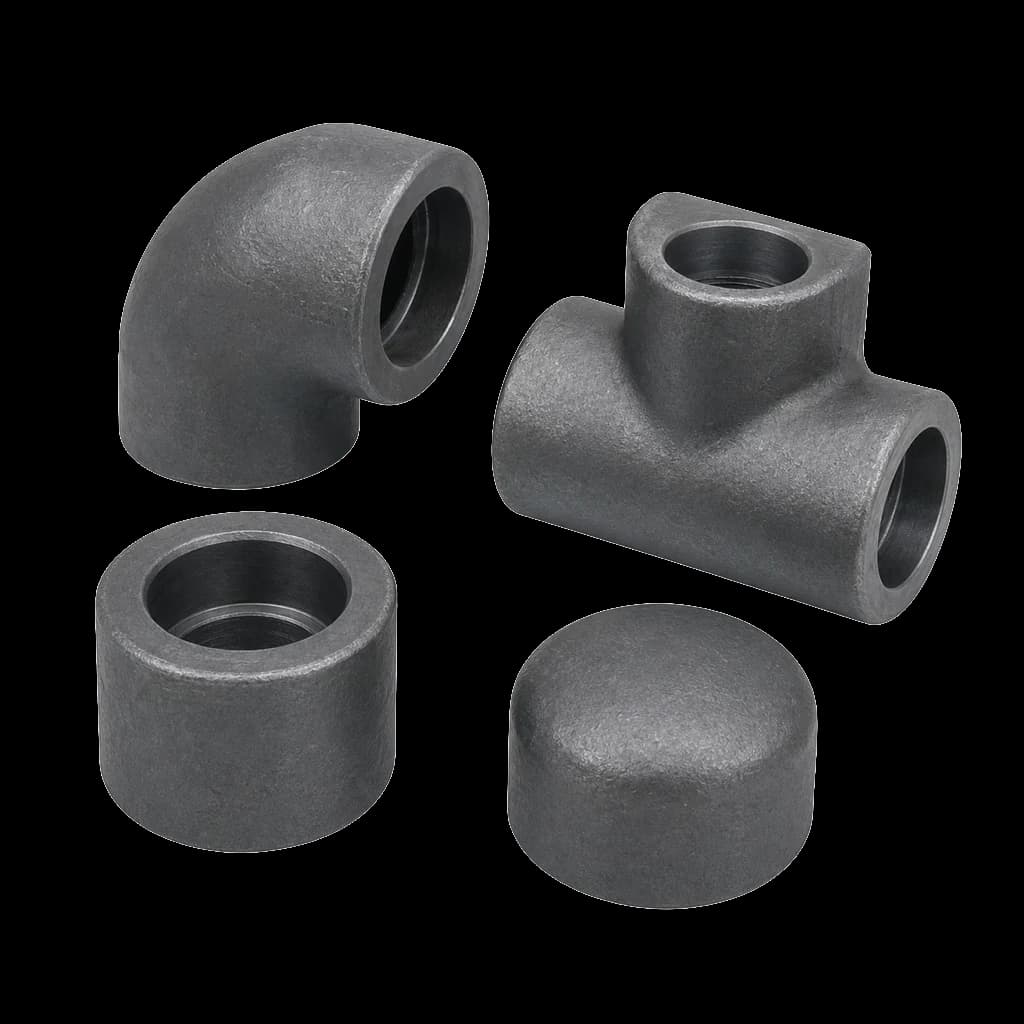
Small-bore forged items are the classic omission. A specification will demand 100% PMI on every valve and say nothing about the socket weld fittings welded into the same alloy line. If the line is alloy, the fittings and the bolting need the same treatment.
Where XRF quietly fails
A reading that says nothing is easy to spot. A reading that says the wrong thing confidently is the dangerous one, and there are five ways to get it.
- Coatings and plating. Zinc, nickel plate, paint and scale sit inside the analysed depth. A galvanised fitting reports as a zinc alloy until it is ground.
- Thin sections and small parts. The measurement assumes enough material under the window; on thin discs and small trim the beam reads through to whatever is behind.
- Weld overlay dilution. A first layer of cobalt-chromium hardfacing is diluted by the base metal and reads low on cobalt, high on iron. Test the finished machined surface.
- Welds and buttering. Filler metal is deliberately different from the base metal, so a reading across a weld is not a reading of the component.
- Anything metallurgical. A Grade 91 body that missed its normalising and tempering reads perfectly on chemistry, as does a stainless casting that never saw solution annealing.
Indian practice: third-party inspection, IBR and tender documents
On Indian projects the PMI clause usually arrives bundled with third-party inspection, the agency nominated in the purchase order — RITES, IRCLASS, Lloyd's, Bureau Veritas, TUV or SGS. It witnesses PMI at the works as a stage activity and endorses the report. Where the line falls under the Indian Boiler Regulations, the IBR-authorised inspecting authority separately certifies the valve on Form III-C — a different statute, and no substitute for PMI. Owners in refinery and petrochemical service treat the two as parallel obligations.
The commercial payoff shows up at bid evaluation. A PSU or GeM technical bid is scored on documents by a committee reading paper. A bidder who attaches a sample PMI report format alongside the mill certificate and a heat-number traceability statement at bid stage is far harder to knock out than one who promises to arrange it after award.