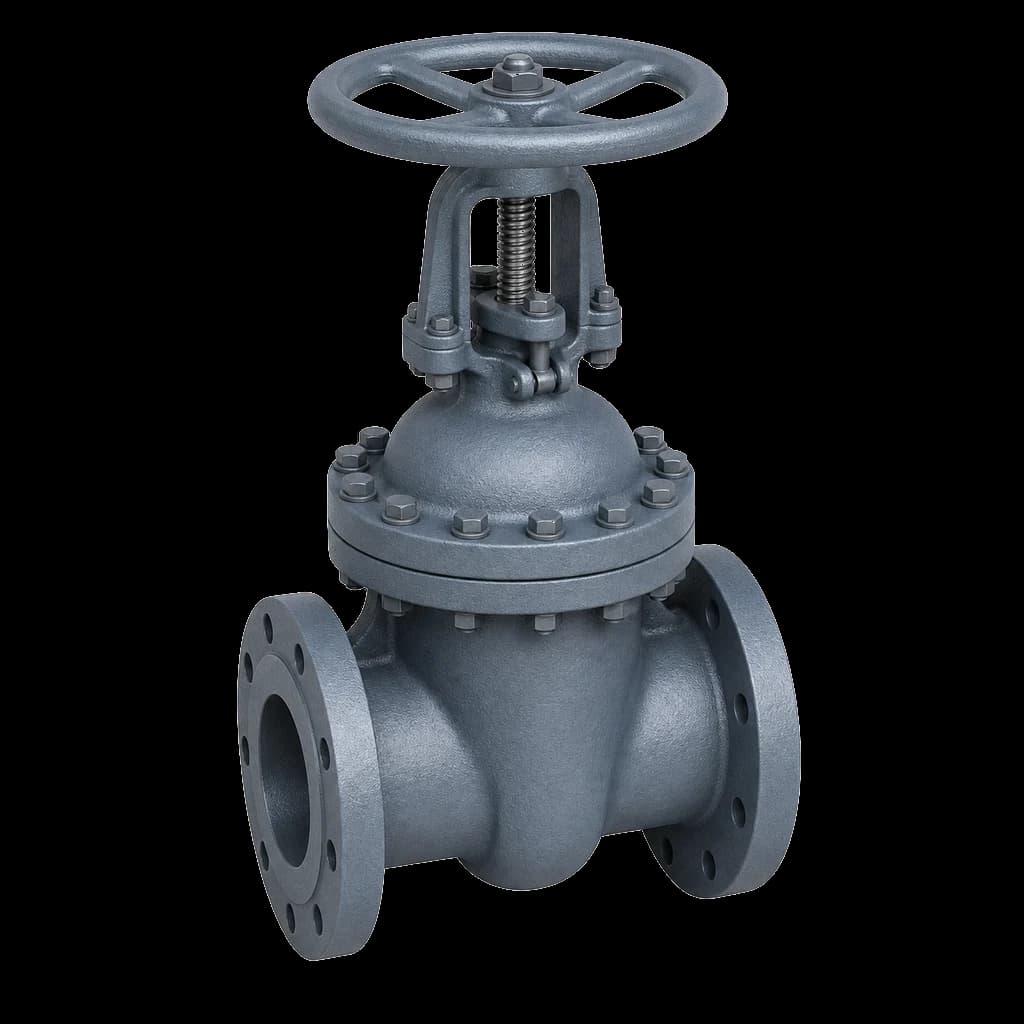
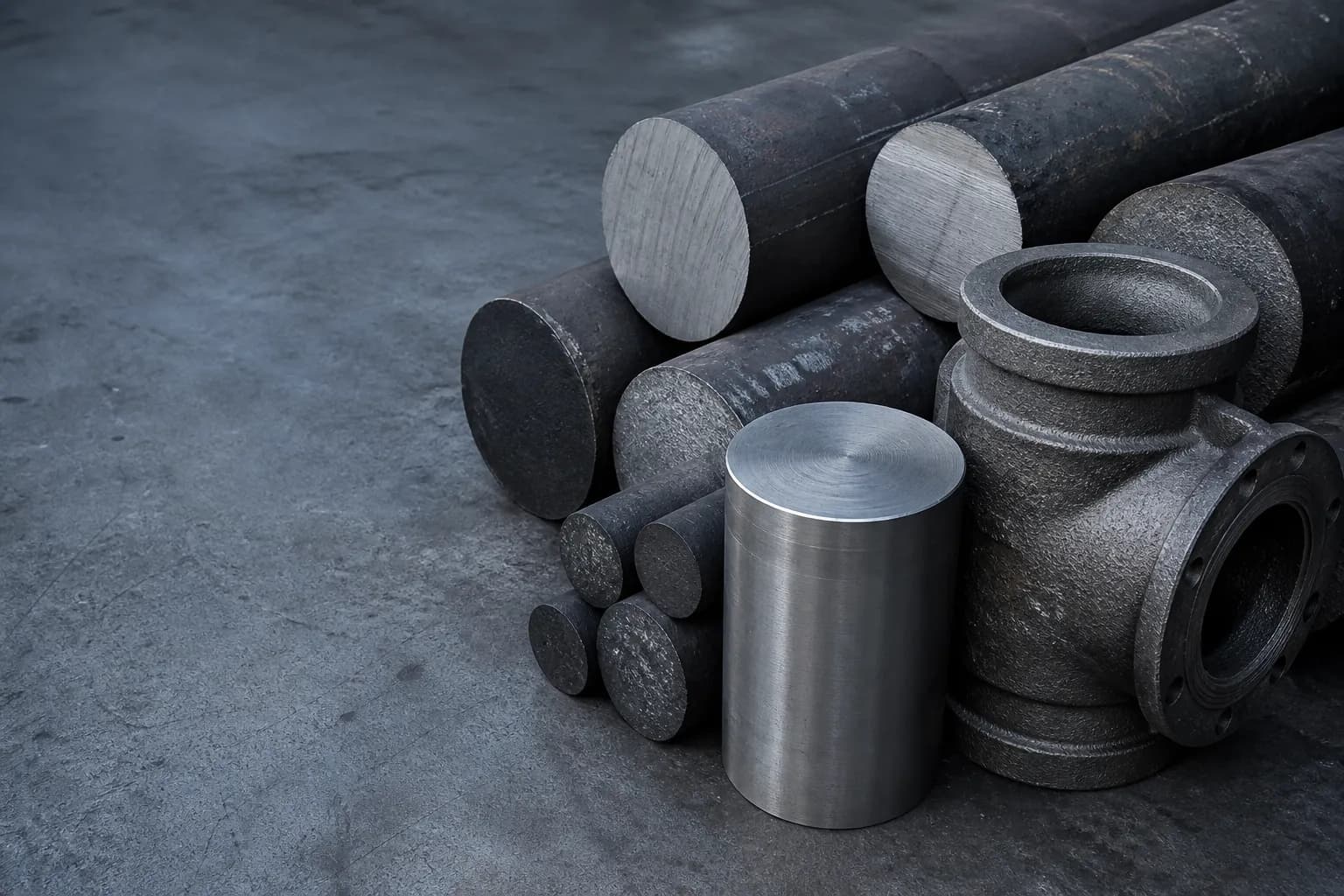
A municipal tender asks for a 300 mm double-flanged sluice valve. One bidder quotes a grey cast-iron body to IS 210 FG 200; another quotes ductile iron to IS 1865 SG 400/15 and is dearer for it. Both castings are legitimate, both pass the shell hydro on inspection day, and the difference will not surface until something in the line moves faster than the designer assumed. Ductile iron vs cast iron is not a quality argument — the chemistries are nearly identical. It is an argument about the shape the graphite takes as the iron solidifies, and therefore about how the body behaves in the second it is overloaded.
Ductile iron vs cast iron
Flake graphite
Grey iron carries roughly 3.2-3.6% carbon and 1.8-2.4% silicon, and the excess carbon precipitates as interconnected graphite flakes through the matrix. Every flake tip is a stress raiser, so under tension a crack starts at one tip and runs flake to flake. IS 210 grades on tensile strength and hardness, nothing more useful: FG 200 means 200 N/mm2 on the test bar, there is no usable yield point, and elongation is effectively nil. Grey iron damps vibration better than steel, machines well, fills thin sections and carries heavy compressive load. What it will not do is bend before it breaks.
Nodular graphite
Ductile iron — SG iron, nodular iron, the same material under three names — starts from low-sulphur base iron treated with magnesium and inoculated so the graphite grows as discrete spheroids. A sphere concentrates far less stress than a flake tip, so the casting gets a real yield point and elongation the specification actually states — 15% for SG 400/15, 7% for the stronger SG 500/7. Overloaded, a ductile body yields locally, redistributes and usually leaks before it lets go; a grey body fractures. The premium is earned honestly: tighter base chemistry, magnesium treatment and its fade window, heavier feeding, a ferritising anneal where the grade calls for it, and a nodularity check grey iron never has to pass. Let nodularity fall below the 80% ASTM A395 sets and the properties slide back toward grey iron.
Reading the grade codes
Three conventions appear on the same drawing set and buyers routinely misread them. IS 210 reads FG plus minimum tensile in N/mm2. IS 1865 reads SG plus minimum tensile, then a slash and minimum elongation — SG 400/15 is 400 N/mm2 at 15%. ASTM A536 uses ksi/ksi/percent: 65-45-12 is 65 ksi tensile, 45 ksi yield, 12% elongation. Indian drawings sometimes write GS 400/15 for the IS 1865 grade; it is the same spheroidal-graphite iron.
| Grade | Standard | Min tensile | Min elongation |
|---|---|---|---|
| FG 200 | IS 210 | 200 N/mm2 | Not specified |
| Class B | ASTM A126 | 31 ksi | Not specified |
| SG 400/15 | IS 1865 | 400 N/mm2 | 15% |
| SG 500/7 | IS 1865 | 500 N/mm2 | 7% |
| 60-40-18 | ASTM A395 | 60 ksi | 18% |
| 65-45-12 | ASTM A536 | 65 ksi | 12% |
Cross-standard rows are near equivalents, not substitutions — heat treatment, test-bar type and section thickness all move the numbers. If the tender names one standard and the casting carries another, declare a deviation rather than assume the inspector reads them as interchangeable.
Pressure ratings
Grey-iron flanged valves are rated under ASME B16.1 Class 125 and Class 250, with MSS SP-70, SP-71 and SP-85 covering grey-iron gate, swing check and globe valves. Ductile-iron flanged valves and fittings belong to ASME B16.42, Classes 150 and 300. The gap is not cosmetic: B16.42 rates a Class 150 ductile-iron flange at 285 psig at 100 F, the same figure B16.5 gives Class 150 carbon steel, while B16.1 Class 125 sits well below that and derates with size — a Class 125 body at 24" does not hold what it holds at 6". Indian water-works drawings work in PN instead, IS 14846 sluice valves being offered at PN 1.0 and PN 1.6. Where PN, Class and CWP collide on one datasheet, valve class ratings separates them.
- A Class 125 grey-iron flange drills like a Class 150 steel flange. Bolt circle and hole count match, so a CI body bolts straight into a Class 150 line and nobody notices until the test. Drilling compatibility is not a rating.
- Ductile iron does not buy steel ratings. Pressure-retaining ductile iron is capped around 343 C (650 F), and no iron body belongs on a thermally cycled or IBR line.
- PN 1.6 does not imply SG iron. Makers reach PN 1.6 in smaller sizes with thicker grey-iron walls. Read the material clause, not the pressure clause.
Flanges and bolt load
By design, grey-iron valve and fitting flanges are flat-faced. Bolt a raised-face steel flange straight onto a flat-faced grey-iron flange with a ring gasket and the bolt load acts outboard of the gasket contact, bending a flange never rated for bending. It cracks at the hub — sometimes during erection, sometimes six months later. The fix is old and non-negotiable: machine the raised face off the steel flange, or use a full-face gasket so the load is carried out to the bolt circle. Torque is the other half of the same problem. Grey iron has no plastic reserve to absorb an over-torqued stud, so bolt stress must be controlled and studs pulled cross-pattern in stages. Ductile iron survives the same abuse better because it yields instead of splitting, but correct practice is identical.
Buried, pumped and fire duty
Below ground
Indian water schemes under AMRUT and Jal Jeevan Mission have effectively standardised on ductile-iron pipe to IS 8329 and fittings to IS 9523, and chamber valves have followed. A buried body takes backfill compaction, differential settlement, traffic surcharge through a shallow slab and eventually an excavator bucket. Grey iron answers all four the same way. Specify SG iron below grade even where the tender permits grey.
Surge and fire mains
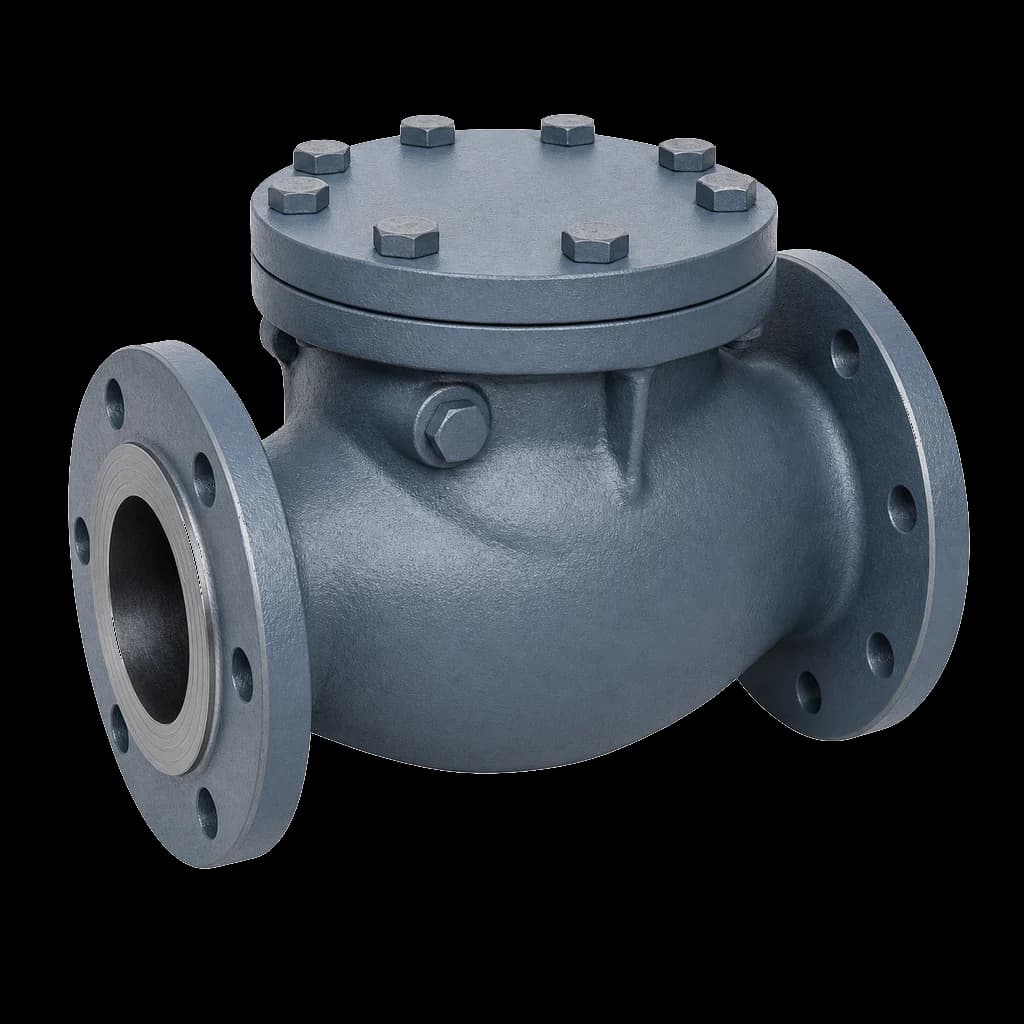
Pumped systems are where brittle bodies get exposed. Pump trip, check-valve slam and hydrant closure all generate transients far above static head, and grey iron converts them into fracture with no warning stage. Fire mains are the sharpest case: idle at static pressure, then a jockey-to-main-pump step change with the whole building depending on the answer. Insurer-led Indian fire specifications and UL/FM-listed hardware lean on ductile iron for exactly that reason; the fire fighting valves guide covers the rest of that specification.
What the tender decides
In PSU, municipal and CPWD/PWD work the choice is usually not yours — it is a line in the BOQ, and offering the other iron is a technical rejection, not value engineering. "CI double flanged sluice valve to IS 14846, PN 1.0" means a grey-iron body to IS 210 with flange drilling to IS 1538, and a ductile offer must be declared as a deviation even though it is the better casting. "SG iron body to IS 1865 Gr. SG 400/15" rules out FG 200 outright. The IS 14846 sluice valve guide covers what else that standard fixes, and Kartar CI sluice gate valves are the pattern those tenders are written around.
- Read the material, standard and test clauses separately. They disagree more often than you expect, and the inspector holds you to the strictest of the three.
- On GeM the category text and the seller's technical parameters both carry body material; a mismatch between them disqualifies bids.
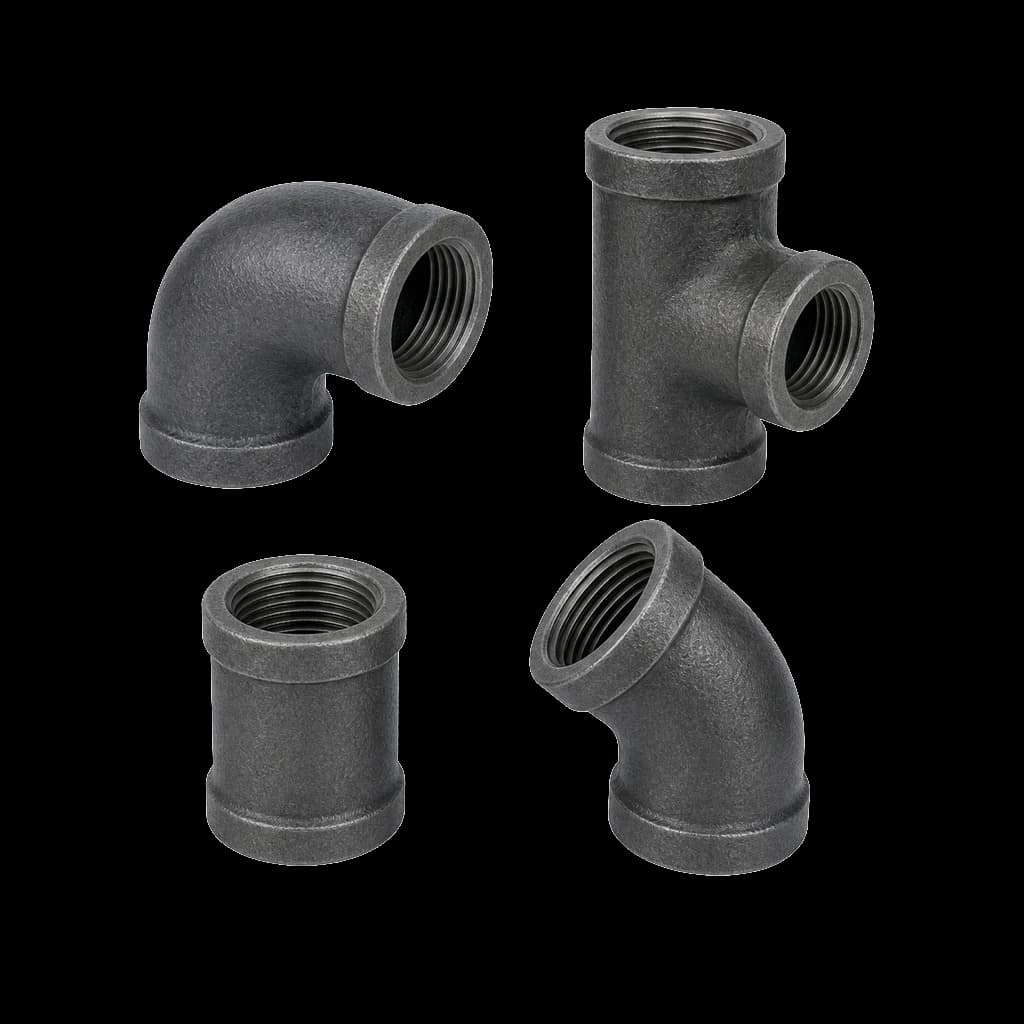
- NVR DI threaded fittings are dimensionally to ASME B16.3 but cast in ASTM A536 ductile iron, not malleable iron — check which the specification actually names.
Proving what you bought
Chemistry alone will not tell you which iron is on the table. Both sit at similar carbon and silicon; the difference is graphite morphology produced by residual magnesium. A handheld XRF cannot read magnesium reliably — too light an element — so PMI in the usual sense does not settle it. Spark OES on a coupon shows the residual Mg, and metallography settles it outright.
- Tensile and elongation per heat on a cast-on or separately cast block to IS 1865 or A536. If the certificate carries no elongation figure, you are looking at grey iron.
- A micrograph with nodularity and nodule count against the percentage the specification states.
- Hardness on the body as a cheap cross-check on the declared grade.
- Ultrasonic velocity screening, a recognised nodularity indicator — sound travels appreciably faster through nodular iron than through flake-graphite iron.
- EN 10204 3.1 certificates keyed to heat numbers, with shell and seat hydro reports at the pressures the governing standard sets.
Where neither iron belongs
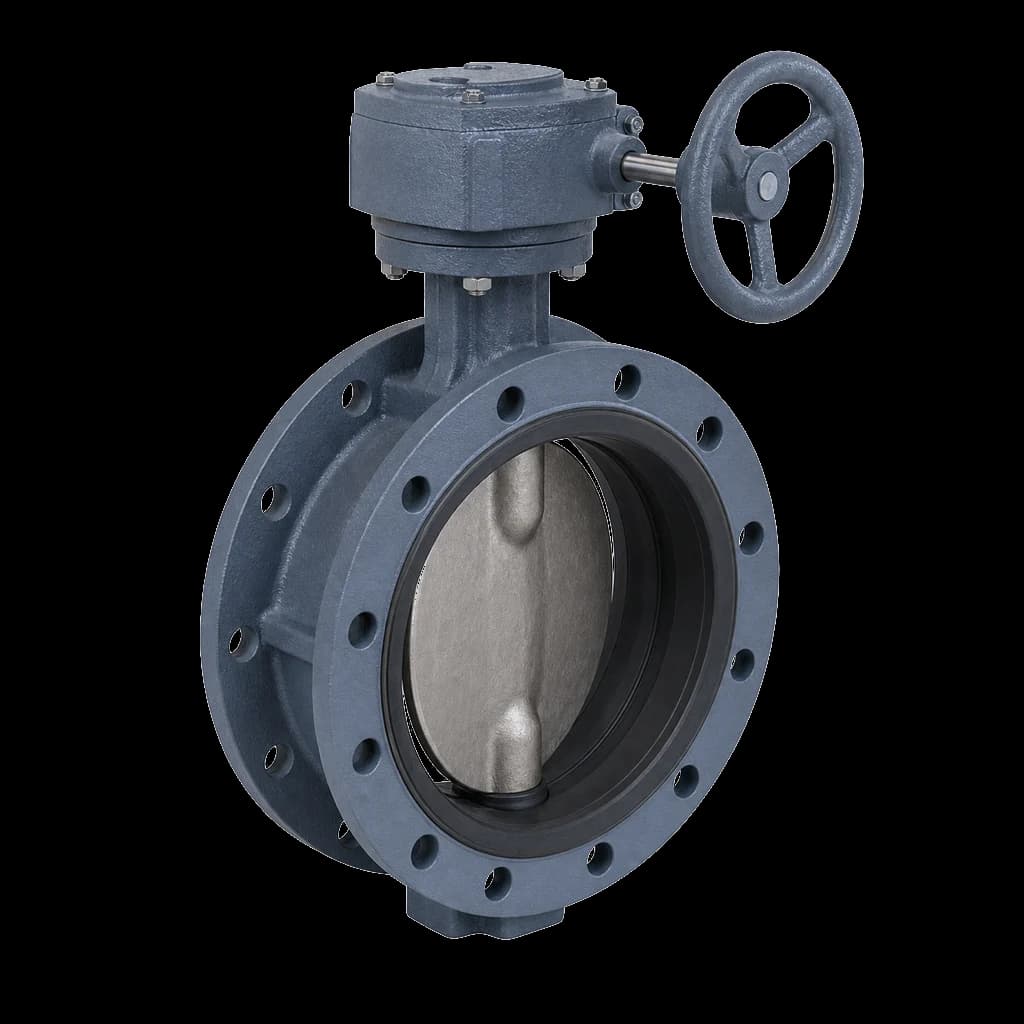
Both irons stop at the edge of water, air and low-pressure general service. Steam and IBR duty, thermal cycling, hydrocarbon service, LPG and CGD networks, sour service and any fire-safe requirement move you to cast or forged steel, and most Indian refinery and pipeline owner specifications exclude cast iron from hydrocarbon service on principle regardless of rating. For those lines the comparison you want is WCB, WC6, WC9 and CF8M cast valve materials. Inside water and fire service iron stays correct and economical — including CI and DI butterfly valves on large-bore headers, where the graphite question is worth asking size by size.