
A fire protection system spends years doing nothing and must then work perfectly within seconds. Its valve population is small and standardized, but utterly unforgiving of a wrong pattern or a seized stem — there is no second attempt at a fire. This guide maps the valves and fittings across a typical Indian installation: the hydrant ring, the sprinkler installation, and the pump room that feeds both. For project context, see our fire fighting sector page.
Hydrant ring anatomy
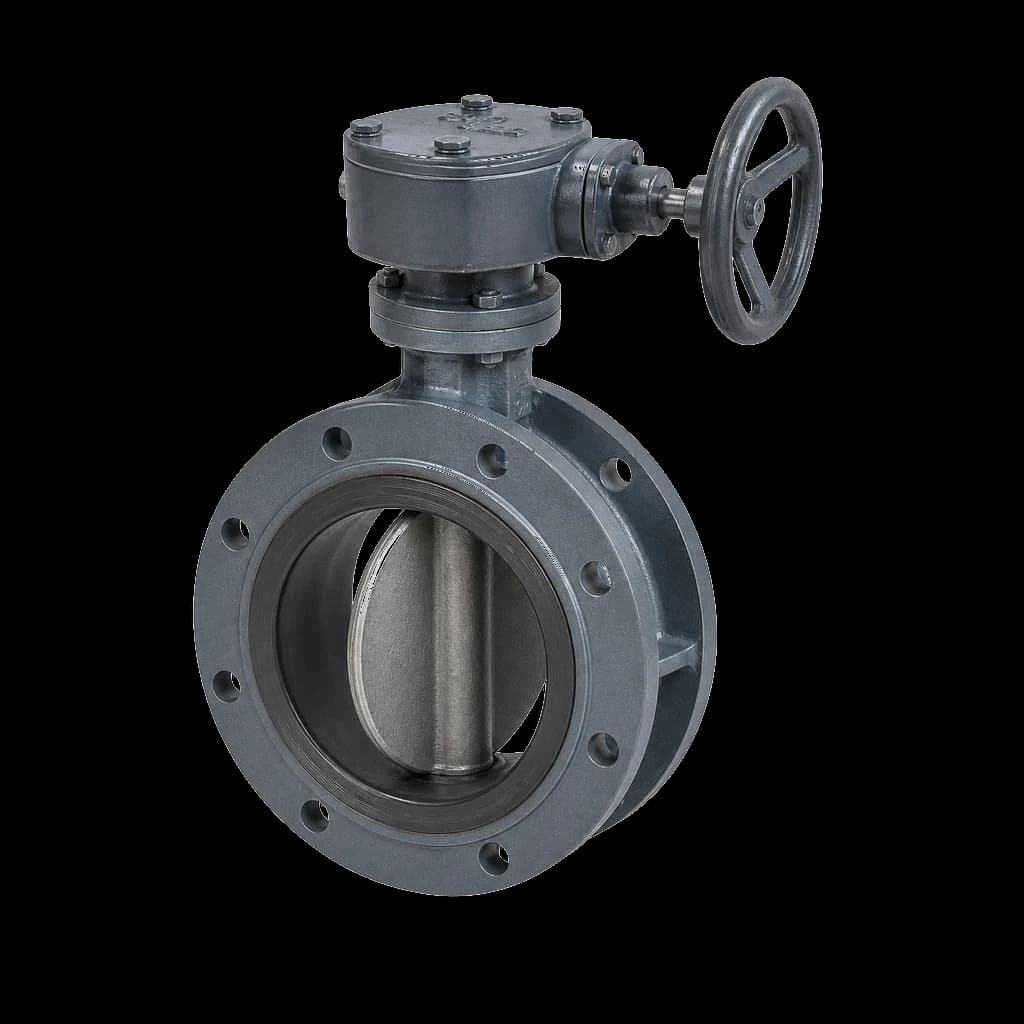
The backbone is a ring main looped around the facility, kept pressurized at all times by a jockey pump. Sectionalizing isolation valves — sluice-pattern gate valves to the IS:14846 pattern, or butterfly valves, commonly rated PN-16 — divide the ring so a damaged or leaking leg can be cut out while the rest of the ring keeps fighting the fire. Isolation spacing is a design decision: every hydrant should remain feedable with any one section isolated. At each standpost, a hydrant landing valve — conceptually an oblique-pattern gunmetal valve with an instantaneous hose coupling — is the point where hose meets main. Buildings extend the same logic vertically as wet risers, with landing valves at each floor level.
Sprinkler systems and zone isolation
A wet sprinkler installation begins at the installation control valve set: an isolation valve and an alarm valve — conceptually a check-type clapper that passes water to the sprinkler network and, in doing so, diverts a small flow to ring the water motor gong and trip the pressure switch. Downstream, each floor or zone gets its own isolation. Here pattern matters: zone isolation butterflies sit at the end of a live branch when downstream pipework is opened for modification, which is dead-end service — so specify lugged-body butterfly valves, which are threaded onto both flange bolt circles and can retain pressure with the downstream flange removed. A plain wafer body, clamped between flanges, cannot. Every isolation valve in the sprinkler path should be supervised open — tamper switch or lock-and-strap — because a closed zone valve is the classic cause of sprinkler failure.
Check valves in the pump room
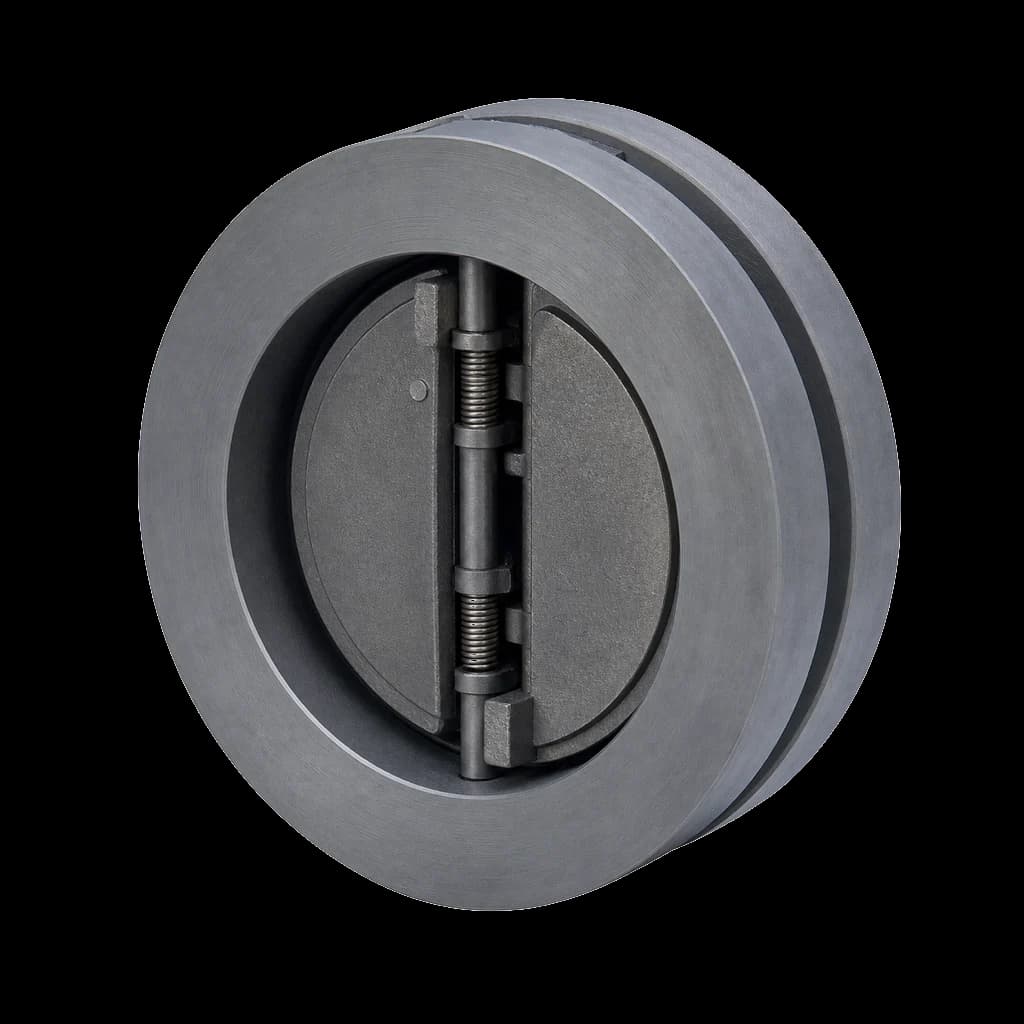
The standard pump room houses a jockey pump, a main electric pump and a diesel standby, each needing a check valve on its discharge to prevent reverse flow through an idle pump and to hold ring pressure while pumps cycle. Dual plate wafer checks dominate the duty: compact, light, and spring-assisted so the plates close before reverse flow establishes — which softens the slam when a pump stops against a pressurized ring. Larger diesel pump discharges often carry swing-pattern reflux valves instead. The patterns, and where each wins, are compared in our check valve types guide.
The grooved fittings advantage on fire mains
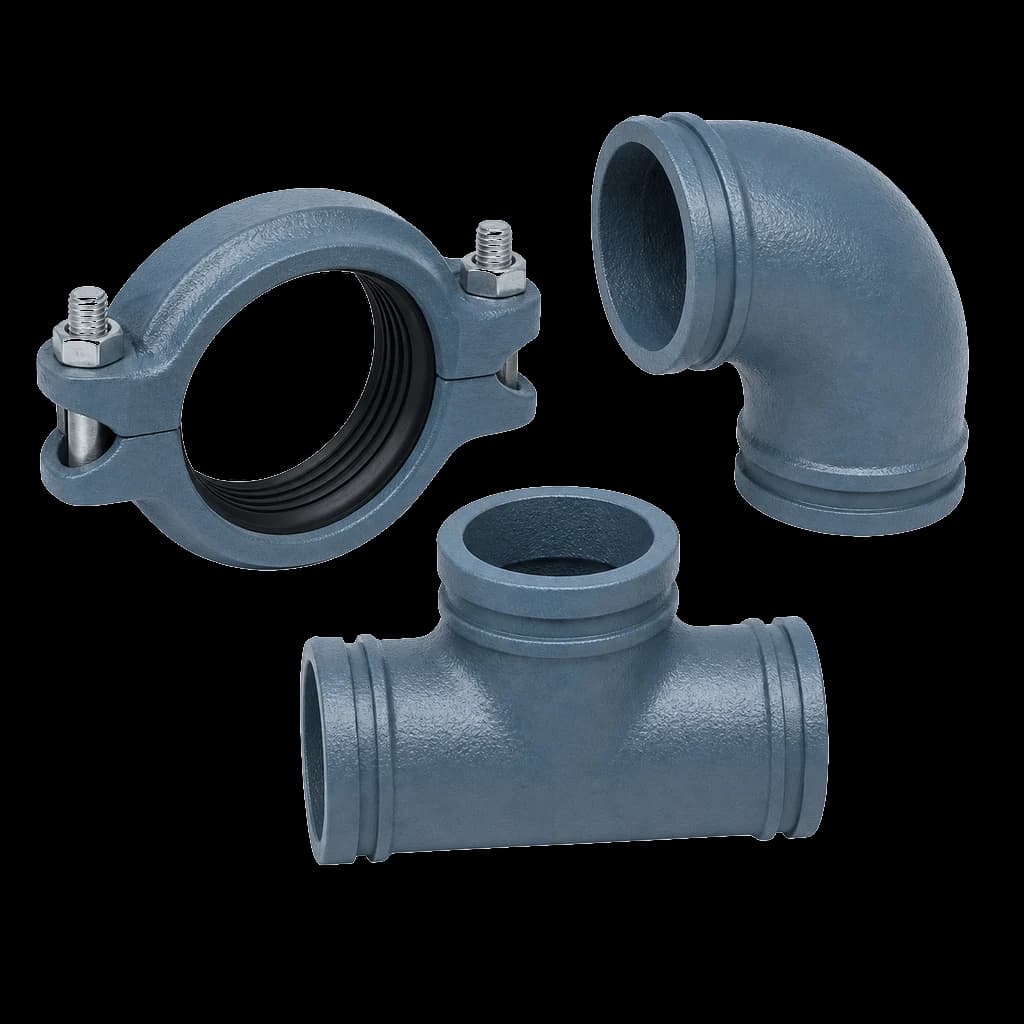
Fire mains are increasingly assembled with grooved couplings rather than welded or flanged joints, and the decisive reason is no hot work. A grooved joint — roll-grooved pipe ends, a gasketed coupling, two bolts — needs no welder, no permit, no fire watch, and no post-weld inspection, which matters enormously when extending a system through an occupied building or a live plant. Assembly is fast, every joint is a future disassembly point for maintenance, and flexible-pattern couplings tolerate minor misalignment and building movement. NEW grooved fittings cover the coupling and fitting range for exactly this duty.
G.I. and threaded distribution
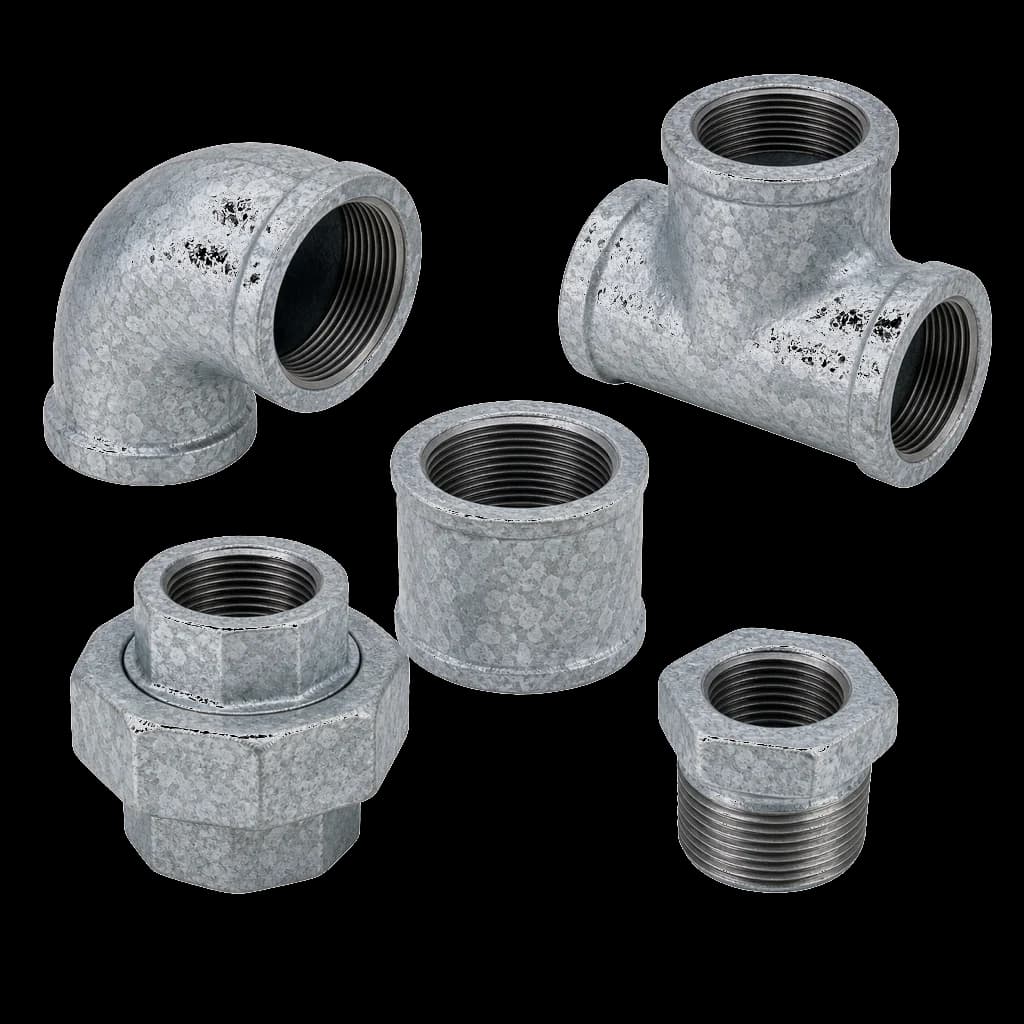
Small-bore distribution — hose reel branches, hydrant standpost risers, sprinkler range pipes on many projects — runs in galvanized steel pipe to IS:1239 with #1000 Lbs threaded fittings: elbows, tees, sockets and unions in galvanized malleable or mild steel. Galvanizing is not cosmetic here; fire water stands stagnant for years, and bare steel small-bore corrodes shut from the inside. Keep thread engagement full and sealant disciplined — a weeping joint on a pressurized ring runs the jockey pump ragged. The pipe standard itself is unpacked in IS:1239 pipes and fittings explained.
| System element | Typical valve / fitting | Notes |
|---|---|---|
| Ring main isolation | IS:14846-pattern gate or butterfly, PN-16 | Section the ring; every hydrant feedable both ways |
| Zone / floor isolation | Lugged butterfly, supervised open | Dead-end capable; tamper switch |
| Pump discharge | Dual plate wafer check | Spring-assisted, non-slam |
| Installation control | Alarm valve + isolation | Wet system; drives gong and pressure switch |
| Hydrant standpost | Landing valve, instantaneous coupling | Gunmetal, oblique pattern |
| Main pipe joints | Grooved couplings | Flame-free assembly, easy strip-down |
| Small-bore branches | IS:1239 G.I. pipe + #1000 Lbs threaded fittings | Galvanized against stagnant water |
Maintenance and exercise discipline
The enemy of a fire valve is immobility. A gate left untouched for five years silts up and seizes; a butterfly's seat takes a permanent set; a check valve's plates gum onto their stops. The discipline is simple and cheap: exercise every isolation valve through full travel on a fixed schedule — quarterly is common practice — then return it to its supervised-open position and log it. Flow-test hydrants by rotation. Repair gland weeps promptly, because a dripping valve tempts someone to leave it half-closed, and a half-closed sectionalizing valve is invisible until the day the system is asked to perform. An installation whose valves are exercised, supervised and logged is one an insurer's inspector — and a fire officer — can sign off without argument.