A check valve is the only valve in the line that decides for itself when to close — and how it closes is the whole selection problem. Slow closure after reverse flow has developed means slam: the disc arrests a moving column of liquid, and the resulting pressure spike hammers the pump, the pipe supports and the valve itself. The three common patterns — swing, dual plate and wafer disc — sit at different points on the closure-speed, pressure-drop and cost map. Choose by dynamics first, price second.
Swing check: simple, full-port, slam-prone
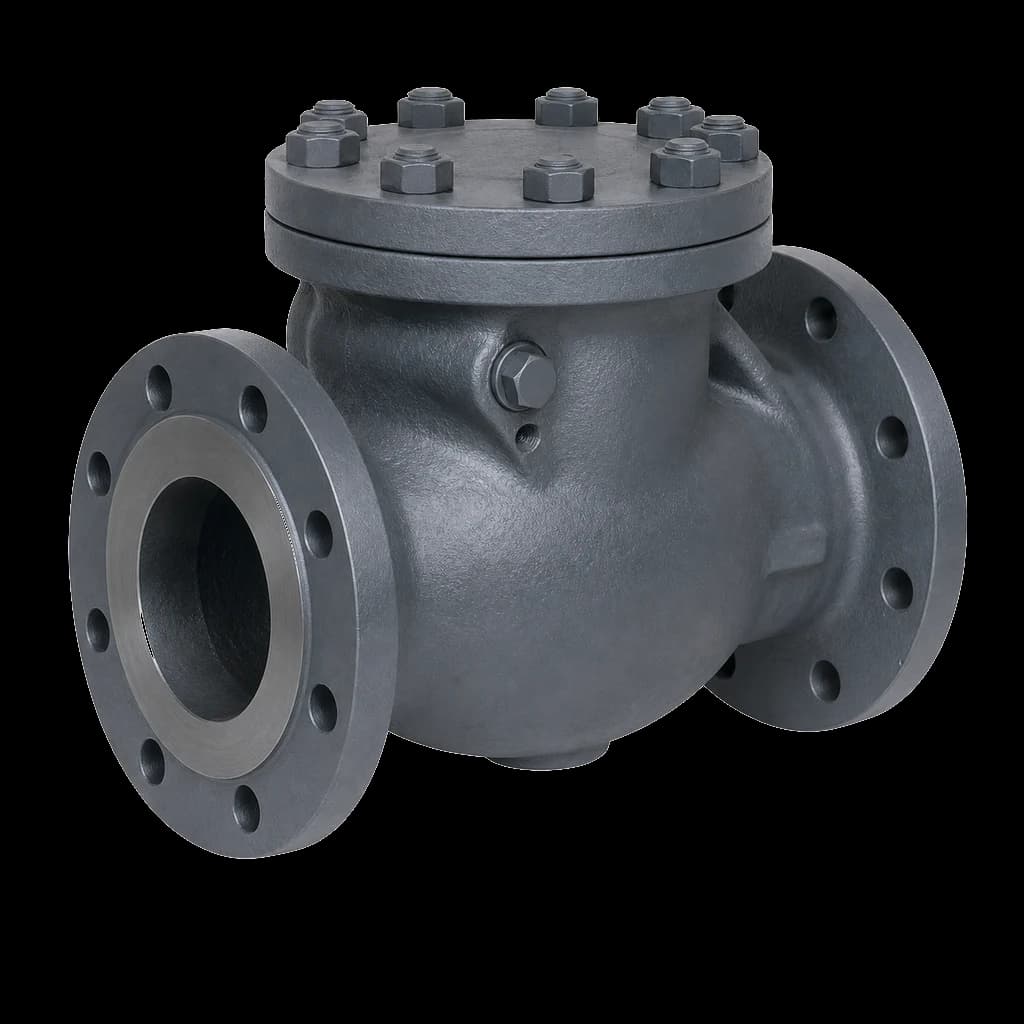
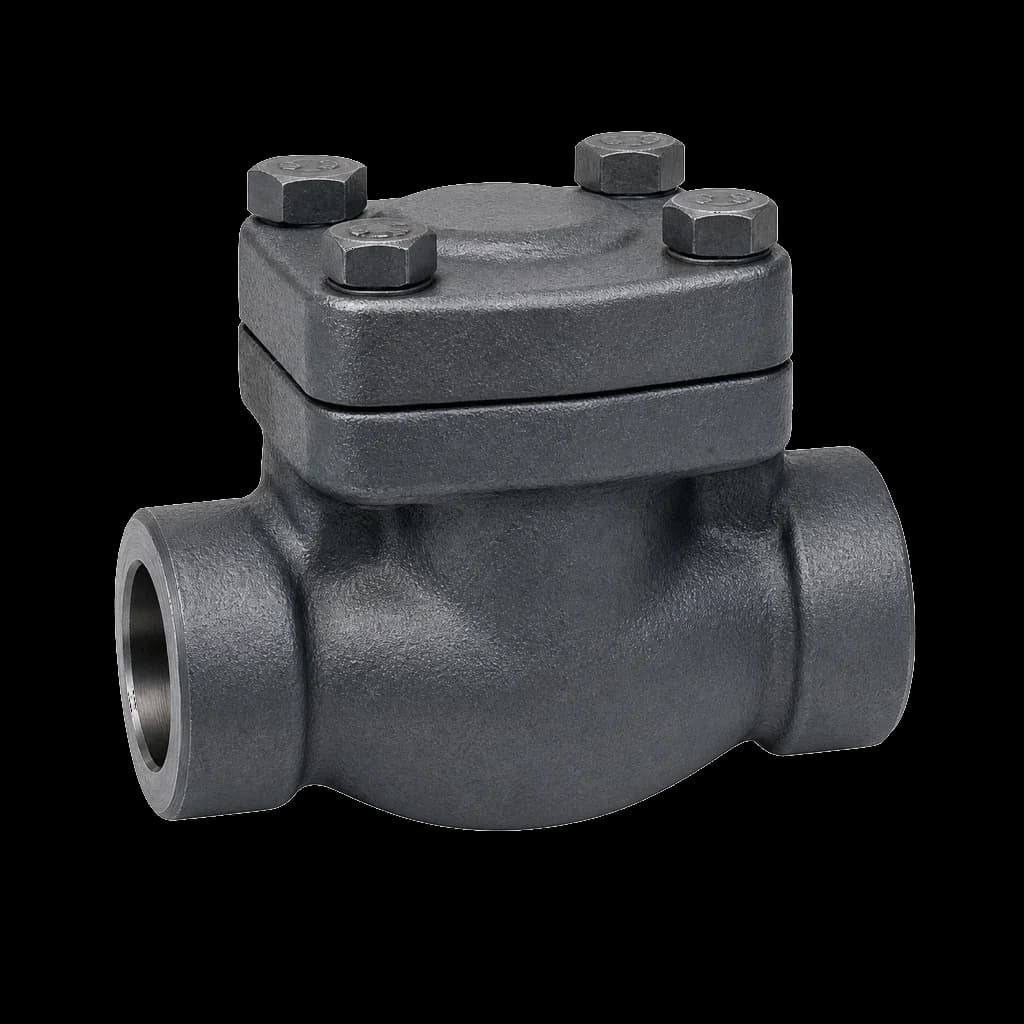
A swing check hangs a disc on a hinge pin inside a full-bore body. Forward flow pushes it open; gravity and reverse flow close it. Fully open, the flow path is nearly unobstructed and pressure drop is the lowest of the three — which is why swing checks remain the default on large water and process lines with steady flow. The weakness is closure dynamics: the disc travels a long arc from wide open to seat, so on a pump trip the flow has already reversed by the time the disc arrives. It slams. On a long discharge line or a parallel-pump station, that surge event is a design problem, not a nuisance. Lever-and-weight or lever-and-spring attachments speed up closure and are common on water pumping duty; for severe cases, purpose-built non-slam (nozzle) checks exist beyond the scope of the three patterns here.
Dual plate (API 594): spring-assisted fast closure
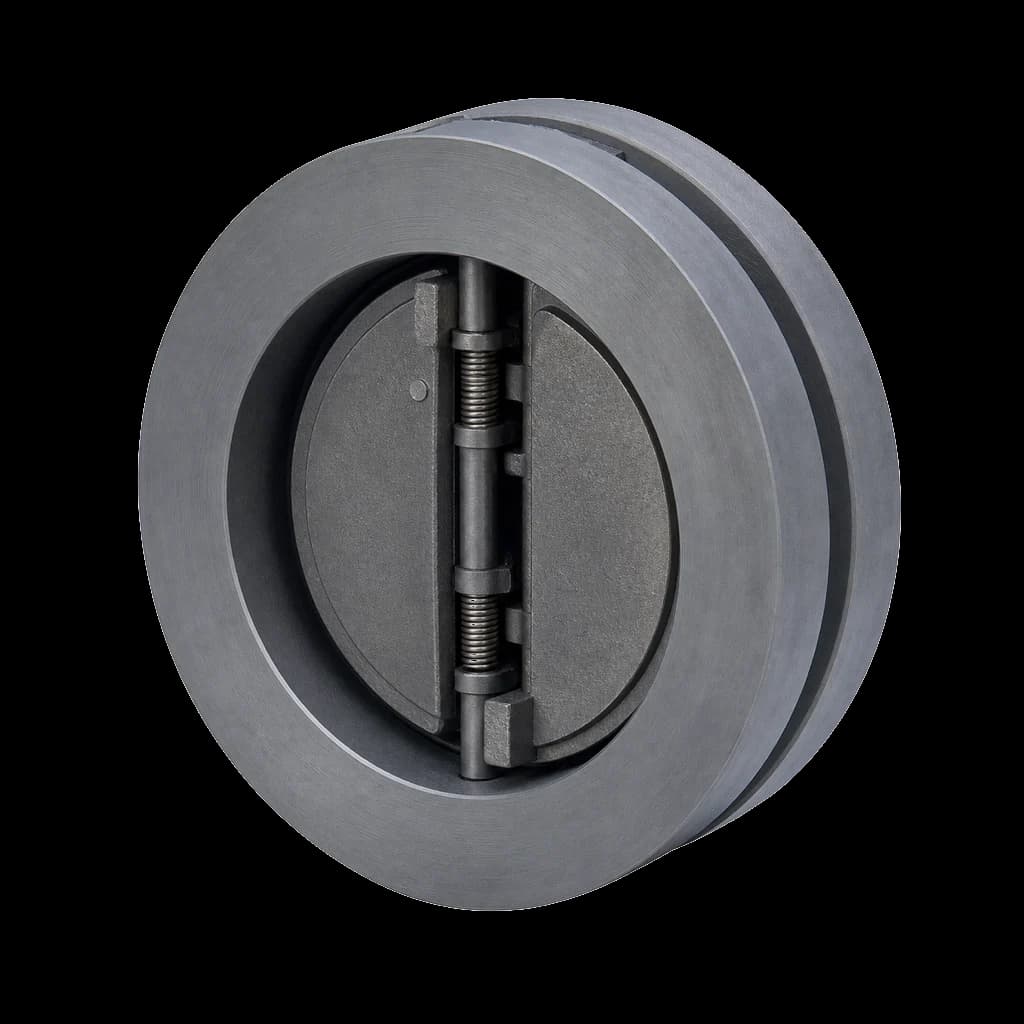
The dual plate check — standardized in API 594 — replaces the single disc with two spring-loaded half-discs folding on a central hinge pin. The travel is short and the springs start closing the plates the moment forward flow decays, so the valve is essentially shut before reverse flow establishes. That is the definition of non-slam behaviour in a compact package. The second advantage is physical: a wafer-pattern dual plate valve fits between flanges in a fraction of the length and weight of a cast swing check body.
| Parameter | Swing check (flanged) | Dual plate (wafer) |
|---|---|---|
| Face-to-face | ≈ 495 mm (ASME B16.10) | ≈ 130 mm (API 594) |
| Weight | ≈ 120–150 kg | ≈ 20–25 kg |
| Closure behaviour | Slow, slam-prone on pump trip | Spring-assisted, fast, low slam |
| Pressure drop (open) | Lowest | Moderate (plates and stops in bore) |
| In-line maintenance | Yes — bonnet/cover access | No — remove from line |
The weight delta cascades: lighter valve, shorter spool, smaller supports, easier handling at height. On new construction, dual plate check valves frequently cost less installed even where the bare-valve price is similar.
Wafer disc: the utility workhorse
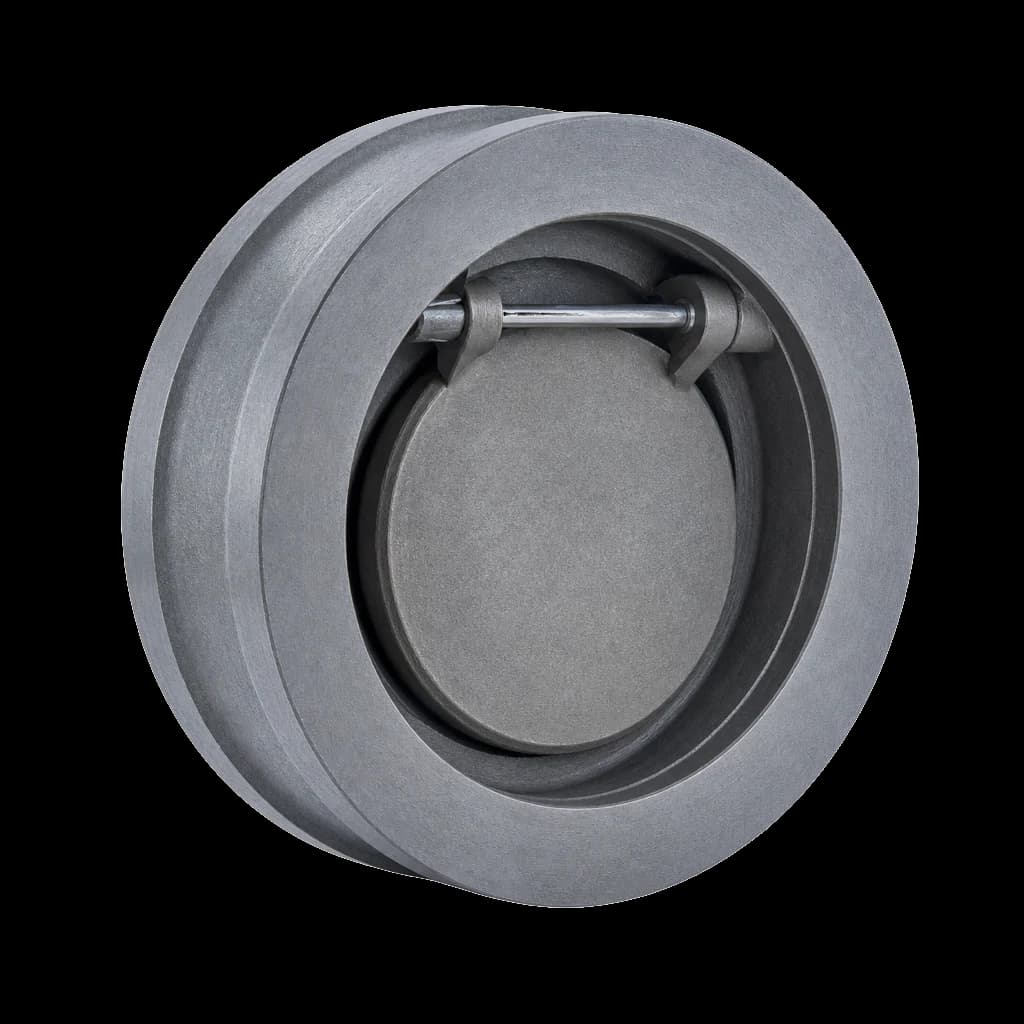
The wafer disc check (spring-loaded disc check) uses a single spring-loaded plate moving axially onto a seat inside a short wafer body. It is the cheapest and most compact of the three, closes fast, and works in any orientation because the spring — not gravity — does the closing. The costs are hydraulic: the disc and spring sit in the flow path, so pressure drop is the highest of the three, and the spring imposes a cracking pressure the system must overcome before flow starts. That makes it the right valve for pump discharge on utility water, compressed air, and general service lines — and the wrong one where every metre of head matters or flow is barely above minimum. See the wafer disc range for typical sizes.
Orientation, cracking pressure, pressure drop
- Swing: horizontal lines, or vertical with flow upward only. Gravity must help the disc close — never install one in vertical down-flow.
- Dual plate: horizontal or vertical up-flow as standard; the springs make it far less orientation-sensitive than a swing, but confirm the manufacturer's mounting statement.
- Wafer disc: any orientation, including vertical down-flow, because closure is fully spring-driven.
- Sizing rule for all three: size the check for the actual flow velocity, not the line size. An oversized check never opens fully, flutters against its seat or stops, and wears out early. This is the most common check valve failure cause in the field.
Maintenance access
A cast steel swing check has a bolted cover: disc, hinge pin and seat can be inspected and renewed with the valve in the line. Dual plate and wafer disc valves have no access opening — service means dropping the spool and pulling the valve out. In practice small wafer disc checks are treated as replaceable cartridges, which is fine at their price point; for a 12" dual plate on a critical line, plan the flange access and spool handling into the layout from day one.
Where each belongs
- Swing: large water transmission and steady process flow, media with solids (clear disc path), lines where in-line maintenance matters, low available head.
- Dual plate: pump discharge with trip-driven reversal risk, hydrocarbon and steam condensate systems, space- and weight-constrained racks, larger sizes where a swing body becomes a crane lift.
- Wafer disc: utility water, air and glycol loops, pump protection on small and mid-size general service lines, any orientation, lowest budget.
Whichever pattern you pick, state it explicitly on the enquiry along with orientation and flow range — "check valve, 8", Class 150" is not a specification. Our guide to reading a valve datasheet covers the fields that prevent the wrong valve arriving on site.