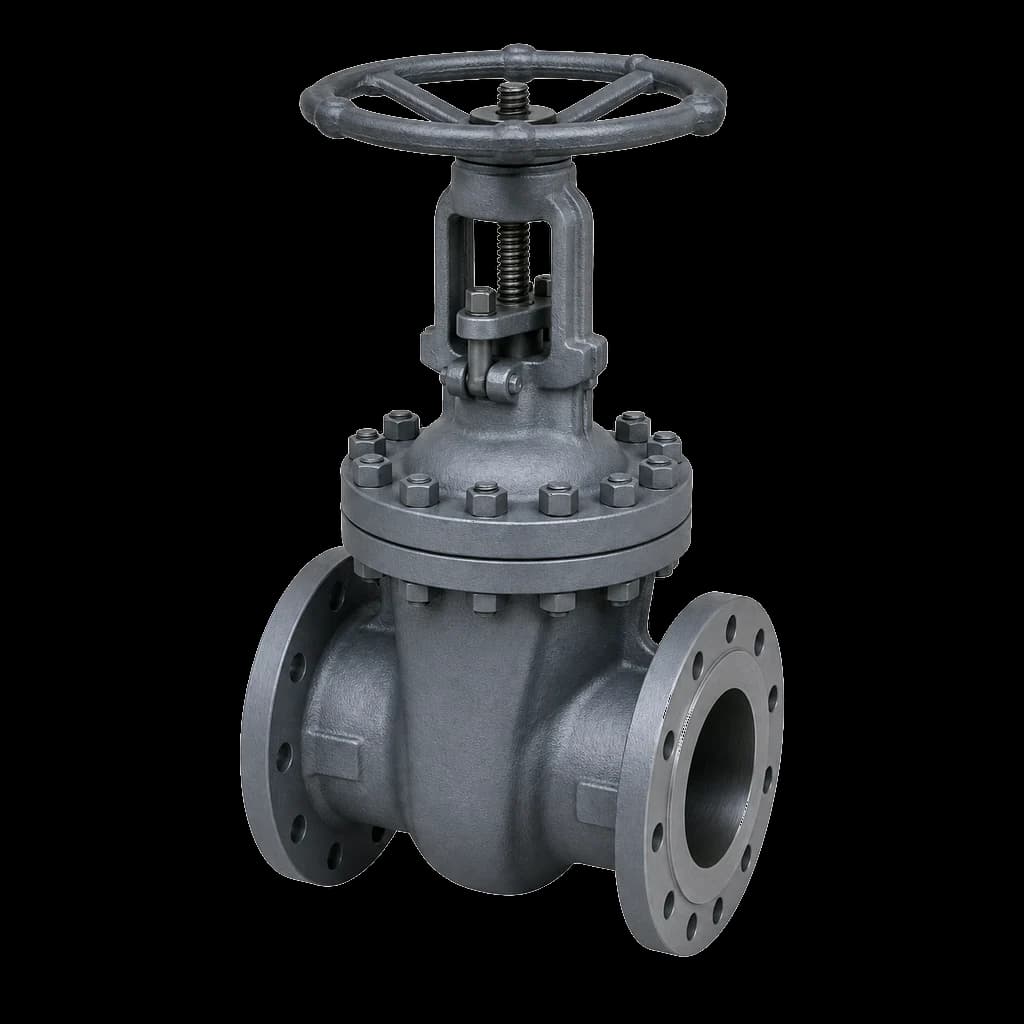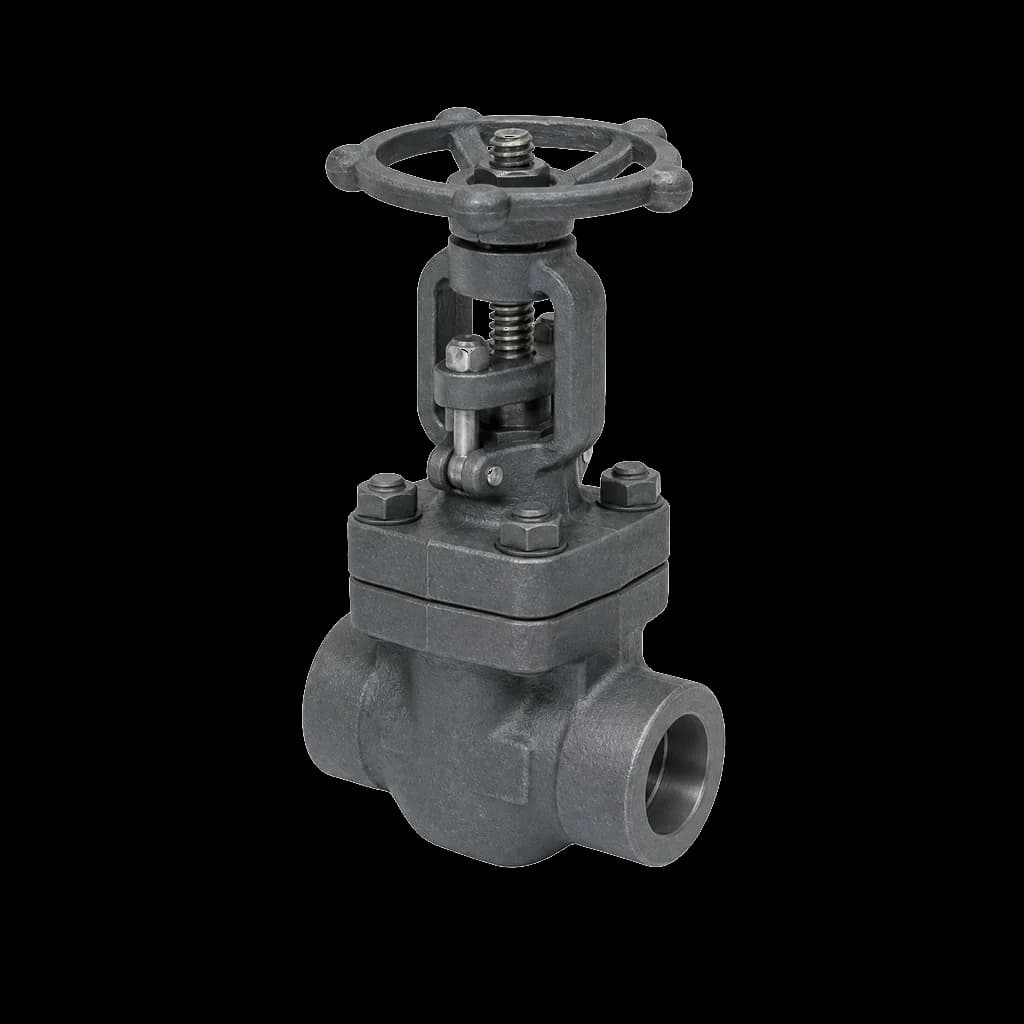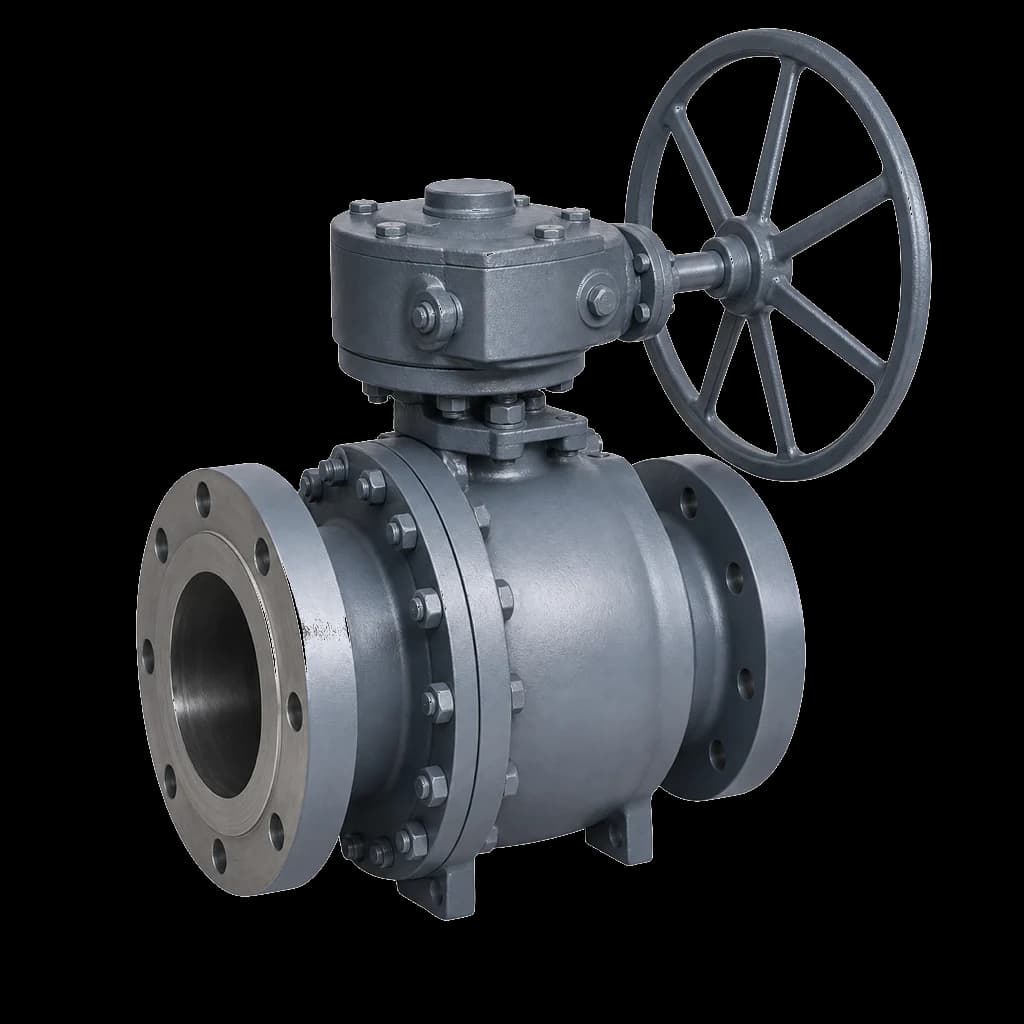
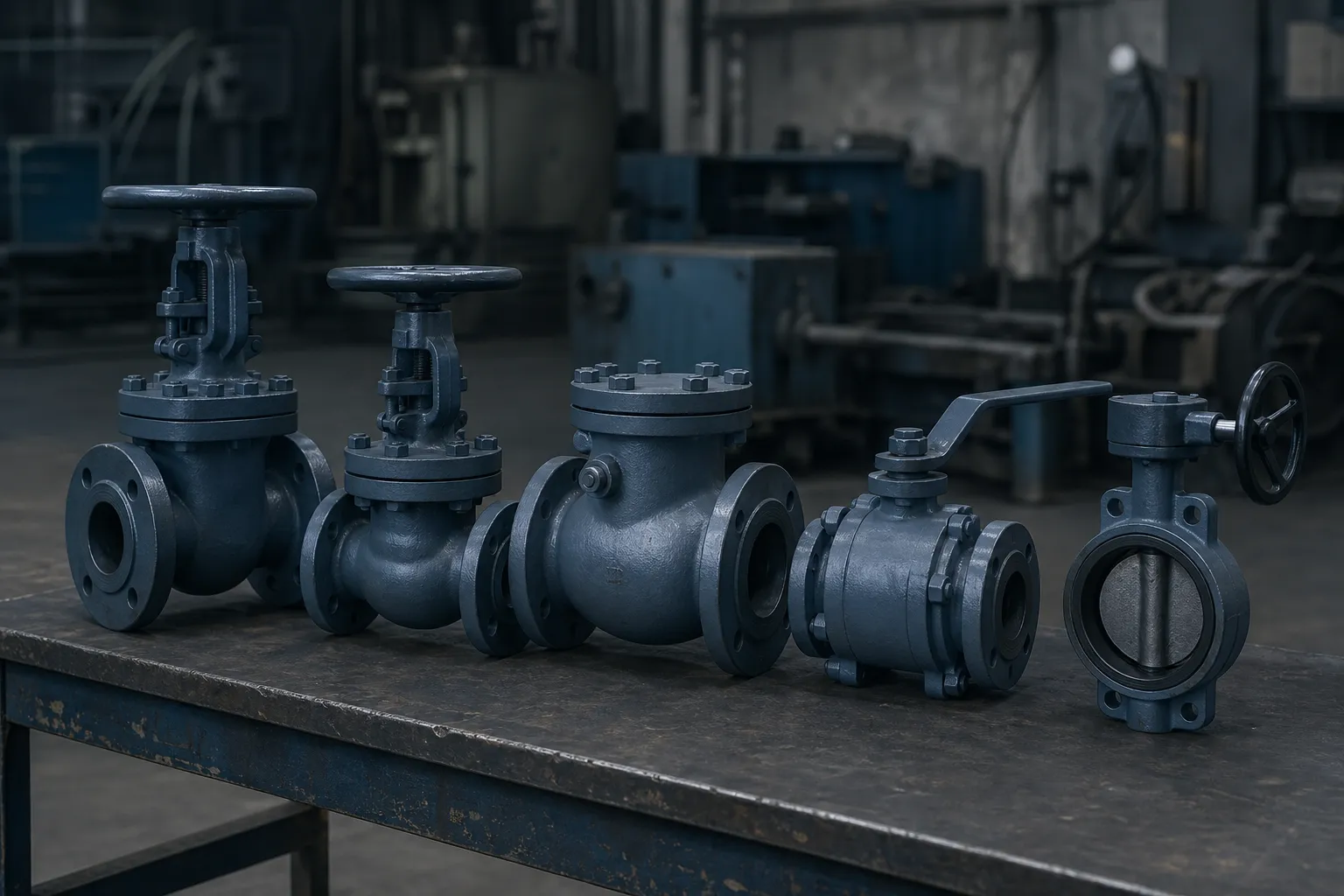
A valve datasheet is a contract in table form. Every row either fixes a decision or leaves a hole a vendor will fill with an assumption — and assumptions always price cheaper than requirements. Reading a datasheet line by line, knowing what each field commits both parties to, is the fastest-payback skill in valve procurement. Here is the walkthrough, top to bottom.
The service block: what the valve will live in
The header rows name the fluid, its state and its behavior — "cooling water," "saturated steam," "sour wet gas." This block quietly drives half the sheet: sour service invokes NACE MR0175; hydrocarbons invoke fire-safe certification; solids content pushes trim toward hardfacing. If the service line is blank or says "process," the vendor knows nothing that matters — first red flag.
Design vs operating conditions
The sheet carries two pressure–temperature pairs. Operating describes the normal day. Design is what the piping was engineered to withstand — upsets included — and it alone selects the class, via the B16.34 tables explained in our class ratings guide. Verify the arithmetic yourself: design P&T against the stated class and body material group. A sheet showing 45 bar at 300 °C over "Class 150, WCB" contains a contradiction someone must resolve before money moves.
Size, class and design standard
Size and class are self-evident; the design standard row is where patterns live: API 600 for cast gates, API 602 for forged small-bore, BS 1873 for cast globes, BS 1868 for swing checks, API 594 for dual-plate, API 6D for pipeline valves, API 609 for butterflies. This row decides wall thickness philosophy, face-to-face dimensions (B16.10), and which testing regime applies — it is not decoration, and "manufacturer's standard" written here is a second red flag on anything critical.
Materials: body, bonnet, trim, fasteners
Body and bonnet carry an ASTM grade — A216 WCB, A351 CF8M, A105, A182 F316L. Trim is cleanest as an API trim number (Trim 1, 5, 8…), decoded in our trim guide. Soft goods — seats, seals, packing — get their own rows on quarter-turn sheets: PTFE/RPTFE/PEEK per the seat materials logic, graphite packing for fire-safe or hot duty. Bolting (B7/2H standard, B16 for heat, L7 for cold) is the row everyone skips and metallurgists read first.
Ends and operation
End connections must name the standard and the detail: "flanged RF per B16.5," "SW per B16.11," "BW ends, schedule to match 80." Above 24", the flange series (B16.47 A or B) is mandatory. Facing finish (smooth vs serrated) matters for gasket selection. The operation row — handwheel, gear, bare stem for actuation, lever — is priced hardware: a 12" Class 300 gate without "gear operated" written down arrives with a handwheel nobody can turn.
Testing and certification boxes
The testing row names the regime — API 598 for general valves, API 6D's own annex for pipeline valves — plus any extras: low-pressure air seat test, witness points, NDT on castings. The certification boxes commit the paper trail: EN 10204 3.1 or 3.2 MTCs, IBR Form III-C for boiler-connected steam, fire-safe type-test certificates, NACE compliance statements. Anything unticked here is un-negotiated later.
A worked example
| Field | Entry |
|---|---|
| Service | Saturated steam, boiler header (IBR scope) |
| Design / operating P&T | 28 bar @ 300 °C / 21 bar @ 285 °C |
| Size · Class | 8" · Class 300 |
| Design standard | API 600; face-to-face B16.10 |
| Body / bonnet | A216 WCB |
| Trim | API Trim 8 (13Cr, Stellite seats) |
| Ends | Flanged RF, B16.5, serrated finish |
| Operation | Handwheel, OS&Y rising stem |
| Testing | API 598 (shell + HP closure + backseat) |
| Certification | IBR Form III-C + EN 10204 3.1 |
| Marking | Body: size, class, material, heat no. |
Red flags: a short checklist
- Blank design conditions — the class is an orphan; someone guessed it.
- Class inconsistent with stated P&T — run the table check before quoting or buying.
- "Or equivalent" on safety-critical rows (fire-safe, NACE, IBR) with no definition of equivalence.
- No test standard named — "tested" without API 598/6D commits the vendor to nothing measurable.
- No thread form on threaded ends, no series on large flanges — the two classic site-mismatch generators from our procurement mistakes list.
- Certification boxes empty on IBR-scope or hydrocarbon service — the omission that cannot be fixed after manufacture.