Walk through any Indian plant's utility corridors — compressed air headers, fire mains, cooling and service water, plumbing risers — and most of the steel you see was bought against one standard: IS:1239. It is the workhorse specification for mild steel (MS) tubes and their screwed fittings, and because it is so common it is often ordered from habit rather than understanding. That habit produces two recurring mistakes: the wrong class for the duty, and IS:1239 used where the service has quietly outgrown it. This article covers both.
What IS:1239 covers
IS:1239 comes in two parts. Part 1 covers mild steel tubes in nominal bores from 6 mm to 150 mm (⅛" to 6"), supplied plain-ended or screwed-and-socketed, for water, gas, air and general low-pressure service. Part 2 covers the matching wrought steel fittings — sockets, elbows, tees, bends, nipples, unions and plugs — that complete a screwed utility system. Above 150 NB, the Indian-standard route continues with IS:3589 for larger-diameter welded pipe; IS:1239 itself stops at 6".
Light, Medium, Heavy — and the colour bands
Part 1 defines three classes that share outside diameter but differ in wall thickness: Light, Medium and Heavy. Shared OD is deliberate — all three classes take the same threading dies and the same fittings. Each class carries a colour band for identification at stores and site, and picking by colour band is faster and safer than callipering walls on a busy receipt dock.
| Class | Colour band | Wall | Typical placement |
|---|---|---|---|
| Light (L) | Yellow | Thinnest | Non-critical drainage, sleeves, low-pressure indoor plumbing |
| Medium (M) | Blue | Intermediate | General water distribution, compressed air, G.I. plumbing lines |
| Heavy (H) | Red | Thickest | Fire mains, buried or exposed rugged service, lines that are threaded repeatedly |
Two practical selection rules. First, threading cuts into the wall — so lines that will be screwed, re-threaded during maintenance, or clamped and grooved deserve Medium at minimum and usually Heavy. Second, fire-protection practice in India specifies Heavy class for hydrant and sprinkler mains as a matter of course; if you are quoting a fire-fighting system, assume the red band unless the consultant states otherwise.
Threading per IS:554 and the G.I. variant
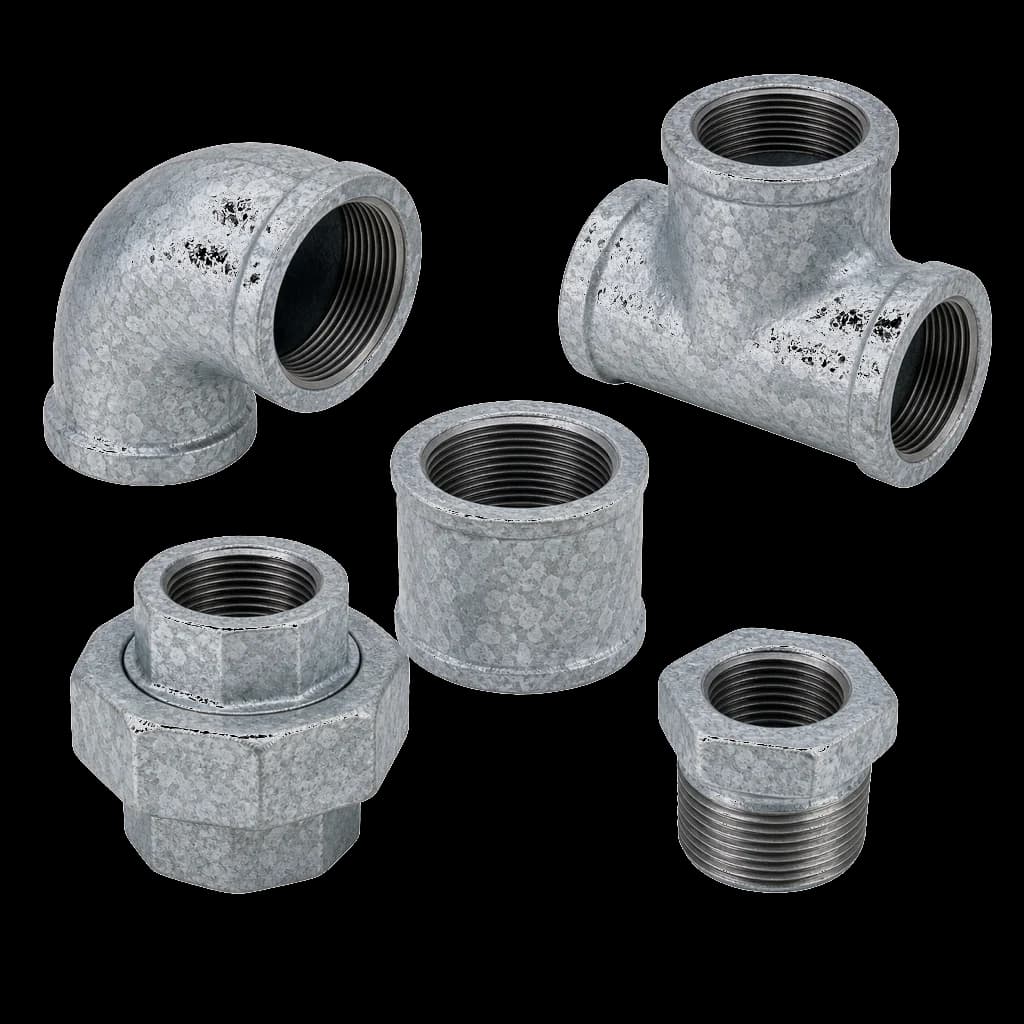
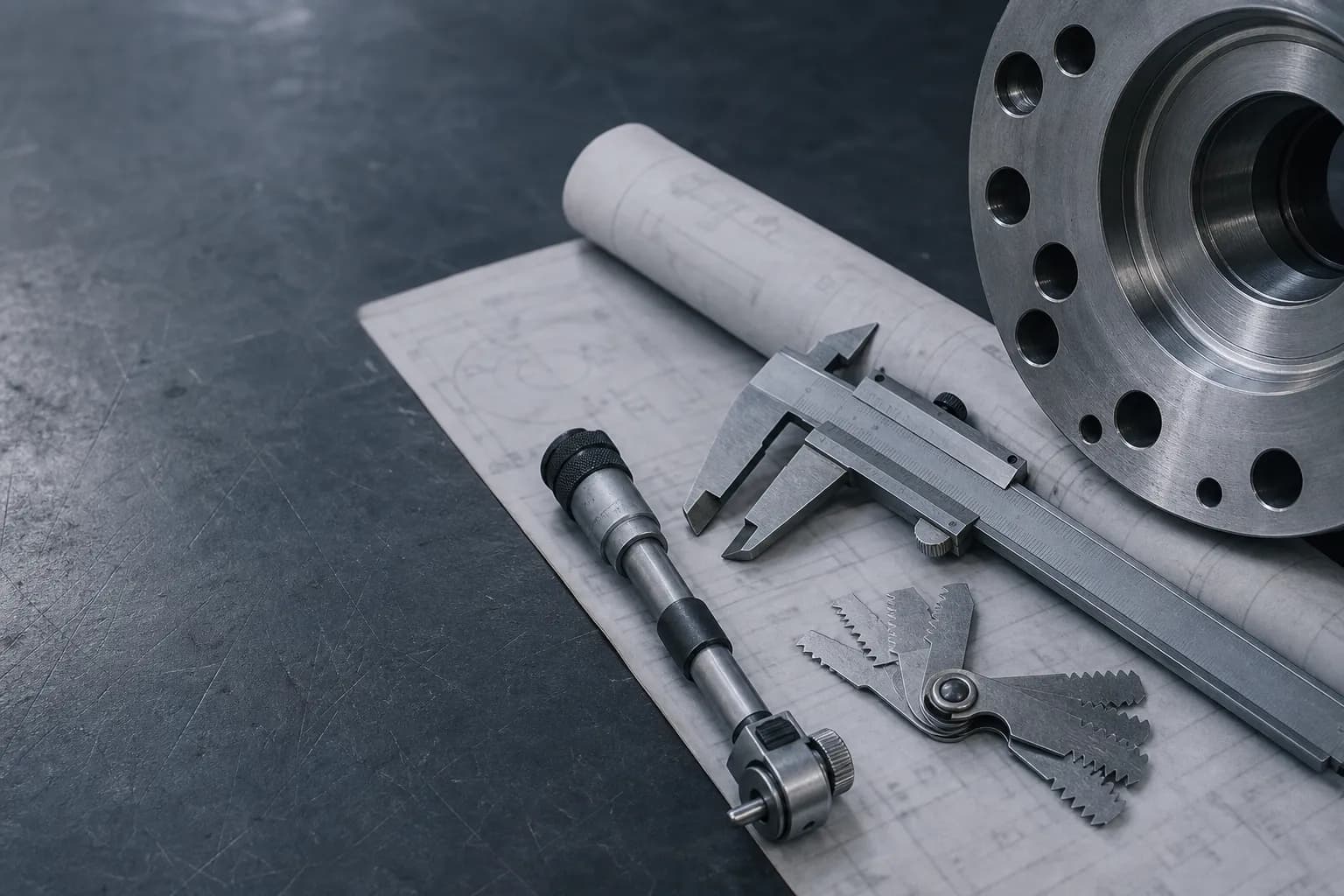
Threads on IS:1239 pipe and Part-2 fittings are cut to IS:554 — taper pipe threads where pressure-tight joints are made on the threads, technically aligned with the ISO 7 / BSPT family. This matters at interfaces: an IS:554/BSPT thread and an American NPT thread have different angles and forms, will start on each other, and will weep for the life of the joint. Do not mix them, and state the thread standard on the PO when imported equipment is anywhere in the system. For water service, the tubes and fittings are commonly supplied hot-dip galvanized (the familiar G.I. pipe), with zinc coating per IS:4736, giving corrosion life that bare MS cannot match in wet, intermittently drained lines. G.I. fittings — elbows, tees, sockets, unions — complete the galvanized system; cutting a thread does expose bare steel, which is why threaded joints in G.I. lines get dressed with paste or tape and why severe duties move to other systems entirely.
Where IS:1239 belongs
- Water: drinking water distribution, service and cooling water branches, plumbing — usually G.I. in Medium class.
- Compressed air: shop air headers and drops, where pressures sit comfortably within utility ratings.
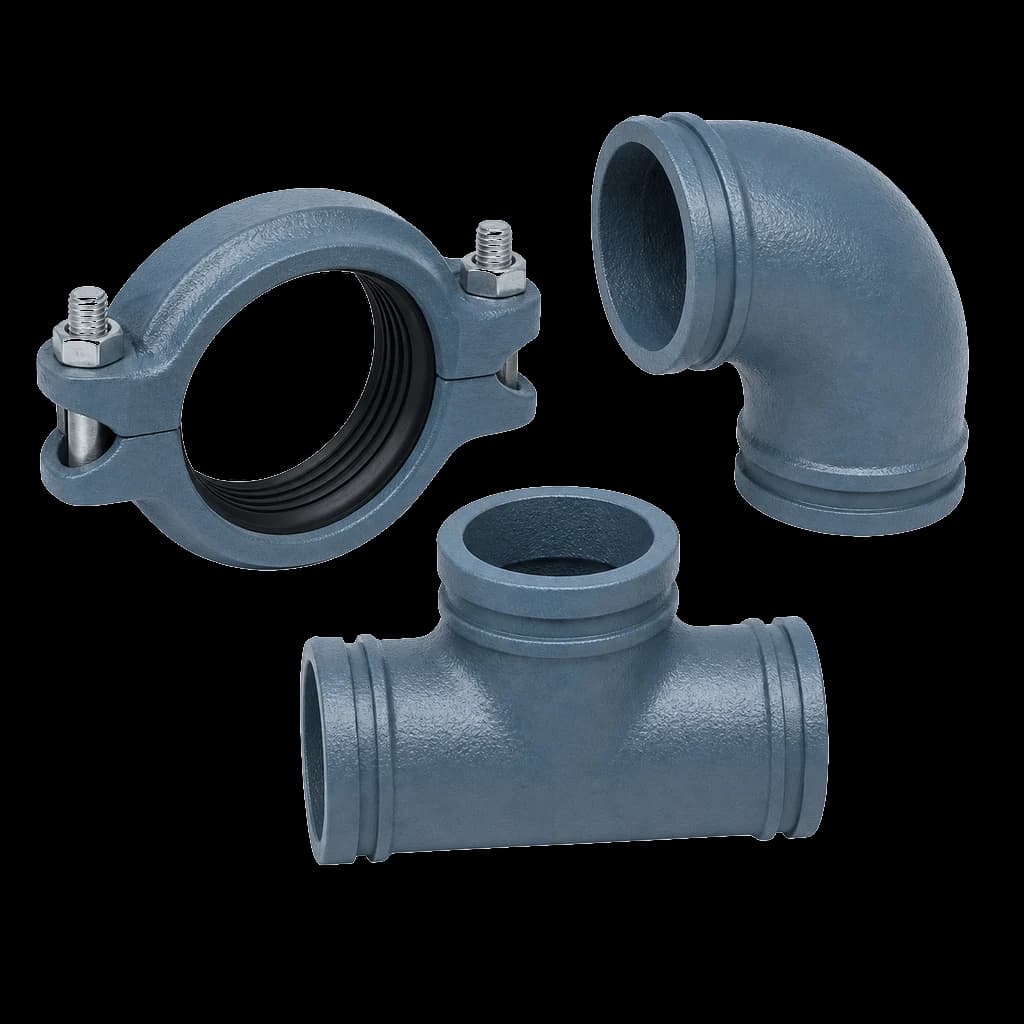
- Fire mains: hydrant and sprinkler networks in Heavy class, screwed or grooved, painted fire-red or galvanized.
- General utility: low-pressure steam tracing returns, condensate drains and similar non-critical hot lines are seen in practice — but anything within IBR scope or at real steam conditions belongs in the ASME/IBR system, not IS:1239.
#1000 Lbs fittings and BS:10241
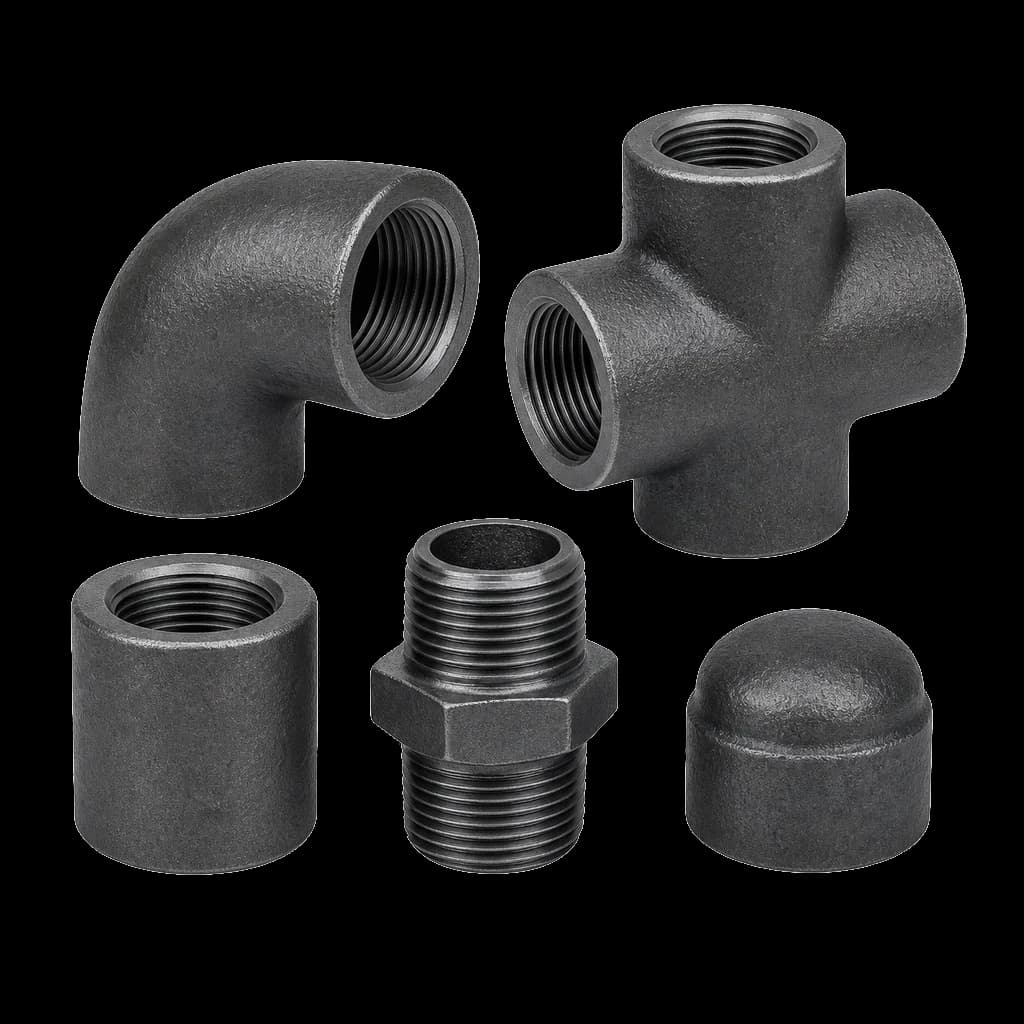
In Indian trade practice, the screwed fittings that partner IS:1239 pipe are quoted as “#1000 Lbs” commercial threaded fittings, with dimensions to IS:1239 Part-II and BS:10241 — you will see both standards cited together on catalogues and POs. The #1000 Lbs designation marks the bottom rung of the threaded-fitting ladder: above it sit the forged #2000, #3000, #6000 and #9000 Lbs classes made to IS:4712 and ASME B16.11 for genuinely high-pressure screwed and socket-weld work. The dividing line is simple: utility services stay with #1000 Lbs commercial fittings; hydrocarbon, steam and high-pressure services step up to forged. The ASME B16.11 vs IS:4712 article covers that upper tier in detail.
When to step up to ASME-system piping
IS:1239 is a utility standard, and its limits are reached quickly once the service turns serious. Move to the ASME system — seamless pipe to ASTM A106/API 5L, forged fittings to ASME B16.11, flanged or welded construction — when any of the following is true:
- The fluid is hydrocarbon, chemical or toxic. Screwed utility joints are not the right containment philosophy for these services.
- Pressure or temperature exceeds utility conditions — process steam, boiler-connected lines (which also trigger IBR certification), high-pressure air or gas.
- Traceability is contractual. IS:1239 supply is commercial; when the project demands heat-number traceability and EN 10204 MTCs per line item, the ASME/ASTM route is built for it.
- The design code says so. Piping engineered to ASME B31.3 will list ASTM materials; substituting IS:1239 into such a line is a deviation, not an equivalence.
Joining method is a related but separate decision — screwed IS:1239, grooved couplings and welded construction each have their place, and the trade-offs are covered in grooved vs threaded vs welded piping.