
Every piping system is a chain of joints, and the joining method decides more of the project outcome than the pipe itself: installation speed, permit burden, leak behaviour, maintainability, and where the system is allowed to go at all. Three methods dominate Indian building services and industrial work — grooved couplings, threaded fittings and welding. Each wins somewhere. This guide sets out how each joint works and where the boundaries actually lie.
How each joint works
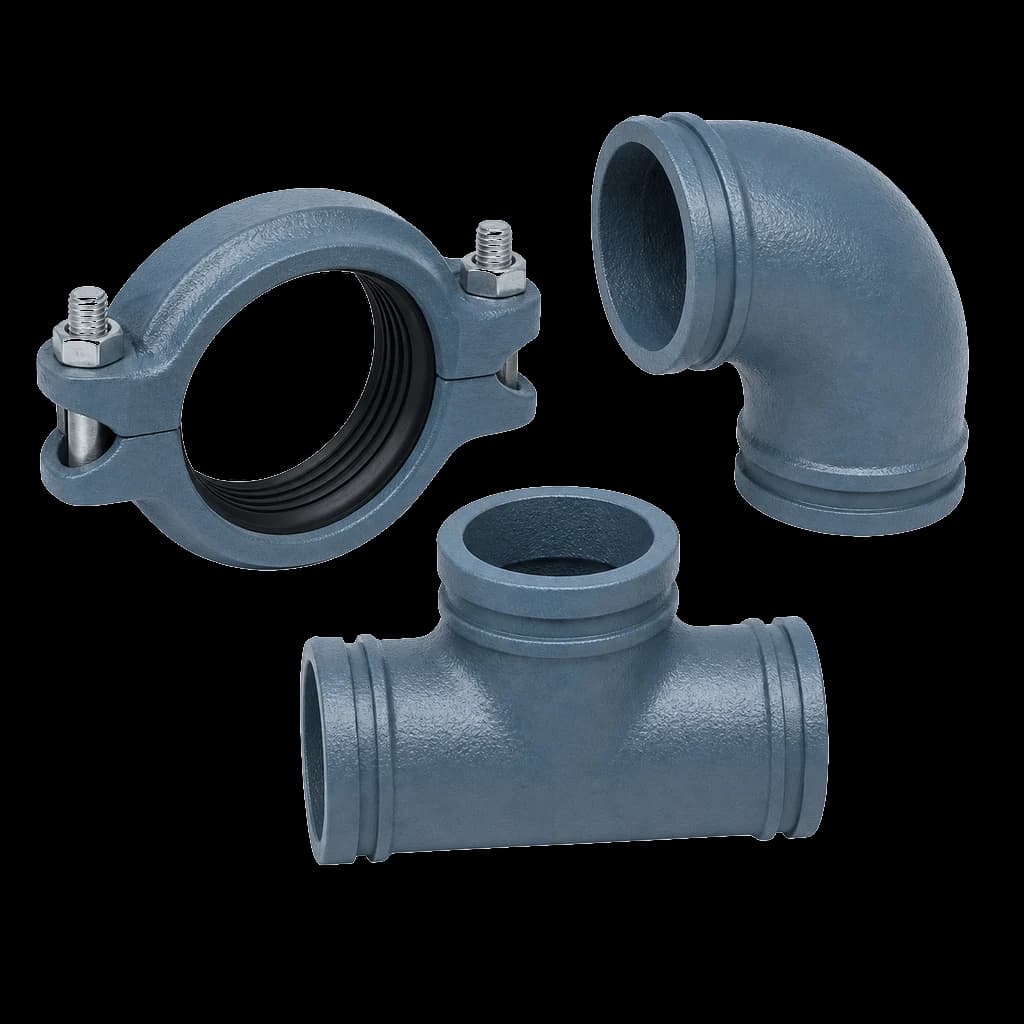
Grooved
A shallow groove is rolled (or cut, on heavy wall) near each pipe end. A two-piece coupling housing engages both grooves and compresses a C-shaped elastomer gasket — typically EPDM for water — around the joint. Two bolts complete it. The housing carries the mechanical load; the pressurized gasket seals harder as pressure rises. Couplings come in flexible pattern, allowing limited angular deflection and axial movement, and rigid pattern, which grips the pipe like a fixed joint.
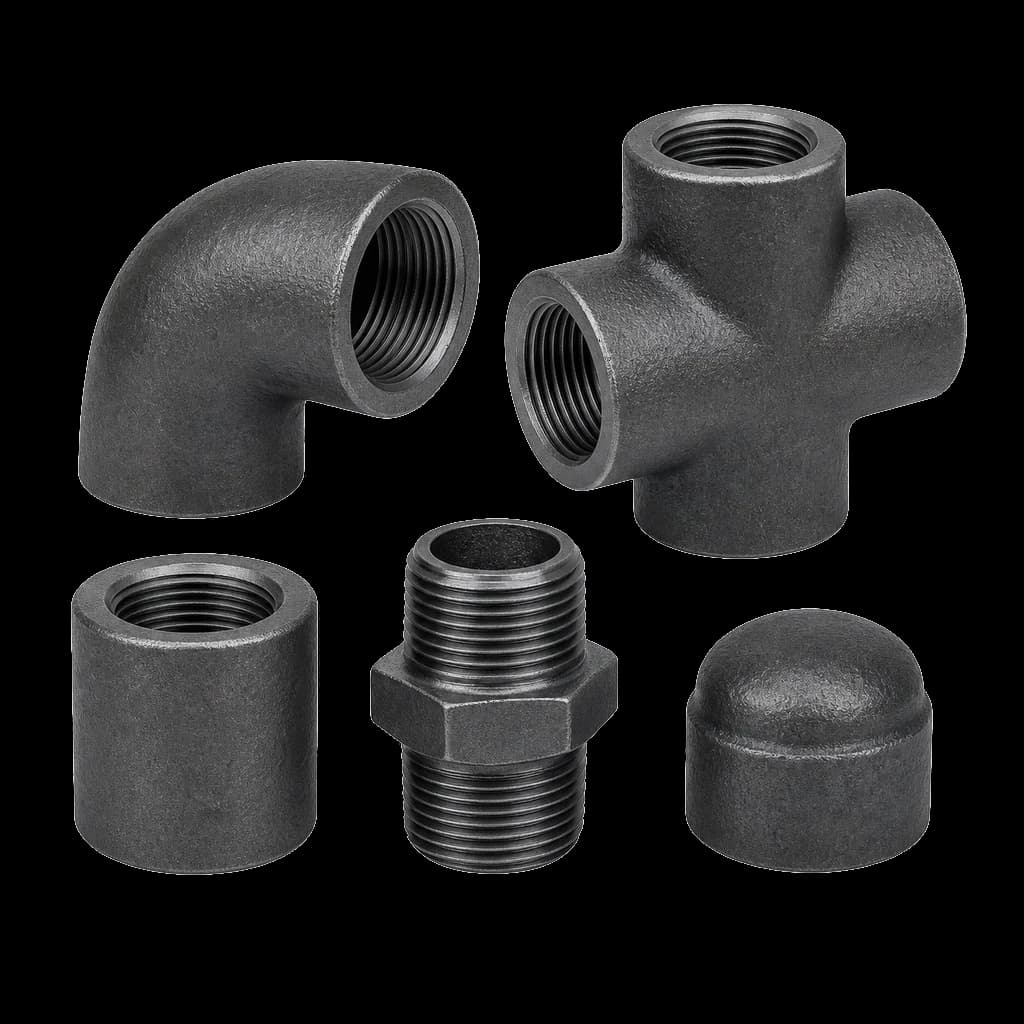
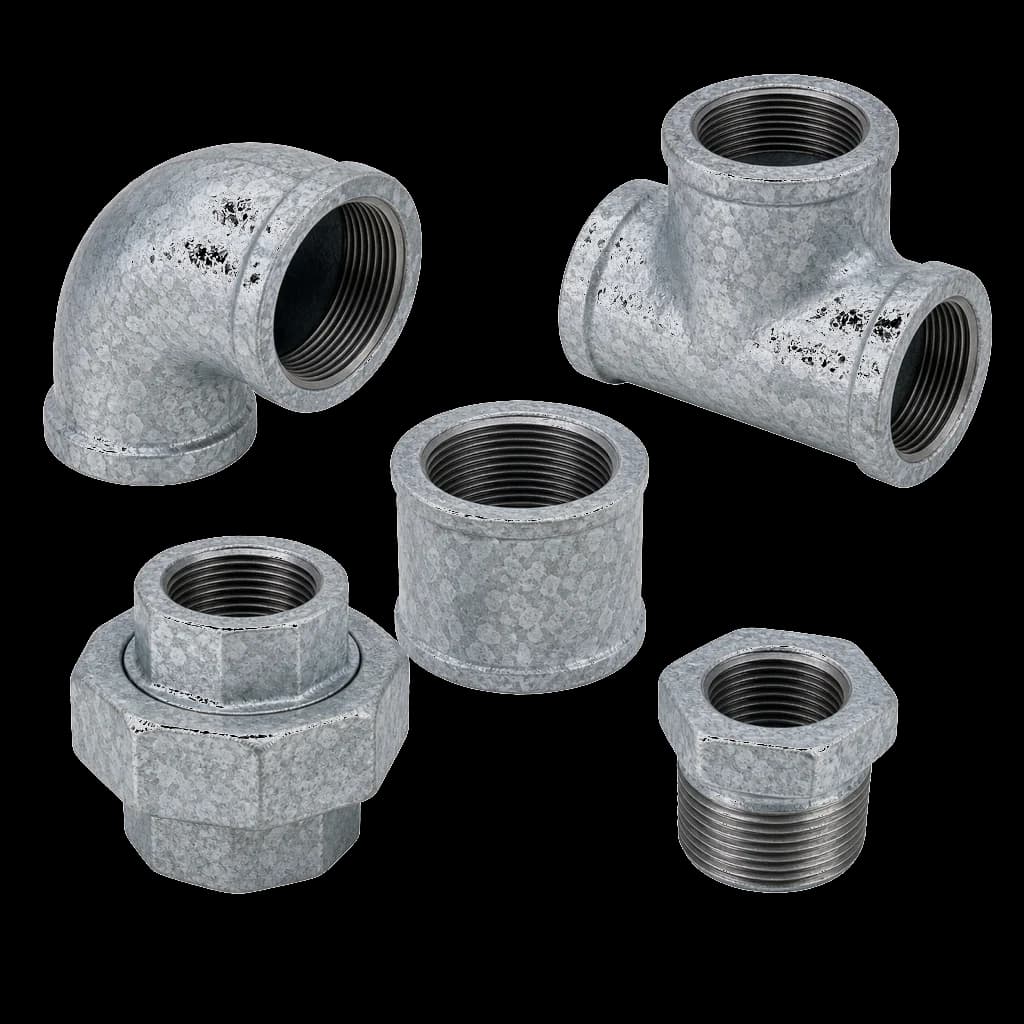
Threaded
Tapered threads — NPT or BSPT — are cut into the pipe end and wedged into a mating fitting, with thread sealant filling the spiral leak path. The joint is metal-to-metal plus sealant, and the thread root removes wall thickness from the pipe: the joint is the weakest cross-section in the run. Threaded fittings span #1000 Lbs banded patterns for G.I. work up to Class 3000/6000 forged steel.
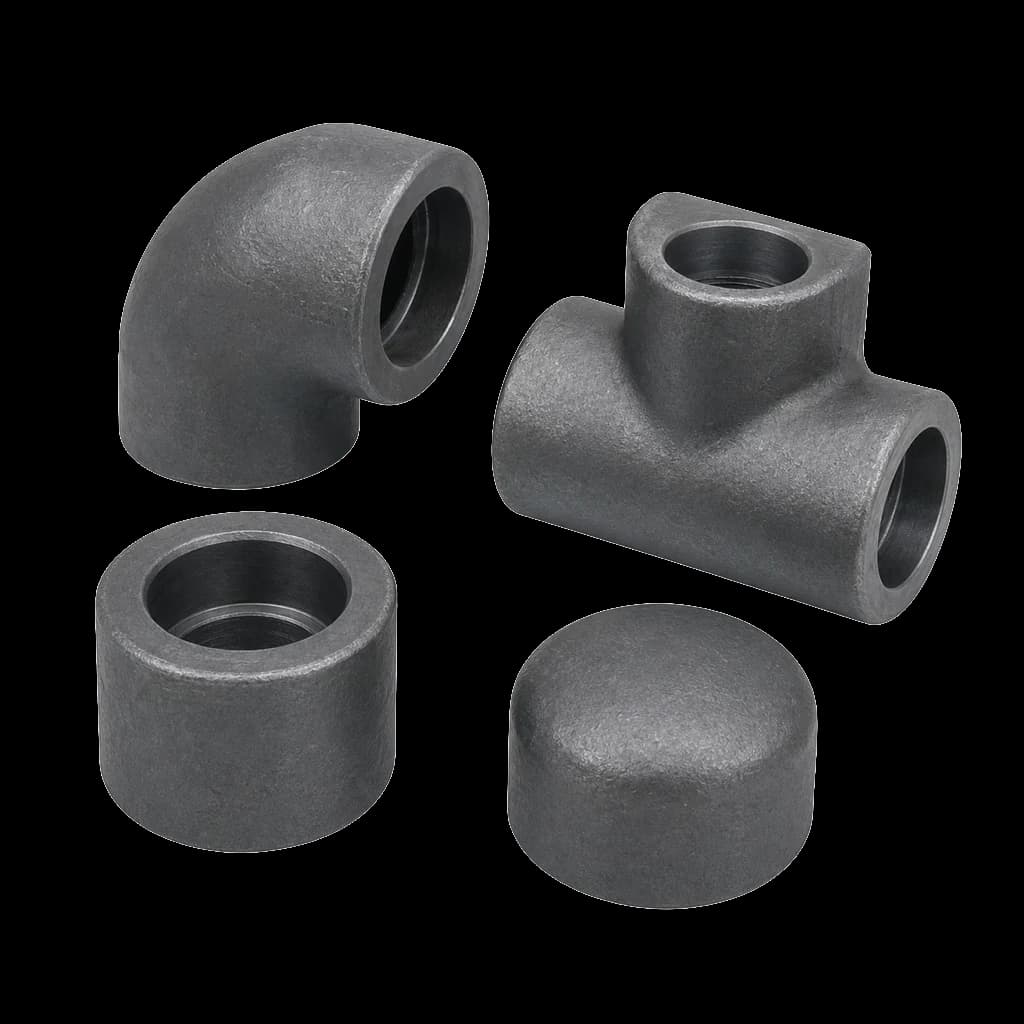
Welded
Butt-weld fittings are fused to matching bevelled pipe ends; small-bore socket-weld fittings receive the pipe into a socket with a fillet weld. Done right, the joint is continuous metal — as strong as the pipe, with no gasket, no sealant and no ageing element. The price is qualified welders working to approved procedures, hot work permits, fire watch and NDT sampling.
Installation speed and the hot-work question
On site, the sharpest divider is fire. Grooved assembly is flame-free: no hot work permit, no fire watch, no gas cylinders in the building, no weld inspection queue. A grooved joint goes together in minutes with hand tools (typical figures; crew and size dependent), which is why grooved systems dominate work inside occupied buildings, hospitals, data centres and live plants where every welding permit costs a shift. Threading is also flame-free but slows sharply with size — cutting and doping 3" and 4" threads is hard, slow work. Welding is the slowest per joint once permits, fit-up, welder qualification and radiography sampling are priced in, and site conditions degrade weld quality in ways shop spools do not.
Pressure and temperature envelopes
| Attribute | Grooved | Threaded | Welded |
|---|---|---|---|
| Typical size range | 1"–24" and beyond | Best ≤ 2"; practical to 4" | All sizes |
| Pressure envelope (representative) | ~20 bar standard couplings; higher with HP designs | Per fitting class — #1000 Lbs G.I. to Class 3000/6000 forged | Full pipe rating, through Class 2500 |
| Temperature limit (representative) | Gasket-limited — EPDM ~110 °C | Sealant- and service-limited | Metallurgy-limited only |
| Governing weakness | Elastomer gasket | Thread root, sealant, corrosion | Weld quality |
| Hot work required | No | No | Yes |
| Disassembly | Minutes — unbolt coupling | Unions or break the run | Cut and re-weld |
The pattern is clear: grooved is bounded by its gasket, threaded by its geometry, welded only by the metal. Water-based services at building temperatures sit comfortably inside the grooved envelope; anything hot, flammable or high-pressure migrates toward welding.
Vibration, movement and seismic tolerance
Flexible grooved couplings are the quiet advantage of the system. Each joint permits a small angular deflection and axial movement; a chain of them accommodates thermal growth, settlement and seismic drift that would crack a rigid system, and the elastomer gasket damps pump vibration and noise transmission — three flexible couplings at a pump connection are a recognized alternative to a bellows. Rigid couplings lock the run where stiffness is wanted: risers, valve clusters, equipment connections. Threaded joints are the worst case under vibration — the thread root is a ready-made stress concentration and fatigue crack initiator, and joints back off. Welded systems are strong but rigid; movement must be engineered in with loops and supports rather than absorbed at the joints.
Leak paths and maintenance
Threaded joints carry the most leak paths per metre: sealant ages, exposed thread roots corrode first — the classic first failure point of G.I. pipework covered in IS:1239 pipes and fittings explained — and over-tightening splits fitting sockets. A grooved system leaks rarely and tells you where: at a gasket, replaceable in minutes by unbolting the coupling, which also makes every joint a maintenance access point for strainers, valves and pumps. A sound weld does not leak for the life of the plant — but every future modification reopens the hot-work cycle, permits and all.
Where welded remains mandatory
No coupling or thread argues with the process codes. Hydrocarbon and process piping under ASME B31.3 practice is welded, with small-bore socket-welded and threaded joints tightly restricted — flammable and toxic services do not accept elastomer gaskets or sealant-dependent joints as the pressure boundary. Steam within IBR scope is welded with certified procedures. High pressure, high temperature, buried gas mains and severe cyclic services all stay welded. The rule of thumb: where a joint failure releases something that burns, poisons or scalds, weld it.
Typical Indian practice
Current practice sorts cleanly. Fire protection and HVAC mains have moved decisively to grooved — NEW grooved fittings serve exactly this market — for the hot-work and speed reasons above. Plumbing, small fire branches and utility G.I. lines remain threaded on IS:1239 pipe with #1000 Lbs fittings: cheap, familiar, adequate at small bore. Process plants, refineries, steam and gas stay welded, with forged threaded and socket-weld fittings confined to instrument connections and small-bore per the piping class. Specify the joint per service, not per habit — and price the permits, not just the fittings.