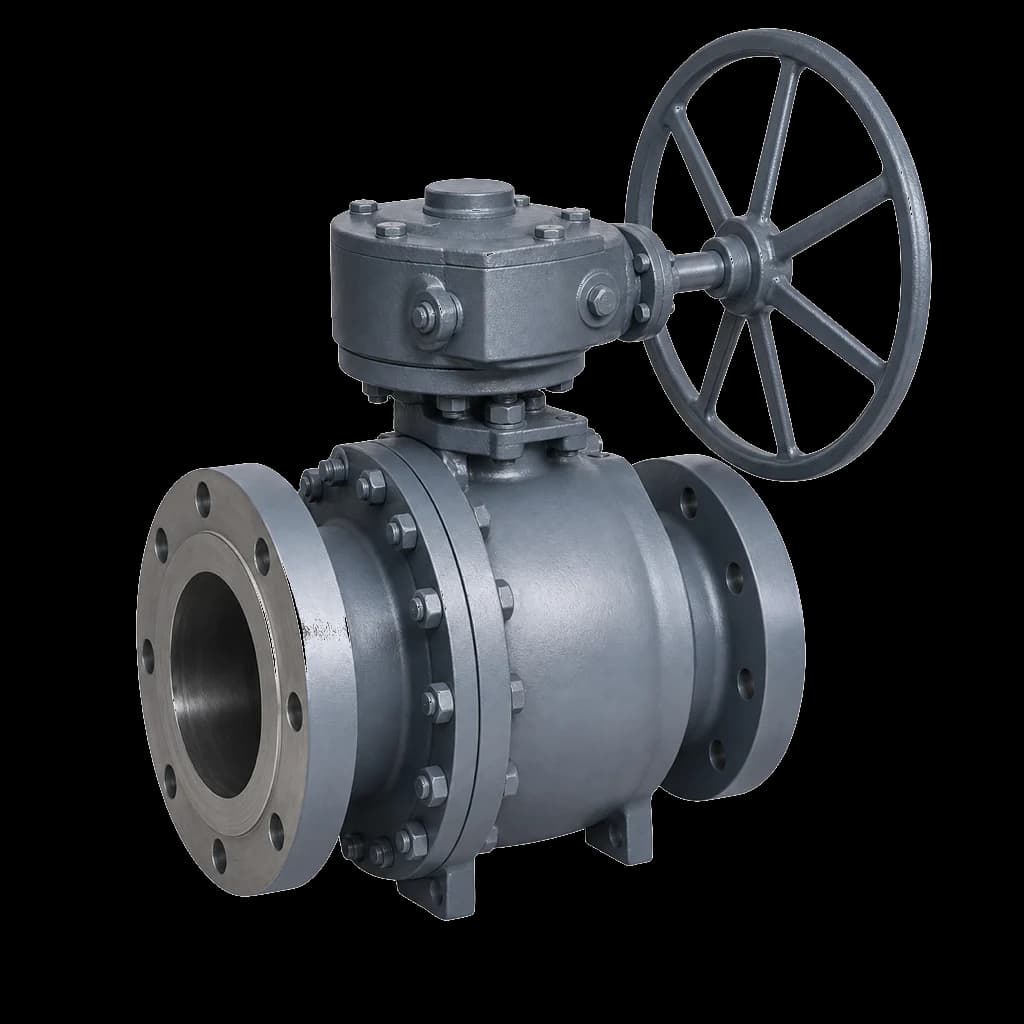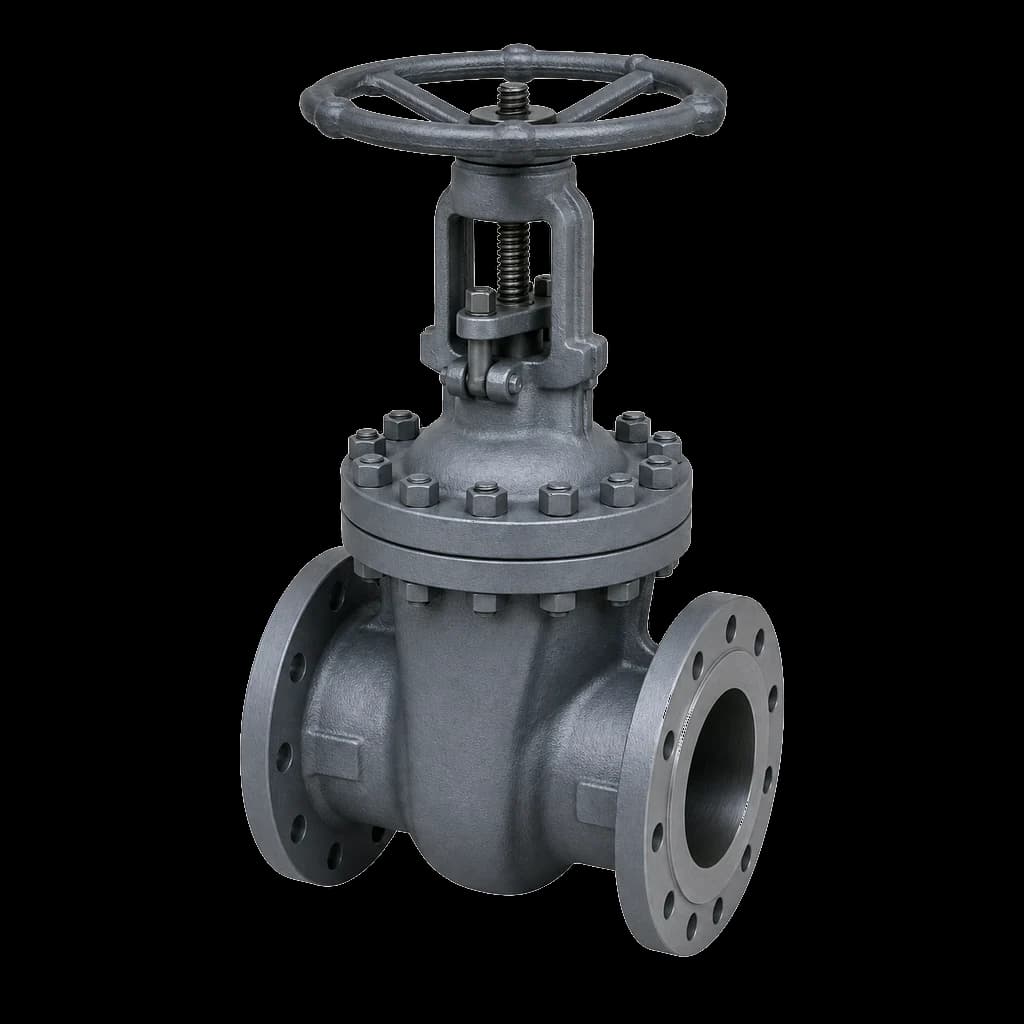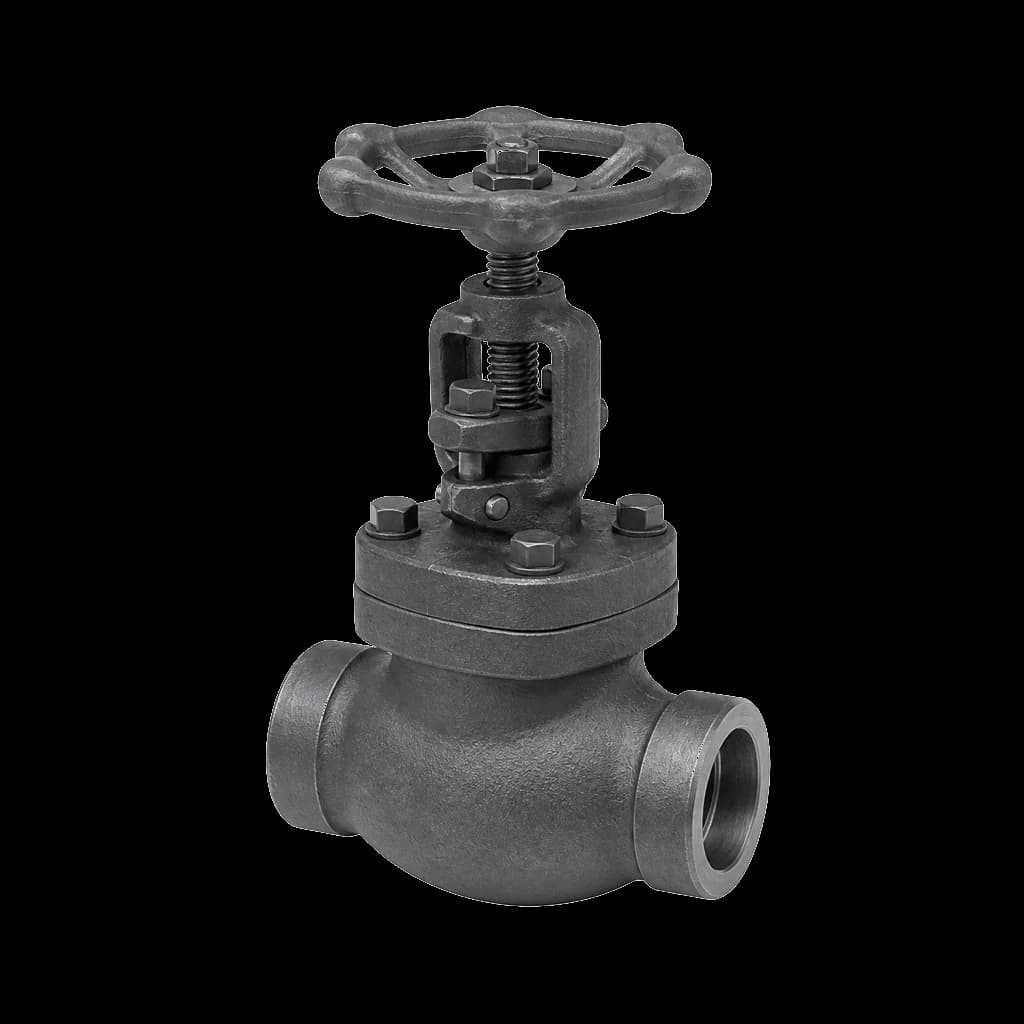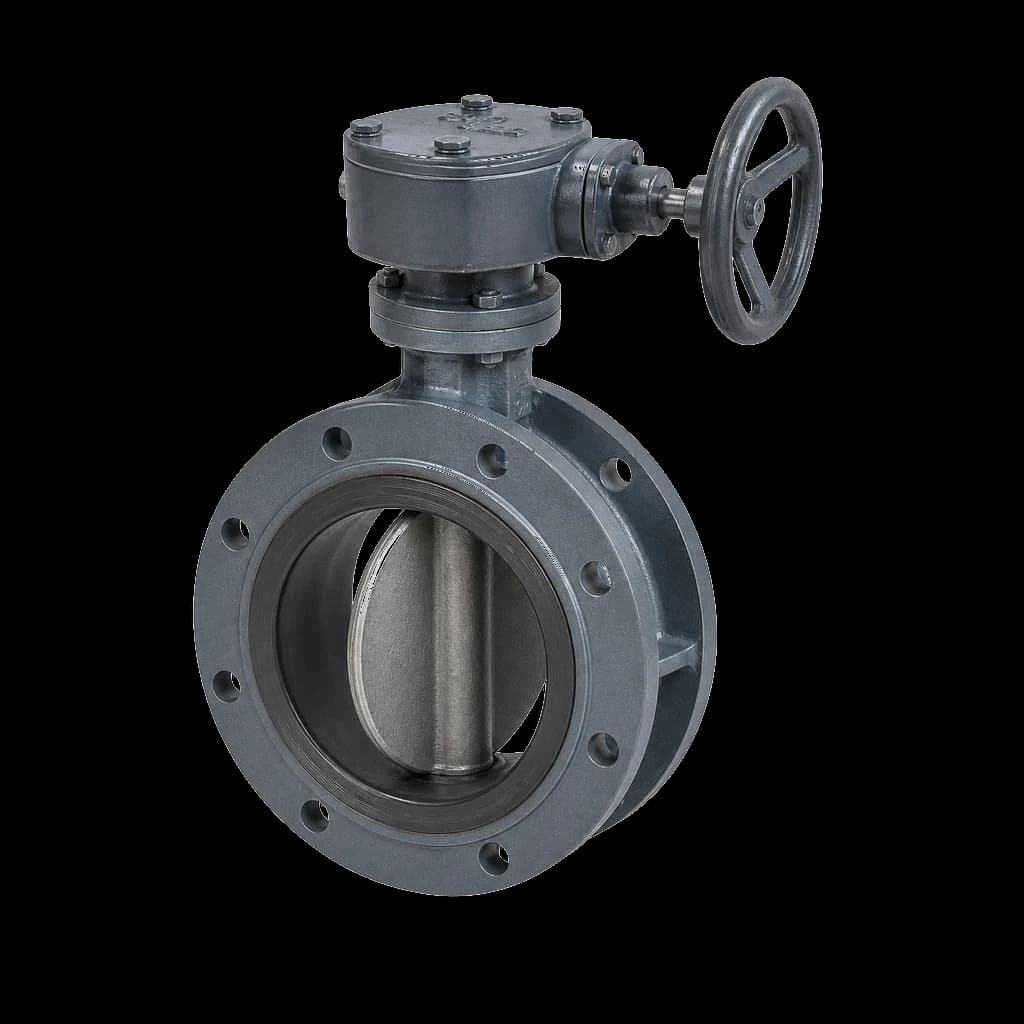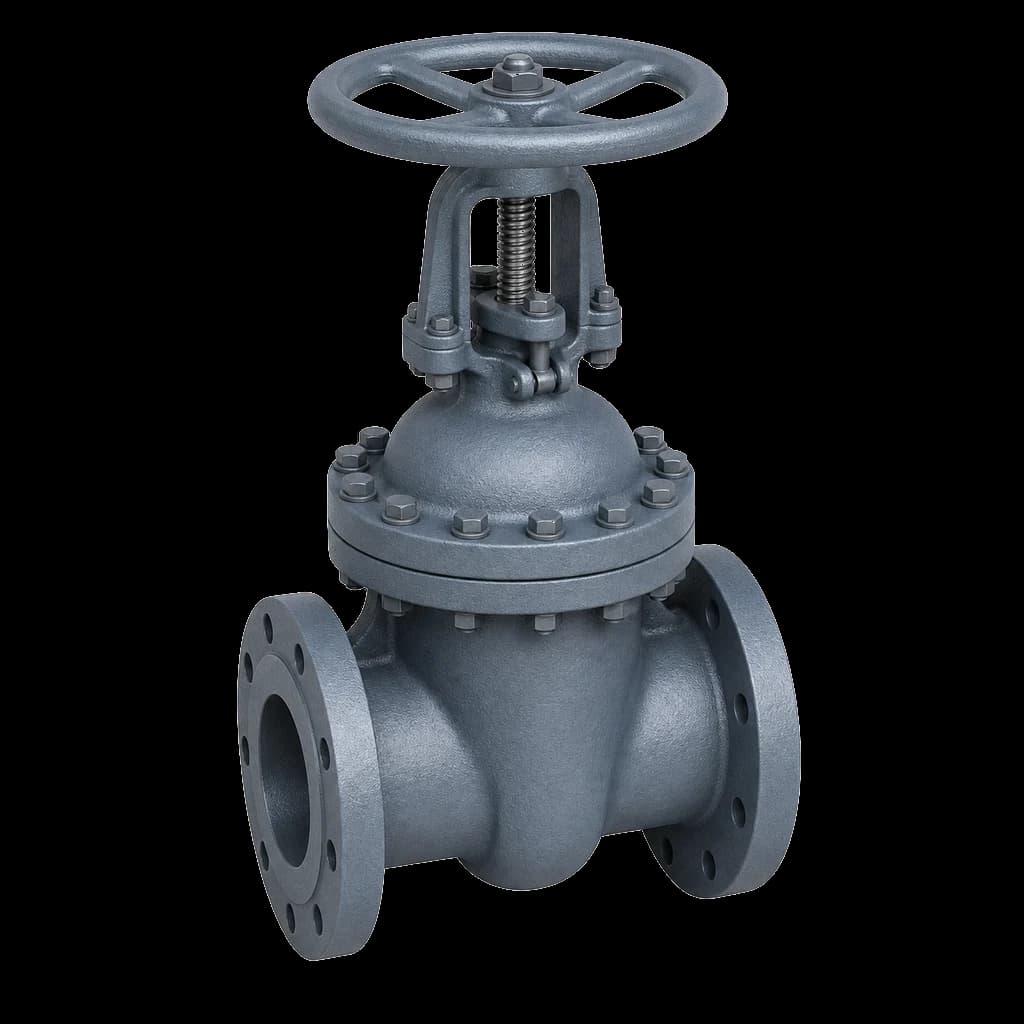
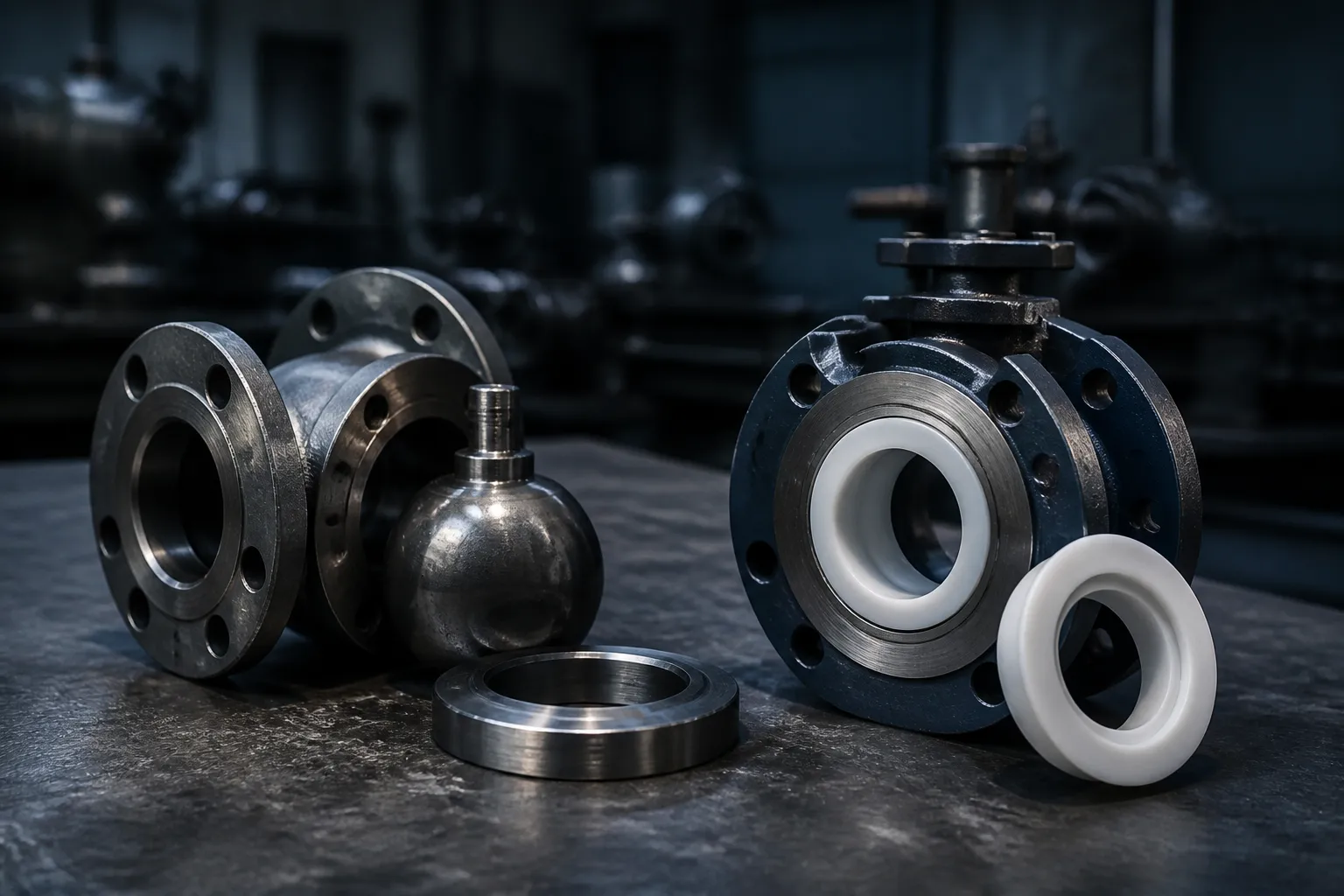
A tender datasheet arrives with "seat leakage: Class VI" typed against a 12" cast steel gate valve, and three vendors quote three different valves. Nobody is being dishonest: the buyer has borrowed a valve leakage class from the control-valve world and applied it to an isolation valve, where that designation has no defined meaning. Acceptance comes from two unrelated families. ISO 5208 and EN 12266-1 set the lettered rate ladder for isolation valves, and API 598 writes its own allowances for the same valves; ANSI/FCI 70-2, with IEC 60534-4 alongside it, classifies seat leakage of throttling control valves. Which ladder you are on decides whether the quotes are comparable at all.
What a valve leakage class actually certifies
A leakage class is a shop acceptance criterion, not a performance warranty. It says that with this fluid, at this differential, at ambient temperature, held for this duration, leakage past the closed obturator did not exceed a stated figure. Each qualifier carries weight: a soft-seated ball valve proved on the 4–7 bar low-pressure air test may still weep at 0.3 bar, where there is too little differential to energise the seat, and a valve certified drop-tight at 30 °C can pass steadily at 180 °C once the PTFE has crept. Two distinctions end most site arguments. Seat leakage is internal — it passes downstream; fugitive emission escapes at the gland and bonnet joint and is measured separately under ISO 15848 or API 624. And leakage class is independent of pressure class: Class 800 describes the pressure boundary, not how the seat seals. Both lines belong on the datasheet.
Two rate systems: ISO 5208 for isolation, FCI 70-2 for control
The systems differ because the valves do different jobs. An isolation valve is bought to stop flow, so acceptance is an absolute rate scaled by size — a DN 600 seat has twelve times the sealing circumference of a DN 50 seat and cannot fairly be held to the same millilitre. A control valve works partly open, so acceptance is a fraction of that valve's own rated capacity. One ladder is absolute, the other proportional, and no arithmetic converts between them: anyone offering a neat equivalence table is selling a convenience, not a standard.
| Attribute | ISO 5208 / EN 12266-1 / API 598 | ANSI/FCI 70-2 / IEC 60534-4 |
|---|---|---|
| Applies to | Gate, globe, ball, butterfly, plug, check | Throttling control valves |
| Leakage expressed as | Absolute rate scaled by DN or NPS | Percentage of rated capacity (II-IV) |
| Tightest rung | Rate A — no visually detectable leakage | Class VI — tabulated bubble count |
| Usual test fluid | Water, plus air on the low-pressure test | Air or nitrogen at 3.4 bar; water for Class V |
| Where you meet it | API 598, API 6D and IS test reports | Control valve and IEC 60534 tag sheets |
FCI 70-2 Class II to Class VI, in numbers
FCI 70-2 defines six classes, of which Class I is an agreement to test nothing. The meaningful ladder runs II to VI, and the steps are uneven: II to IV is a fiftyfold tightening bought with better lapping and higher seat load, while V to VI is a change of construction, because the bubble table is a soft-seat specification.
| Class | Maximum allowable leakage | Test fluid and pressure | Typical construction |
|---|---|---|---|
| I | No test required; agreed with the supplier | By agreement | Any |
| II | 0.5% of rated valve capacity | Air or water at 3.4 bar (50 psi) or max operating differential, whichever is lower | Double-port or balanced metal-seated plug |
| III | 0.1% of rated valve capacity | As Class II | Metal seat, better lapped and loaded |
| IV | 0.01% of rated valve capacity | As Class II | Lapped metal seat, unbalanced or piston-ring trim |
| V | 5 × 10⁻⁴ mL/min per inch of port diameter per psi of differential | Water at max service differential | High-load lapped metal seat, often hardfaced |
| VI | Tabulated bubble count by port diameter | Air or nitrogen, 3.4 bar or max operating differential | Soft insert — PTFE, filled PTFE or elastomer |
Class VI is not zero
The Class VI table refutes the phrase most often typed above it. Leakage is permitted, tabulated against port diameter, not body size, and counted as bubbles through a water-immersed tube.
| Nominal port diameter | Allowable leakage (mL/min) | Bubbles per minute |
|---|---|---|
| 1" (25 mm) | 0.15 | 1 |
| 1½" (38 mm) | 0.30 | 2 |
| 2" (51 mm) | 0.45 | 3 |
| 2½" (64 mm) | 0.60 | 4 |
| 3" (76 mm) | 0.90 | 6 |
| 4" (102 mm) | 1.70 | 11 |
| 6" (152 mm) | 4.00 | 27 |
| 8" (203 mm) | 6.75 | 45 |
Twenty-seven bubbles a minute through a 6" port is the tightest class the control-valve world defines, and it is still a countable leak. Write "Class VI" if you mean it, but never "Class VI, zero leakage" — the clauses contradict each other, and the vendor resolves the contradiction in whichever direction is cheaper.
ISO 5208 rates and the API 598 allowance
ISO 5208 works the other way. It publishes a ladder of lettered rates — Rate A at the tight end, then progressively looser rates B, C, D and beyond — each a coefficient multiplied by DN and expressed in mm³/s, with separate values for liquid and gas test media. The coefficients differ between editions, so the rate letter and the edition belong on the same line — ISO 5208 named on its own specifies nothing. The top rung does not move: Rate A means no visually detectable leakage for the duration of the test.
API 598 covers the same valves from the API side and states its allowance directly: zero visible leakage for resilient-seated valves, and a size-scaled allowance for metal-seated ones — up to 0.18 cm³/min per inch of NPS on the liquid closure test and 1.5 bubbles per minute per inch of NPS on the low-pressure air test, tabulated by size band in the standard. Our API 598 testing guide covers the pressures and hold times behind those figures. The consequence is blunt: a 24" metal-seated gate valve that drips slowly on the bench is compliant, and rejecting it at FAT on that basis will not survive review.
- Rate A is a test statement, not a physical claim. Nothing was seen during a hold of stated length at a stated pressure; it says nothing about a differential the test never applied.
- Looser rates scale with DN. At the same rung a DN 300 valve is allowed six times the leakage of a DN 50 valve, so a large valve reading worse in absolute millilitres can be sitting on exactly the same rung as a small one.
- EN 12266-1 uses the same lettered ladder. BS 6755 Part 1, still quoted in older Indian specifications, was superseded by it — update the clause when you reissue the spec.
- API 6D points metal-seated pipeline valves at an ISO 5208 rate rather than restating numbers. Check which rate your named edition calls up before assuming drop-tight shutoff.
- Check valves carry a larger allowance. A non-return valve is a directional device; put a positive isolation valve behind it if you need tightness.
What a "zero leakage valve" clause really buys
"Zero leakage" appears in thousands of Indian tender documents and in none of the standards those tenders cite. Read as engineering it can only mean no visually detectable leakage during the specified seat test — ISO 5208 Rate A, or the API 598 resilient-seat criterion. Read as procurement, it commits you to a soft seat, with everything a soft seat brings.
- It forces a polymer. PTFE, filled PTFE, PEEK and the elastomers each stop at a different temperature; the seat materials guide shows where the menu runs out. Demand zero leakage on a saturated steam line and you have specified a seat the service will destroy.
- It rules out large metal-seated stock. Resilient-seated butterfly valves and soft-seated balls meet it to large diameters; a metal-seated wedge gate valve will not, however finely its seats are lapped.
- Fire testing reintroduces leakage by design. API 607 and API 6FA burn the polymer away and permit a defined leakage during and after the burn — zero leakage and fire-safe certification describe two different moments in the valve's life.
- Tightness is directional. State unidirectional or bidirectional, and the differential. A vendor quoting only the high-pressure closure test has quoted less valve than you think.
Cross-mapping the two ladders — and where it breaks
Because purchase departments reuse templates, FCI classes land on isolation valve datasheets constantly. The fix is not to invent an equivalence but to rewrite the line in the language of the valve you are buying; the datasheet reading guide shows where that line sits relative to trim, class and test standard.
- "Class VI" on a ball or butterfly valve — you mean soft-seated construction accepted at ISO 5208 Rate A. Write that, and name the test medium.
- "Class IV" on a gate or globe valve — you are describing a metal seat. Say metal-seated, name the rate you accept, and expect a figure on the certificate rather than a nil entry.
- "Bubble tight" — undefined in both systems; a sales adjective. Replace it with Rate A and a test pressure.
- "Zero leakage" against a metal seat — unbuildable. Accept a rate or change the seat; the review comment is cheaper before the PO than after.
- "As per API 598" alone — legitimate, but the standard's metal-seat allowance then applies. If you need better, say so in the same line.
Indian tender practice: IS standards, GeM and witness testing
Indian waterworks standards handle leakage in their own text rather than by pointing at a rate ladder. IS 14846 for sluice valves and IS 5312 for swing check valves each prescribe a hydrostatic seat test above rated pressure — 1.1 times PN for the sluice valve — with the acceptance criterion written into the standard itself. A leaded-tin-bronze wedge sealing on bronze body rings carries an allowable seat leakage rate; it was never a drop-tight design. If a bulk meter chamber genuinely needs drop-tight closure, the answer is a resilient-seated valve, not a rejection note against a compliant IS 14846 sluice valve. On IBR-scope lines the seat test follows the valve's design standard; IBR governs material certification and construction, not seat tightness.
- GeM technical parameters often leave leakage as free text. Fill it with a standard and a rate, never an adjective, or bid comparison becomes meaningless.
- PSU and EIL-format specifications invoke API 598 and add buyer options on top; the tightening is frequently in a note rather than the table.
- Third-party witness is what makes a rate clause enforceable at a distant works. Put a hold point in the ITP and use the FAT checklist so the inspector records medium, pressure, duration and observed leakage instead of ticking a box.
- Retest after flushing. Commissioning hydrotests damage seats more often than service does; on critical isolation points specify a seat retest rather than assuming the works certificate still holds.
Writing the leakage line so quotes come back comparable
One complete sentence removes a round of technical clarification. It needs five elements: standard, rate or class, test medium, differential and direction. "Seat test to API 598, resilient seat, no visible leakage on both the high-pressure water closure test and the low-pressure air test, bidirectional" is unambiguous. "Leak proof" is not.
- Name the standard and edition, and never mix two families in one line.
- State seat construction — soft or metal. It decides whether the rate you asked for is achievable at all.
- Give the test medium and differential, especially the low-pressure figure, where soft and metal seats diverge most sharply.
- Say unidirectional or bidirectional, and for double block and bleed duty, which cavity you want proved.
- Ask for the numerical result on the certificate, not the word "satisfactory".