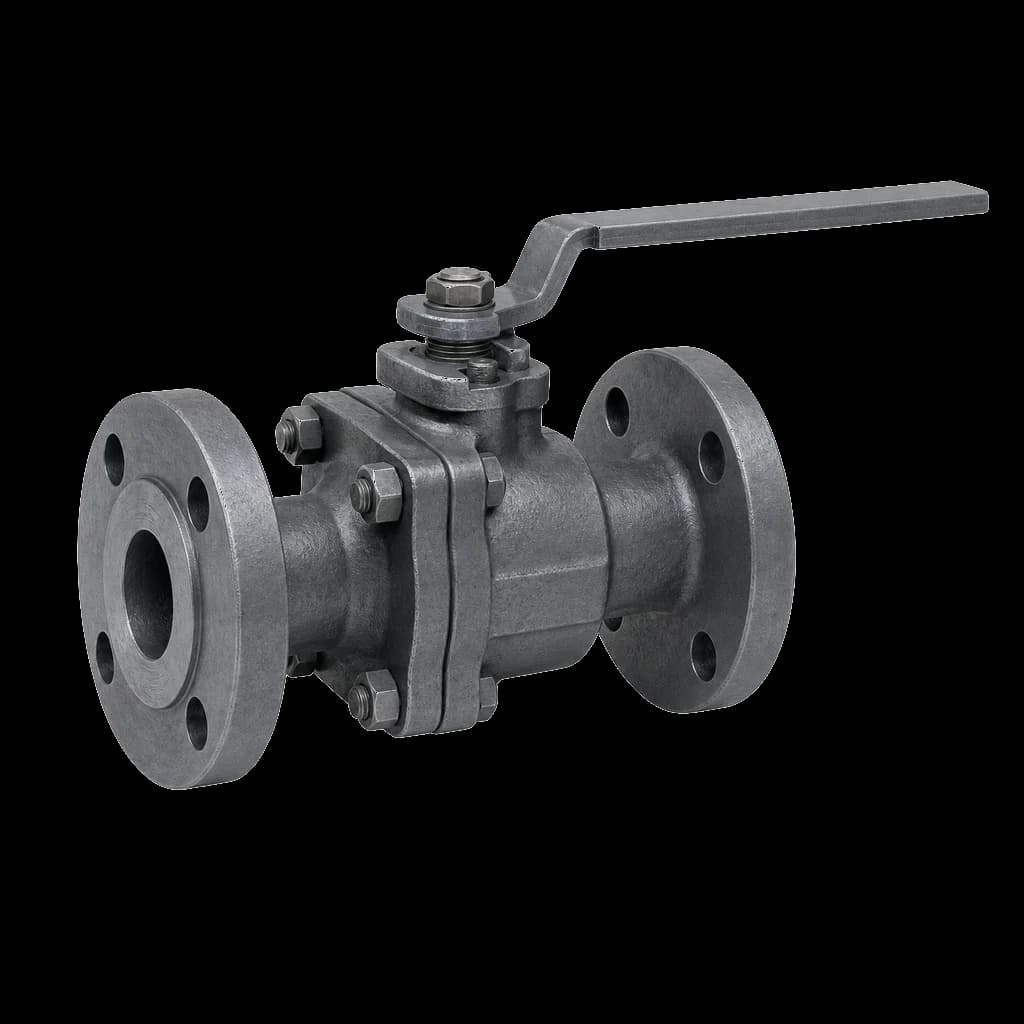
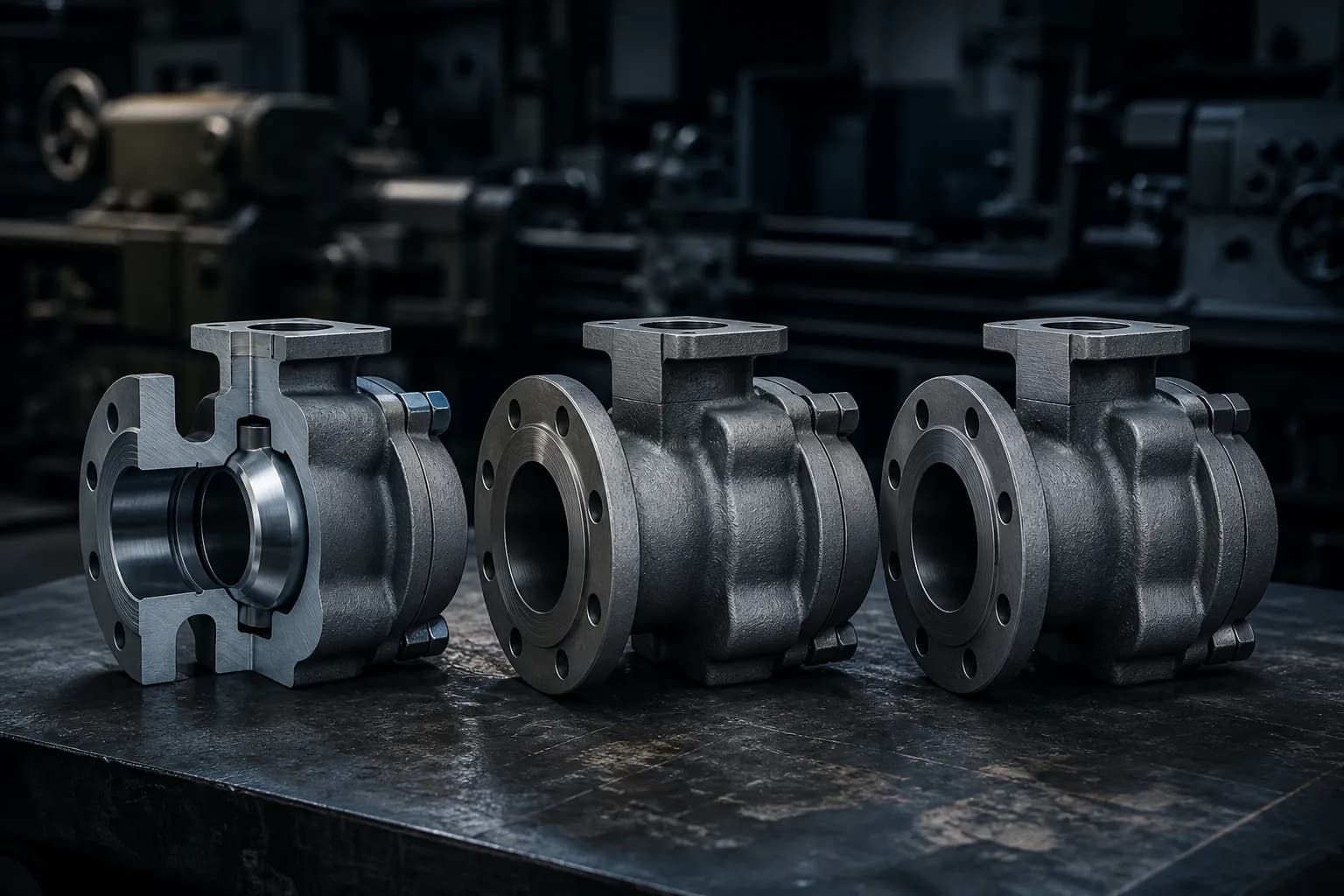
A datasheet line reading “Body: ASTM A351 Gr. CF8M” looks unambiguous until you reconcile it against a European drawing calling for 1.4408, an offer that simply says “SS 316 body”, and a piping spec that insists on the L grade. CF8M material is a casting grade, not a wrought one; it is close to 316 but not the same alloy; and the single number separating CF8 from CF3 — maximum carbon — decides whether that body survives being welded into your line. Here is what the letters encode, and what to put on the enquiry so foundry, inspector and piping spec agree.
What the CF designations actually encode
The CF family comes from the ACI (Alloy Casting Institute) naming system, and every character carries information. The first letter C means corrosion-resistant service; the parallel H series covers heat-resistant castings for furnace duty. The second letter marks position on the iron-chromium-nickel ladder, advancing as nickel rises; CF sits at roughly 19 % Cr and 8–12 % Ni, which is why it maps onto the 300 series. The digits are the maximum carbon content in hundredths of a percent: CF8 is 0.08 % C max, CF3 is 0.03 % C max. Trailing letters flag alloy additions — M for molybdenum, C for columbium (niobium, the cast 347 analogue); an A suffix, as in CF8A, is the same chemistry certified to a higher minimum tensile. So CF8M reads as: corrosion-resistant casting, 19Cr-10Ni base, 0.08 % carbon ceiling, molybdenum-bearing.
CF8M chemical composition, and what each element buys
| Grade | UNS | Carbon % max | Chromium % | Nickel % | Molybdenum % | Wrought cousin |
|---|---|---|---|---|---|---|
| CF8 | J92600 | 0.08 | 18.0–21.0 | 8.0–11.0 | 0.50 max | 304 |
| CF3 | J92500 | 0.03 | 17.0–21.0 | 8.0–12.0 | 0.50 max | 304L |
| CF8M | J92900 | 0.08 | 18.0–21.0 | 9.0–12.0 | 2.0–3.0 | 316 |
| CF3M | J92800 | 0.03 | 17.0–21.0 | 9.0–13.0 | 2.0–3.0 | 316L |
Manganese is capped at 1.50 %, phosphorus and sulphur at 0.040 % each, and silicon at 2.00 % for CF8/CF3 but 1.50 % for the molybdenum grades. That silicon allowance is the first clue that castings differ from bar and forgings: it improves melt fluidity so thin sections and complex bonnet geometries fill properly. The 0.50 % molybdenum against CF8 and CF3 is a residual ceiling, not an addition — it stops a foundry running mixed stainless scrap from certifying a Mo-bearing heat as CF8.
Why the molybdenum, and what it costs
The 2–3 % molybdenum stabilises the passive film against chloride attack, which is why CF8M is the default for chloride-bearing water, most chemical duty and coastal installations. Quantify it with the pitting resistance equivalent number, PREN = %Cr + 3.3 × %Mo + 16 × %N: CF8M lands in the mid-20s against roughly 19 for CF8. That is a real step up, and where the step stops — seawater, produced water and high-chloride brines expect PREN in the high 30s and above, which is duplex and super duplex territory. Molybdenum also carries the price: size for size, a CF8M body costs more than CF8.
CF8M material vs SS 316: why they are not interchangeable
Wrought 316 is a fully austenitic, single-phase alloy. Cast CF8M is deliberately duplex in microstructure — delta ferrite balanced into the austenite matrix, typically 5–20 FN unless the purchaser specifies tighter limits. That ferrite is not a defect: it suppresses hot tearing during solidification and lets a foundry weld-repair a body without cracking the repair. Four consequences follow.
- A CF8M body is weakly magnetic. Delta ferrite responds to a magnet; annealed wrought 316 largely does not. An inspector who condemns a valve because “the magnet sticks” is wrong — settle it with positive material identification by XRF.
- Specified minimum strength is lower than wrought. A351 CF8M is certified to 485 MPa minimum tensile, 205 MPa minimum yield; A182 F316 forgings carry a higher tensile minimum. Read the pressure–temperature rating off the group the body actually falls into.
- Ferrite is the sigma-phase precursor. It degrades on long, hot exposure, setting the practical ceiling discussed below.
- “SS 316 body” is not a specification. Foundries, inspectors and MTCs work to a casting grade. Write A351 Gr. CF8M (or CF3M) on the PO — this is the commonest wording error in Indian tender datasheets.
On a European drawing the cast equivalents under EN 10213 are 1.4408 (GX5CrNiMo19-11-2) for CF8M, 1.4409 (GX2CrNiMo19-11-2) for CF3M, 1.4308 for CF8 and 1.4309 for CF3 — close matches, not clones, so confirm the composition on the certificate. Where these grades sit against WCB, WC6 and WC9 is in our cast valve body materials guide.
Carbon, sensitisation and where CF3M stops being optional
Hold an austenitic stainless steel in roughly the 425–815 °C band and chromium combines with carbon to precipitate chromium carbides at the grain boundaries. The depleted boundary region loses passivity and corrodes preferentially — sensitisation, seen as intergranular attack a few millimetres from a weld. Less carbon, less precipitation: that is the entire argument for the L grades.
A351 requires every casting to be solution heat treated — heated above about 1040 °C and quenched — precisely to dissolve those carbides and put the chromium back into solution. That protects the casting as delivered; it cannot protect a weld made afterwards. Specify CF3M, not CF8M, when the valve has butt-weld or socket-weld ends and will be welded into the line, when the body may be weld-repaired without a re-solution anneal, or in high-purity and pharmaceutical duty where intergranular attack ends the valve's life early.
Dual-certified CF3M/CF8M, and the temperature penalty
Much of what ships as CF8M is poured to 0.03 % carbon and certified to both grades — carbon low enough for CF3M, properties meeting CF8M. That solves the bind where the datasheet says CF8M but the welding plan demands low carbon. It is not automatic: ask at enquiry and have it stated on the MTC, because the grade name will not tell you. The trade-off runs the other way too: lower carbon means lower allowable stress hot, so rating tables assign the L grades a lower pressure–temperature rating than the 0.08 % carbon grades, and many owner specs cap L-grade austenitics near 425 °C. A genuine derate, not a rounding difference.
A351, A743 and A744: three routes to the same grade
| Specification | Scope | Practical distinction | Where it belongs |
|---|---|---|---|
| ASTM A351/A351M | Austenitic castings for pressure-containing parts | Solution treated and quenched; the pressure-part route | Valve bodies, bonnets and covers |
| ASTM A743/A743M | Corrosion-resistant Fe-Cr and Fe-Cr-Ni castings, general use | Same grades, no pressure-containing intent | Pump casings, non-pressure internals |
| ASTM A744/A744M | Same grades, severe corrosion service | Tighter heat-treatment and quench requirements | Where maximum corrosion resistance is the object |
The distinction bites at inspection. A valve body is a pressure-containing part, so the correct call-out is A351; an offer certified to A743 for a pressure boundary invites a legitimate rejection even though the chemistry is identical. Insisting on A744 for a chilled-water isolation valve buys nothing.
Ferrite, sigma phase and the real temperature ceiling
Cast austenitics are superb at the cold end: CF8M and CF3M stay tough to −196 °C, which is why they are standard for cryogenic and LNG duty, though ferrite blunts low-temperature toughness, so call for impact testing at the design temperature. The constraint is at the hot end. Held for long periods in the 550–900 °C range, delta ferrite transforms to sigma phase, a hard, brittle intermetallic that shows up as collapsed room-temperature toughness once the plant cools for a shutdown. Valves that sit hot for years, not ones that see an excursion, are at risk. For sustained high-temperature service specify controlled low ferrite, measured as a Ferrite Number to ASTM A800 — A351 caps ferrite in CF8M only if the purchaser specifies a limit.
Sour service adds its own constraint. Austenitic stainless steels are acceptable to NACE MR0175 / ISO 15156 only in the solution-annealed condition, within stated limits on H₂S partial pressure, chloride content and temperature, and with hardness controlled to 22 HRC maximum. CF8M is not automatically a sour-service material — the environmental envelope decides. Our sour service valve guide sets out how to state that envelope on an enquiry.
Choosing by duty, not by habit
- CF8 (cast 304): demineralised water, condensate, food and dairy circuits with controlled chlorides, and nitric acid — where the molybdenum in CF8M is actively unhelpful, Mo reducing resistance in strongly oxidising nitric media.
- CF8M (cast 316): the general-purpose chloride-tolerant choice — chemical process lines, treated and brackish water, dilute sulphuric and phosphoric duty, coastal atmospheres, pulp and paper. The right answer for most Indian stainless valve enquiries.
- CF3M (cast 316L): anything welded into the line, bodies that may be weld-repaired without a re-anneal, high-purity and pharma service, and any spec calling for an ASTM A262 Practice E intergranular corrosion test.
- Beyond CF8M: seawater and high-chloride brines need duplex or super duplex, and hypochlorite dosing usually needs more than either. Buying CF8M to save cost there means buying the valve twice.
- Match trim and bolting to the body. A CF8M body with 13 % chrome trim is a mismatch in the very service the body was chosen for; specify SS 316 or hardfaced trim, and A193 B8M Class 2 / A194 Gr. 8M fasteners rather than carbon-steel B7/2H studs in a corrosive external environment.
What to put on the enquiry
The grade name alone is half a specification. A complete call-out states specification and grade together (A351 Gr. CF8M), the delivery condition (solution treated and quenched), and the verification expected: an EN 10204 3.1 or 3.2 material certificate with heat numbers traceable to the body marking, PMI by XRF where the spec demands it, ASTM A262 Practice E where sensitisation is a live risk, a Ferrite Number report to A800 for hot service, marking to MSS SP-25, and shell and seat testing to API 598. On PSU and EPC tenders that write “SS 316 body” in the schedule, clarify to A351 CF8M in writing at the pre-bid stage rather than at inspection.
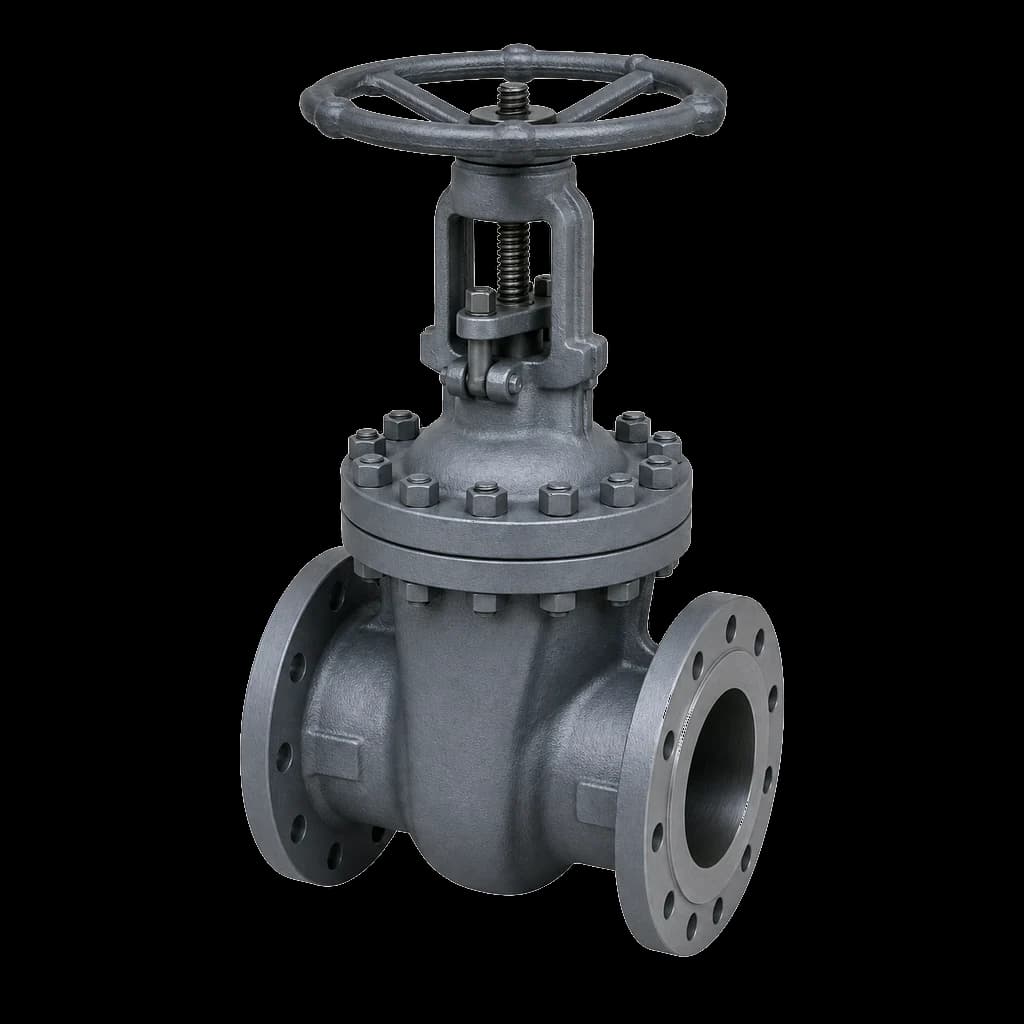
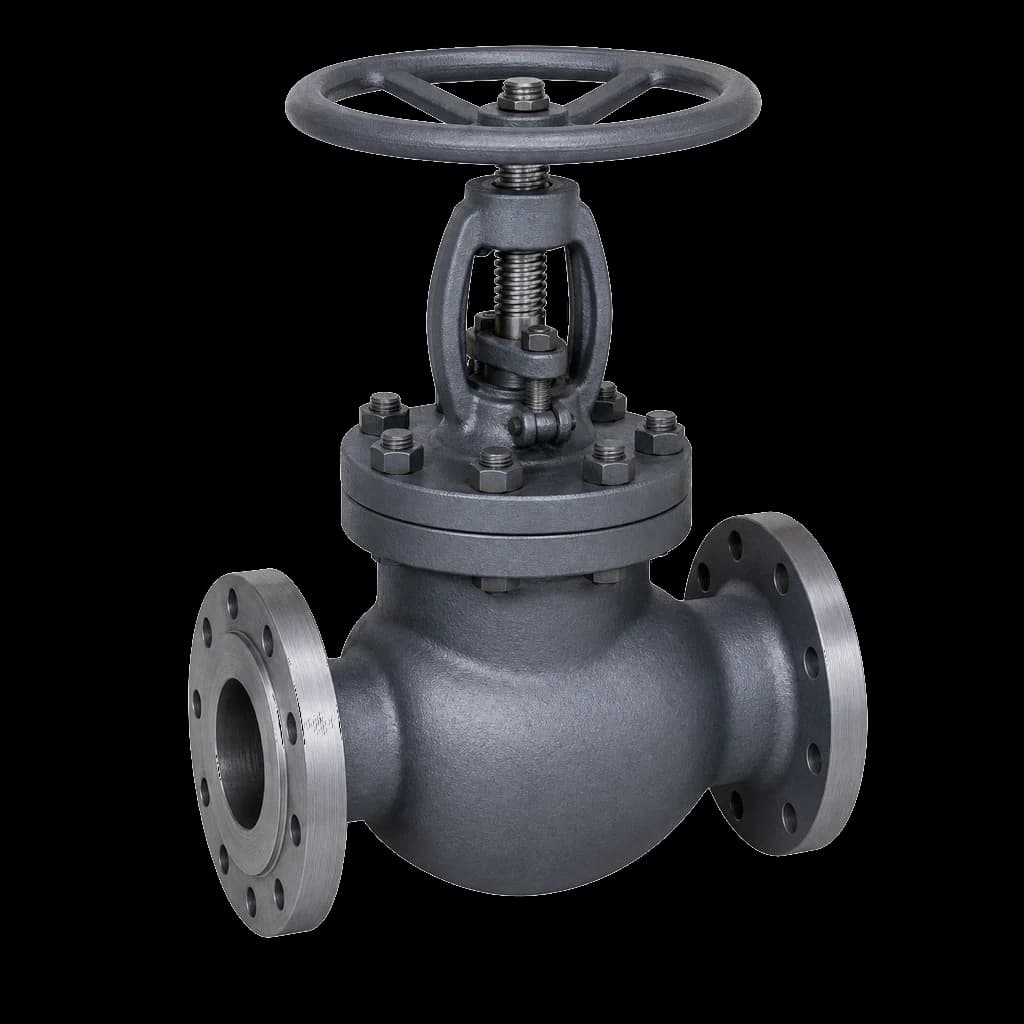
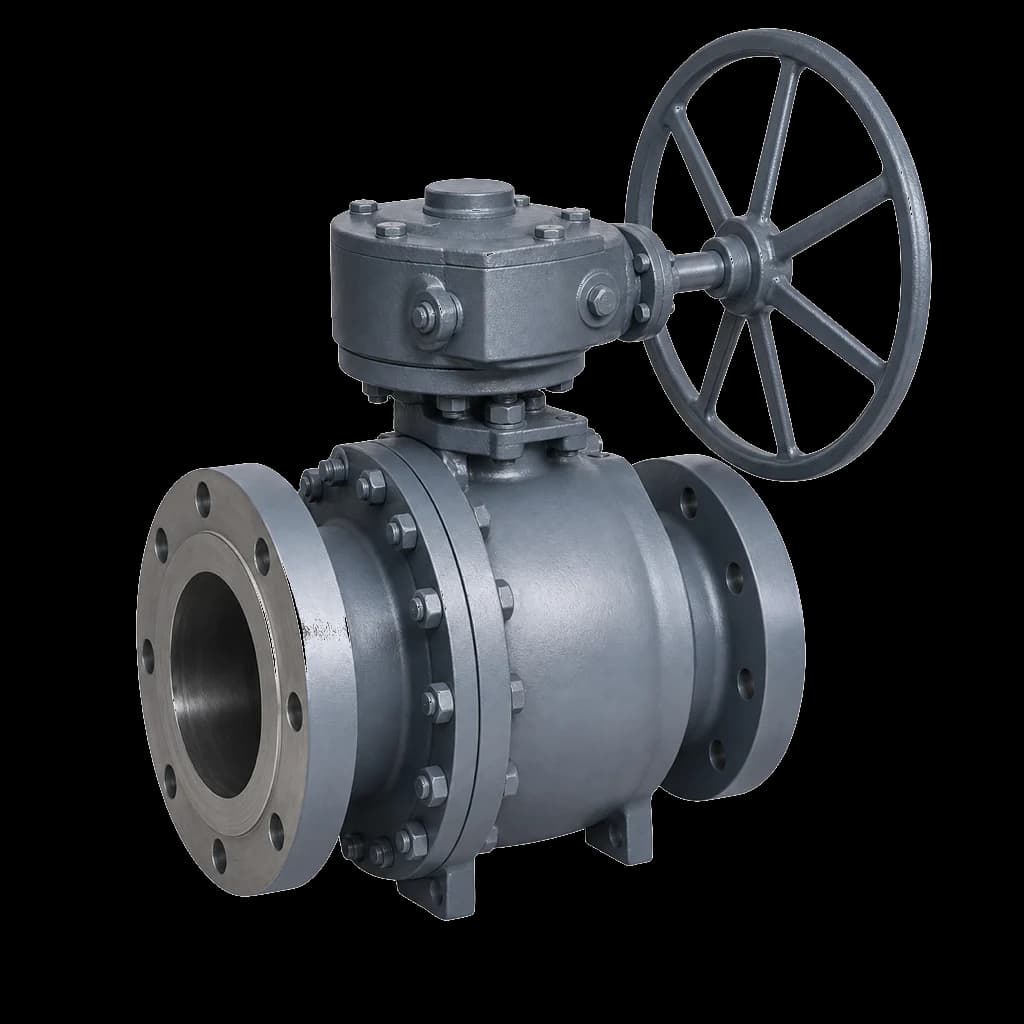
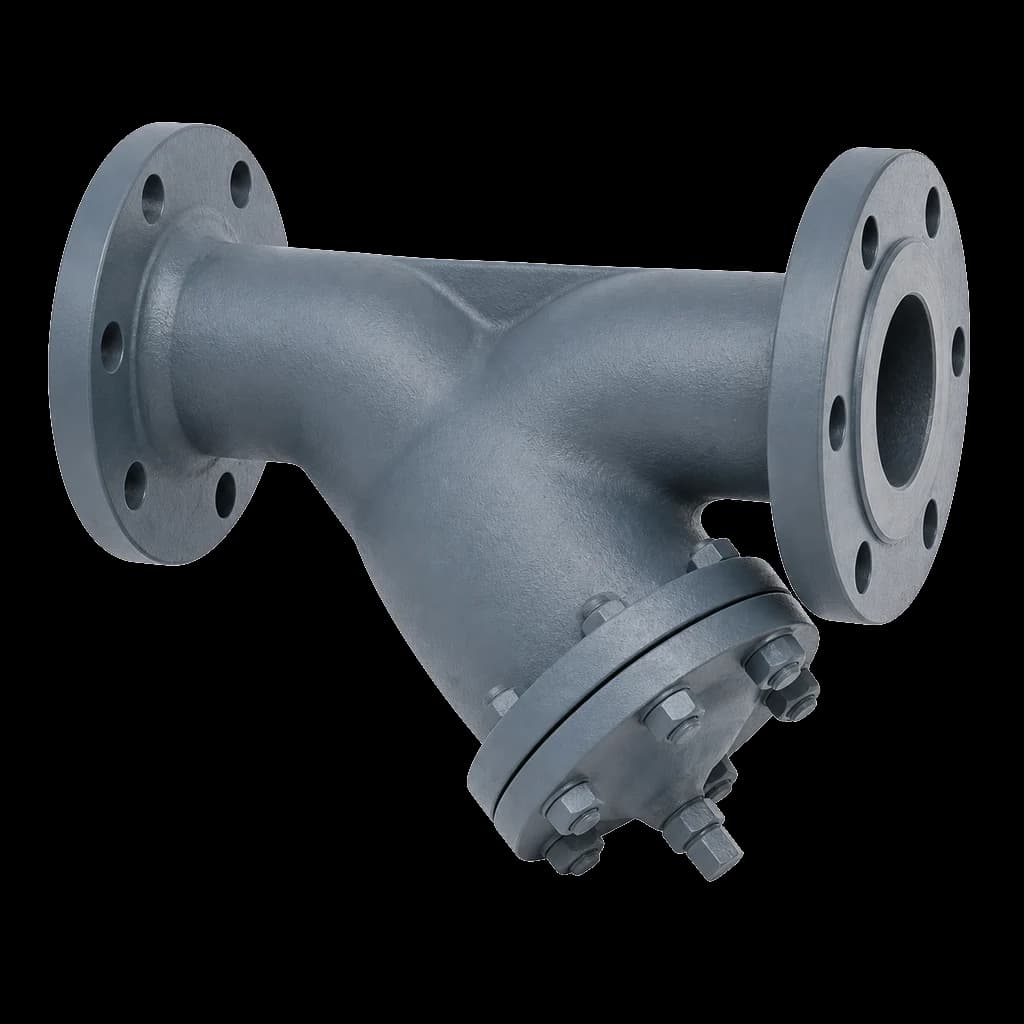
Most stainless enquiries resolve into three families: cast steel gate valves and globe valves in CF8/CF8M for isolation, API 6D ball valves where tight shut-off and quarter-turn actuation matter, and Y-type strainers on pump and control-valve protection — where body grade and screen material must be specified separately, and frequently are not.