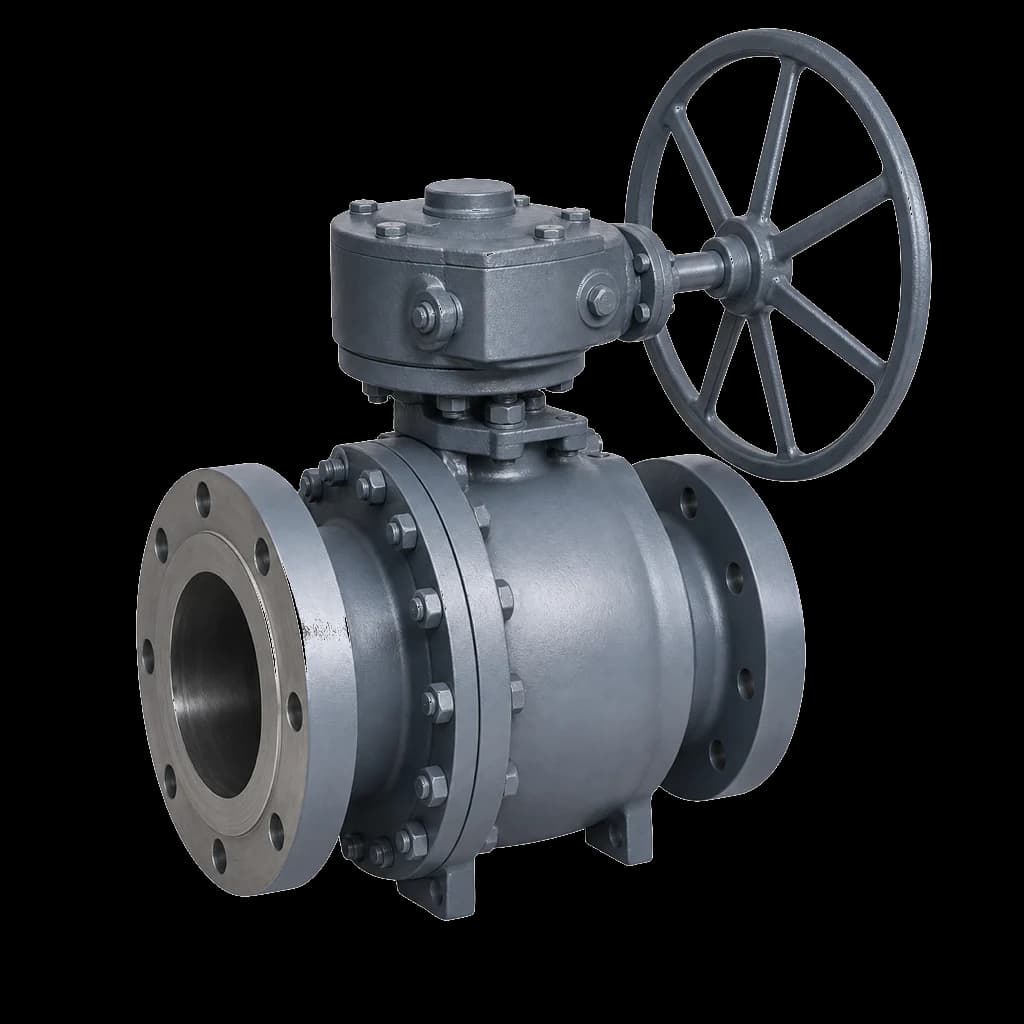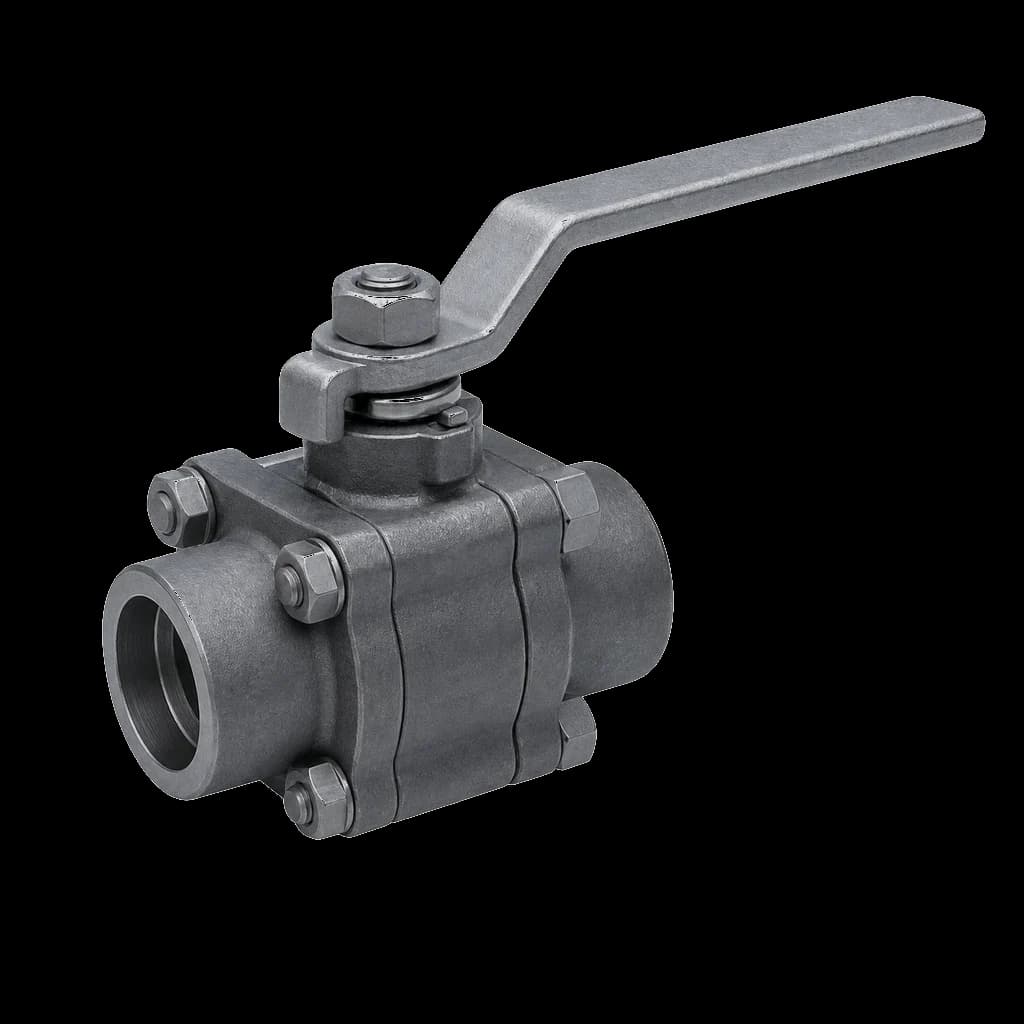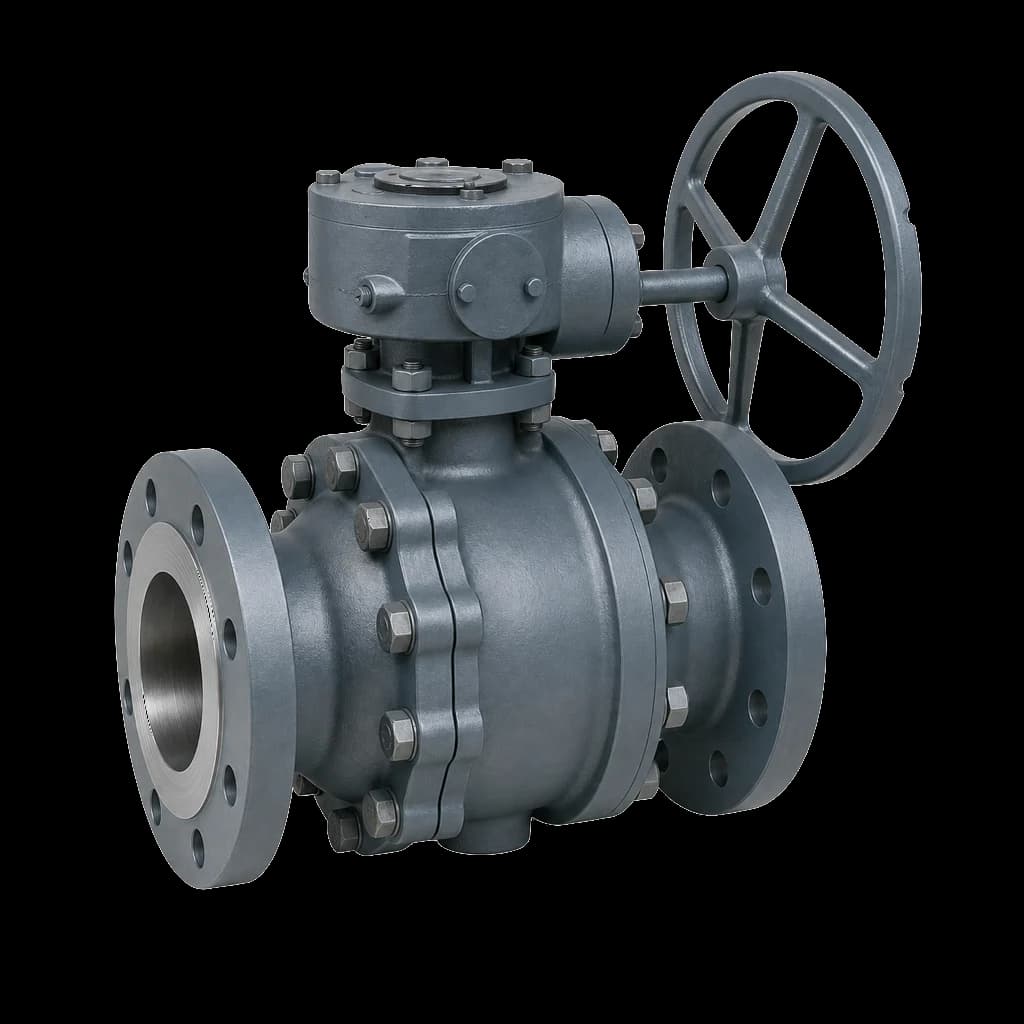
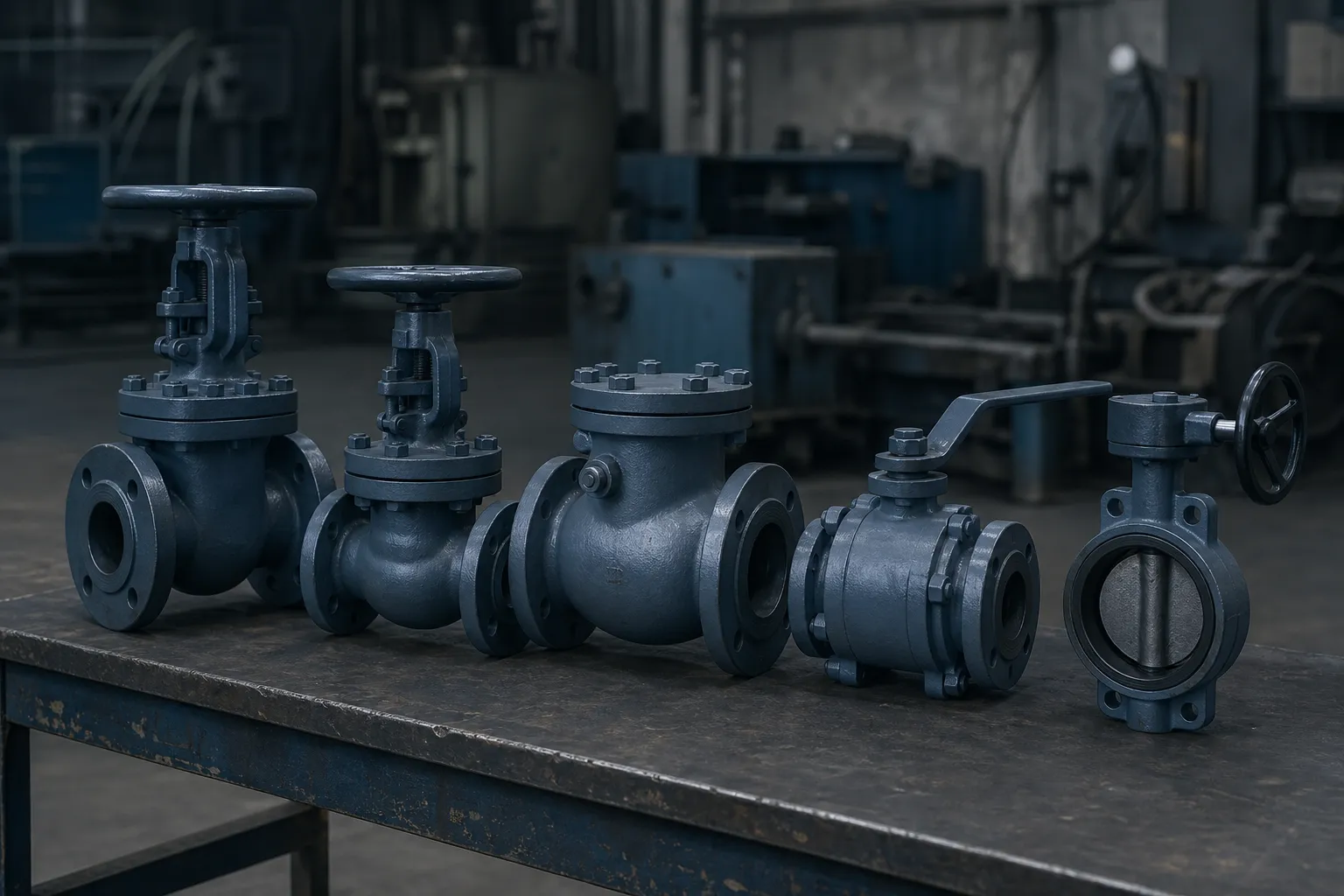
Two ball valves can share a size, class, material and end connection and still be different valves: one passes a pig, the other does not. The full bore / reduced bore choice is the least glamorous line on a ball valve datasheet and one of the most consequential — it decides piggability, pressure drop, weight and a meaningful slice of the price. It is also the line most often left blank on enquiries, which is how reduced-bore valves end up welded into piggable pipelines.
What the terms actually mean
A full bore (FB) valve — "full opening" in API 6D language — has a ball bore approximately equal to the inside diameter of the matching pipe, giving an essentially uninterrupted flow path through the open valve. A reduced bore (RB) valve uses a smaller ball and bore, typically about one nominal pipe size down (a 6" RB valve carries roughly a 4"–5" bore, depending on the manufacturer's pattern). The body ends stay the same; only the internals shrink. Standards define minimum bore diameters for full-opening valves by size — which is why "full bore per API 6D" is a checkable requirement, not a marketing phrase.
Pigging makes full bore mandatory
If the line will ever be pigged — cleaning pigs, batching pigs, gauging plates or intelligent inspection tools — every valve in the pig's path must be full bore, without exception. A pig cannot negotiate the step of an RB valve; it stalls or wedges, and recovering a stuck pig means cutting the line. This is why transmission pipelines and CGD steel mains specify full-opening API 6D valves as a matter of course: the pigging requirement is baked into the pipeline codes and the operator's integrity-management programme, not left to project preference. If there is any credible future pigging scenario — even one inline inspection ten years out — the mainline valves must be FB on day one. Retrofitting is a shutdown and a welding crew.
Pressure drop and flow coefficient
An open FB ball valve is hydraulically close to a piece of straight pipe — its resistance is negligible. An RB valve behaves like a short venturi: a contraction into the bore and an expansion out of it. For a single valve on a short utility run the absolute loss is small and rarely matters. It starts mattering when losses stack: many valves in series on a long header, pump suction lines where every metre of NPSH counts, gravity or low-head systems, and high-velocity gas service where the contraction adds noise and turbulence. As a representative figure, an RB valve's flow coefficient (Cv) runs on the order of 25–40% below the FB valve of the same nominal size — check the manufacturer's Cv table rather than assuming.
Weight and cost: what RB buys you
The reduced ball is the whole economy. A smaller ball means a smaller body cavity, less forged or cast steel, smaller seats, and lower operating torque — hence a smaller lever, gearbox or actuator. The table below shows the typical direction and rough magnitude of the deltas; actual figures vary by size, class and manufacturer.
| Parameter | Full bore | Reduced bore |
|---|---|---|
| Ball bore | ≈ pipe ID | ≈ one size smaller |
| Piggable | Yes | No |
| Cv / pressure drop | Highest / negligible | Typically 25–40% lower Cv |
| Weight | Baseline | Often 20–30% lighter |
| Operating torque | Baseline | Lower — smaller operator |
| Price | Baseline | Typically 15–30% lower, growing with size |
When reduced bore is the rational choice
- Bypasses, vents and drains — short runs where pressure drop is irrelevant and the valve exists for isolation only.
- Non-pigged utility service — cooling water, air, nitrogen, fuel gas distribution inside the plant fence.
- Instrument and sampling isolation — small forged valves where the bore difference has no process consequence; see the forged ball valve range.
- Cost-driven large-bore isolation on lines that will demonstrably never be pigged — the 20–30% saving is real money at 12" and above.
The dishonest version of that last point is the trap: "we'll never pig it" declared by a project team that is gone before the first inline inspection is due. On anything connected to a transmission or CGD network, let the pipeline integrity requirement decide, not the purchase order total.
Calling it out on the datasheet and PO
- State "full bore" or "reduced bore" explicitly on every ball valve line item. Never rely on a manufacturer's default — defaults differ between brands and even between size ranges of one brand.
- For piggable lines, add the minimum bore diameter in millimetres and the words "full opening per API 6D". That makes it measurable at inspection, not arguable.
- Check quotations line by line: an RB valve quoted against an FB enquiry is the oldest low-bid trick in the valve trade, and the price gap makes it tempting.
- Carry the bore through to the GA drawing review and receiving inspection — a bore check takes one vernier reading.
Bore is one field of several that make an enquiry quotable in one pass — our guide on writing a valve RFQ covers the complete set.