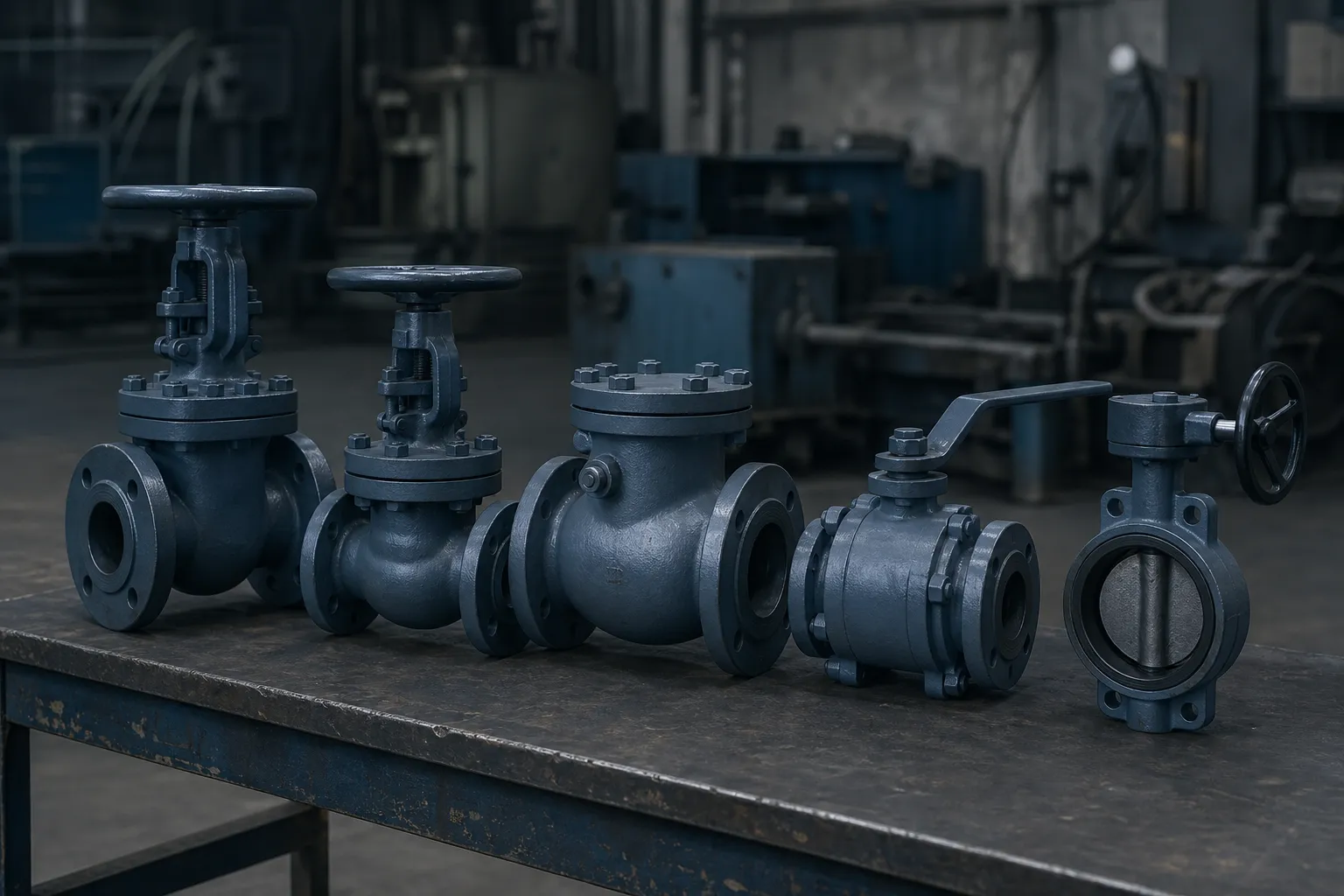
Three valve types do most of industry's isolating and regulating work, and they are not interchangeable. Choosing between gate, globe and ball comes down to one question asked honestly: *what will this valve actually do in service* — sit open for years, throttle continuously, or cycle quickly? Match the construction to that answer and the valve lasts; mismatch it and no brand or class will save you.
How each construction works
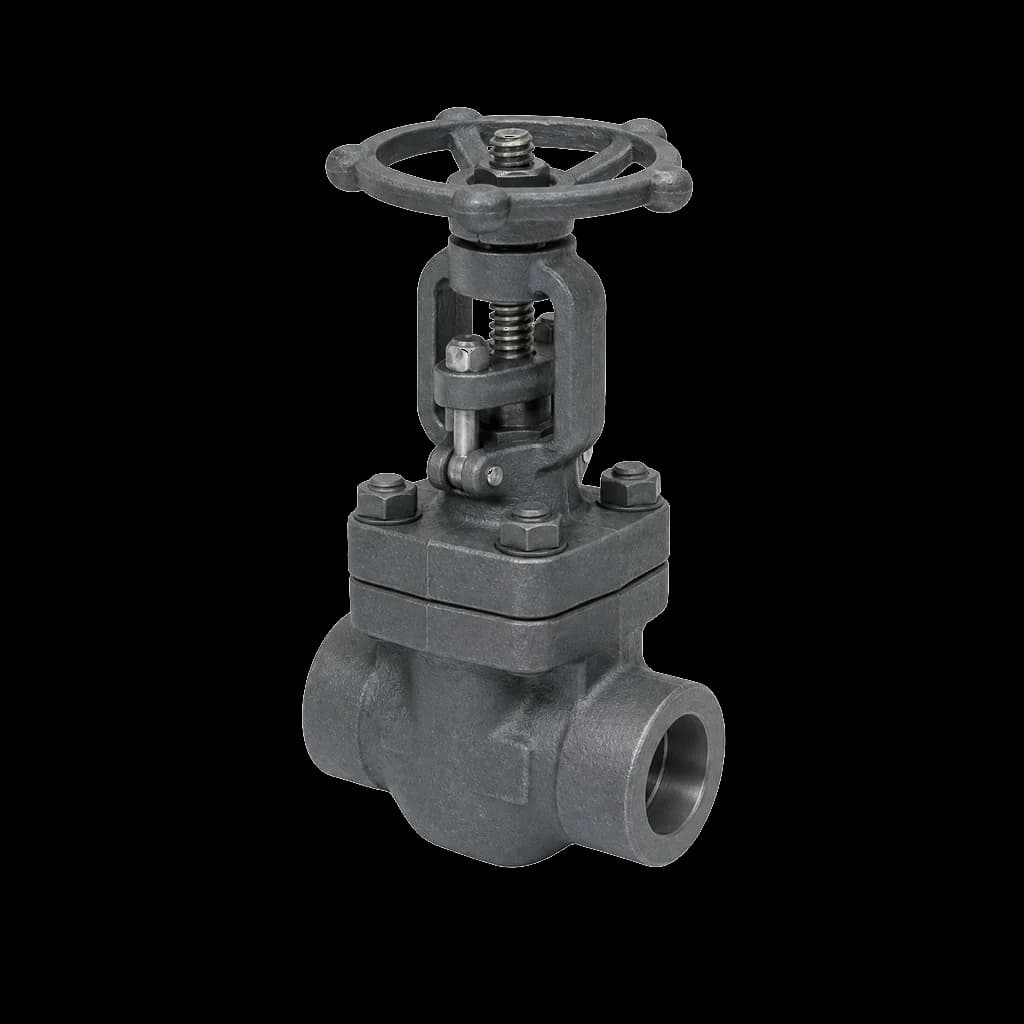
A gate valve slides a wedge perpendicular to flow. Fully open, the bore is straight-through and unobstructed — pressure drop is near zero and pigs and scrapers can pass. But the wedge has no flow-control geometry: partially open, the gate vibrates and the seat faces erode (wire-drawing). It is a two-position device: open or closed.
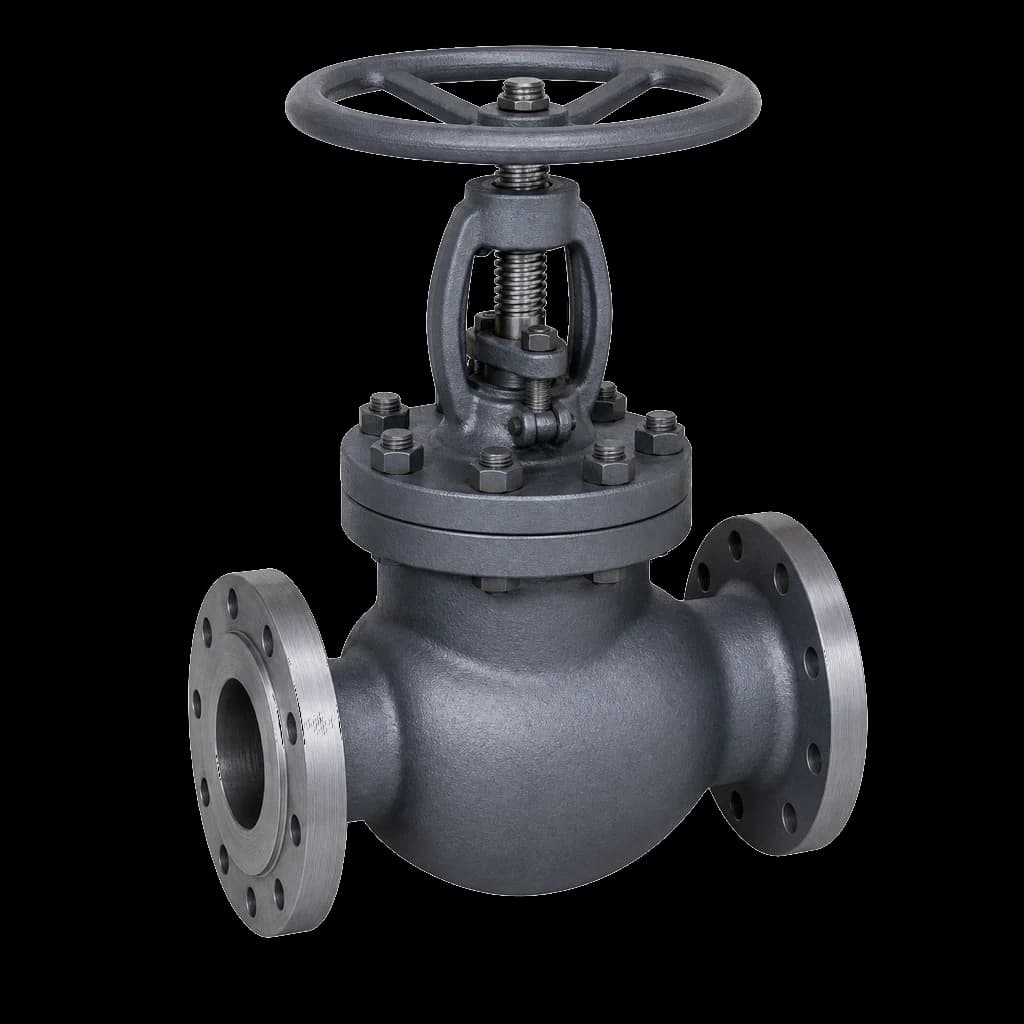
A globe valve turns the flow through an S-path and closes a disc onto a seat facing the flow. That geometry costs permanent pressure drop, but gives precise, stable flow control — the disc can hold any intermediate position without damage, and the seat/disc pair is renewable. It is built to be operated, often thousands of cycles.
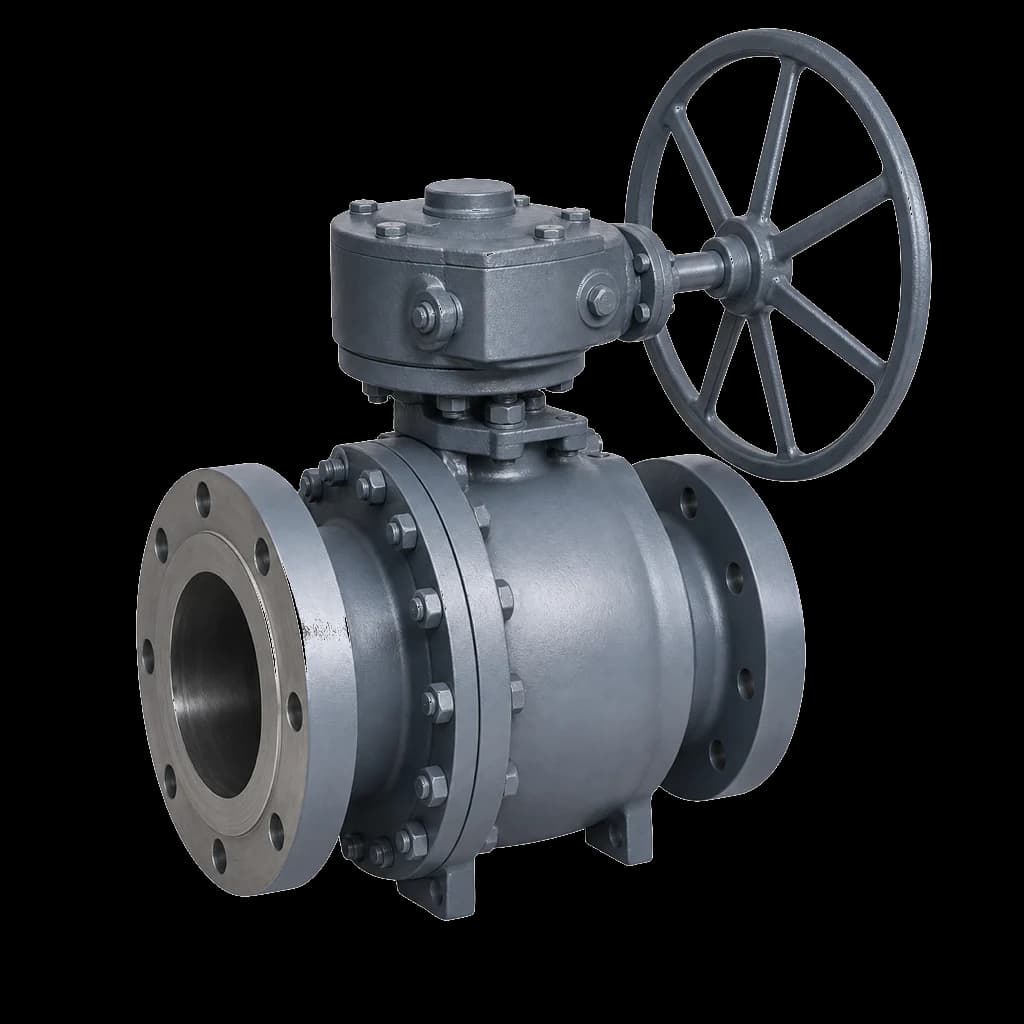
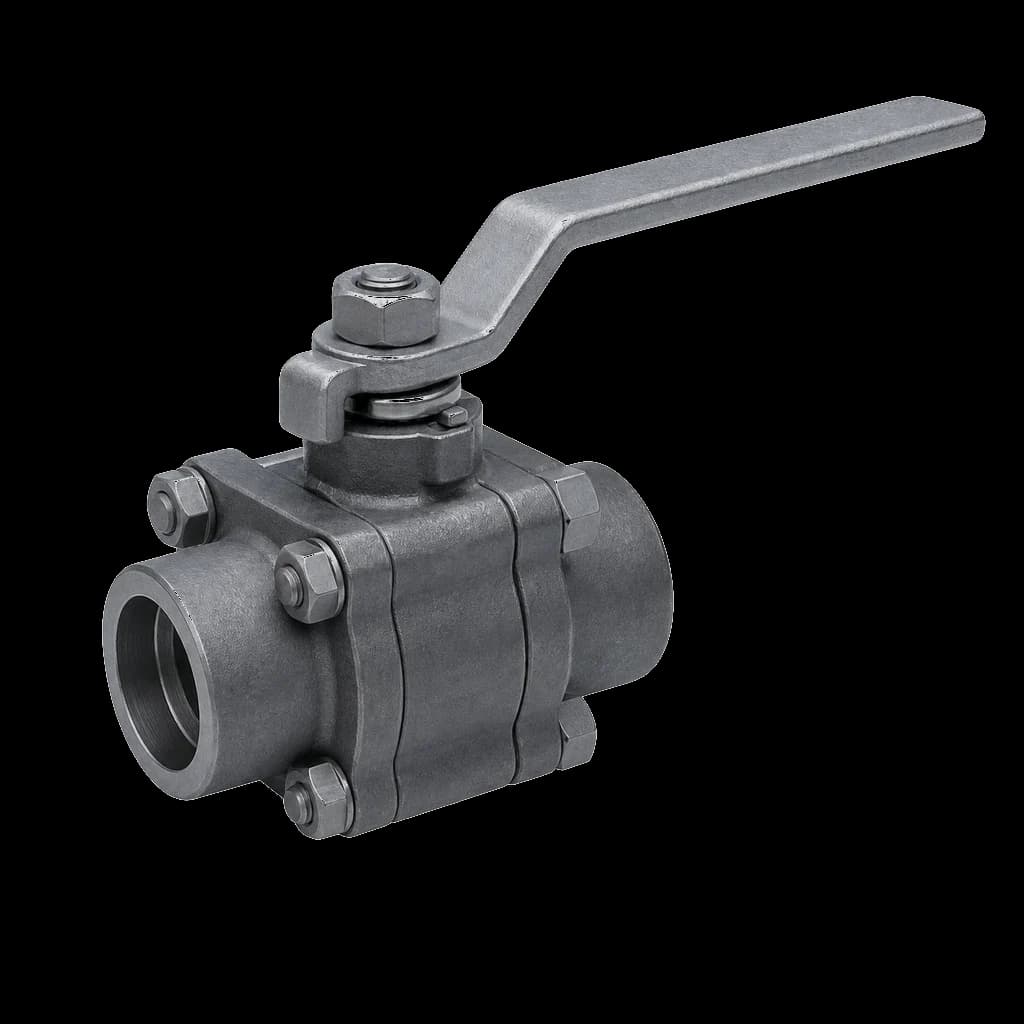
A ball valve rotates a bored sphere a quarter turn between full open and full closed. It seals bubble-tight on soft seats, operates in seconds, and in full-bore form leaves the line piggable. Standard soft-seated balls, however, throttle poorly — a partially open ball focuses high-velocity flow on a sliver of seat and destroys it.
Side-by-side comparison
| Criterion | Gate | Globe | Ball |
|---|---|---|---|
| Primary duty | Isolation | Throttling / regulation | Fast isolation |
| Pressure drop (open) | Minimal | High | Minimal (full bore) |
| Throttling ability | Poor — damages seats | Excellent | Poor (soft seat) |
| Operating speed | Slow (multi-turn) | Slow (multi-turn) | Fast (quarter-turn) |
| Seat tightness | Good (metal) | Good (metal) | Excellent (soft seat) |
| Water hammer risk | Low (slow closure) | Low | High if slammed |
| Piggable | Yes (full bore) | No | Yes (full bore) |
| Automation fit | Poor–moderate | Good (control duty) | Excellent |
| Relative cost (same size/class) | Moderate | Moderate–high | Low (small) to high (trunnion) |
Where each belongs
Choose a gate valve when…
- The valve isolates a line and stays put — mainline block valves, equipment isolation, tank suction/discharge.
- Pressure drop matters across a long line or a pump suction.
- The line is pigged or drained through the valve (full-bore path required).
- Classic uses: refinery mainline isolation to 42", water transmission sluice duty, steam header isolation.
Choose a globe valve when…
- Flow must be regulated — bypass control, minimum-flow lines, cooling-water balancing, steam desuperheater feed.
- The valve operates frequently and must keep sealing after thousands of cycles.
- Some pressure drop is acceptable or even useful (letting down pressure).
- Classic uses: boiler blowdown, gauge and sample lines, control-valve bypasses.
Choose a ball valve when…
- You need fast, positive, bubble-tight shutoff — gas service above all.
- The valve will be actuated (ESD, remote operation) — quarter-turn actuation is simple and reliable.
- Double block & bleed or pigging capability is specified — trunnion API 6D valves are built for exactly this.
- Classic uses: CGD and pipeline sectionalizing, manifolds, instrument isolation, loading arms.
The edge cases that cause arguments
- "We'll just crack the gate valve to balance flow" — the classic misuse. Weeks of partial opening wire-draws the seats; the valve then fails as an isolator too. If flow needs adjusting, fit a globe.
- Ball valves on steam: soft seats limit temperature; frequent thermal cycling ages them fast. Metal-seated balls exist but cost accordingly — on steam, gate/globe remain the default.
- Slurries and scaling media: gates jam in the seat pocket, globes erode at the seat. Full-bore balls with flushed cavities, or specialty valves, do better.
- Water hammer: a quarter-turn ball slammed on a long liquid column generates surge. Gear operators or actuator stroke-time control mitigate it.
Class and material selection then follow the service conditions — our class ratings guide covers that method — and steam duty within IBR scope adds a Form III-C certification requirement on top.