
City gas distribution is now India's largest single market for small and mid-bore gas valves. 307 geographical areas stand authorized by PNGRB — the established figure, covering nearly the entire country — and every one of them is building the same asset: a pressure cascade that takes transmission-grade natural gas down to a domestic burner tip. The valves change at each tier of that cascade. This guide maps the network from city gate to kitchen and lists what a procurement engineer should specify — and demand on paper — at every step. For sector context, see our oil & gas / CGD industry page.
Network anatomy: CGS, steel mains, DRS/MRS, MDPE
Gas enters the city at the City Gate Station (CGS): a transmission tap-off followed by filtration, pressure reduction, metering and odorization. From the CGS, welded API 5L steel mains ring the city, typically operating in the 19–26 barg band (representative figures; design pressures run higher). District Regulating Stations (DRS) step the steel-main pressure down to the polyethylene distribution level — typically 4 barg or below — while Metering-cum-Regulating Stations (MRS) serve industrial and commercial consumers directly. The last mile is MDPE pipe to a service regulator, then GI or copper installation pipe to the domestic meter and appliance point. Steel carries the valves that matter most; polyethylene and brass finish the journey.
| Network tier | Line material | Typical pressure | Valves specified |
|---|---|---|---|
| CGS | Carbon steel | Transmission inlet, regulated outlet | API 6D ball, forged gate/globe/check |
| Steel mains | API 5L steel | 19–26 barg (typical) | API 6D sectionalizing ball valves |
| DRS / MRS | Carbon steel | Inlet from mains, outlet ≤ 4 barg | Forged steel ½"–2", regulators |
| MDPE last mile | MDPE | ≤ 4 barg | PE valves, transition fittings |
| Domestic PNG | GI / copper | Millibar range | Brass gas valves, threaded gas fittings |
Sectionalizing ball valves on the steel mains
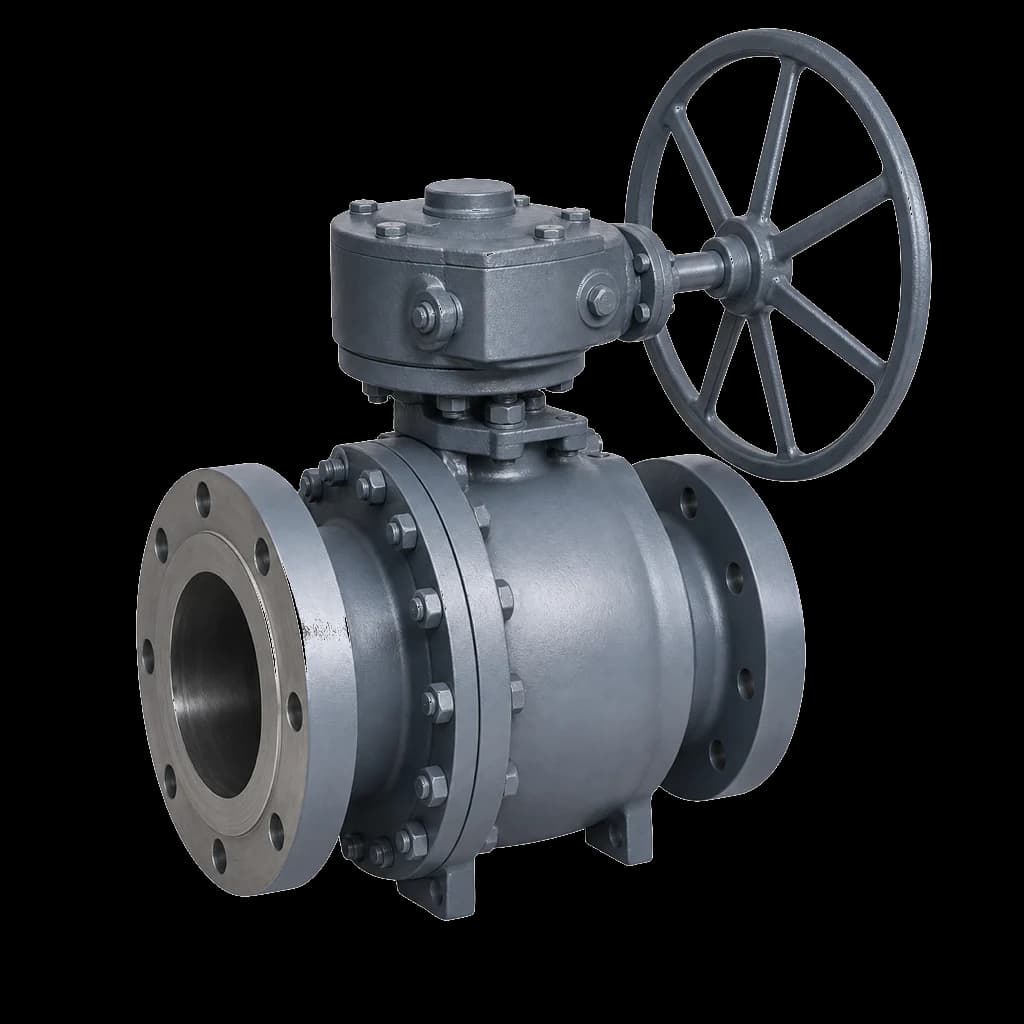
Steel mains are divided into isolatable sections by buried API 6D trunnion-mounted ball valves, operated from surface pits. Spacing follows the operator's emergency-isolation philosophy: a third-party excavator strike or a major leak must be isolable quickly without shutting down the whole city. Specify full bore on any section that will be pigged — intelligent pigging of CGD steel mains is standard integrity practice — and weld ends on buried valves to remove flange leak paths from the soil. Double block & bleed capability lets the operator prove isolation through a body vent before cutting into a live main. Gear operators with position indication, stem extensions to grade, and an external coating compatible with the mains' wrapping complete the specification. Our API 6D selection guide covers construction, bore, class and materials in detail.
Station valves: forged steel, ½" to 2"
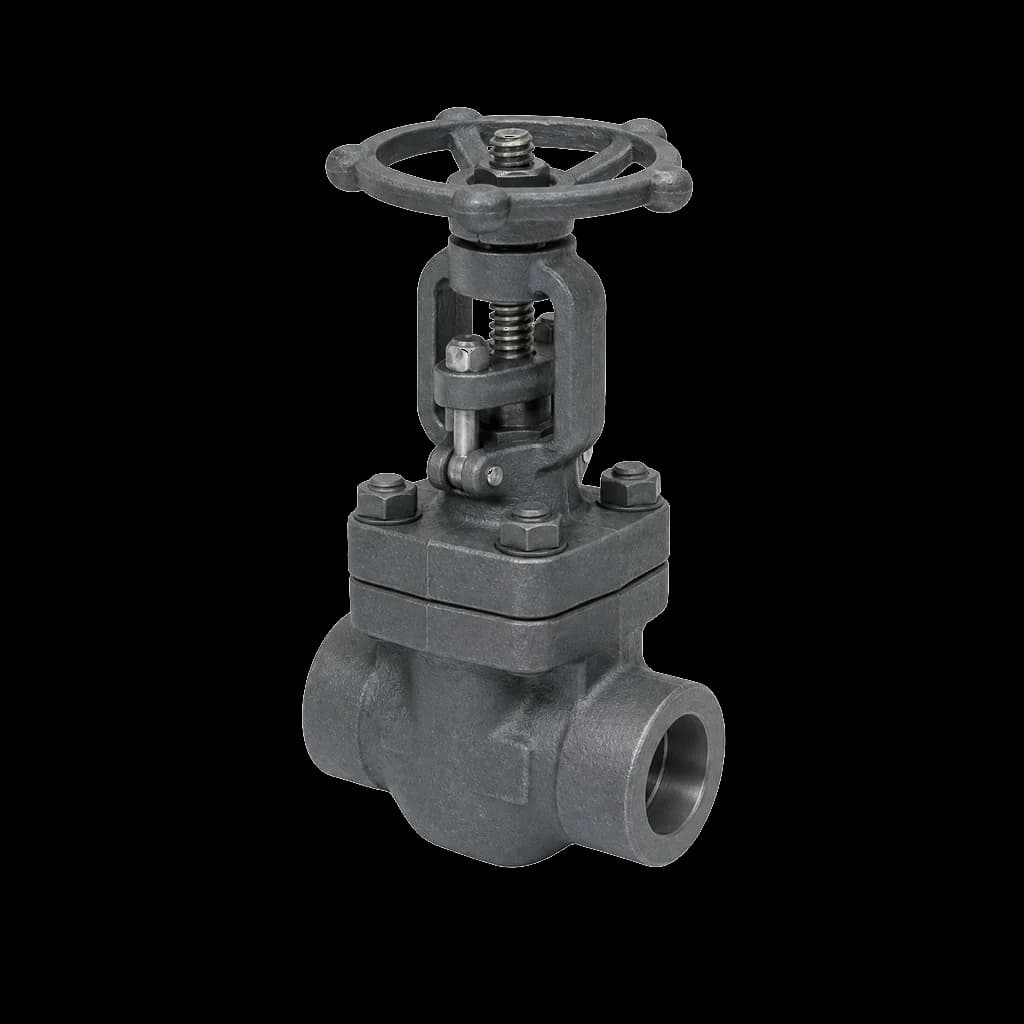
Inside the CGS, DRS and MRS, pipework is small-bore and the valve population is API 602 forged steel: A105 bodies, Class 150–600 to suit the tier, socket-weld or NPT ends. Gate valves isolate filter vessels and regulator runs; globe valves throttle bypass and creep-relief lines so a regulator can be worked on while the station stays in service; check valves protect meter runs against reverse flow. A twin-stream DRS can carry thirty to forty such valves. Order them as a matched set against the station P&ID — mixed lots from mixed sources are how stations end up with a leaking gland on every second run and no common spares.
Fire-safe, anti-static, DBB: the gas non-negotiables
- Fire-safe design. Soft-seated ball valves must carry a fire-safe type test — API 607 or API 6FA, explained here — so that a burned-out seat still limits leakage against a secondary metal seat.
- Anti-static device. Proven electrical continuity from ball to stem to body, so a dry gas stream cannot leave an isolated ball carrying a static charge.
- Blowout-proof stem. The stem must be retained from inside the body; a gland removed under pressure must never become a projectile.
- Double block & bleed on sectionalizing and station battery-limit valves — isolation you can verify before anyone opens a joint on a live network.
The last mile: gas fittings and brass valves for PNG
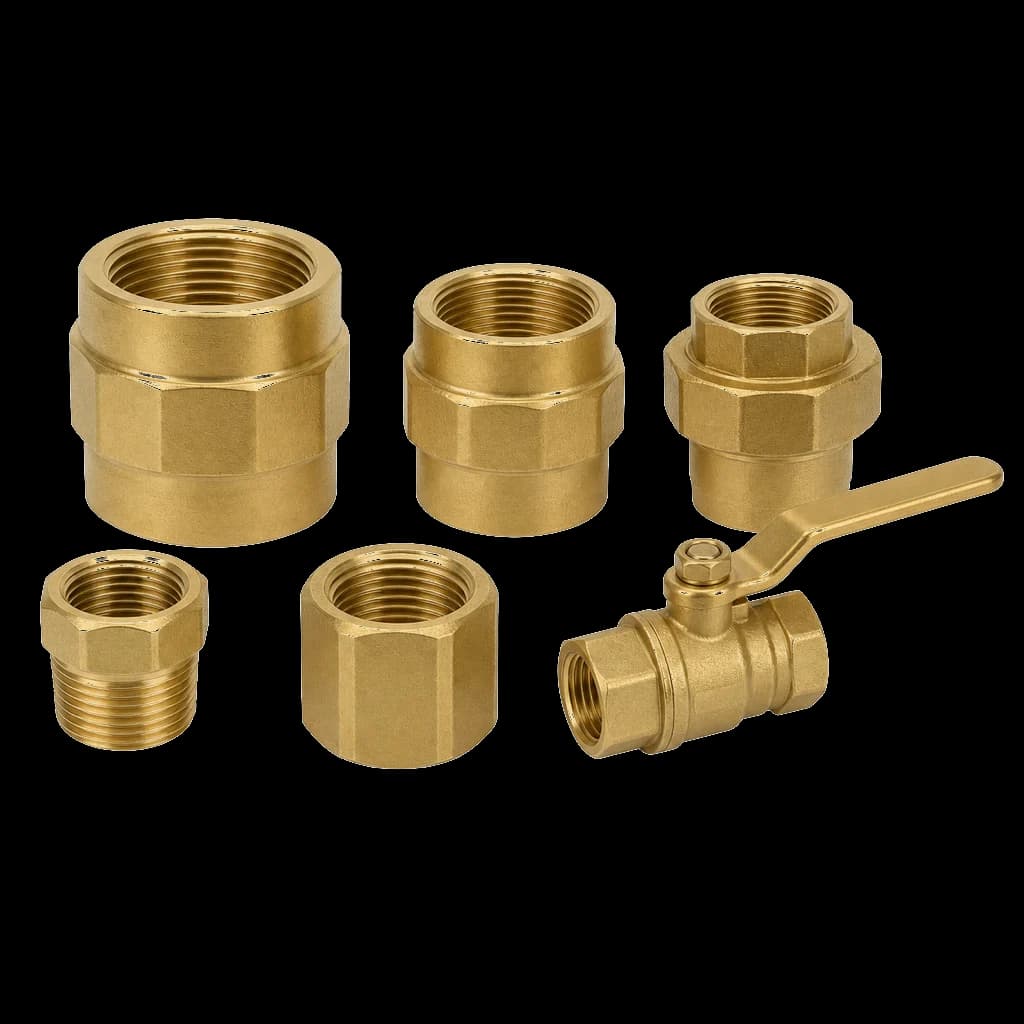
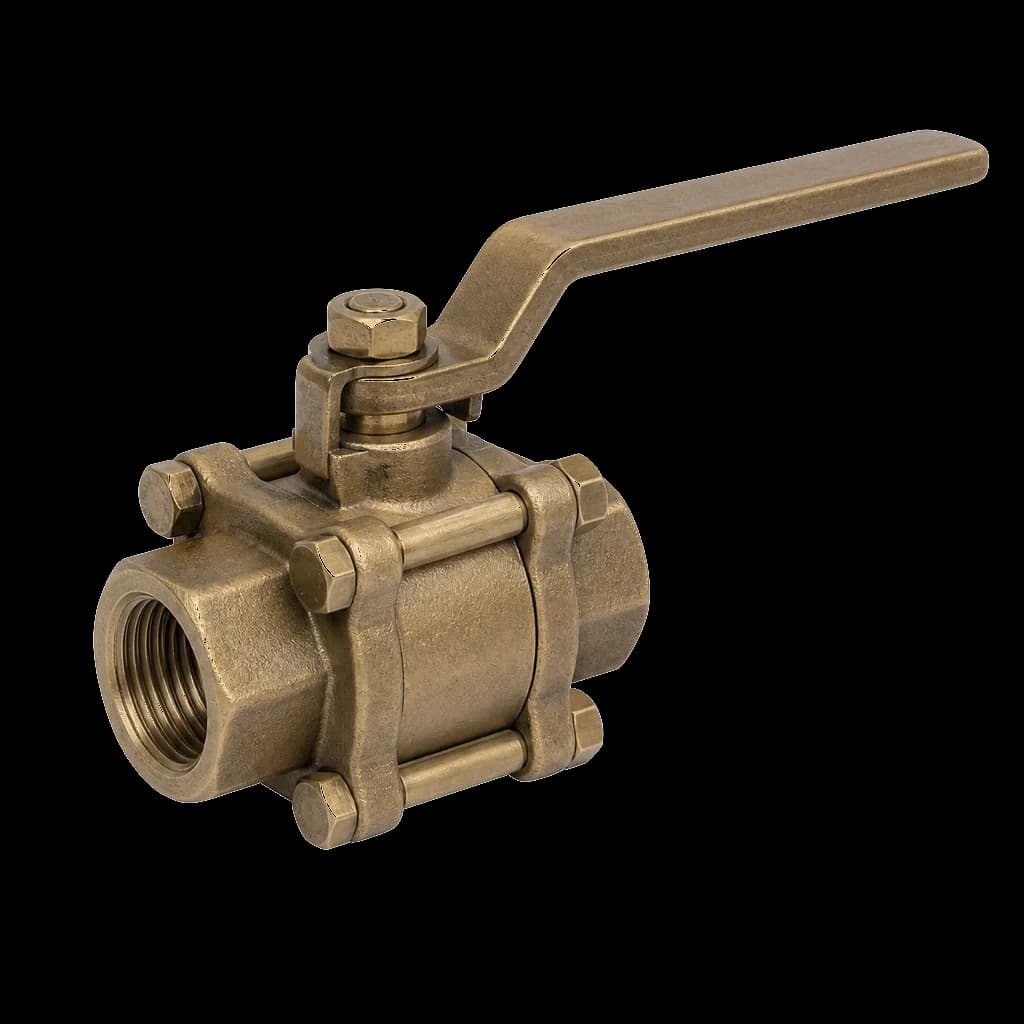
Downstream of the service regulator the materials change, but the discipline should not. Domestic PNG installations run GI or copper pipe with threaded gas fittings, an isolation valve at the meter, and a brass ball valve at the appliance point — quarter-turn, with gas-rated seats and seals proven at low pressure. Commercial kitchens and small industrial consumers add gas-train hardware: manifold isolation valves, appliance cocks and unions sized to the burner load. VKS stocks NEW gas fittings and NEUGREEN brass gas valves for exactly this tier. The failure consequence per joint is small, but the joint count across a geographical area runs into the millions — consistent, tested product is the only defensible buying policy.
The documentation pack a CGD operator expects
CGD operators are audited against PNGRB's T4S technical standards and safety regulations, and every installed valve must trace back to its paperwork. A compliant offer includes:
- EN 10204 3.1 MTCs for all pressure-containing parts — 3.2 with third-party witness where the operator's specification demands it.
- Hydrostatic shell and seat test reports — to API 6D for mains valves, API 598 for station valves.
- Fire-safe type-test certificates referencing the qualified size and class family, not a generic brochure claim.
- Anti-static continuity and low-pressure air seat test records for gas duty.
- Coating and wrapping compatibility data for buried valves.
Treat the pack as part of the product. A valve that arrives without its documents does not go in the ground — it goes back on the truck, and the contractor's schedule goes with it. Writing the document list into the purchase order costs nothing; recovering it after delivery costs weeks.