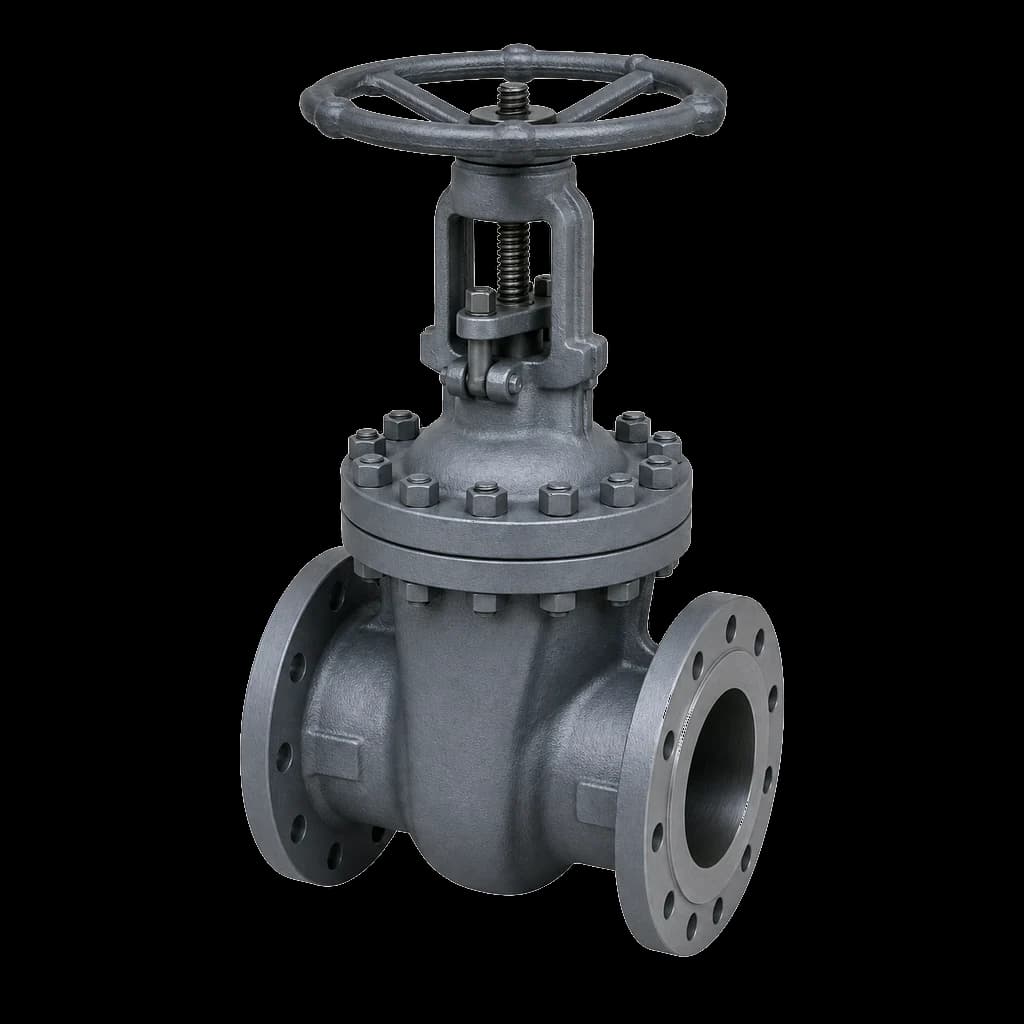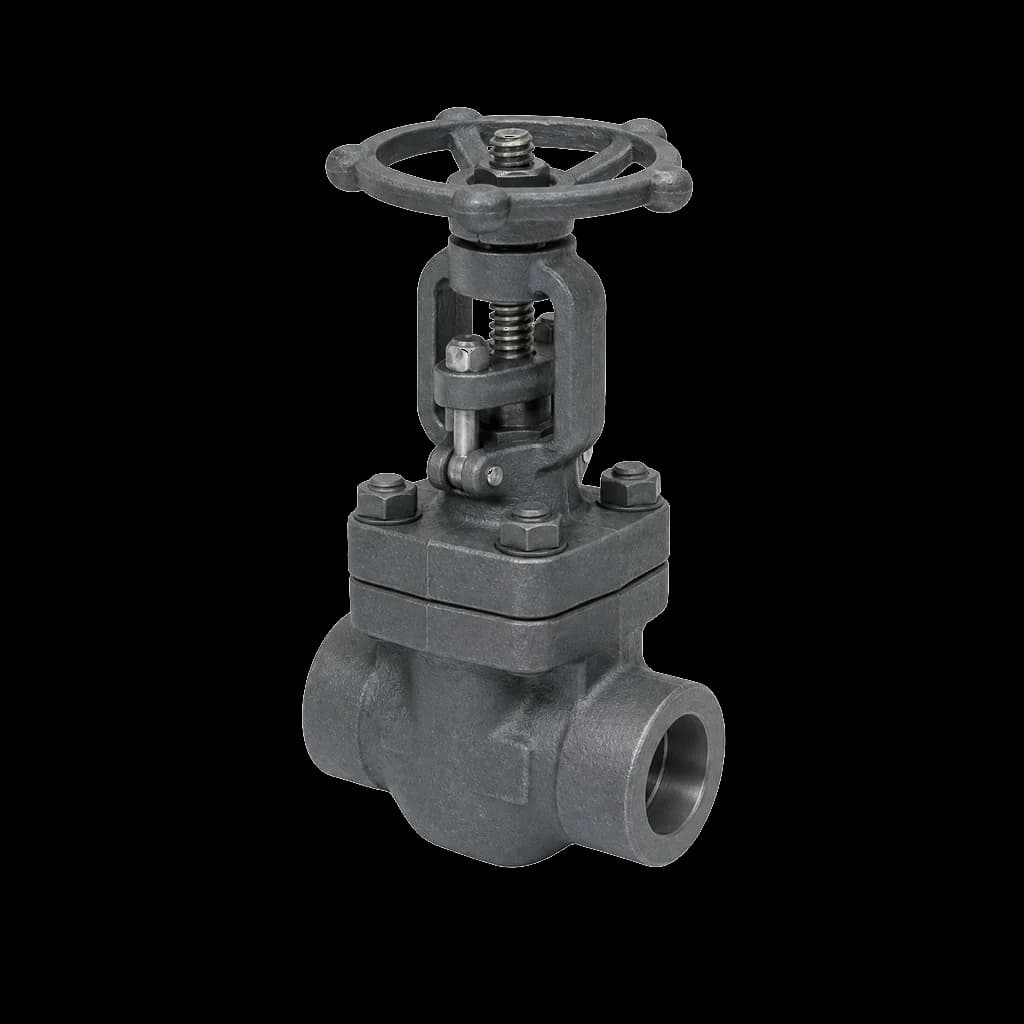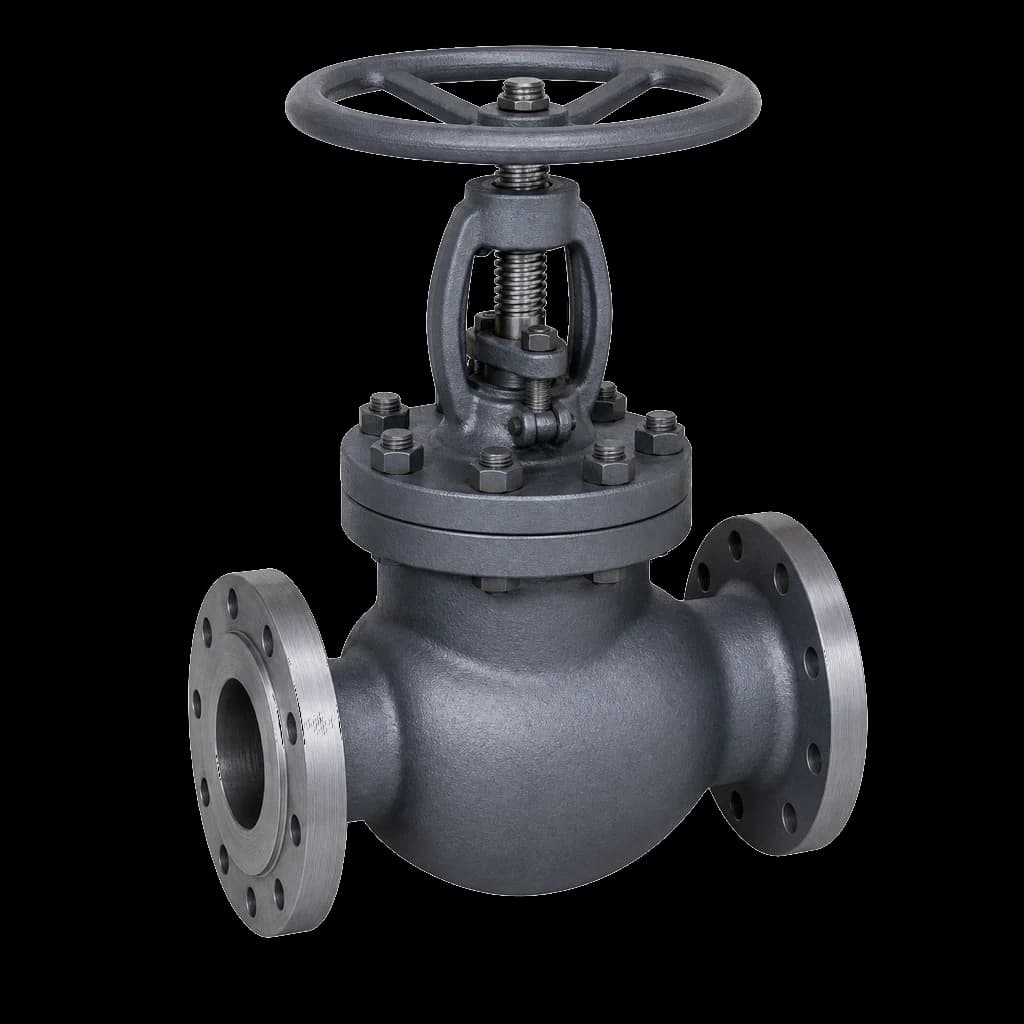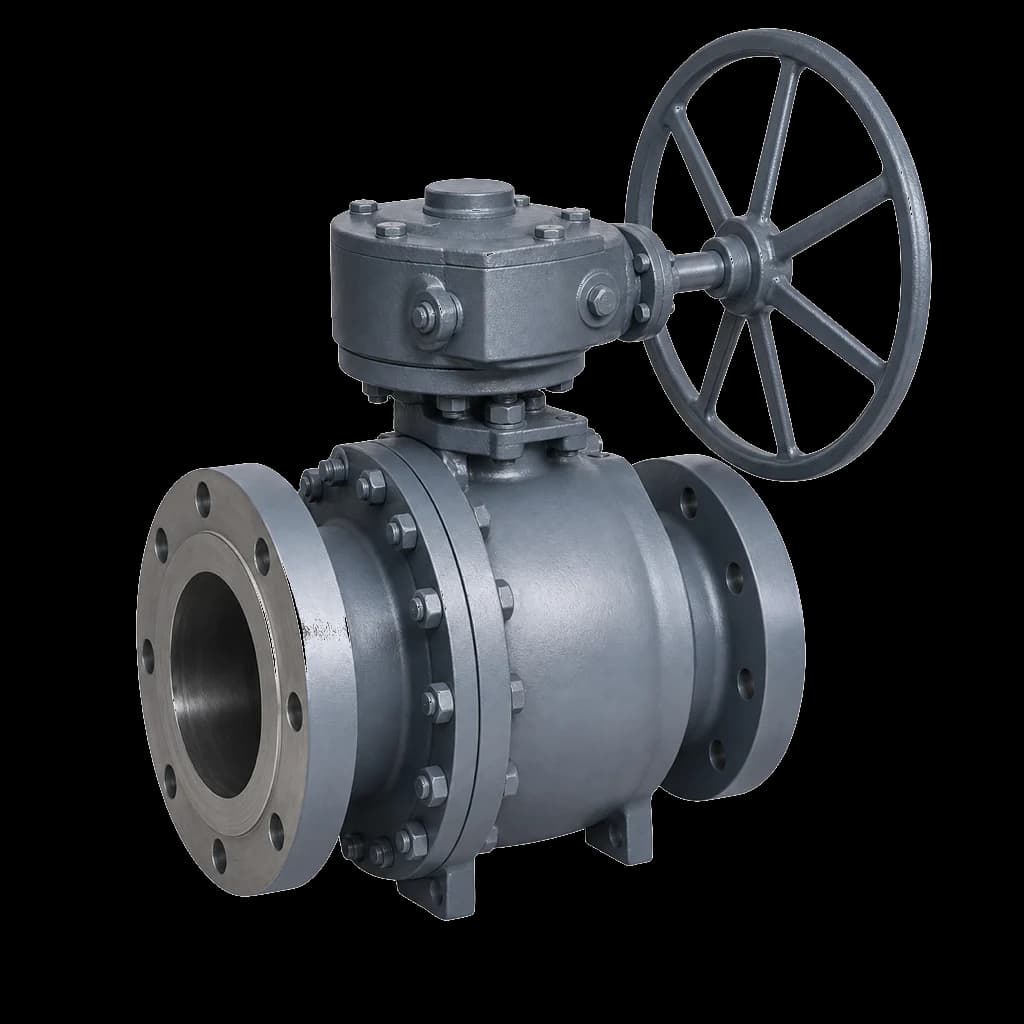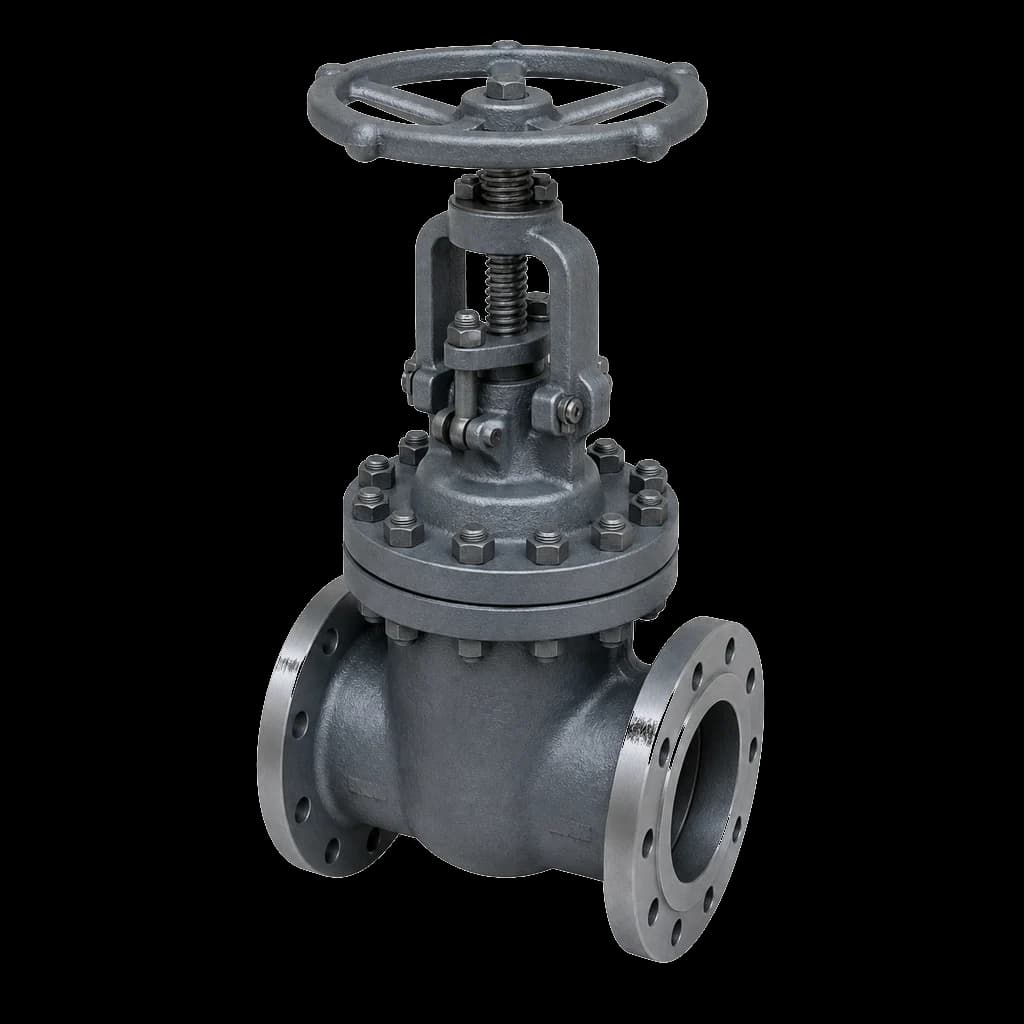
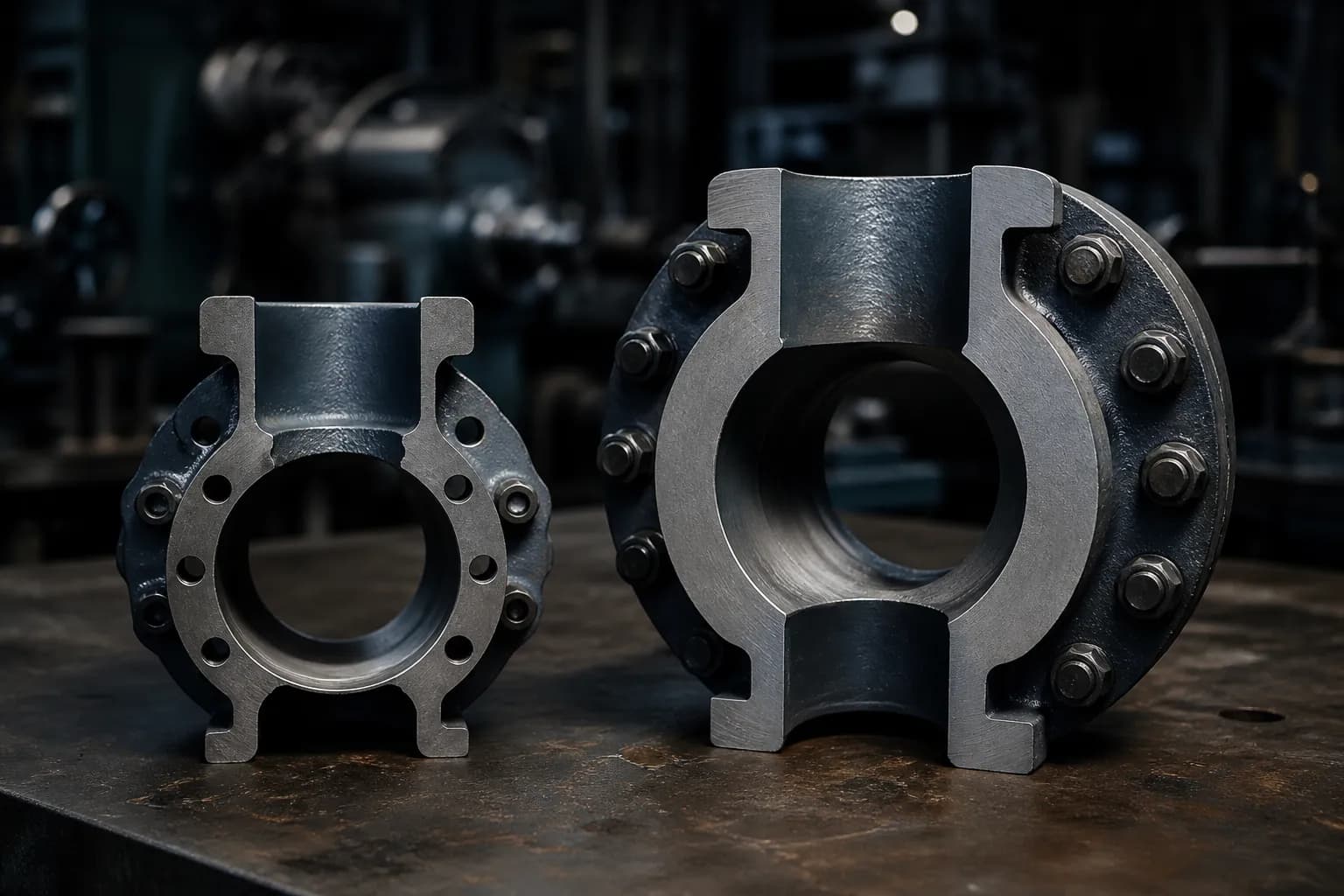
Most people searching for the ASME B16.34 PDF do not want the document. They want one number: the pressure the valve body is allowed to hold at their design temperature. ASME B16.34, "Valves — Flanged, Threaded, and Welding End", is the pressure-boundary standard that every cast and forged steel valve on an Indian line list is stamped against. What follows is its working logic: the Group 1.1 carbon steel table in bar, Standard versus Special versus Limited Class, and the wall thickness rule the rating rests on.
What the standard contains, and which edition binds you
Four things in the standard do the work.
- Material groups. A list mapping every acceptable pressure-boundary material — A216 WCB, A105, A351 CF8M, A182 F22 — onto a group number such as 1.1 or 2.2. Nothing else in the standard is usable until you know your group; our guide to cast valve body materials covers what those grades actually are.
- Pressure-temperature rating tables. One sub-table per material group, each carrying two blocks of columns headed Standard Class and Special Class. The figure you read off is a maximum allowable working gauge pressure at the metal temperature of the pressure-retaining part.
- Minimum wall thickness, tabulated against pressure class and NPS. The rating is only real if the metal is there.
- Testing, marking and examination rules, including the shell test pressure API 598 then repeats and the extra examination that buys a Special Class rating.
ASME reissues the standard every few years, and Indian tenders are still commonly written around the 2013, 2017 and 2020 editions. It is a copyrighted document sold by ASME, so the free PDFs circulating online are usually superseded editions carrying obsolete material lists. That matters. A specification reading "ASME B16.34, latest edition" has handed the vendor the choice of edition and left you nothing concrete to reject a bid against. Name the edition on the enquiry, and repeat it on the purchase order.
Standard Class, Special Class and Limited Class
B16.34 does not publish one rating for a Class 300 body. It publishes three rating designations, and the same casting can legitimately carry different numbers depending on which one it was built and examined to.
Standard Class
The default, and what most line-list valves are. Standard Class ratings are the same values as the ASME B16.5 flange ratings for the same material group — which is why a Class 150 flanged WCB gate valve and the Class 150 A105 weld neck flange it bolts to derate along one curve and fail the design check at the same temperature. Silence on a datasheet means Standard Class. Note what it excludes: volumetric examination of the body is not a condition of the rating, so radiography on a casting must be bought as a line item.
Special Class
Special Class ratings run higher than Standard Class for the same group and class. The extra pressure is bought with non-destructive examination, not extra metal — the standard demands volumetric examination of the pressure boundary plus a surface method, while the minimum wall thickness stays identical. Specify it when the design pressure lands just over a Standard Class ceiling and stepping the whole line up a class is absurd, and expect that examination to show in the quotation as well as in the paperwork.
Limited Class
The third designation is a restricted rating for valves that meet the standard in other respects but cannot claim the full Standard Class figure. You will rarely meet one on an EPC or PSU enquiry, and a bid offering Limited Class against a Standard Class specification is a technical deviation, not a commercial alternative. If the datasheet does not name the designation, get it in writing before the technical bid closes — our guide to reading a valve datasheet lists the other fields that vanish the same way.
| Attribute | Standard Class | Special Class |
|---|---|---|
| Rating values | Same as ASME B16.5 for that group | Higher, from the Special Class columns |
| Named on the datasheet | Rarely; it is the assumption | Always, or you will not get it |
| Body NDE | Not a condition of the rating | Volumetric plus surface examination of the pressure boundary |
| Minimum wall | Per the wall thickness table | Per the same table, no reduction |
| Typical use | Almost all refinery, water, steam and CGD service | Design pressure sitting just over a Standard Class ceiling |
ASME B16.34 pressure ratings for Group 1.1 carbon steel
Group 1.1 covers A216 WCB castings, A105 forgings and A350 LF2 — between them, the body material of most of what ships on an Indian project. These Standard Class values are maximum allowable working gauge pressures in bar at the metal temperature of the pressure-retaining part, which on an uninsulated line you take as the fluid temperature.
| Metal temp °C | Class 150 | Class 300 | Class 600 | Class 900 | Class 1500 | Class 2500 |
|---|---|---|---|---|---|---|
| 38 | 19.6 | 51.1 | 102.1 | 153.2 | 255.3 | 425.5 |
| 100 | 17.7 | 46.6 | 93.2 | 139.8 | 233.0 | 388.3 |
| 200 | 13.8 | 43.8 | 87.6 | 131.4 | 219.0 | 365.0 |
| 250 | 12.1 | 41.9 | 83.9 | 125.8 | 209.7 | 349.5 |
| 300 | 10.2 | 39.8 | 79.6 | 119.5 | 199.1 | 331.8 |
| 400 | 6.5 | 34.7 | 69.4 | 104.2 | 173.6 | 289.3 |
| 425 | 5.5 | 28.8 | 57.5 | 86.3 | 143.8 | 239.7 |
| 450 | 4.6 | 23.0 | 46.0 | 69.0 | 115.0 | 191.7 |
| 500 | 2.8 | 11.8 | 23.5 | 35.3 | 58.8 | 97.9 |
| 538 | 1.4 | 5.9 | 11.8 | 17.7 | 29.5 | 49.2 |
Three rules govern how that table is read. Interpolation between temperature rows is permitted; extrapolation past the end of the table is not — 538 °C is where carbon steel stops, and the standard cautions that prolonged service above roughly 425 °C invites graphitisation of the carbide phase. Below -29 °C the rating is no greater than the -29 °C value, and low-temperature service brings impact testing obligations the table says nothing about. And the table rates the shell, never the seat.
Material groups that change the answer
Two valves of the same class and size can carry different allowable pressures because the body alloy sits in a different group. This is where a substitution offered as "equivalent" changes the engineering without changing the paperwork.
| Group | Representative grades | What the curve does |
|---|---|---|
| 1.1 | A216 WCB, A105, A350 LF2 | The baseline table above. Tabulated to 538 °C, with graphitisation the practical brake well before that. |
| 1.2 | A216 WCC, A352 LCC | Slightly stronger at ambient — Class 150 is 20.0 bar at 38 °C — then converges with 1.1 as temperature climbs. |
| 1.9 | A217 WC9, A182 F22 | Holds useful pressure far past where the carbon steel table stops; refinery hot lines go to chrome-moly rather than to a higher class. |
| 2.2 | A351 CF8M, A182 F316 | Just below 1.1 at ambient — Class 150 is 19.0 bar at 38 °C — but keeps far more of its rating at 400-500 °C. |
| 2.3 | A351 CF3M, A182 F316L | Materially below 2.2 at ambient; 316L is not a free substitution for 316 on a rated line. |
So it is the body grade, not the word "steel", that you specify. A cast steel gate valve offered in WCC against a WCB enquiry is an upgrade; the same valve offered in CF8M because stainless sounds safer buys a lower ambient rating at a higher price.
The Class 150 trap: what derating actually costs
Read the first column again. A Class 150 carbon steel valve is worth 19.6 bar at 38 °C and 13.8 bar at 200 °C — it has surrendered thirty per cent of its rating by the time the line is merely hot, and at 400 °C it is a 6.5 bar valve. This is the commonest error that reaches our desk: 10 bar at 250 °C gets a Class 150 valve because 10 looks comfortably under 19.6, when the allowable there is 12.1 bar and the margin has evaporated. On steam it is worse, because the temperature is not a design choice.
- Steam. Saturated steam at 10 bar g sits near 184 °C and at 17 bar g near 207 °C, so Class 150 runs out of table fast. Indian steam distribution above the LP header ends up Class 300 for that reason — and above 3.5 kg/cm² gauge it is an IBR steam pipe as well, which brings Form III-C and an IBR-approved manufacturer into scope whatever B16.34 permits.
- Hot process lines. At 400 °C a Class 300 WCB body is down to 34.7 bar, and once the carbon steel table ends, alloy is the only answer.
- Flanges, gaskets and bolting derate too. Putting a Class 150 valve into a Class 150 flanged line creates no margin; it just makes everything fail the check at once. Valve class ratings explained works through the class system itself.
- The seat is not the shell. B16.34 rates the pressure boundary and nothing else. A PTFE-seated ball valve is limited by its seat long before the body notices, and that seat has its own, lower curve and its own temperature ceiling. Never quote a B16.34 figure as the service limit of a soft-seated valve.
Minimum wall thickness: the rule the rating depends on
The rating table is only half of B16.34. The other half is the minimum body wall thickness, tabulated against pressure class and NPS. It is independent of material group and of rating designation — a Class 300 body needs the same metal whether Standard or Special Class — and it carries no corrosion allowance. Whatever your corrosion philosophy demands is added on top of it.
- The tabulated figure is a minimum after machining, at the thinnest point of the pressure boundary — on a cast body usually the section around the seat pocket, not the ribbed run a caliper reaches first.
- A body machined below that minimum is not a B16.34 valve whatever the nameplate says. Ultrasonic wall measurement at incoming inspection is the quickest decisive check on a suspiciously light import.
- API 600 and API 602 both impose walls heavier than the B16.34 minimum for the same class and size, so specifying them is a physical upgrade and not a paperwork one — API 600 vs API 602 sets out where each belongs.
ASME B16.34 vs API 602, API 600 and API 6D
B16.34 is a pressure-boundary standard, not a valve design standard. It governs what the body may hold and how thick it must be; it is silent on stem diameter, backseat, face-to-face and trim. Those come from the product standards, and every one of them defers to B16.34 for ratings. That is why "API 600" and "ASME B16.34" are not alternatives on a datasheet — a correctly specified cast gate valve carries both.
| Standard | What it covers | Relationship to B16.34 |
|---|---|---|
| ASME B16.5 | Pipe flanges and flanged fittings, NPS 1/2 to 24 | Standard Class valve ratings are the same values as the B16.5 flange ratings for that group; B16.5 stops at Class 2500, so a Class 4500 valve has no flanged counterpart |
| API 600 | Bolted bonnet cast steel gate valves | Takes ratings from B16.34, then adds heavier walls, larger stems and defined trim |
| API 602 | Compact forged gate, globe and check valves, NPS 4 and smaller | Takes ratings from B16.34; its own wall table is heavier than the B16.34 minimum |
| API 6D | Pipeline valves — ball, check, gate and plug | Pressure-temperature ratings taken directly from B16.34 |
| ASME B16.10 | Face-to-face and end-to-end dimensions | Dimensional only; says nothing about pressure rating |
| IS 14846 | Cast iron sluice valves for water works | A separate PN regime whose designations do not map onto ASME classes; cast iron is outside B16.34 altogether |
Ball valves follow the same pattern. An API 6D ball valve draws its pressure-temperature ratings from B16.34, then adds pipeline requirements — drain and vent connections, antistatic devices, double block and bleed provisions — that B16.34 has no opinion about.
Closing the B16.34 line on an enquiry
A B16.34 reference is only useful once it is closed out. Five fields do it:
- Design pressure and design temperature, separately. Not "Class 300". The class is the answer, not the question, and quoting it alone hides whether the temperature was ever checked.
- Body material by grade and specification, so the group is unambiguous: A216 WCB is Group 1.1, A216 WCC is 1.2, A351 CF8M is 2.2, and they do not derate alike.
- Rating designation — Standard Class unless there is a stated engineering reason for Special Class, and the examination records called for by name if there is.
- The edition of B16.34, named. "Latest edition" is not a specification and cannot be used to reject anything.
- Test and certification scope: shell and seat testing to API 598, EN 10204 3.1 or 3.2 certificates, and any casting radiography written as a line item rather than assumed. One cross-check falls out of the rating table itself — the shell hydrostatic test is 1.5 times the 38 °C rating, rounded up to the next whole bar, which is where the familiar 30 bar for Class 150 and 77 bar for Class 300 come from. A certificate showing less was not written against this standard.