Two lines can leave the same plot in the same 6" carbon steel at the same pressure and still fall under different codes. ASME B31.3 (Process Piping) and ASME B31.1 (Power Piping) are not interchangeable, and the choice is not a designer's preference: it follows from what the plant is and what the line does. It cascades into wall thickness, weld examination, test pressure, admissible valve standards and whether the Boiler Inspectorate has a say.
Scope: which code owns the line
B31.1 is power piping: boilers and their external piping, steam, condensate, feedwater and high-temperature water. B31.3 is process piping: refineries, chemical and petrochemical units, pharmaceutical, pulp and paper, semiconductor and cryogenic plants. Read the two scope statements side by side and most lines classify themselves in one pass.
The boiler external piping trap
The exception that catches people is Boiler External Piping, the run from the boiler proper up to and including the first valve or valve pair. B31.1 reproduces those rules, but jurisdiction sits with ASME BPVC Section I. In India that is the Indian Boiler Regulations, 1950 and the State Boiler Inspectorate. Get the BEP boundary wrong and you find out at inspection.
Mixed plants and the spec break
Most Indian plants run both codes: a refinery has a captive boiler house, a paper unit a steam network feeding process. Design the steam and utility island to B31.1 and the process units to B31.3, with a documented spec break at the battery limit. A line list that reads B31.3 for every line in a plant with a package boiler is wrong.
| Parameter | ASME B31.1 (Power Piping) | ASME B31.3 (Process Piping) |
|---|---|---|
| Design margin on tensile strength | 3.5, the BPVC Section I basis | 3.0; higher allowable stress, thinner wall |
| Girth weld radiography | By service, size and thickness; 100% on boiler external piping | 5% for Normal, visual for D, 100% for severe cyclic |
| Hydrostatic leak test | 1.5 × design, corrected for temperature | 1.5 × design; service leak test for Category D |
| Valve standards | B16.34 and the API standards in Table 126.1 | Same families in Table 326.1, plus Chapter IX |
B31.3 has a floor as well: piping below 105 kPa (15 psi) gauge falls outside its scope if the fluid is non-flammable, non-toxic and harmless to tissue and design temperature stays between -29 °C and 186 °C. Low-pressure vents and drains drop out of ASME jurisdiction altogether.
ASME B31.3 fluid service categories and what they cost
This is the structural difference, and it decides what you buy. B31.1 applies one rule set to everything in its scope. ASME B31.3 sorts every line into a fluid service category first, and the category drives examination, testing and permitted joints. Categorising the line is the owner's job, and it belongs on the line list before the enquiry is written.
| Fluid service | What puts a line in it | Examination | Valve consequence |
|---|---|---|---|
| Category D | Non-flammable, non-toxic, harmless to tissue; ≤1035 kPa gauge; -29 to 186 °C | Visual | Threaded and socket-weld valves fine; service leak test may replace hydro |
| Normal Fluid Service | Anything not D, M, severe cyclic or high pressure | 5% random radiography | Standard API 600 / API 602 / B16.34 valves, flanged or butt-weld |
| Category M | One exposure to a very small quantity causes irreversible harm | As Normal Fluid Service | Welded joints; bellows-sealed stems; sensitive leak test |
| Severe cyclic conditions | Owner designates it, or stress range and cycle count exceed thresholds | 100% radiography | Threaded joints out, socket welds restricted; butt-weld or flanged |
| High pressure (Chapter IX) | Owner designates it; beyond the Class 2500 rating at temperature | 100% radiography | Beyond standard B16.34 classes: special class or qualified bodies |
Category D is a real cost lever and it is badly under-used on Indian projects. Instrument air, cooling water and most non-hazardous utility lines qualify on their face; defaulting them into Normal Fluid Service buys 5% radiography and a hydrostatic test nobody needed. Going the other way, once a line is severe cyclic or Chapter IX the valve you were about to requisition usually stops being acceptable.
Design margin, wall thickness and valve ratings
For the same material at the same temperature, B31.3 permits a higher allowable stress than B31.1: a design margin of 3.0 on specified minimum tensile strength against 3.5 on the Section I basis. A B31.1 line frequently lands one schedule heavier. None of that sets the valve's rating. A valve body is rated by ASME B16.34 and its pressure-temperature tables, not by a piping stress calculation. Class 150 carbon steel starts at 19.6 bar at 38 °C and is into single digits by 400 °C, which is why it has no business on a superheated steam header under either code. Our guide to valve class ratings works through the derating tables.
What each code actually says about valves
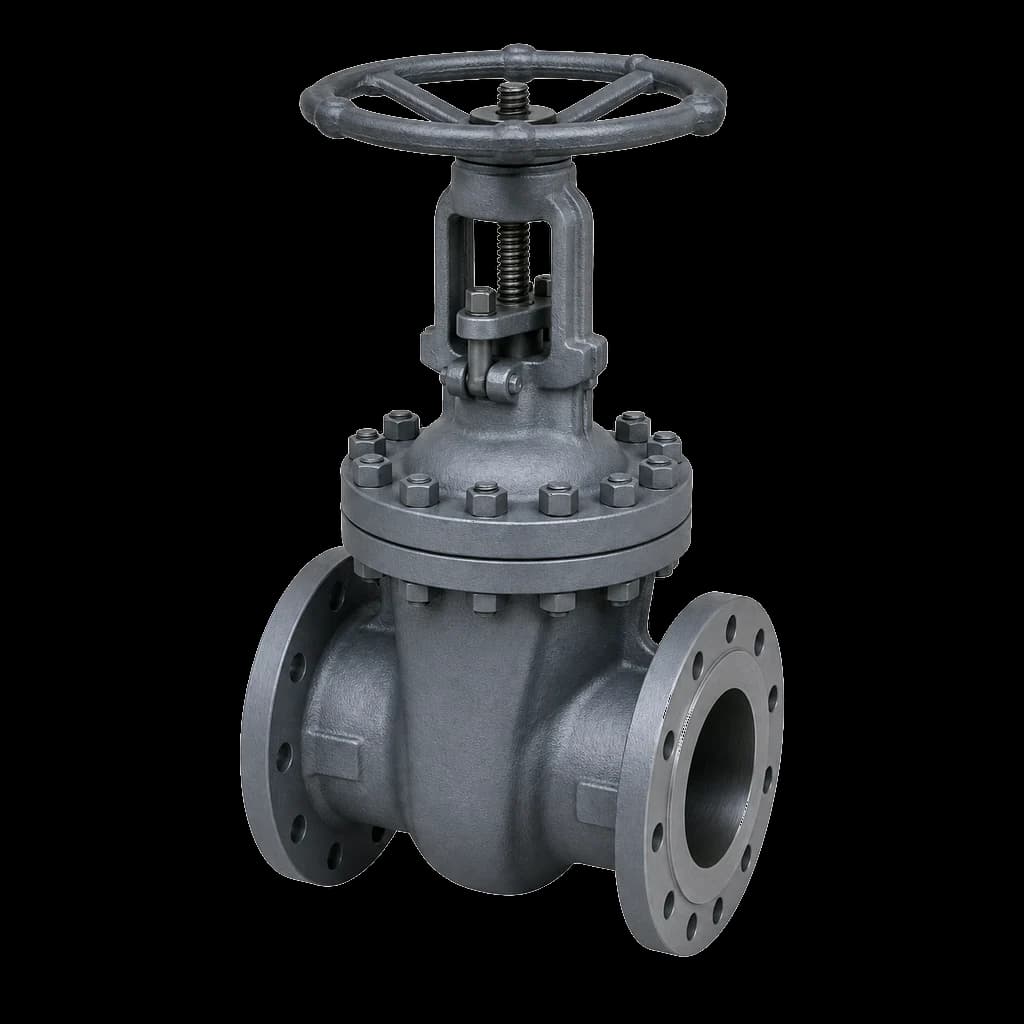
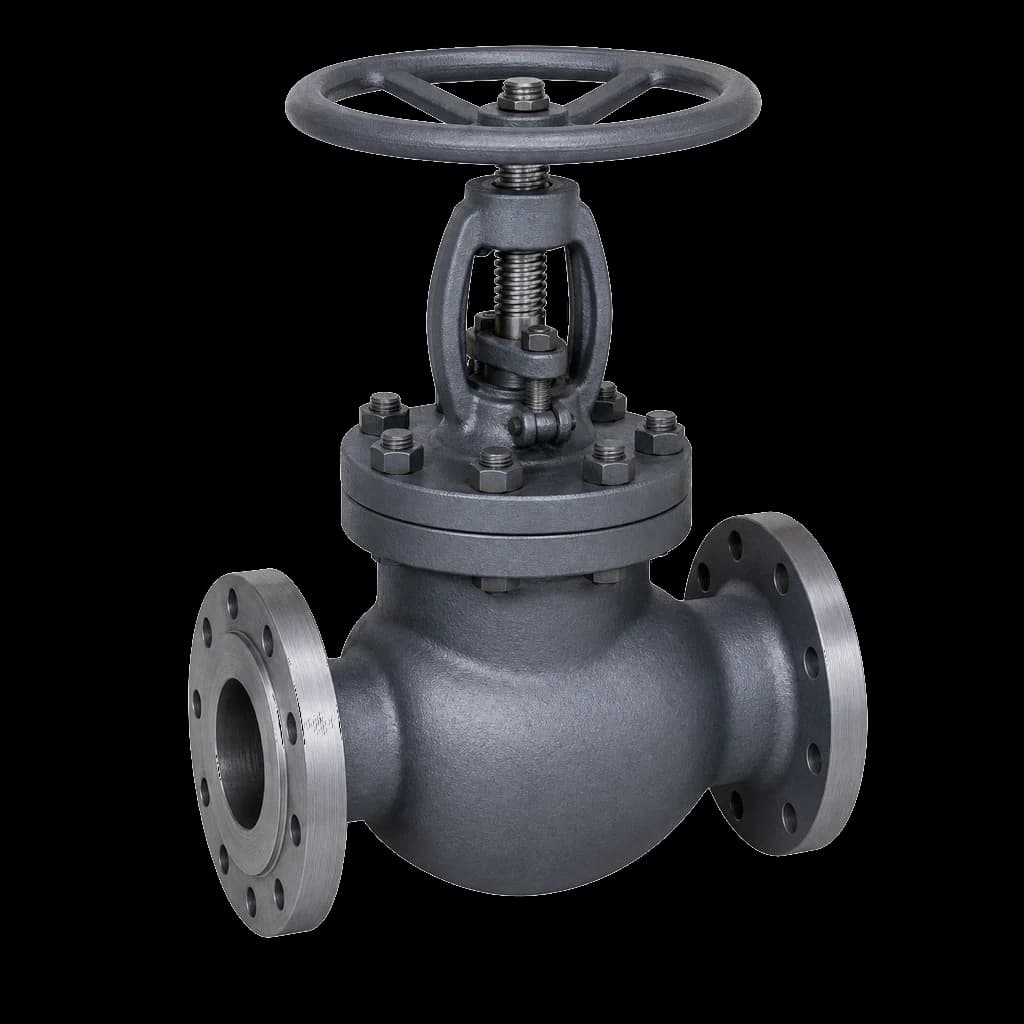
B31.1 handles valves in para. 107 and lists acceptable component standards in Table 126.1; B31.3 does the same in para. 307 and Table 326.1. The mechanism is identical: a valve conforming to a listed standard (B16.34, B16.5/B16.47 ends, B16.10 face-to-face, API 600, API 602, API 594, API 6D) is acceptable within that standard's pressure-temperature limits and needs no further qualification. Anything else is an unlisted component, qualified by proof test. Neither code specifies trim, seat material or gland packing.
End connections follow the fluid service, not the code
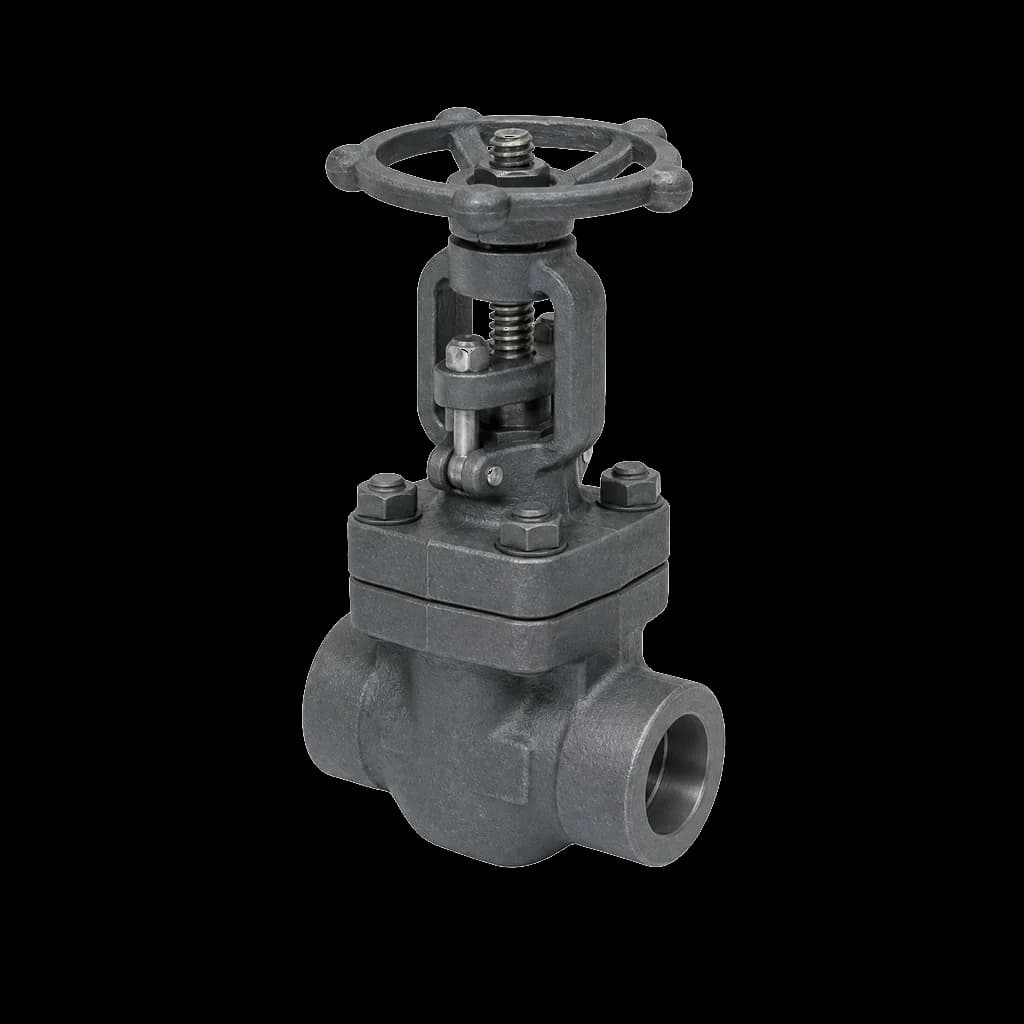
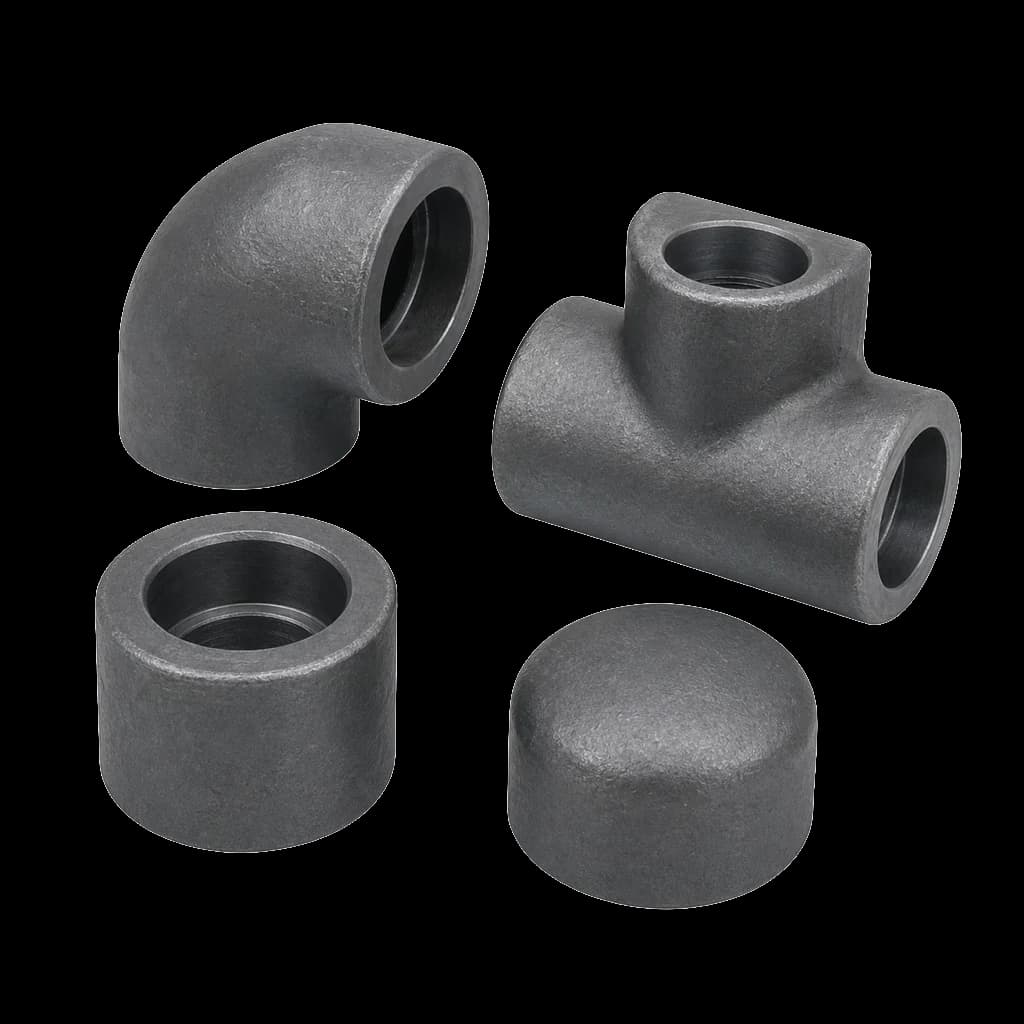
The commonest spec error on enquiries is end connections chosen by habit. Under B31.3 the category drives it: Category D lines can take screwed or socket-weld valves in small bore, Normal Fluid Service flanged or butt-weld, severe cyclic and Chapter IX butt-weld. Under B31.1 the drivers are the steam parameters and the BEP boundary. Where socket weld is right, the valve needs a matching ASME B16.11 socket-weld forged fitting in A105 or F304/F316 at the same class.
ASME B31.3 hydrostatic testing versus B31.1 practice
Both codes call for a hydrostatic leak test at 1.5 times design pressure, corrected upward where allowable stress at test temperature exceeds that at design temperature. The divergence is in the alternatives: B31.3 permits a pneumatic test at 1.1 times design pressure where hydro is impractical, and an initial service leak test instead of hydro for Category D. B31.1 allows a pneumatic factor of 1.2 and expects hydro as the norm.
Examination diverges the same way. Under B31.3, Normal Fluid Service asks for 5% random radiography of girth welds, Category D visual only, severe cyclic and Chapter IX 100%. B31.1 sets examination by service, size and wall thickness, with boiler external and high-energy piping at 100%. A tender that says only "NDT as per code" is a change order with a delay built in.
IBR and the Indian statutory overlay
ASME compliance is contractual; IBR compliance is statutory, and it sits on top of whichever ASME code you chose. A line is a steam pipe under the Indian Boiler Regulations when steam pressure exceeds 3.5 kg/cm² gauge, or when the pipe exceeds 254 mm internal diameter and pressure exceeds 1 kg/cm². Every valve and fitting on it must arrive with IBR Form III-C countersigned by the inspecting authority.
The failure mode is specific and expensive. A valve entirely correct to B31.1 and API 600, with a clean EN 10204 3.1 certificate, is rejected at site because no Form III-C exists against it. Certification has to be instructed before the body is cast; it cannot be retro-fitted. What IBR Form III-C certifies sets out the mechanics; our steam service valve guide covers what else changes on a steam datasheet.
The other half of the overlay runs the opposite way. Municipal water schemes, CPWD building services and most state utility tenders never mention ASME: sluice valves to IS 14846, IS 1239 or IS 3589 pipe. IS 1239 tube is not among the ASTM and API 5L grades B31.3 lists, which is why a refinery utility line calls A106 Gr B while the same duty in a CPWD building calls medium-class GI. Mixing the two regimes inside one specification is how bids get disqualified. How IS 1239 pipes and fittings are classified covers that route, and the gate and sluice valves we supply span both.
Editions, and writing the code line in an RFQ
Each code is reissued on a two-year cycle — 2020, 2022, 2024 — and acceptance criteria move between editions. "Latest edition" in a purchase order is a trap: the valve gets made against whatever was current at order date and inspected against whatever the agency has on the shelf. Name the edition; EIL, PDIL and the major EPC specifications all name theirs.
Enquiries routinely arrive missing several of the seven items below, and a reconstruction from the P&ID turns up at site as the wrong valve:
- Design code and edition — ASME B31.3-2022 or B31.1-2022, not "as per applicable code".
- Fluid service category under B31.3, or steam parameters and BEP status under B31.1.
- Design pressure and temperature, separate from operating: the class comes off the B16.34 table at design temperature.
- Valve standard: API 600, API 602, API 594, API 6D or IS 14846, with body, trim and bolting grades named.
- End connection: flanged to B16.5 with facing and finish, butt-weld to B16.25, or socket weld to B16.11.
- Testing and certification: API 598, EN 10204 3.1 or 3.2, IBR Form III-C where the line is IBR, and third-party inspection.
- Statutory overlay: IBR, PESO, RDSO, fire-service listing, or a vendor list the maker must sit on.