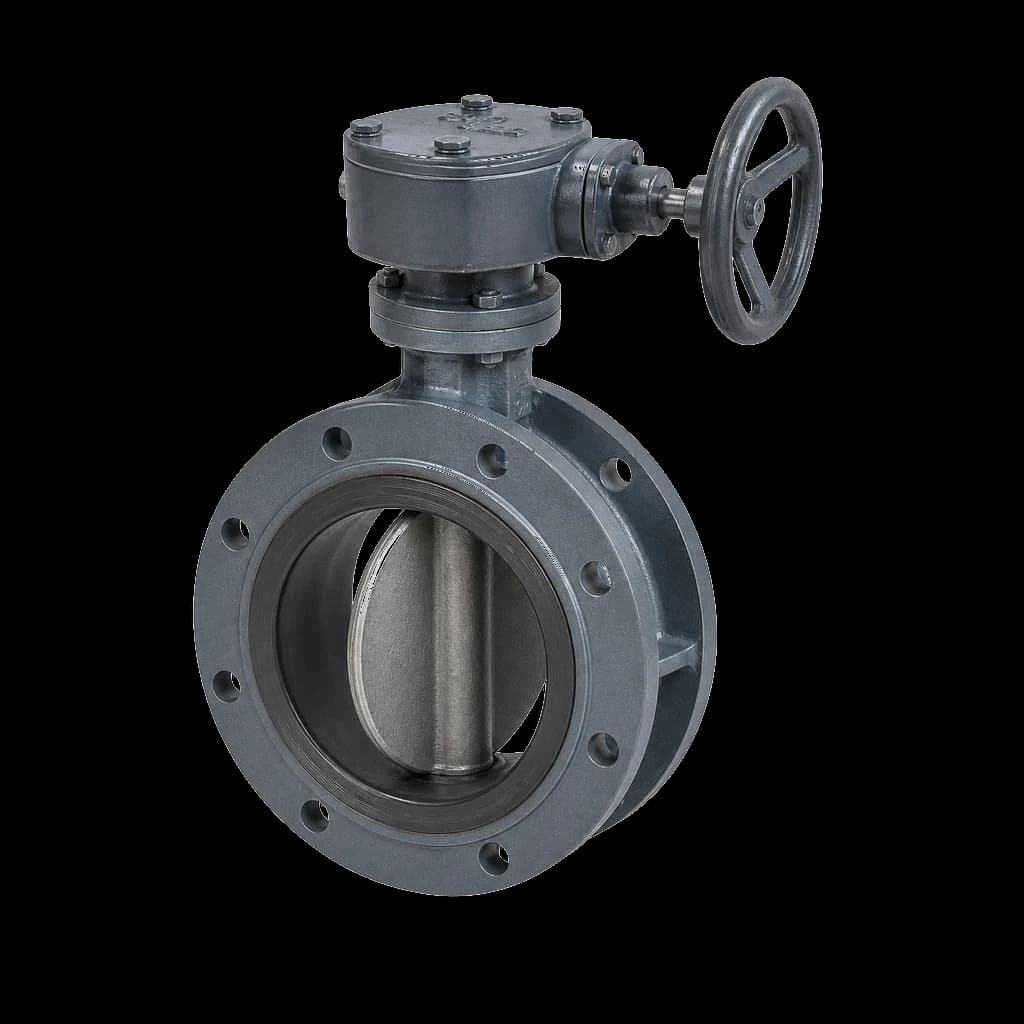
A valve bid can be technically faultless and still be set aside at the document check. The rate is competitive, the datasheets match the NIT, the make sits on the approved list — and the offer goes no further because the authorised dealer certificate proving the bidder is a genuine channel for that make was undated, addressed to nobody in particular, or signed by a regional sales executive with no power to bind the manufacturer. The document is not a formality. It is the buyer's cheapest defence against spurious castings and re-stamped bodies, and evaluation committees treat it that way.
What an authorised dealer certificate actually is
An authorised dealer certificate — also written as authorised distributor certificate, channel partner certificate or dealership certificate — is a letter on the manufacturer's own letterhead confirming that a named firm is authorised to sell, stock and support defined products, usually within a defined territory, for a defined period. It is a standing document, typically reissued each financial year, and a serious channel partner holds a current one for every principal it represents.
It is not a certificate of quality, and it does not travel with the goods — it travels with the bid. What it certifies is the commercial chain: that the material will leave the manufacturer's works by a route the manufacturer acknowledges, so the warranty, the EN 10204 3.1 or 3.2 mill test certificate and the hydro test report all trace back to a body the manufacturer will stand behind.
Why tenders insist on it
Because the Indian valve market has a long tail of traders who buy unbranded castings, machine them, stamp a well-known name on the body and sell them into low-scrutiny tenders. A buyer cannot detect that from a photograph or a photocopied test certificate. The dealer certificate, cross-checked with the manufacturer, closes the gap in one phone call. Several failure patterns in our valve procurement mistakes guide begin exactly here — with a make that was never authorised at all.
MAF versus authorised dealer certificate
Buyers use the two terms loosely, and bidders lose bids because of it. A Manufacturer's Authorisation Form (MAF) is tender-specific. It is a standard annexure in bidding documents drawn on the GFR 2017 / Manual for Procurement of Goods pattern, and it does more than confirm dealership: it names the tender, authorises the bidder to quote against it, and commits the manufacturer to back the offer with warranty support and spares. A dealer certificate is generic and standing; an MAF is written for one NIT and expires with it.
| Aspect | Authorised dealer certificate | Manufacturer's Authorisation Form (MAF) |
|---|---|---|
| Scope | Standing appointment as a channel partner | Authority to quote against one named tender |
| Names the tender | No | Yes — NIT number and buyer name are mandatory |
| Typical validity | One year, or a stated dealership period | Bid validity plus contract and warranty period |
| Manufacturer's obligation | None beyond the appointment | Warranty backup, spares, sometimes a step-in undertaking |
| Who signs | Sales or channel head, on letterhead | Signatory holding power of attorney or board authority |
Where a tender asks for both, submit both. Where it asks only for an MAF, attach the dealer certificate as well and pre-empt a clarification round. Where it asks for neither but demands a make from an approved list, expect the question at technical clarification anyway.
What a valid MAF format must contain
The Word-format templates circulating online are usable skeletons, but the tender's own annexure prevails — if the NIT prints an MAF proforma, reproduce it verbatim on the manufacturer's letterhead and change nothing but the blanks. Whatever the wording, an evaluation committee checks for these elements:
- Manufacturer's letterhead with registered address, CIN and GSTIN — not the dealer's letterhead, and not plain paper with a rubber stamp.
- Tender reference: the NIT or enquiry number, its date, and the procuring entity's name spelled exactly as in the tender document.
- Bidder's legal name and address, matching the bid, the GST registration and the bid security declaration character for character.
- Item scope: the products authorised — cast steel gate, globe and check valves, or API 6D ball valves — with size and class range where the approval is range-limited.
- Warranty and spares undertaking for the contracted period, routed through the named bidder.
- Validity dates stated as a period covering bid validity plus execution, not a bare issue date.
- Signature block with name, designation and authority, plus a contact number and email that reach the manufacturer's office rather than a personal mobile.
- Date and reference number. An undated authorisation is treated as no authorisation in most PSU evaluations.
Two clauses cause more argument than the rest combined. The first is exclusivity: many tenders require the manufacturer to authorise only one bidder, and some manufacturers refuse. Raise it at the pre-bid meeting, not at bid opening. The second is the step-in undertaking, where the manufacturer agrees to supply the buyer directly if the dealer defaults — common in defence and large PSU packages, unusual in municipal work.
Validity, naming and signing authority
Validity has to outlast the contract
An MAF valid for 90 days, offered against a tender carrying 180-day bid validity and a delivery period running most of a year, is defective on its face. Ask the manufacturer to write validity as a period tied to the tender — bid validity, any extension, the delivery period and the warranty — rather than a fixed calendar date that lapses mid-execution.
Names must match everywhere
One character of divergence between the bidder name on the MAF, the PAN, the GST certificate, the Udyam registration and the covering letter is enough for a rejection that will not be reversed. Private Limited spelled out on one document and abbreviated on another is the classic case. Check the vendor master too — the mismatch often originates in an old PSU vendor registration record never updated after a name change.
Signing authority is scrutinised
On high-value packages, committees ask what authority the signatory holds. A branch sales manager's signature on a letter carrying a step-in obligation invites a query at the least. Where the value justifies it, ask the principal for a director, company secretary or attorney-holder to sign, and attach the board resolution or power of attorney standing behind that signature.
How buyers verify an authorised distributor
None of the checks below is slow, and every one of them is available to the evaluator. If you are bidding, run them on your own paperwork before submission rather than discovering the gap in a clarification letter.
- Call the manufacturer on a number you found yourself, from its corporate website or a public directory — never the number printed on the letter you are verifying.
- Cross-check the published channel list where the manufacturer keeps one. Many do not, in which case ask the works for a confirmation addressed to the buyer; a principal that will not confirm its own dealer in writing has told you something.
- Verify the ISI licence where the item carries the mark: the CM/L number can be checked against the BIS database, and the licence must cover the specific IS standard and the size range quoted.
- Confirm third-party marks independently. An API 6D or API 600 monogram licence is checkable against API's Composite List; a monogram claimed by a works that holds no licence settles the matter, whatever the letter says.
- Match the GSTINs — the manufacturer's on the MAF, the dealer's on the bid. Cancelled or mismatched registrations show up immediately on the GST portal.
- Ask for heat-number traceability. A genuine channel produces the mill certificate, heat number and hydro record against the body serial number. A re-stamper cannot.
On GeM the mechanics differ: authorisation is transacted inside the portal, where the OEM maps the reseller to its own brand and catalogue, so a reseller offering an unmapped brand is caught by the platform rather than by the buyer. That does not replace a paper MAF where the ATC calls for one, and it is separate again from the vendor assessment covered in our GeM vendor assessment guide.
Where valve bids get rejected
Some rejection patterns are specific to valve packages rather than procurement in general, and they recur across states and utilities:
- Multi-make packages with one MAF. A water-supply schedule covering sluice valves, butterfly valves, check valves and strainers usually needs an authorisation per make.
- Scope narrower than the schedule. The certificate covers gate and globe valves; the schedule also carries butterfly valves and strainers. The evaluator reads the scope line, not the covering letter.
- Range-limited authorisation. A dealer authorised to 12" quoting a 24" body. Where the principal's range chart stops short, the authorisation should say so — and the bidder should not quote past it.
- Standard mismatch. A municipal tender written to IS 14846 answered with an authorisation for an API 600 line. The make may be genuine and still be non-responsive.
- Expired or generic letters. A dealership certificate from three financial years ago, or an MAF naming no tender, is routinely treated as non-submission.
- Uploaded but unsigned. Scans without a signature, or files that do not carry the manufacturer's stamp, fail the same way.
Most of this is avoidable by settling the authorisation question when the enquiry is drafted rather than the night before submission. Our note on how to write a valve RFQ sets out what a supplier needs up front to confirm, in one reply, both the technical offer and the documentation behind it.
Sector practice in India
What the buyer wants from the authorisation varies sharply by sector. The table reflects common practice; the individual NIT overrides it, so read the ATC.
| Buyer type | Usually demanded | Practical note |
|---|---|---|
| Refinery and petrochemical EPC | MAF plus proof the make is on the consultant's approved vendor list | Vendor approval attaches to the manufacturer; the dealer supplies against it |
| Railways | RDSO or zonal approval held by the make, plus authority to quote | Approval is granted to works, not traders — confirm the item is covered |
| Defence and ordnance | MAF with warranty and spares undertaking, often an integrity pact | Signing authority and step-in clauses are examined closely |
| Water boards, municipal, PWD | Dealership certificate plus BIS licence copy for IS-marked items | IS 14846 sluice valves and IS 778 bronze valves dominate the schedules |
| GeM | OEM-to-reseller mapping in the portal; MAF if the ATC asks | Brand and model must already exist in the OEM catalogue |
One structural point worth stating plainly: none of this makes a dealer a manufacturer. A channel partner cannot claim the manufacturer's works approvals, BIS licence or API monogram as its own, and a bid that does so ends up worse placed than one presenting the relationship honestly. What a good channel partner brings is speed, correct specification, and the ability to assemble the whole document set — MAF, mill certificates, hydro reports, IBR Form III-C where the line falls under the Indian Boiler Regulations, and third-party inspection release notes — from several principals into one compliant offer.