A low-emission clause now appears in almost every refinery, petrochemical and city-gas tender, usually as one ambiguous line: valves shall be fugitive emission tested. Fugitive emission testing is not a single test. ISO 15848-1 qualifies a valve design, ISO 15848-2 checks the valve being shipped, API 622 qualifies a packing material that never went near your valve, and API 624 and API 641 cover rising-stem and quarter-turn valves. Name the wrong one and you buy paperwork you did not need, or a certificate that proves nothing about the valve in the crate.
What fugitive emission testing actually measures
Fugitive emissions escape to atmosphere from a valve that is otherwise doing its job — through the stem seal, the body-to-bonnet joint, any gasketed connection on the pressure boundary. Seat leakage is a different subject: internal, passing downstream, governed by API 598 and ISO 5208. A valve can pass a zero-bubble seat test and still emit at the gland; a certified low-emission valve can still be an indifferent isolator. Both belong on the datasheet.
Two measurement methods dominate, and their numbers do not convert. Sniffing follows US EPA Method 21: an analyser traverses the seal and reports a concentration in ppmv, normally of methane. The vacuum method encloses the seal and measures a helium leak rate per metre of stem diameter. Helium is the harder gas to hold, so never answer a helium requirement with a methane sniffing report.
ISO 15848-1: how to read the class string
ISO 15848-1 is a type test: one representative valve is pressurised, cycled mechanically and thermally, then classified. The output is not a pass stamp but a string, on the pattern BH – CO2 – SSA0 – t(-29 °C to 200 °C) – Class 300. Every field is a separate commercial decision, which is why a specification naming only the standard number ends in dispute.
Tightness class: how tight is tight
The letter is the leak criterion, the subscript the test fluid: H for helium, M for methane. The two columns are alternative routes to one letter, not conversions.
| Class | Helium, per metre of stem | Methane, sniffed | Where it belongs |
|---|---|---|---|
| A (AH / AM) | ≤ 1 × 10⁻⁵ mg·s⁻¹·m⁻¹ | ≤ 50 ppmv | Bellows-sealed bonnets, premium packing sets, toxic service |
| B (BH / BM) | ≤ 1 × 10⁻⁴ mg·s⁻¹·m⁻¹ | ≤ 100 ppmv | The workhorse class for hydrocarbon isolation |
| C (CH / CM) | ≤ 1 × 10⁻² mg·s⁻¹·m⁻¹ | ≤ 500 ppmv | A low bar, rarely worth the paperwork |
Class B is the practical target for hydrocarbon isolation. Class A normally needs a bellows-sealed bonnet, or a die-formed graphite set on a very well finished stem; writing it across a whole population is habit rather than decision.
Endurance, temperature and the fine print
- CO1, CO2 and CO3 are the endurance classes for isolating valves: 205, 1,500 and 2,500 mechanical cycles, with two, three and four thermal cycles interleaved. CO2 is the normal refinery ask; control valves are graded separately as CC1 to CC3. Thermal cycling, not turning, is what relaxes a gland.
- Temperature classes run -196 °C, -46 °C, -29 °C, ambient, 200 °C and 400 °C, declared as a range. Ambient qualification says nothing about a 250 °C hot oil line.
- Stem seal adjustment appears as an SSA class; SSA0 means none was permitted. Demand SSA0 — a class earned after the technician nipped up the gland is not the valve you get.
- Coverage envelope. Extension rules let one tested sample cover a size and class range; check that your size, class and body material fall inside it.
ISO 15848-2: the part your inspector witnesses
Part 1 certifies a design once, in a laboratory, possibly years ago. ISO 15848-2 is the production acceptance test: a short ambient-temperature helium test on production valves, run at the works and witnessable by a third-party agency. Tenders confuse the two both ways — buyers pay for Part 1 then accept untested production valves, or demand Part 2 across a 400-valve package without allowing works time. Specify Part 1 to qualify the design; write Part 2 into the ITP with a sampling rate on critical-service items. A type test proves the design, a witnessed production test proves the batch.
API 622, API 624 and API 641: three different subjects
API took the opposite route: separate standards, each with one acceptance limit, not a classification system. What costs buyers most is that API 622 does not test a valve at all — it qualifies packing material on a fixture.
| Standard | What it qualifies | Medium | Test regime | Acceptance |
|---|---|---|---|---|
| ISO 15848-1 | The valve design (type test) | Helium or methane | 205 / 1,500 / 2,500 for CO1–CO3, thermal interleaved | Class A, B or C at a declared temperature and class |
| ISO 15848-2 | Production valves, batch or unit | Helium | Short routine at ambient temperature | The declared class, on the valve shipped |
| API 622 | Packing material only, on a fixture | Methane | 1,510 mechanical / 5 thermal, to 260 °C | 100 ppmv, plus corrosion and material tests |
| API 624 | Rising-stem gate and globe valves, graphitic packing | Methane | 310 mechanical / 3 thermal, to 260 °C | 100 ppmv, no packing adjustment |
| API 641 | Quarter-turn valves, any packing technology | Methane | 610 mechanical / 3 thermal, to 260 °C | 100 ppmv, no packing adjustment |
An offer described as API 622 compliant has qualified a packing material on a rig — necessary, and no evidence that the assembled valve seals. The valve-level standards are API 624 for rising-stem gate and globe valves with graphitic packing, and API 641 for quarter-turn valves with any packing that passes. API 624 also requires its packing to be qualified to API 622 — that is how they interlock. Their 100 ppmv limit is the same number as ISO Class BM, though the cycle regimes differ. US-licensor and Gulf projects lean API; European licensors and TA-Luft specifications write ISO 15848-1. An enquiry reading API 622 or ISO 15848-1 Class AH has two clauses pasted together: settle which governs first.
Choosing the right fugitive emission standard for the duty
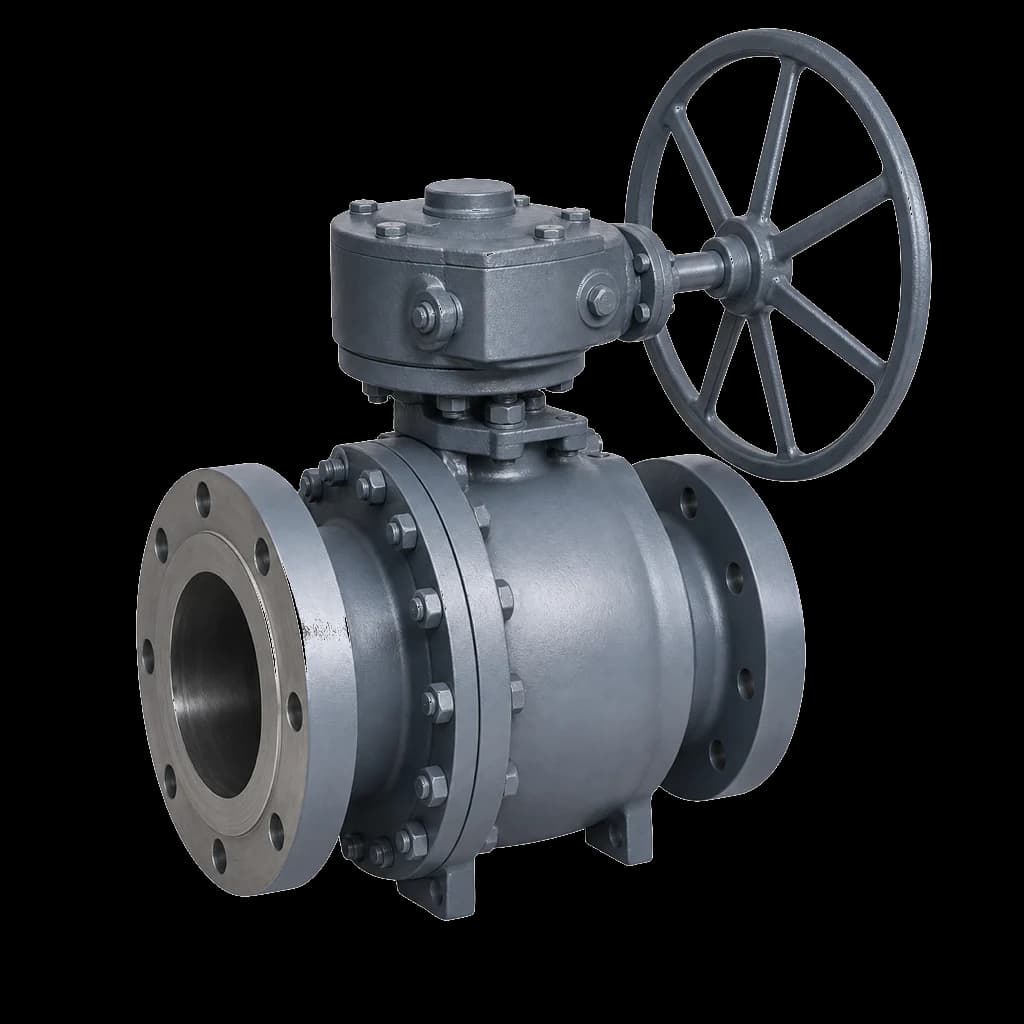
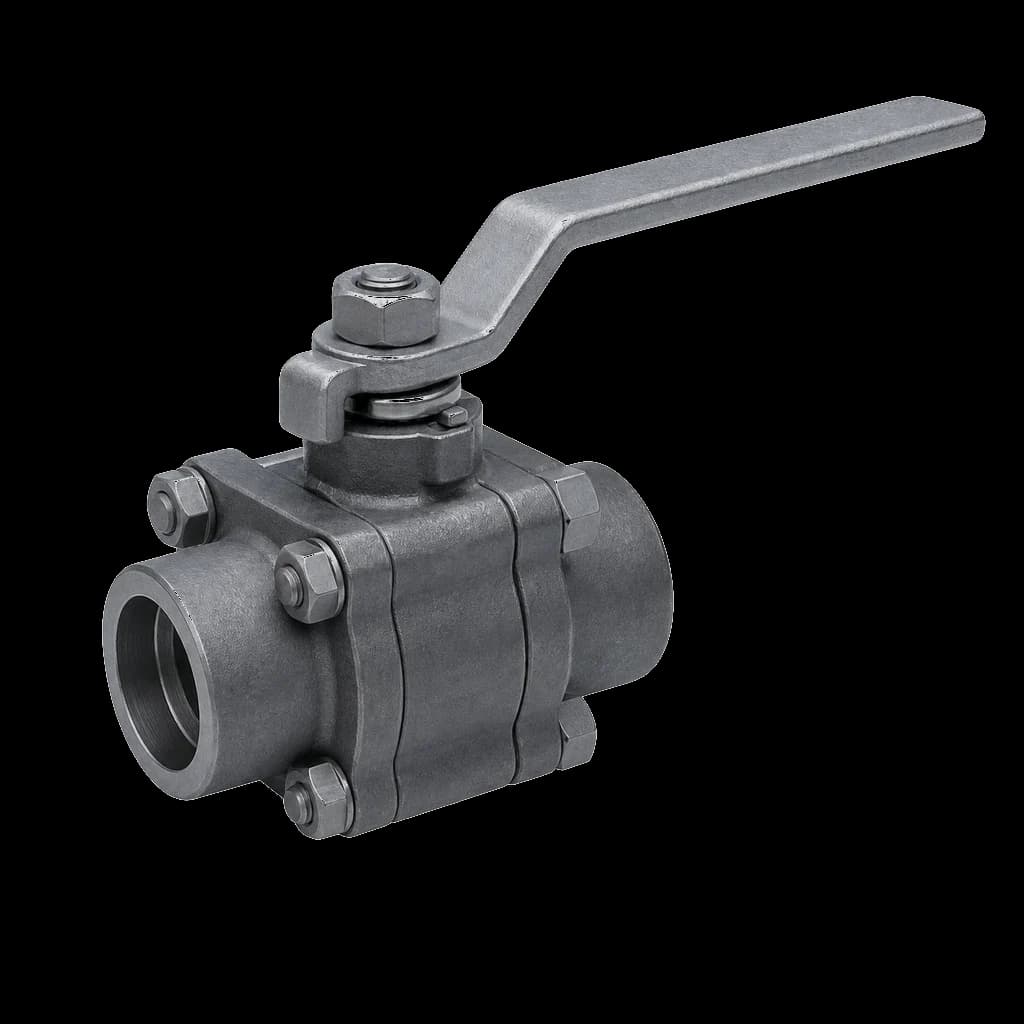
- Quarter-turn ball, butterfly and plug valves: API 641, or ISO 15848-1 Class BH with CO2 endurance for EU-spec clients. Trunnion API 6D ball valves on gas duty are the volume case.
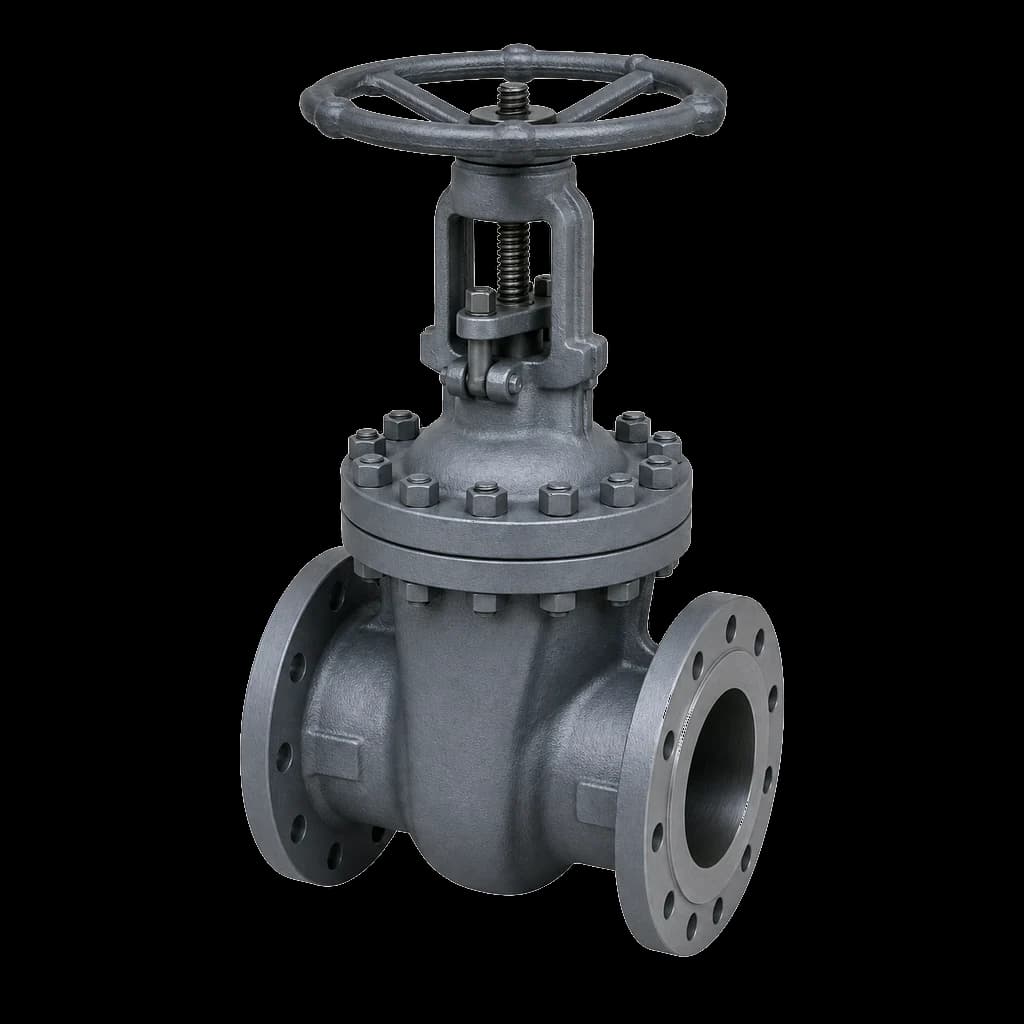
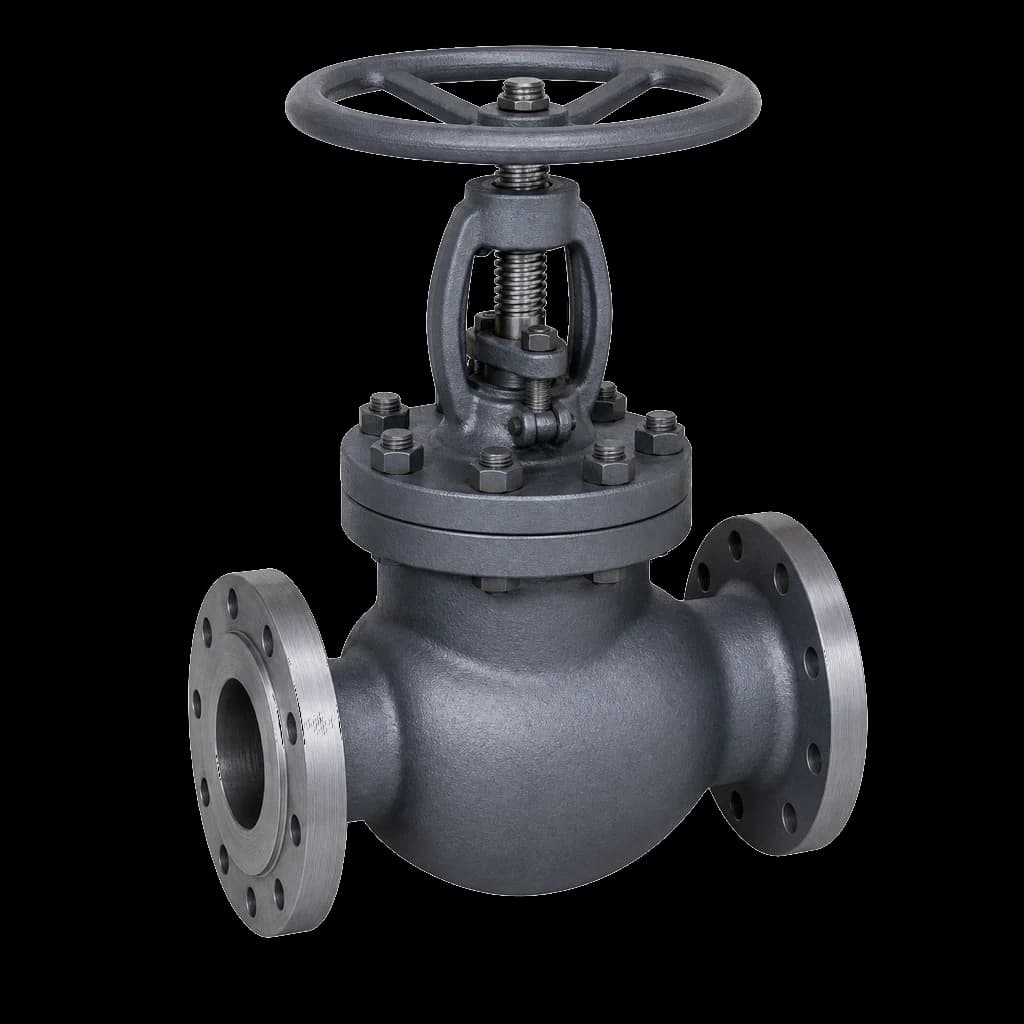
- Rising-stem gate and globe valves: API 624, or ISO 15848-1 where the packing is not graphitic and API 624 does not apply. Cast steel gate valves in Classes 150 to 600 are the usual population.
- City gas distribution: methane is the process fluid, so a methane-based class is the honest test to write. Our CGD network valve guide covers the rest.
- Refinery and petrochemical VOC service: the site LDAR programme, not the valve standard, is the real driver; certified valves shrink the population that keeps failing the survey, and refinery and petrochemical duty is where the payback is real.
- Utility water, plant air, fire water, sluice service: do not specify fugitive emission testing at all — it buys nothing on non-VOC duty and quietly disqualifies half the competent bidders.
- Cryogenic and high temperature: only ISO 15848-1 carries a temperature-class structure reaching -196 °C and 400 °C. Specify the class, not just the standard.
Cost scales with the combination, not the standard: Class A at CO3 and 400 °C on a large-bore valve is the most expensive line you can write.
Why valves fail: packing, stem finish and gland load
Emission failures come back to the stem seal almost every time, and none of the causes are exotic.
- Packing construction. Die-formed high-purity graphite with braided carbon anti-extrusion end rings is the standard answer on hot hydrocarbon duty; braided graphite alone extrudes into the gland clearance and sheds stress. Detail sits in our gland packing guide.
- Graphite quality. API 622 sets a minimum carbon content and limits leachable chloride and oxidation loss: packing that seals beautifully and pits the stem within a year has solved nothing. Ask for the packing maker's certificate.
- Stem finish. A ground and polished stem, typically 0.4 to 0.8 µm Ra, is the cheapest emission control available; a scored stem machines the packing away cycle by cycle.
- Live loading and gland torque. Belleville stacks under the gland nuts hold stress roughly constant as the packing consolidates and the valve cycles thermally; without them, a valve that passed at the works leaks after the first hot cycle. Certified valves carry a specified gland nut torque — over-tightening galls the stem, under-tightening leaks. Hand that figure to maintenance.
- The second leak path. The body-to-bonnet joint is normally a spiral wound gasket with graphite filler; refitting a crushed one at site voids the certification, as does a gearbox bracket that side-loads the stem.
Repacking with whatever is in the stores destroys the certification. If a valve was bought API 641 or ISO 15848-1 qualified, that packing designation belongs in the spares BOM and the maintenance procedure.
What to demand in the documentation package
- The type test certificate with the full class string, laboratory, report number and the size, class and material coverage envelope — not a compliance declaration on a letterhead.
- The test report behind it for critical items: reports show leak readings against cycle count, certificates only the conclusion.
- The packing identification, manufacturer and product designation, plus evidence that it is itself qualified to API 622 on the API 624 route.
- ISO 15848-2 production test records, endorsed by the agency that witnessed them.
- The API 598 shell and seat certificate: emission certification never replaces the pressure test.
- EN 10204 3.1 material certificates for pressure-boundary parts, upgraded to 3.2 where an inspection agency is involved — see 3.1 vs 3.2 MTCs.
A clause nobody can argue with reads: "Valves shall be type tested to ISO 15848-1 for tightness class BH, endurance class CO2 and temperature class t(-29 °C to 200 °C) at the rated pressure class, with no stem seal adjustment during the test. The certificate shall cover the offered size, pressure class and body material. Production acceptance testing to ISO 15848-2 shall be witnessed at the sampling rate stated in the ITP." A bidder either holds that certificate or does not.