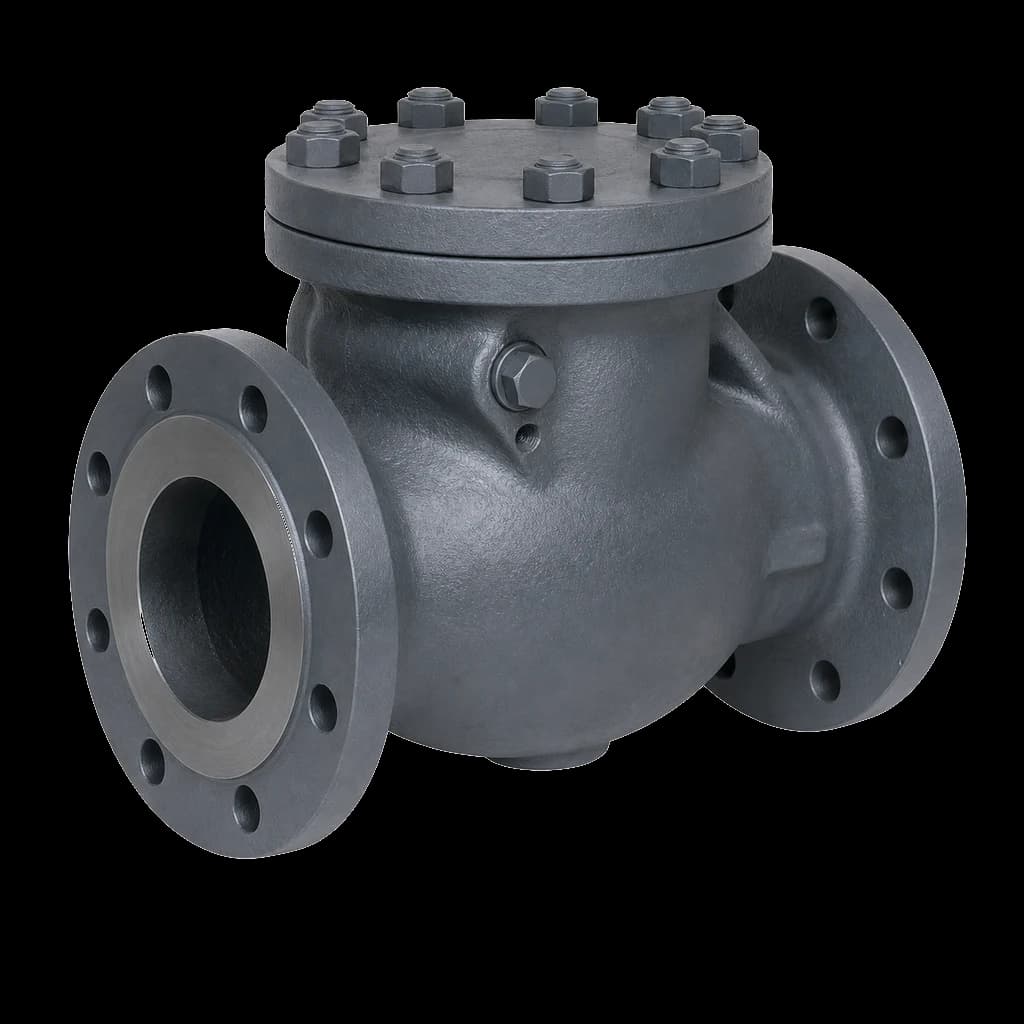
An LPG valve holds a liquid that stays liquid only because you keep it under its own vapour pressure. Lose containment and the inventory does not drip — it flashes, expands by more than two hundred times its liquid volume, and then hugs the ground, because propane and butane vapour are heavier than air. That drives every line of the specification: pressure class, seat compound, fire-safe certificate, anti-static device, excess-flow protection on every vessel connection, and the tests you insist on before anything leaves the works. Indian bottling plants, bulk depots and mounded facilities are designed against OISD-STD-144 for LPG installations and OISD-STD-150 for mounded storage, and licensed by PESO under the SMPV(U) Rules. Liquefied storage and filling is a different problem from piped distribution — for the network side, see our CGD valves guide.
Why LPG service is its own discipline
Four properties separate LPG from anything else on the plant. Vapour pressure: commercial propane sits near 7 barg at 20 °C and commercial butane under 2 barg, so an Indian blend's operating pressure moves with composition and with a Rajasthan summer — take the design pressure from the vessel data sheet, never from plant habit. Auto-refrigeration: propane boils at about −42 °C at atmospheric pressure and butane at about −0.5 °C, so wherever liquid can flash — a drain leg, a blowdown, a leaking gland — the metal chills fast, and A105 forgings and A216 WCB castings are normally used only down to −29 °C without impact testing. Molecule size: LPG vapour walks through leak paths that a hydrostatic test bridges over without complaint. Odourant: ethyl mercaptan is a sulphur compound, reason enough to keep bronze and gunmetal off the LPG line list, however comfortable they look on the water spec next door.
LPG valve pressure class and body materials
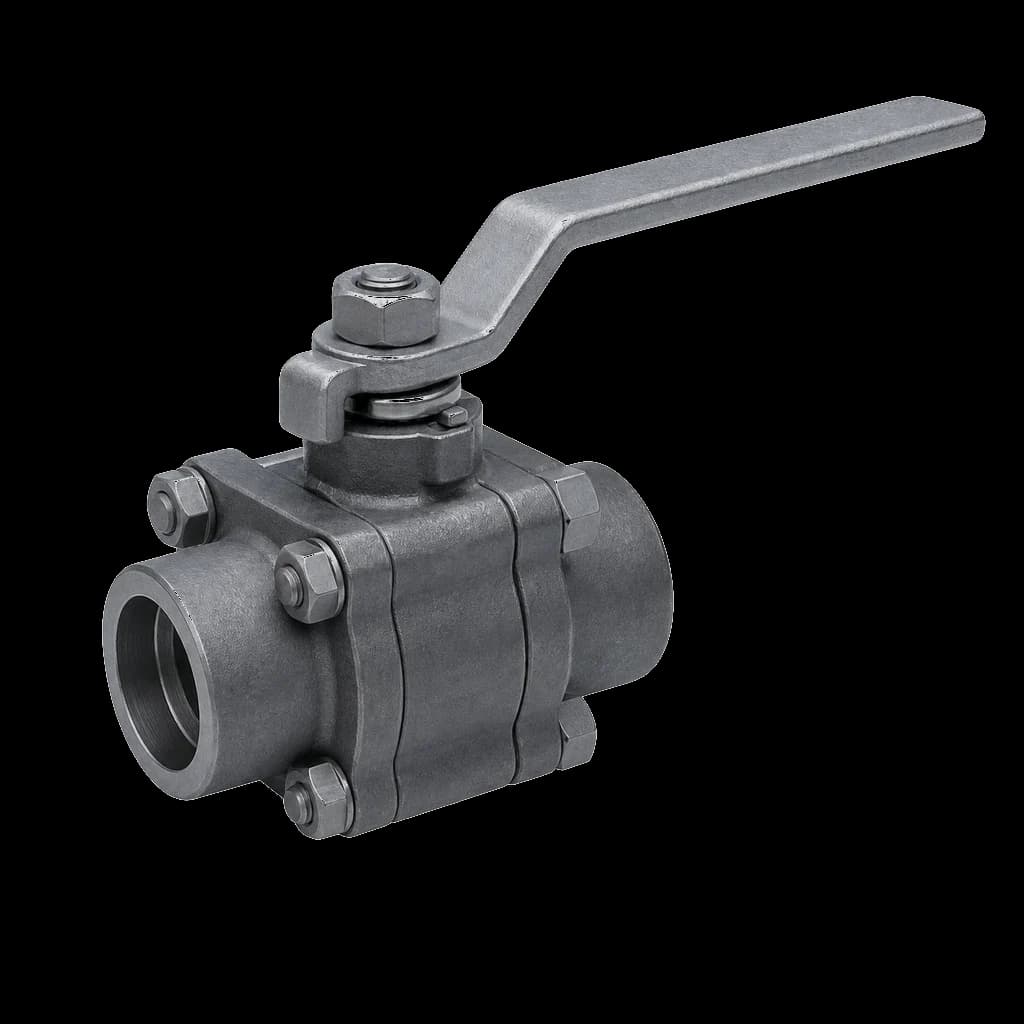
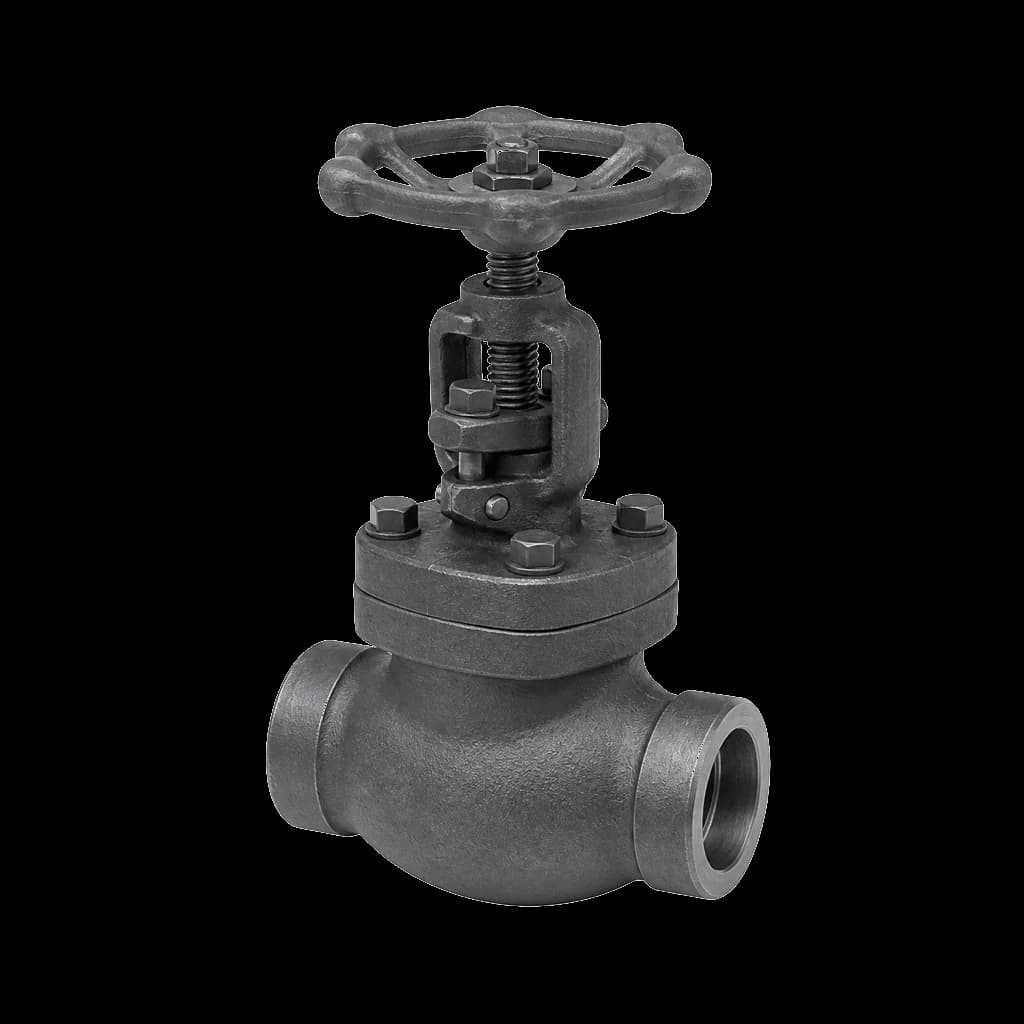
Class 300 is the working default for liquid LPG piping, and Class 150 has to be argued for. A Class 150 carbon-steel valve is rated 19.6 barg at 38 °C against 51.1 barg for the same material at Class 300. Add the vessel design pressure, the fire-case relief setting, pump shut-off head and the surge a liquid-full header sees when a quarter-turn valve is slammed, and the Class 150 margin disappears. The heavier body and flange also behave better in a pool fire. Small-bore forged gate, globe and check valves are conventionally bought as Class 800 under API 602; the forged ball valves beside them are manufacturer-standard Class 800 bodies, so pin the design and test standard down on the offer.
The body decision most often missed is cavity relief. A full-bore ball valve closed on liquid LPG traps a slug in the body cavity, and ambient heating alone is enough to drive that trapped liquid far past the valve's rating; the failure is a burst seal or a jammed ball, and it happens on a hot afternoon with the plant idle. Specify a self-relieving seat design, an explicit body cavity relief provision, or a hole drilled through the ball on the upstream side. State the choice on the datasheet and mark the flow direction — a hole-drilled ball is directional, and fitting it backwards removes the protection silently.
| Duty | Forged | Cast | Class |
|---|---|---|---|
| Liquid headers, pump and filling lines | ASTM A105 | ASTM A216 WCB | 300 cast, 800 forged |
| Blowdown, drain and depressurising legs | ASTM A350 LF2 | ASTM A352 LCC | 300 cast, 800 forged |
| Vapour and compressor recovery lines | ASTM A105 | ASTM A216 WCB | 300 cast, 800 forged |
| Trim throughout | 410 (13Cr) or 316 stem | Plated or overlaid ball | — |
| Bronze, gunmetal, cast iron | Not acceptable | Not acceptable | — |
Seat and seal selection for liquefied gas
Soft seats: reinforced PTFE is the baseline
Virgin PTFE seals beautifully and then cold-flows under sustained load, so keep it for light duty. For LPG, reinforced PTFE is the default across the ambient band: it resists extrusion at Class 300 differentials and keeps hand operation practical. Where seat loads climb — larger bores, higher differentials, actuated valves on a filling carousel — move to a filled nylon or Devlon-type seat, and keep PEEK for the severest positions, accepting more torque and a bigger actuator. The trade-offs are set out in our valve seat materials guide.
Elastomers and rapid gas decompression
Where an O-ring or an energised seal is unavoidable, remember that hydrocarbon gas dissolves into elastomer under pressure. Depressurise quickly and the absorbed gas expands inside the rubber, blistering or splitting it — rapid gas decompression damage, and it is cumulative: the seal fails on the fifth blowdown rather than the first. Keep PTFE, filled PTFE and flexible graphite in the primary sealing path, and where the manufacturer's standard design uses an elastomer, ask for an RGD-resistant grade in writing.
- Stem packing: flexible graphite, or a graphite-and-PTFE stack. Pure PTFE packing becomes an atmospheric leak path the moment there is a fire.
- Body gasket: spiral-wound with graphite filler on cast valves — the joint has to hold after the soft seats have burned away.
- Stem and ball: anti-blowout stem retained from inside the body, and a plated ball. LPG is a poor lubricant and new pipework carries scale.
Fire-safe certification and the anti-static device
Every soft-seated valve on an LPG inventory must be fire type-tested, not merely of fire-safe design. For quarter-turn soft-seated valves the certificate normally cites API 607 or ISO 10497; a valve ordered to API 6D is fire-tested to API 6FA, with ISO 10497 accepted in its place. Acceptance criteria differ, so name the standard your line class calls for. Every type test also qualifies a stated range of sizes, classes and seat materials — check that range actually covers your line items, as our API 607 vs API 6FA comparison explains. A brochure claim of fire-safe construction with no type-test report behind it is worth nothing at an audit.
Equally non-negotiable is the anti-static device: a spring or pin holding electrical continuity between ball, stem and body so a valve operated in a flammable atmosphere cannot accumulate charge and spark across the stem. The usual acceptance is a resistance not exceeding 10 ohms, measured with a power source no greater than 12 V DC and after the valve has been cycled rather than on a virgin assembly. Add locking devices wherever position matters: car-sealed open on relief-valve isolations, locked closed on drains opened only under permit.
The LPG valve schedule, connection by connection
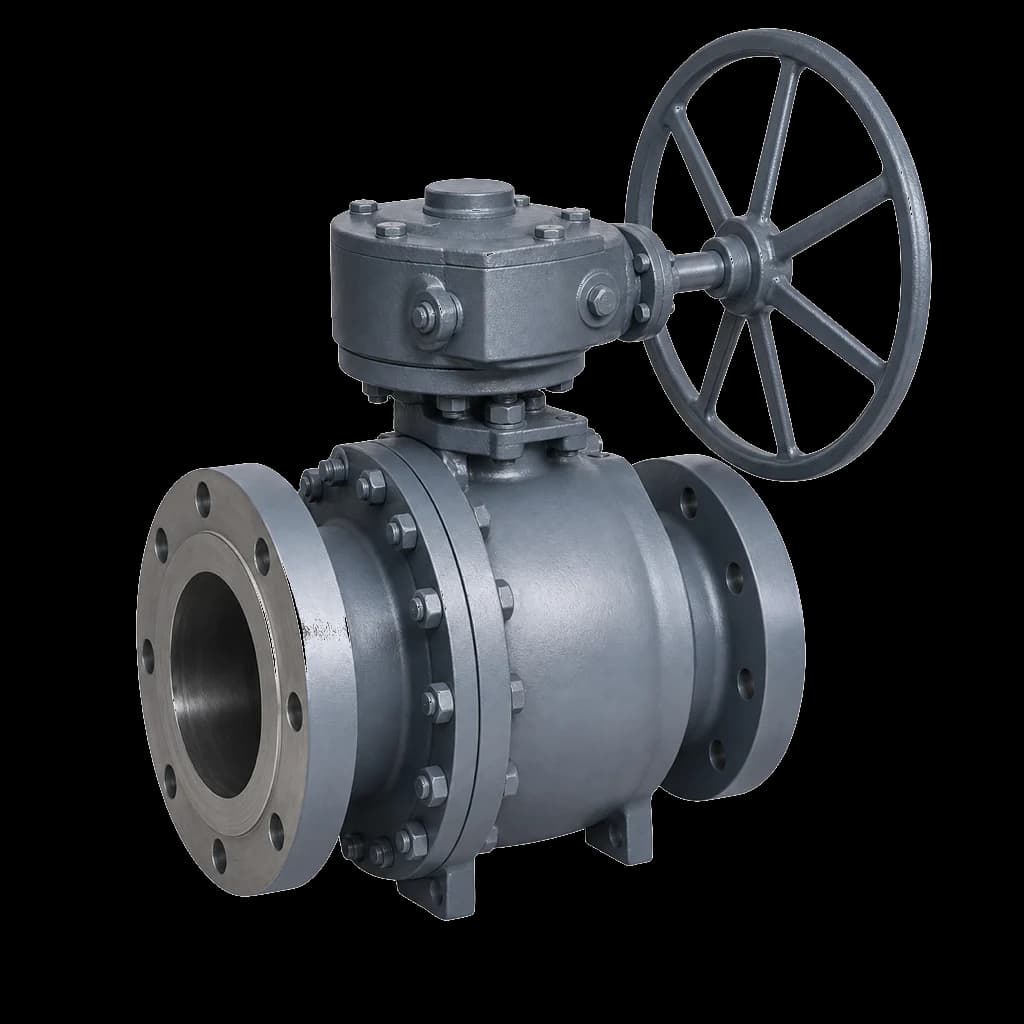
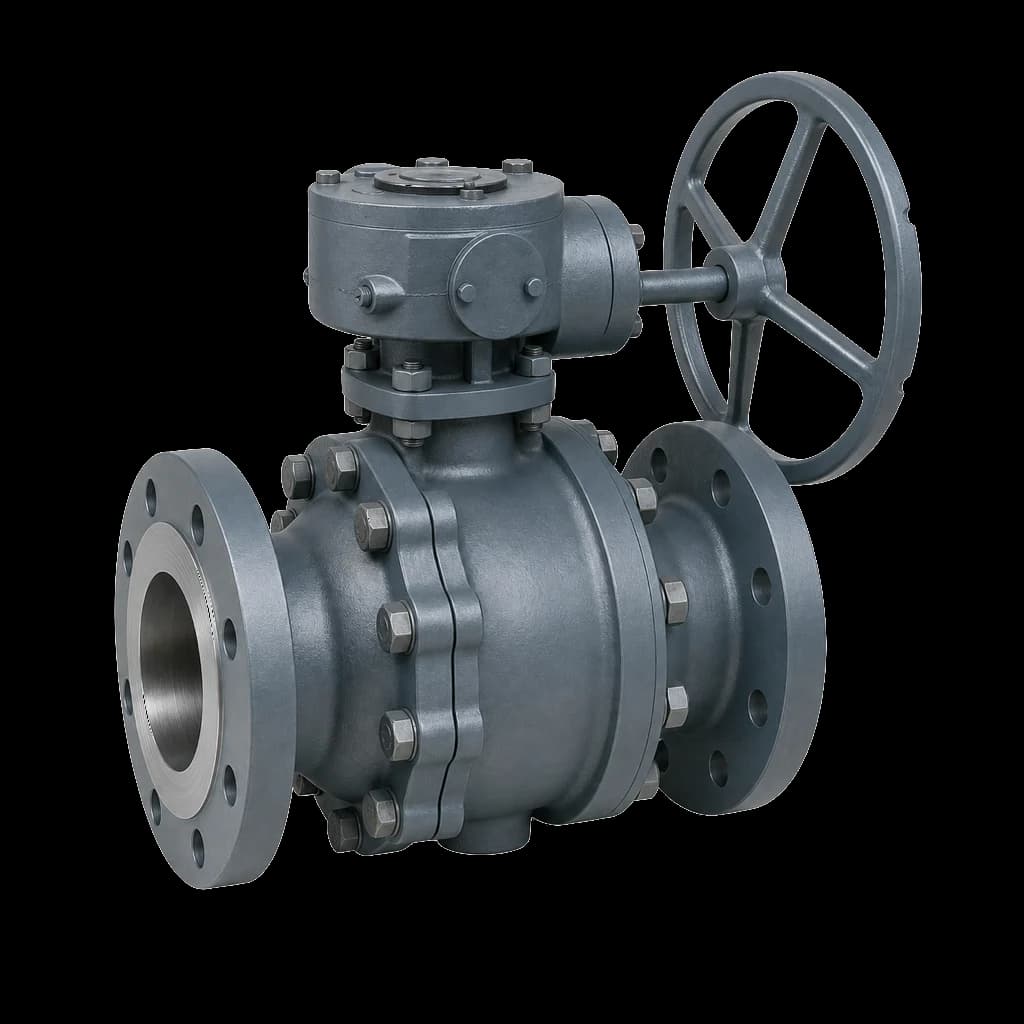
Size decides construction more than duty does. Small-bore isolation on carousels, drains and instrument tappings is forged, floating-ball territory; large liquid headers, loading arms and vessel outlets move to trunnion-mounted construction as soon as seat loads and torque make a floating design impractical — the crossover logic is in trunnion vs floating ball valves. Gate valves have almost no place here: a wedge gate cannot be shut in a quarter turn, carries no anti-static provision as standard, and traps liquid in its bonnet as surely as a ball valve traps it in the cavity. Every emergency procedure on the plant assumes quarter-turn operation.
| Location | Valve | Decisive requirement |
|---|---|---|
| Vessel liquid outlet | Excess flow or internal valve, then a ball valve | Excess-flow device as close to the nozzle as geometry allows |
| Vessel emergency isolation | Remotely operated shut-off valve, actuated | Fail-closed on signal or air loss; remote and local trip |
| Pump suction and discharge | Full-bore ball valve; check valve on discharge | Full bore to protect NPSH; non-slam check to limit surge |
| Filling carousel headers | Small-bore forged ball valves | Cycle life and stem seal life — the highest duty cycle on site |
| Tanker decantation point | Ball valve plus non-return, ESD interfaced | Fire-safe, interlocked with the loading permissive |
| Relief valve isolation | Full-bore ball valve, car-sealed open | Full bore so relief capacity is never throttled |
The water draw-off leg deserves its own paragraph, because it is where people get hurt. Water drained from the bottom of a vessel is followed by liquid LPG, the line auto-refrigerates, and a fully open valve can freeze open with flashing hydrocarbon behind it. The standard answer is two valves in series — an isolation valve at the vessel and a self-closing or quick-closing valve downstream that the operator must hold — with any throttling done by a globe valve rather than by a partly open ball valve, whose seats will not survive the duty. Low-temperature body material on that leg is not a luxury.
Excess-flow check valves and emergency shut-off
An excess flow check valve is a spring-loaded poppet that stays open under normal flow and shuts when flow-induced differential pressure overcomes the spring — the protection against a sheared hose or a snapped connection downstream of a vessel nozzle, which is why a bullet carries one on effectively every liquid and vapour connection bar relief and gauging. It is sized on flow, not on line size, and the window is narrow: closure flow must sit above the maximum operating flow including pump start-up transients, and below the flow a full-bore break would produce. Set it low and the plant trips itself every time a pump starts; set it high and it will sit open through the event it was bought for. Ask the principal for the flow-versus-closure curve at your actual liquid density and differential.
- Most excess flow valves carry a small bleed orifice so downstream pressure can equalise and the poppet can reset — which also means the device is not an isolation valve and must never be counted as one.
- Internal valves put the excess-flow function inside the vessel nozzle and remove the external stub entirely; worth specifying on larger bulk vessels.
- Emergency shut-off valves should be fail-closed and fire-safe, closable from the control room and from field push-button stations, with a local fusible-link trip — and function-tested on a schedule, with partial-stroke capability where a full stroke would shut the plant down.
Testing, inspection and the certificates to demand
A hydrostatic seat test proves little about a valve that has to hold a gas. The tests that matter are the pneumatic ones, and the high-pressure gas seat test is an option under API 598, not an automatic inclusion — write it into the RFQ or you will not get it. Where bubble-tight shut-off is genuinely required, cite the leakage rate class from ISO 5208 or the equivalent FCI 70-2 grade rather than relying on the phrase itself.
| Test or document | Medium | What it actually proves |
|---|---|---|
| Shell test to API 598 | Water, 1.5x the 38 °C rating | The pressure envelope only — nothing about the seat |
| Low-pressure closure test | Air or nitrogen | First real indicator of gas seat behaviour |
| High-pressure gas seat test | Nitrogen, 1.1x the 38 °C rating | Seat tightness at operating differential; must be requested |
| Anti-static continuity check | 12 V DC | Ball-stem-body continuity, ideally after cycling |
| Fire type-test certificate | API 607 / ISO 10497 or API 6FA | That this size, class and seat range was actually burned |
| EN 10204 3.1 or 3.2 certificates | Mill and works records | Heat traceability of body, bonnet and stem to the offered grade |
On PSU and EPC-executed LPG work, add third-party inspection at the works: review of the inspection and test plan, witness of the hydro and pneumatic tests, dimensional and marking checks, and PMI where the trim grade is critical. Rejecting a valve on the manufacturer's floor is always cheaper than discovering it at pre-commissioning of a licensed installation.
Specification errors that surface at commissioning
- Class 150 carried over from a utility line list. Check the rating against vessel design pressure and the fire case before it becomes a site modification.
- No cavity relief on full-bore ball valves in liquid service. Nobody is watching when it lets go.
- Bronze or cast iron on an LPG line. It happens when a water-plant spec is copied, and it is indefensible in front of an auditor.
- Excess flow valves sized on line size. Sizing is a hydraulic calculation against the break case, not a table lookup.
- A fire-test certificate that does not cover the offered size and class. Read the qualification range, not the logo on the brochure.
- Plain A105 or WCB on a blowdown leg. Auto-refrigeration can take the metal below the −29 °C floor those grades hold without impact testing, the first time the line is depressurised in anger.