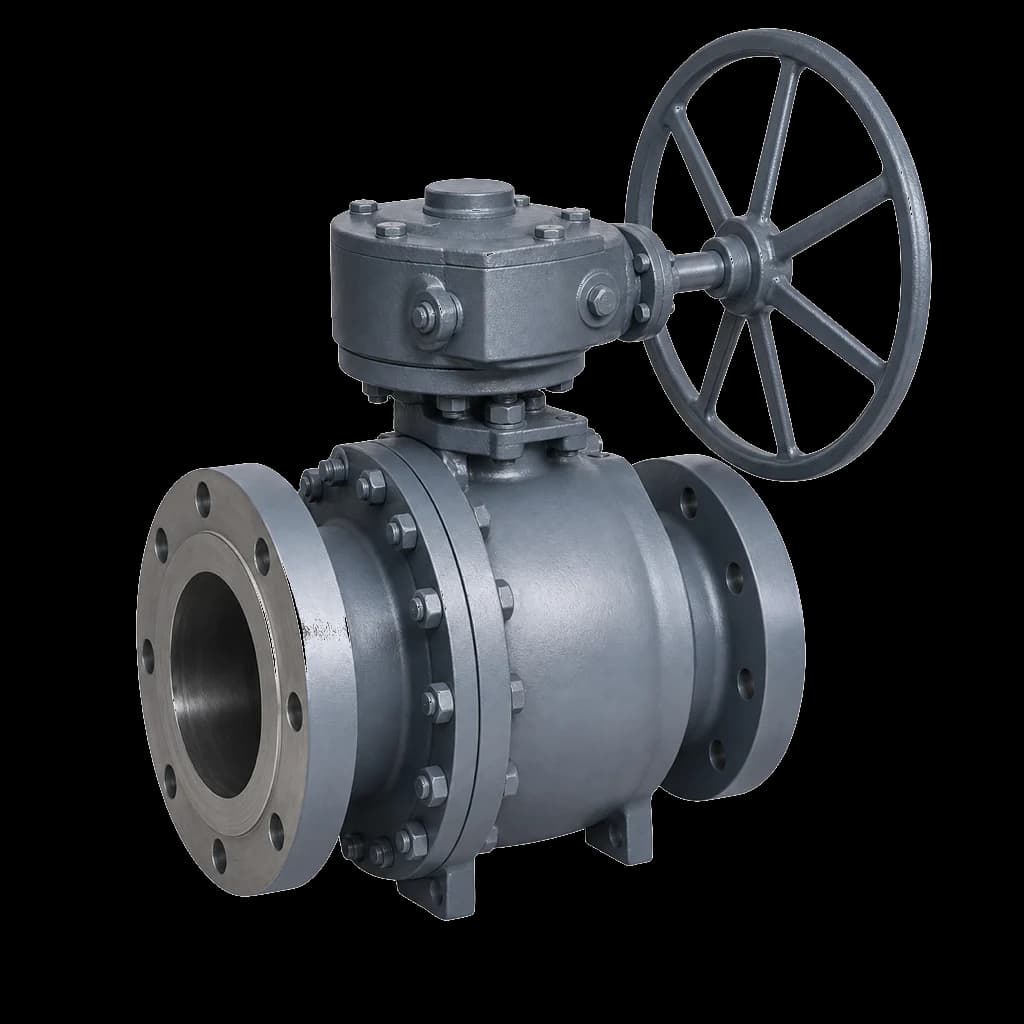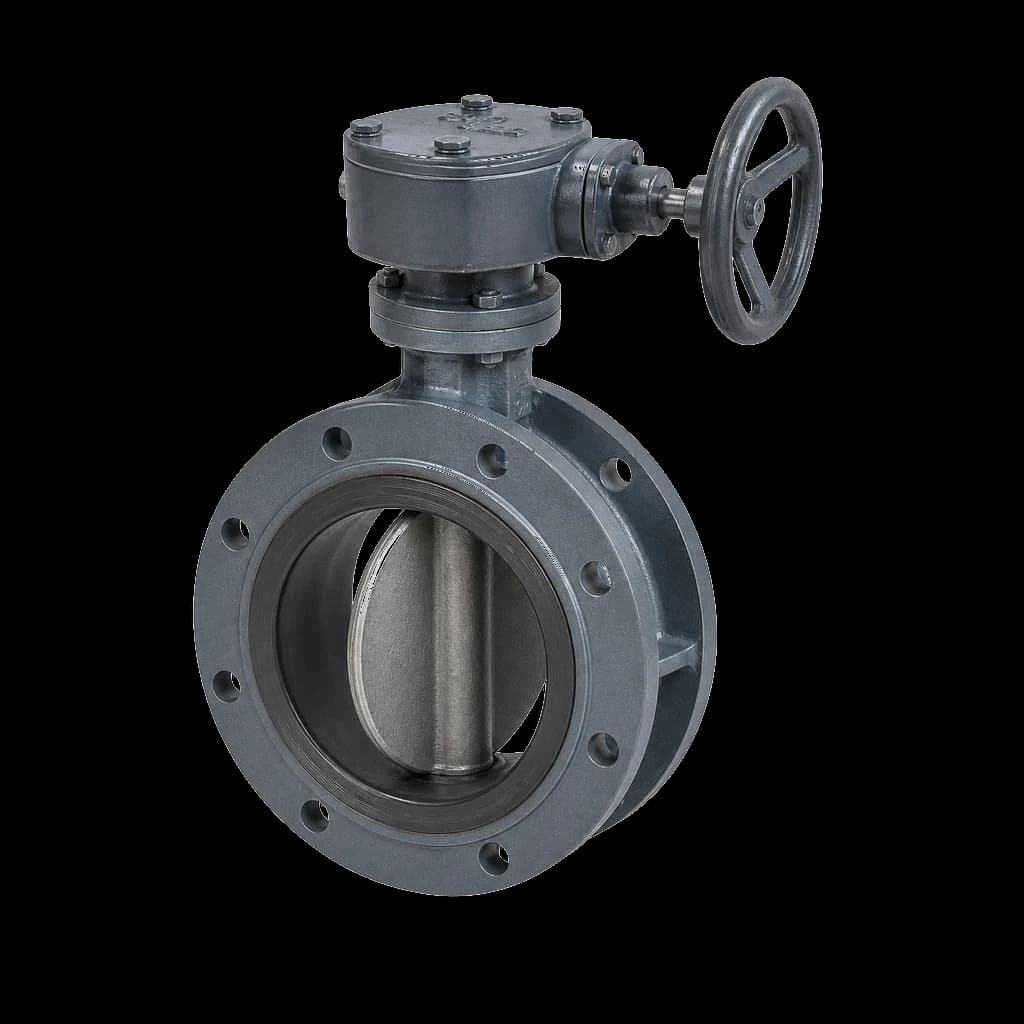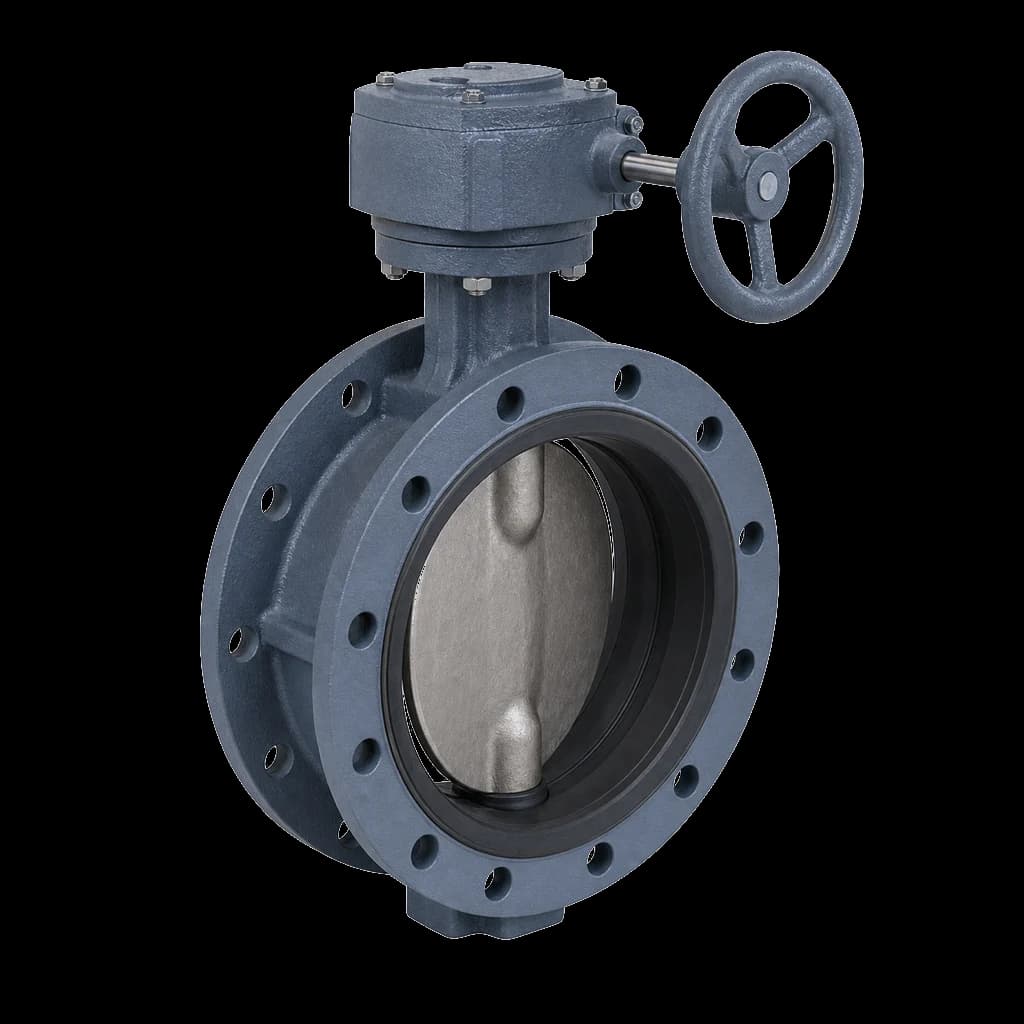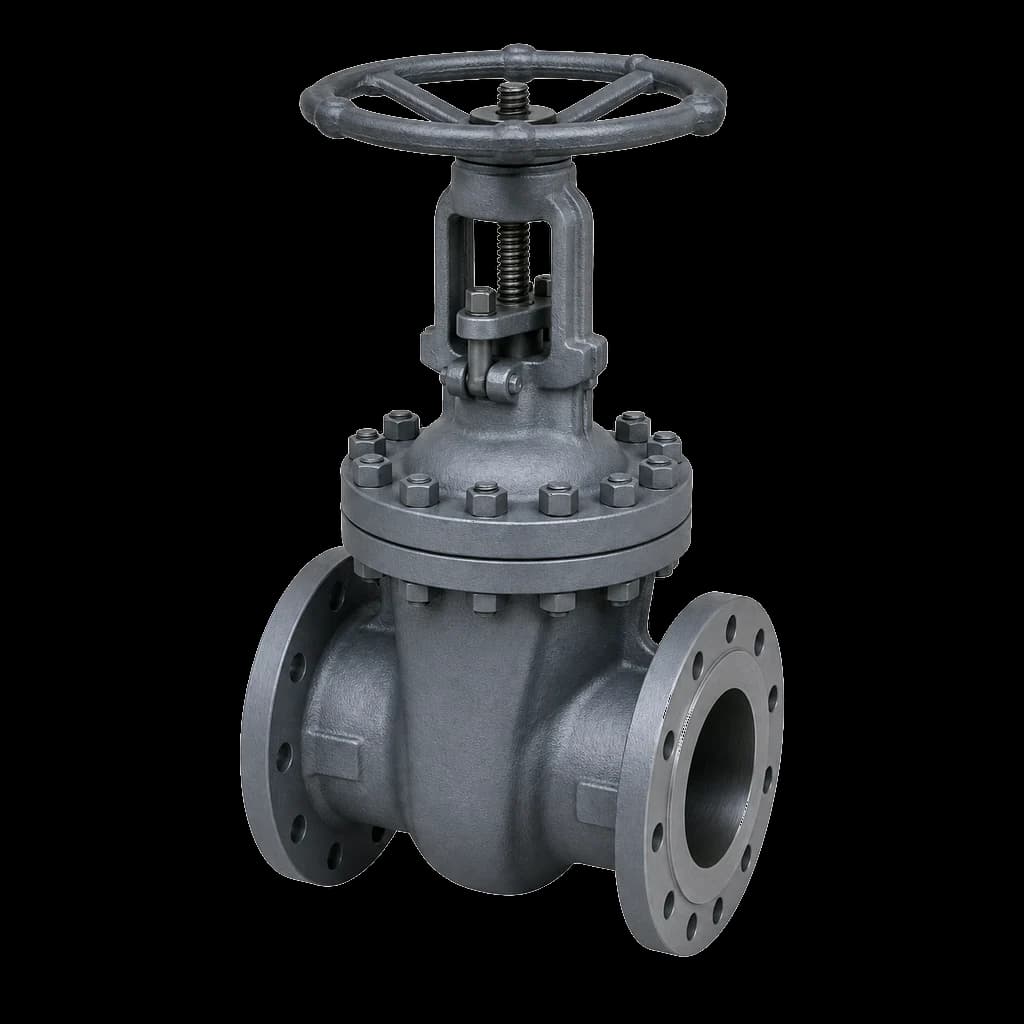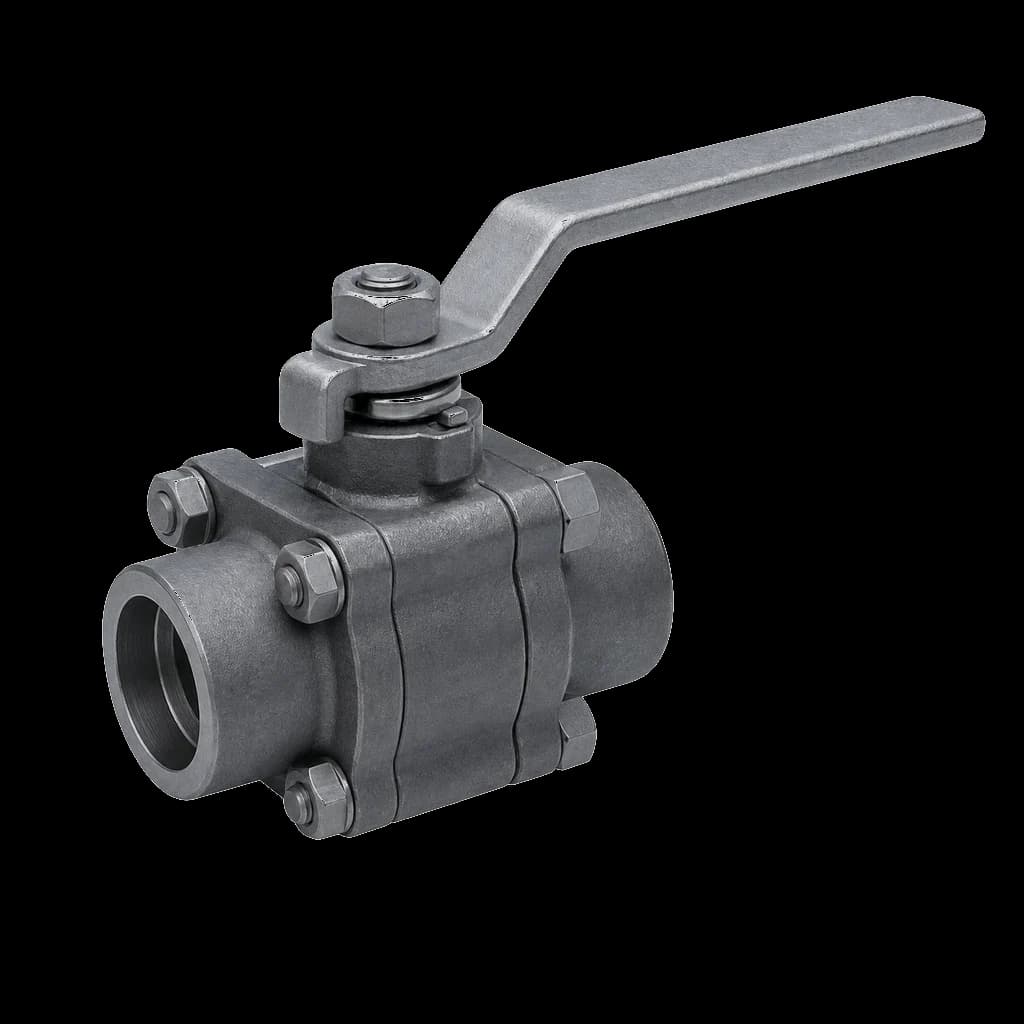
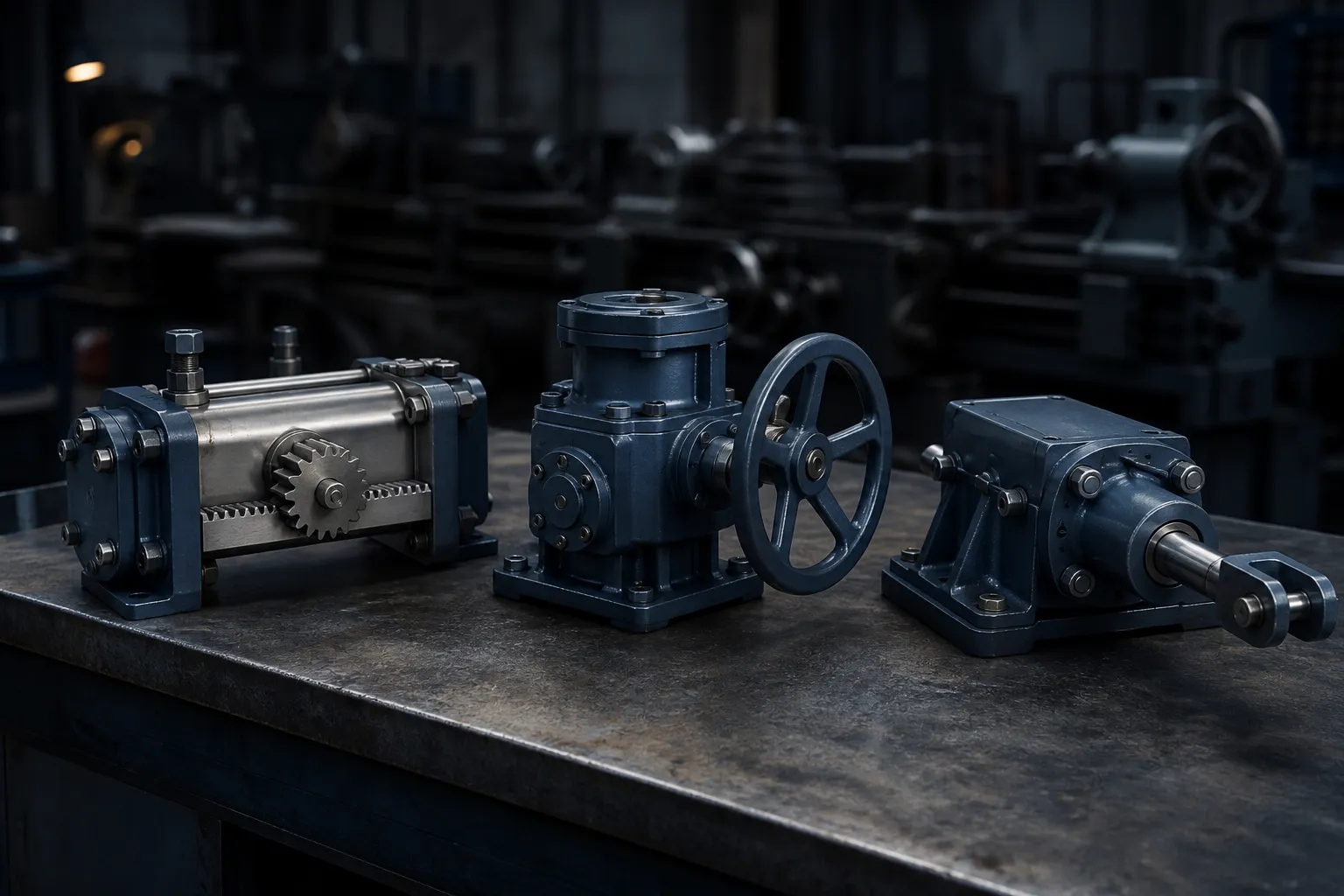
Automating a line is two decisions, not one. The first is the valve. The second is the valve actuator that has to move it on every cycle, on whatever motive power the site can guarantee at 3 a.m. in July. Get that wrong and you own an API 6D ball valve that stalls at full differential, or a modulating butterfly valve whose motor cooks itself in a month. Pneumatic, electric and hydraulic each hold defensible ground; the engineering is knowing where the boundaries sit.
What a valve actuator actually has to do
Fix the load before comparing technologies. A quarter-turn valve has three named points on its torque curve: break-to-open (BTO), the peak needed to unseat; run torque, the plateau through mid-travel; and end-to-close (ETC), the torque that drives the closure member into the seat. On a soft-seated floating ball valve those peaks scale with differential pressure, so a valve that turns easily on the bench can be immovable at line conditions. A resilient-seated concentric butterfly valve behaves differently: seat interference dominates and barely eases as pressure drops, so a large disc on a low-pressure header still demands a big drive. Offset discs change it again — see the butterfly valve types guide.
Rising-stem gate and globe valves are a different load class. A multi-turn actuator turns the stem nut, and what the valve needs from it is thrust — to unwedge, to drag the stem through the packing, to reseat — for the full number of stem turns. Sizing is thrust-led; stem diameter and thread lead set the gearing. Take the margin on the worst case, 25-50% over the published break and seating figures for on-off duty, at the minimum guaranteed supply pressure or voltage rather than the nameplate one. The method is in actuator sizing against valve torque.
Pneumatic actuators: the default for on-off quarter-turn
Rack-and-pinion versus scotch yoke
A rack-and-pinion actuator converts piston travel into 90 degrees of rotation at near-constant torque, and is the most common construction in small and medium torques. A scotch yoke produces a curve that peaks at both ends of travel and dips through the middle — the shape a ball or butterfly valve asks for — and scales to the torques large pipeline valves demand. Symmetric yokes give balanced end torques; canted yokes bias the peak towards closing.
Double-acting versus spring-return
A double-acting unit takes air on both strokes and holds its last position when air fails. A spring-return actuator compresses springs on the air stroke and releases them on the other — a mechanical fail-safe needing no control power. The penalty is envelope: for the same guaranteed torque a spring-return unit runs a frame size or two larger, because the air stroke fights valve and spring together while the spring stroke has only the spring behind it. Allow for it on the layout.
Pneumatics live or die on air quality. Instrument air to a stated ISO 8573-1 purity class, with a pressure dew point below the lowest local ambient, is not a refinement: wet air corrodes cylinder bores and ices exhaust ports on winter mornings. Specify the filter-regulator, add a quick-exhaust valve where stroke time matters, and check the receiver holds enough volume to stroke the shutdown valves after the compressor trips.
Electric actuators: precision, cabling, no free fail-safe
Electric actuators need only a cable, so they win wherever plant air does not exist: water treatment works, pump houses, remote sectionalising stations on a gas network, retrofits into occupied buildings. A modern unit packs motor, gearbox, torque and limit switching, local controls and a bus interface into one enclosure, and holds an intermediate position accurately — the natural choice for modulating duty.
The parameter buyers skip is duty class. An on-off actuator is rated for short-time duty to IEC 60034-1, commonly S2-15 minutes: adequate for a valve that strokes twice a shift, useless for one repositioning every few seconds. Modulating service needs intermittent duty (S4) with a stated starts-per-hour figure; EN 15714-2 sorts electric actuators into class A for on-off, B for inching, C and D for modulating. Ask for the class and the starts-per-hour, and check both against how the loop will behave.
Environment decides the rest. IP67 is the baseline; IP68 to a stated depth and duration is what a chamber that floods every monsoon needs. In a hazardous area the enclosure must be flameproof to IS/IEC 60079-1 with the correct gas group and temperature class, and — the step imported datasheets miss — it needs PESO approval to be installed legally in India: an ATEX or IECEx certificate will not clear site. Loss of power is the real limitation: an electric actuator fails in place unless you buy spring return or battery back-up. On trip duty that is a specification decision, not a site detail.
Hydraulic and gas-over-oil actuators: force in a small envelope
Hydraulics buy force. At the working pressures of valve service — the low hundreds of bar, against the single-digit bar of an air header — a cylinder delivers torque no pneumatic actuator of the same size can approach, and it is stiff: oil does not compress and let the disc drift under load. That suits large pipeline ball valves, high-differential blowdown and choke duty, and anywhere position must hold against hammering flow.
On gas trunk lines with no grid supply at the station, gas-over-oil actuators take line gas as the pressure source, working through an oil reservoir onto the cylinder: the valve carries its own power. Self-contained electro-hydraulic units — motor, pump and accumulator on the valve — do the same where venting gas is unacceptable. Fail-safe action comes from an accumulator or spring, and has to be proven by test, not assumed from a catalogue line. Against that: a power unit, hoses, filtration, seal maintenance, and leaks that are an environmental incident, not a hiss. Do not specify hydraulics for a duty a scotch yoke will handle.
Side by side: the parameters that decide it
The table is a decision aid, not a datasheet: torque ceilings vary widely between makers, so confirm against current range charts.
| Parameter | Pneumatic | Electric | Hydraulic |
|---|---|---|---|
| Motive power | Clean dry instrument air, 4-7 bar | Single- or three-phase mains, or 24 V DC | Power unit, accumulator or line gas |
| Quarter-turn stroke speed | Fast; trimmed at the exhaust | Geared, tens of seconds | Fast, closely controllable |
| On loss of power | Fail open or closed on spring return | Fails in place without back-up | Accumulator or spring; prove by test |
| Modulating capability | Good with a positioner; coarser resolution | Best resolution and repeatability | Excellent, at the highest cost |
| Torque ceiling | Very high with a scotch yoke | Wide, including multi-turn thrust duty | Highest torque per unit volume |
| Hazardous area burden | Actuator passive; solenoid and switchbox certified | Whole unit flameproof plus PESO approval | Certification sits with the power unit |
| Maintenance load | Seals, air quality, filter-regulator | Gearbox lubricant, seals, electronics | Highest: fluid, filtration, hoses, leaks |
Fail-safe philosophy comes before technology
Ask one question before choosing a drive: what should this valve do when air, power or the control signal disappears? That answer belongs to the HAZOP and the cause-and-effect chart, not the actuator catalogue, and it settles the choice more often than torque does.
- Fail closed (FC): fuel gas headers, feed to a fired heater, chemical injection — anything where isolation is the safe state. A spring-return pneumatic is the simplest honest answer.
- Fail open (FO): cooling water, quench lines, pump minimum-flow recycle — services whose loss is itself the hazard. Same hardware, springs the other way.
- Fail last position (FL): large pipeline isolation valves, where slamming shut on a spurious trip does more damage than staying put. Double-acting pneumatic, plain electric or hydraulic all serve.
- Emergency shutdown duty: a fail-safe valve actuator on a safety instrumented function is a certified subsystem, sized with margin for a valve that may sit untouched for years. Routine partial stroke testing finds the seized one before the demand arrives, so specify an actuator that supports it.
Mounting, interfaces and the accessories that get forgotten
An actuator that cannot be bolted down is scrap. Part-turn units mount to ISO 5211 flanges — F03 upwards — with a matching female drive and a machined stem coupling; multi-turn units use ISO 5210 flanges with a thrust base carrying the stem nut. Take the flange designation and stem dimensions from the valve drawing, not a generic size-to-flange table: a mismatch means a fabricated bracket and rework at site. Then the accessories:
- Solenoid valve to VDI/VDE 3845 (NAMUR), coil rated for the control supply, certified and PESO-approved where the area demands it.
- Limit switch box or integral switching, contacts matched to the DCS input card, IP rating chosen for the pit it sits in.
- Positioner for modulating duty: 4-20 mA input, HART or fieldbus to the plant standard, plus a feedback transmitter if the operator wants travel on screen.
- Manual override — declutchable handwheel on an electric unit, hand pump on a hydraulic one: every isolation valve that matters must be movable when the plant is dark.
- Air preparation: filter-regulator with gauge, and stainless tubing outdoors or in coastal air.
Specifying an actuated valve in Indian tenders
Indian procurement adds its own grammar. Water and irrigation packages written to CPWD or state PHED practice call for electric actuation on sluice and butterfly valves, and lean on AWWA C542 for the actuator. Power-sector enquiries speak in MOVs and expect motor details, cable entry, terminal box arrangement and torque switch settings on the datasheet. Hydrocarbon jobs run through EIL specifications, with hazardous-area certificates and the PESO letter attached. Railway work follows RDSO practice, and a GeM listing pins make and model at bid stage.
Two commercial points decide the order. First, single-point responsibility: buy valve, mounting kit and actuator as one assembled, stroked and tested item, because a split scope becomes a mounting dispute at site. Second, documentation: EN 10204 3.1 certificates for the valve, shell and seat test reports, the actuator's torque or thrust certificate and duty rating, hazardous-area certificates with the PESO approval, and a factory acceptance test on the assembled unit, not the bare valve. Write that into the enquiry — how to write a valve RFQ covers the rest.