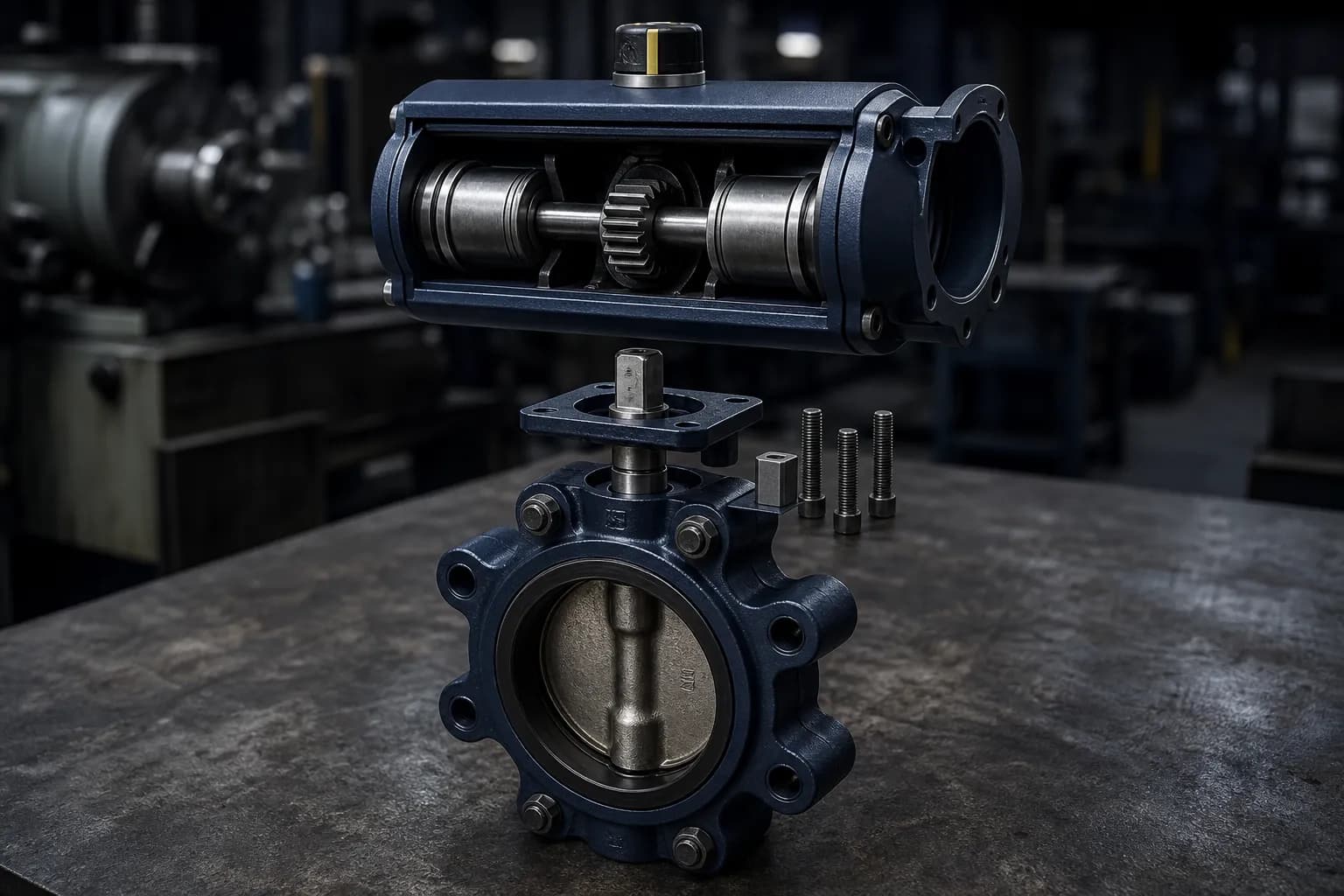
Most actuated valve packages that fail on commissioning were sized on the wrong number: someone matched the headline output in a pneumatic actuator catalogue to the running torque on the valve datasheet, then found the valve would not break away from its seat after the first shutdown. Valve torque is not one number. It is a demand curve with peaks at both ends of the stroke, and the actuator has to beat that curve at every point, with a margin that survives dirty media, a compressed gland and a bad morning on the air header.
Valve torque is not one number
Manufacturers publish demand as a set of named values, and the names are not interchangeable. Learn them before you open a torque chart: the largest and smallest figure on a single line can differ several times over.
| Term | Where in the stroke, and what creates it | Does it govern? |
|---|---|---|
| BTO — break to open | Closed, at rest: static seat friction plus gland drag | Usually, on soft-seated ball valves |
| RTO — run to open | Mid-travel: sliding, bearing and packing friction | No — normally the smallest figure on the row |
| ETO — end to open | Last degrees of travel, against the stop | Rarely |
| BTC — break to close | Full open at rest, plus flow load on a disc | Sometimes, on butterfly valves |
| RTC — run to close | Mid-travel: dynamic torque peaks near 70-80 degrees open | On large butterfly valves in flowing lines |
| ETC — end to close, or seating | Final degrees, compressing the seat to seal | Usually, on resilient-seated butterfly valves |
A lone torque figure means nothing until it says which of the six it is; if the vendor will not say, assume RTO, the flattering one. Compare actuator and valve at the same angular position — matching the worst valve number against the best actuator number is not sizing.
Differential pressure is the hidden variable
Charts are normally published at the full differential the valve is rated for at its class. Service differential is often lower and torque falls with it, but do not size on the comfortable case if the valve can be shut in against a running pump. Size shutdown and blowdown valves at full class differential: the day they are called on is the day differential is worst.
Reading a ball valve torque chart
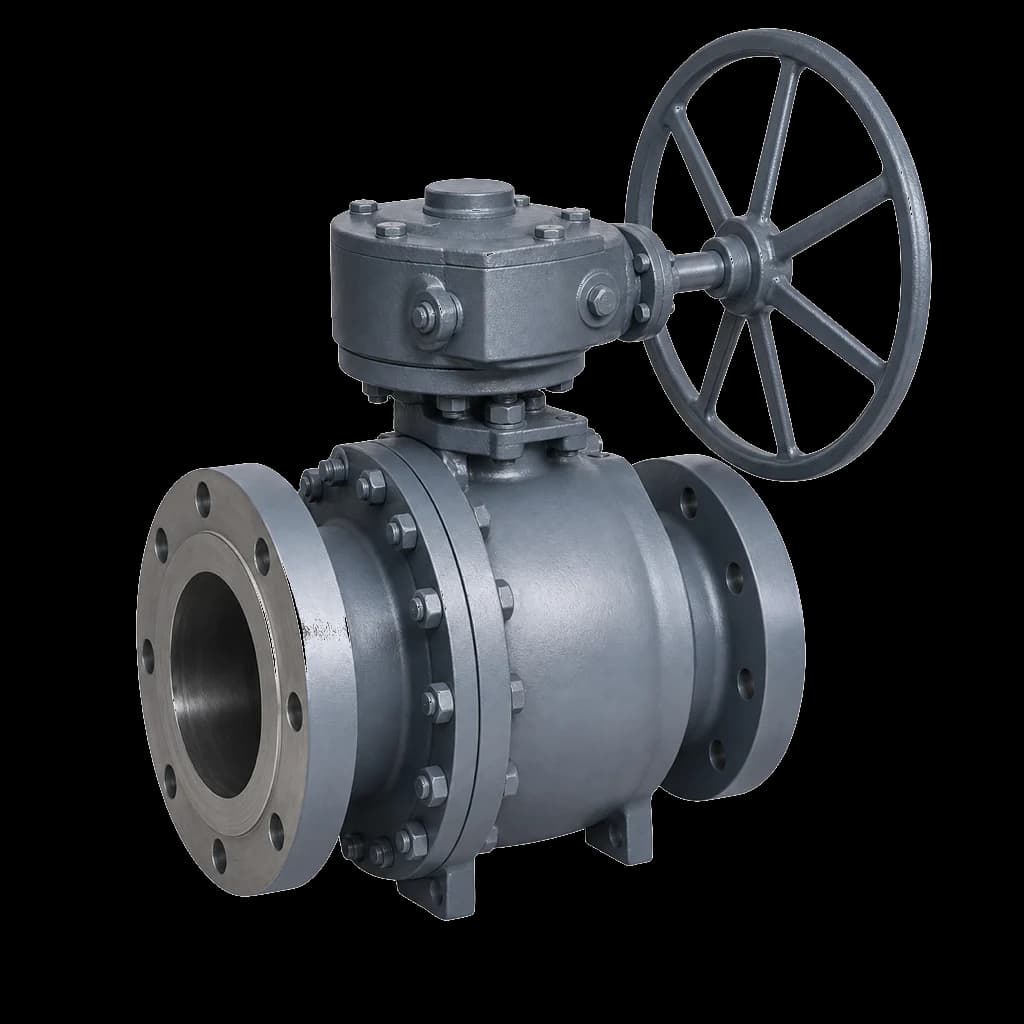
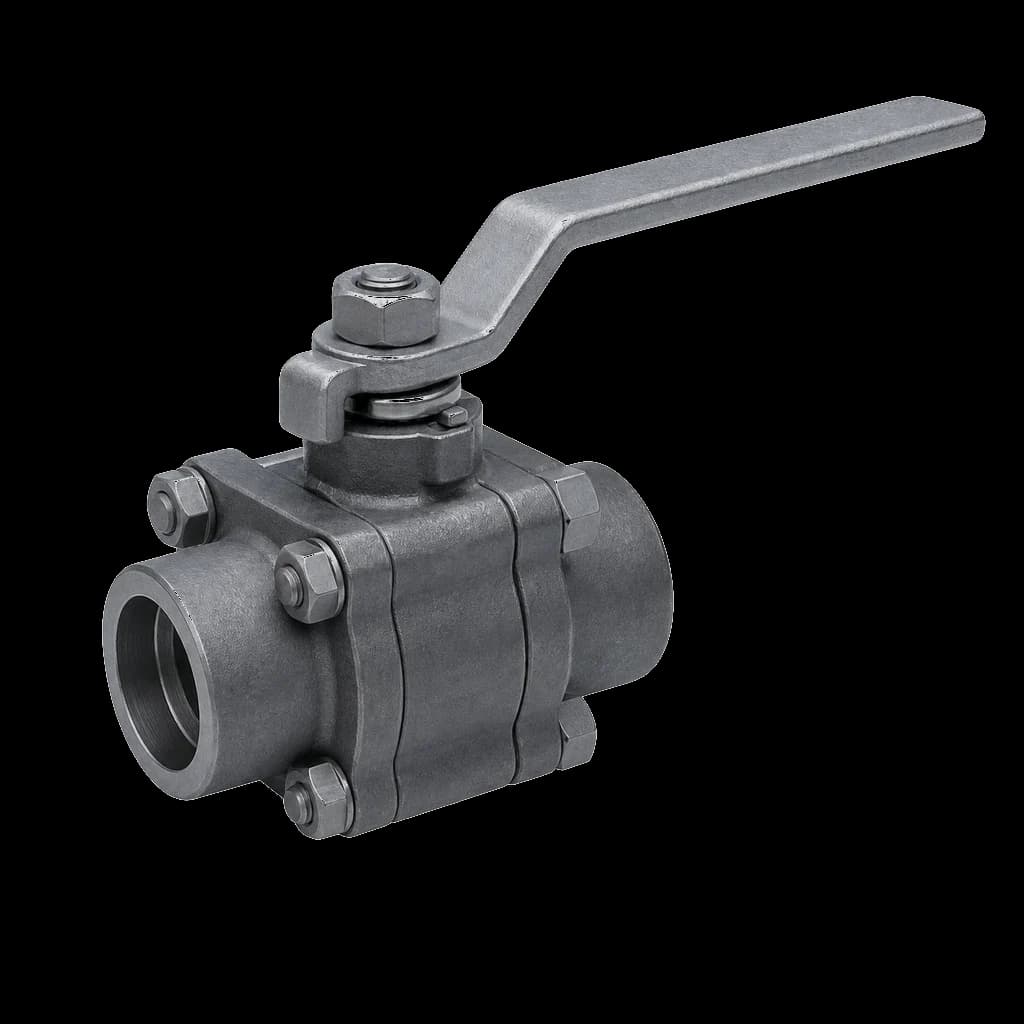
Seat material is the biggest single multiplier on a ball valve chart: virgin PTFE gives the lowest torque, filled PTFE more, PEEK and Devlon more again, and a metal-seated ball valve in the same body can demand several times the soft-seated figure. Ask for the chart matching the seat you actually specified, not the generic one.
Construction matters as much. At small bore and low class a floating ball valve is the lower-torque option; as size and class climb, floating torque rises steeply, because the whole ball is pressed into the downstream seat, while a trunnion valve carries the ball on its own bearings and loads only spring-energised seats. That is why trunnion-mounted API 6D ball valves are easier to actuate at large bore than size alone suggests. Then apply the published adders: gas service, sour service with graphite packing, stem extensions and high cycle counts all raise the number, and they stack.
Butterfly torque: seating, bearing and dynamic
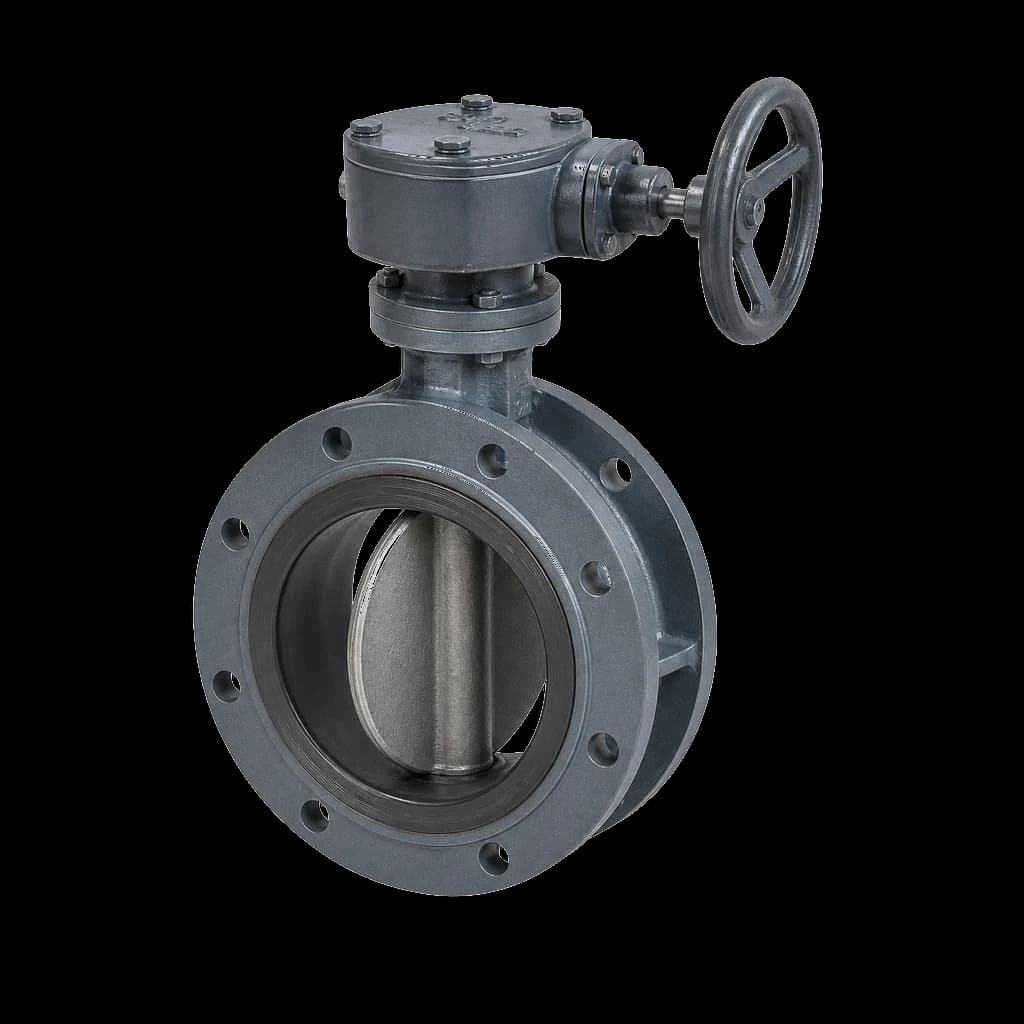
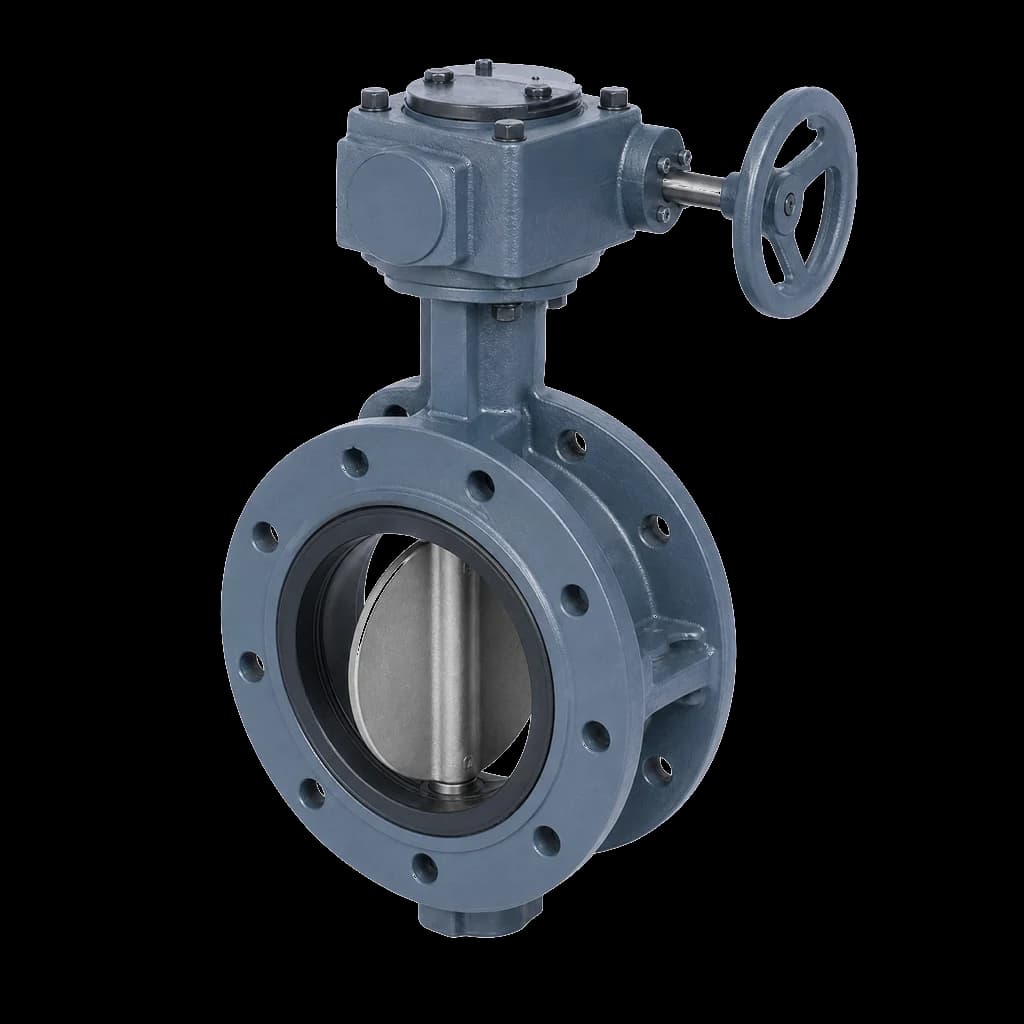
Butterfly torque is three effects added together. Seating and unseating torque comes from interference between disc edge and liner, and on a concentric resilient-seated valve it dominates. Bearing friction rises with differential pressure across the disc area. Dynamic torque is generated by flow, peaks around 70-80 degrees open, and acts to slam the disc rather than resist it. Double- and triple-offset valves redistribute the three: the cam action lifts the disc clear of the seat for most of the stroke, so seat torque concentrates in the last few degrees. Our guide to concentric, double and triple offset butterfly valves sets out where each belongs.
Never size a butterfly actuator on dynamic torque alone: the unseating figure on a lined valve is usually well above it, and an actuator that strokes beautifully in mid-travel will stall against a seated disc.
Choosing the safety factor
The safety factor covers what a chart cannot know: seat relaxation after months closed, scale on a disc edge, a gland retightened by a fitter to kill a weep, and ten years of wear. Indian EPC and PSU specifications cluster around 25-40% on the governing torque, and go higher on dirty or fail-safe duty. ISO 12490, adopted by API as 6DX, is the reference when a pipeline client wants the calculation formalised; it treats 25% as a floor, not a target.
| Service | Typical factor | What the margin buys |
|---|---|---|
| Clean liquid or gas, soft seat, cycled daily | 25% | Chart values are close to reality; wear is slow |
| General plant on/off duty, operated occasionally | 30% | Gland adjustment and modest seat set |
| Raw water, silt, slurry, sugar, pulp, scaling media | 40-50% | Deposits on the ball or disc edge dominate breakaway |
| Metal-seated or high-temperature service | 40% | Seat wear, galling and thermal effects |
| Emergency shutdown and fail-safe duty | 50%, or as the end-user spec dictates | The spring stroke must work after months idle |
Apply the factor once, to the governing torque, and say in the enquiry that you have applied it. The common failure is compounding: the valve maker carries his own margin, the purchaser adds 40%, the vendor quietly adds 25% more, and the result is two frame sizes too large — heavier, slower and genuinely unsafe. An actuator that can deliver several times the stem's rating will twist the stem or shear the key before it stalls, so check the valve's maximum allowable stem torque and keep actuator output at maximum supply pressure below it.
Sizing the pneumatic actuator against real air supply
Every pneumatic actuator table is published at a reference supply pressure, commonly 5.5 bar, and piston output scales roughly linearly with pressure. Size on the minimum pressure guaranteed at the actuator on the worst day, not the header nameplate: undersized tubing, several valves stroking together and dryer regeneration all pull it down. Air quality, where specified, is written to ISO 8573-1 classes; wet or oily air costs more in stuck spools than in torque.
Rack and pinion, scotch yoke, spring return
Rack-and-pinion output is essentially flat through the stroke. A scotch yoke peaks at the stroke ends, exactly where a ball valve wants it, so on large valves it often does the job in a smaller, costlier frame. Spring return costs size too: roughly half the air-stroke output goes into compressing the springs, so a spring-return unit is bigger and thirstier than a double-acting one on the same valve. Buy it because the process needs a defined fail position; where fail-in-place is what you want, a double-acting actuator with a lock-up valve does the job without the spring penalty. The wider choice is set out in our comparison of pneumatic, electric and hydraulic actuators.
| Stroke point | Actuator condition | Output level | Demand it must beat |
|---|---|---|---|
| Air start | Closed, springs relaxed | Highest on the air stroke | Breakaway or unseating torque |
| Air end | Open, springs fully compressed | Lowest on the air stroke | End-of-travel torque at full open |
| Spring start | Open, springs compressed | Highest on the spring stroke | Break-to-close torque |
| Spring end | Closed, springs relaxed again | Lowest of all four | Seating torque — this row governs most fail-close packages |
For a double-acting actuator only the two air rows apply, but check both. The spring-end row is the one that catches people out: the weakest torque the actuator will ever produce, delivered exactly where a fail-close valve must seat and seal.
Mounting kit and accessories
Torque the bracket cannot transmit is torque you do not have. Flange and drive follow ISO 5211 — F05, F07, F10, F12 and upward — and bracket and coupling must be rated against actuator stall torque, not valve demand, because stall is what a jammed valve applies; see ISO 5211 mounting pads and actuator fitting. Solenoids and switch boxes mount to the NAMUR interface of VDI/VDE 3845: 3/2 for spring return, 5/2 for double acting. Undersized tubing changes no torque figure, but it will wreck a stroke time the tender treats as contractual.
Two worked examples
6 inch Class 150 soft-seated ball valve on plant air
Take a 6" Class 150 floating ball valve with RPTFE seats on a compressed-air header. The chart gives breakaway 190 Nm at full class differential, every other value on that row lower. Clean duty, cycled daily, so 25% is defensible: 190 x 1.25 = 238 Nm at every point of the stroke. Site air is 6 bar nominal but sags to 4.5 bar when three valves stroke together, so read the 4.5 bar column. A double-acting rack-and-pinion showing 260 Nm there clears it; the same frame quoted at 5.5 bar would have shown a comfortable 320 Nm and hidden a margin that evaporates when the header drops.
8 inch Class 150 rubber-lined butterfly valve on raw water
Now a concentric lined butterfly valve on a raw-water intake. Unseating torque is 300 Nm and peak dynamic torque near 70 degrees open sits well below it, so unseating governs. Silt and biological growth justify 40%: 300 x 1.4 = 420 Nm. The valve must fail closed, so spring-end output must clear 420 Nm, and air-start output must clear the same 420 Nm to unseat it. That pair of requirements usually pushes the frame a size above a double-acting equivalent — the real cost of a fail-safe position.
Why torque climbs after a valve sits idle
The commonest actuated-valve failure is not a wrong calculation but a correctly sized valve left in one position for a year. None of what follows appears on a chart.
- Seat set and cold flow. A PTFE or RPTFE seat held under constant load takes a permanent impression of the ball, and breakaway climbs above the catalogue figure.
- Deposits. Scale in raw water, sugar, black liquor and catalyst fines build on the ball or disc edge and turn breakaway into a shearing job.
- Gland compression. Graphite packing torqued down hard at site to stop a weep adds permanent stem friction, often more than the safety factor allowed.
- Corrosion and galling between stem, bearing and body, particularly austenitic stainless on stainless where the bearing insert is damaged or absent.
- External loads. Pipe strain from a misaligned spool and thermal growth in a restrained line both bear on the stem and add torque no maker can predict.
The remedy is exercise, not a larger actuator. Valves that must move on demand — shutdown, fire water, emergency isolation — belong on a written cycling or partial-stroke schedule, with the torque trend recorded. A rising breakaway trend is the earliest warning that a seat or bearing is finished.
What the enquiry must carry
Nobody can size an actuator from a line item that reads "8 inch butterfly valve with pneumatic actuator". Give the supplier this and a defensible calculation comes back instead of a catalogue page.
- Valve identity: size, class, body and trim material, seat or liner material, end connection — every torque figure descends from these.
- Design differential pressure at which the valve must break away and seat, and whether that is the operating case or full class differential.
- Fail position: closed, open or in place, and what should happen on loss of air as distinct from loss of signal.
- Instrument air: minimum guaranteed pressure at the actuator, not header nominal, plus air quality and dew point if specified.
- Safety factor you want applied, stated openly, so nobody stacks a second one on top of it.
- Accessories: solenoid, limit switch box, positioner, manual override, filter regulator, area classification, ingress protection, and any RDSO, EIL or client approval the tender demands.
- Documents: valve torque chart, actuator table at your supply pressure, the sizing calculation, mounting-kit drawing and material certificates.
That is the actuation section of a well-built enquiry; the rest is covered in our guide to writing a valve RFQ that gets comparable quotes. Send the same package to every bidder and offers compare on engineering, not on who guessed the smallest frame size.