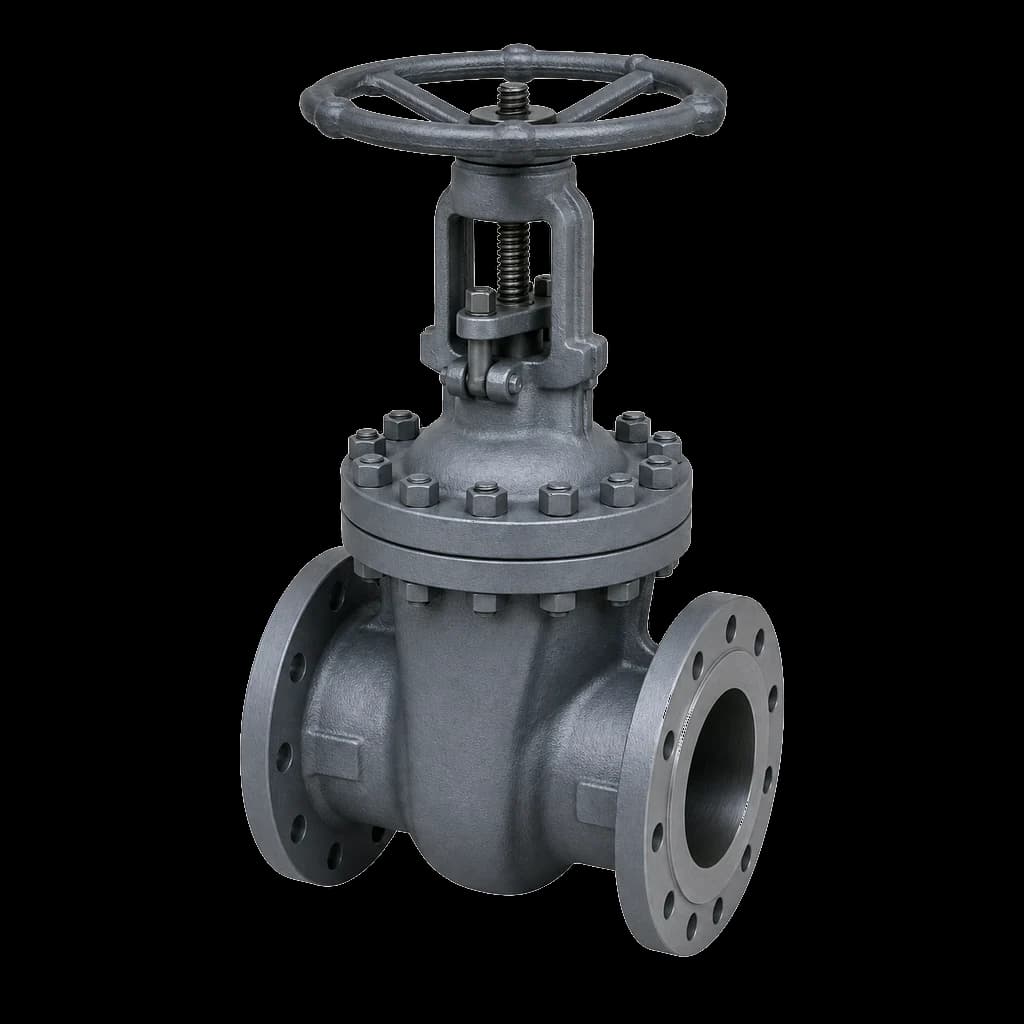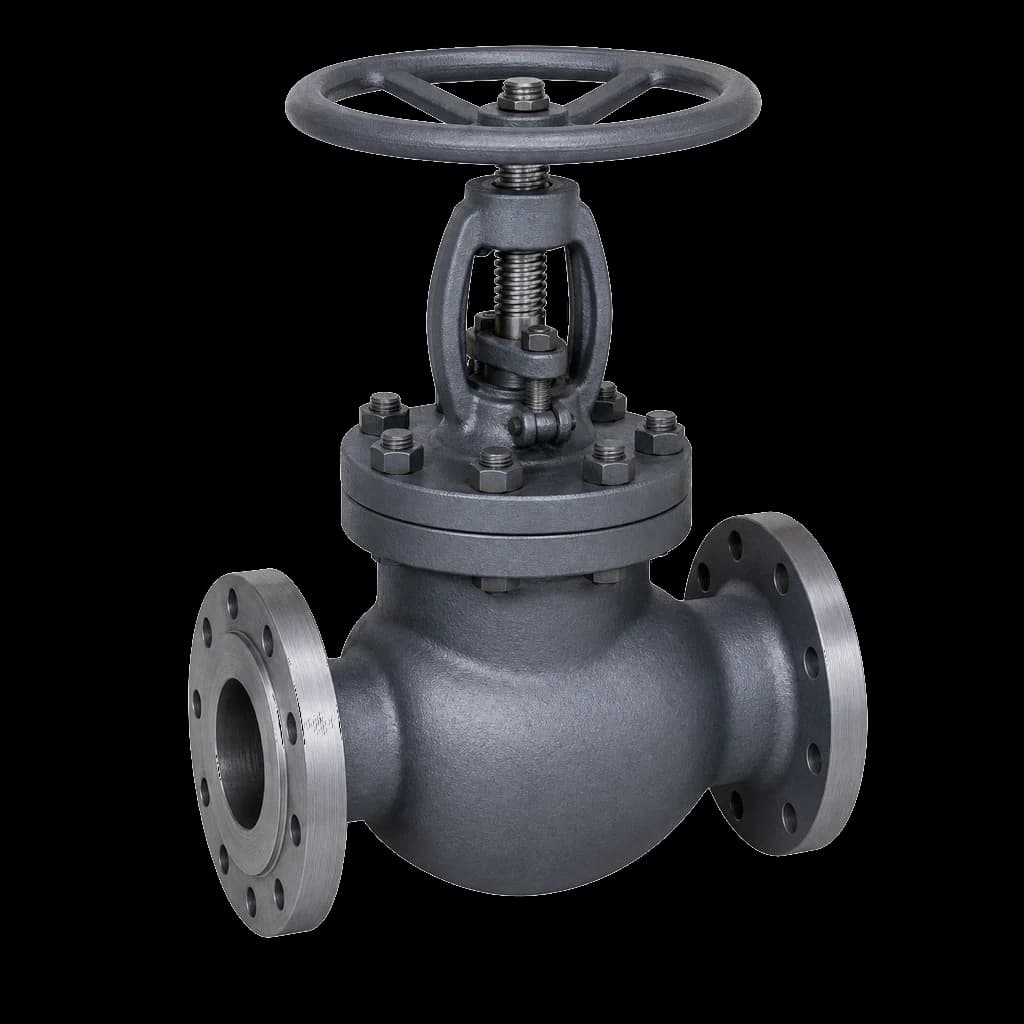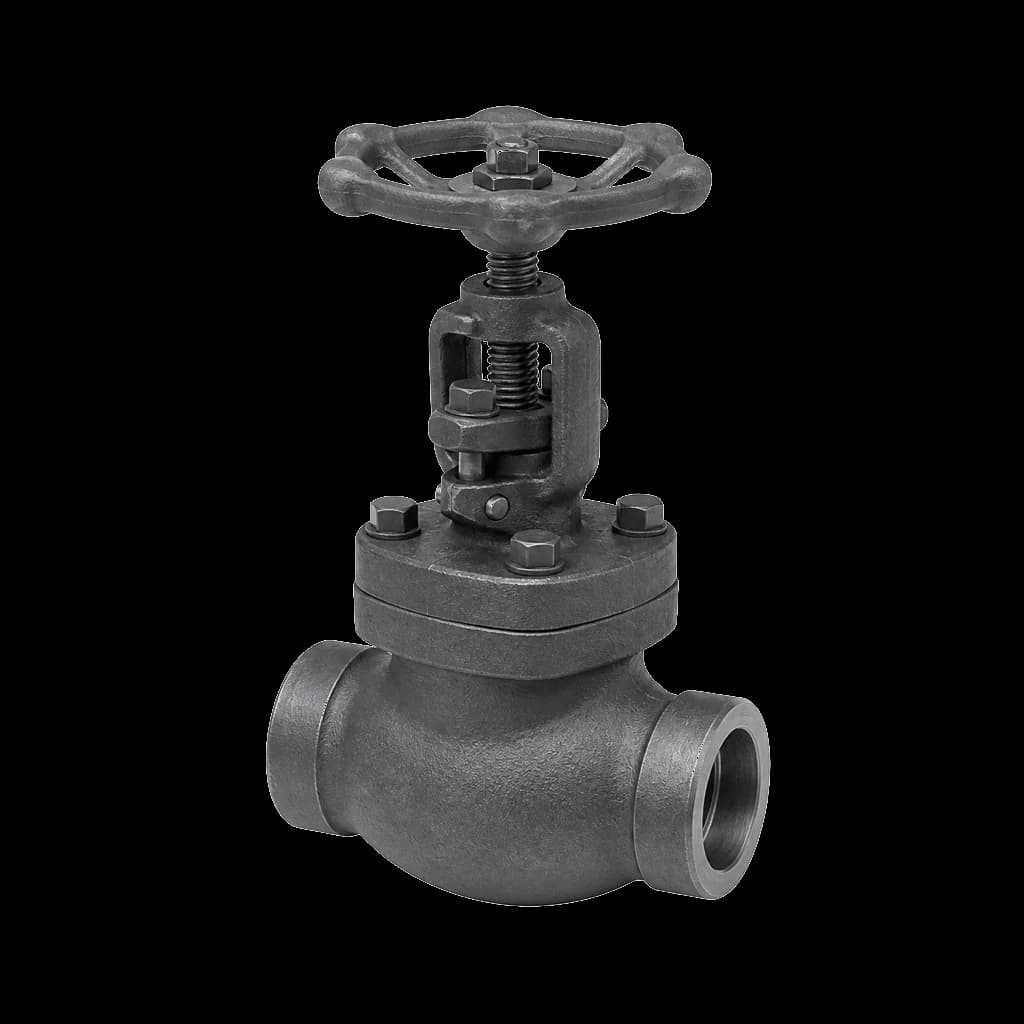
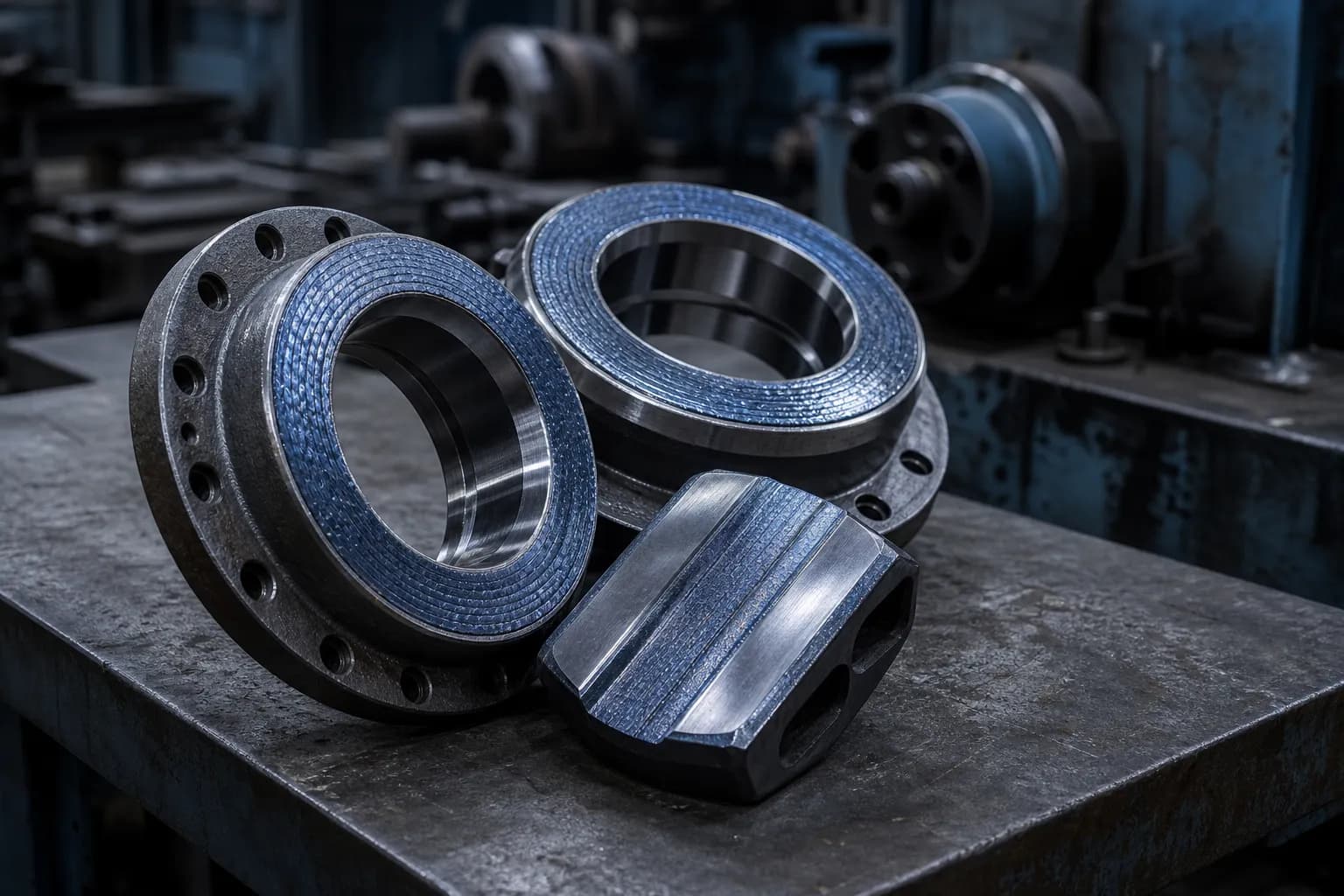
Ask for hardfaced trim on a gate or globe valve in India and you will be offered Stellite 6. It is the default, and usually the right one — but "HF" on a datasheet hides the two facts that decide whether it earns its cost. The first is Stellite 6 composition: roughly 28–32% chromium, 4–5% tungsten and about 1.2% carbon in a cobalt matrix. The second is what that chemistry becomes once it is welded onto a WCB or F22 seat ring, because a heavily diluted first layer never reaches the certificate hardness.
Stellite 6 composition: what is actually in the alloy
Stellite is a trademark covering a family of cobalt-chromium alloys developed by Elwood Haynes over a century ago. Stellite 6 is the Co-Cr-W-C workhorse: ERCoCr-A in AWS A5.21 for bare rod and wire, ECoCr-A in AWS A5.13 for covered electrodes, UNS R30006 cast and wrought, the same chemistry again in PTA powder. Put the designation on the enquiry rather than the trademark; on a GeM or PSU tender that distinction has teeth.
| Element | wt % | What it does in the deposit |
|---|---|---|
| Cobalt (Co) | Balance, typically 55–62 | The matrix. Low stacking-fault energy gives the galling and cavitation resistance |
| Chromium (Cr) | 26–32 | Forms the chromium-rich M7C3 carbides; enough stays in solution for oxidation resistance |
| Tungsten (W) | 3–6 | Solid-solution strengthening; holds hardness at temperature |
| Carbon (C) | 0.9–1.4 | Sets the carbide volume fraction — the biggest hardness lever |
| Iron (Fe) | 5 max, usually under 3 | Residual in the consumable; climbs steeply with dilution |
| Silicon (Si) | 2 max | Deoxidiser; helps the deposit wet the parent metal. Ni, Mn and Mo are residual |
Two numbers drive the rest. Carbon near 1.2% sets the carbide fraction that resists erosion, and chromium feeds those carbides while leaving enough in solution for the seat to survive wet steam.
Why cobalt rather than nickel or iron
The cobalt matrix undergoes a strain-induced FCC to HCP transformation: the instant a seat face is rubbed or hammered, the top few microns work-harden. That gives a valve the two properties it is actually buying — galling resistance and cavitation erosion resistance — and it is why Stellite 6 runs against Stellite 6 without seizing, which you would never risk with 316 on 316.
An overlay is not a coating
"Stellite coating" and hardfacing get used interchangeably; they are not the same thing. A welded overlay — PTA, TIG, oxy-acetylene or laser — is metallurgically fused to the parent metal and cannot spall off. A sprayed coating is mechanically keyed to a roughened surface and can. Insist on a fusion-welded overlay on seating faces, and when a quotation says only "coated", ask which process.
Hardness: what "40 HRC minimum" is really measuring
An undiluted Stellite 6 deposit lands around 39–45 HRC, and most specifications call for 40 HRC minimum on the seating face. The trap is where that hardness is read. A first layer laid onto a carbon or low-alloy steel seat ring picks up iron — 10–25% dilution is normal with manual TIG — and iron thins matrix and carbide fraction together. That layer reads several points below nominal with a perfect consumable certificate in the file.
Hence two layers minimum, with the seat machined back into the second. Say where hardness is verified — "minimum 40 HRC on the finished machined seating surface" — not "Stellite 6 hardfaced". The first is a test; the second is unverifiable.
- Hot hardness: useful working hardness to roughly 500 °C, oxidation resistance well above that. In a valve, the body material's pressure-temperature rating runs out long before the overlay does.
- Thickness: 1.6 mm (1/16") finished minimum on seating faces after machining is common practice. Thinner, and one lapping campaign in the workshop takes you to parent metal.
- Crack sensitivity: high-carbon cobalt alloys check-crack if preheat and cooling rate are not controlled. Liquid penetrant examination after final machining is the acceptance test, and it belongs in the purchase order.
- Machinability: the deposit is ground and lapped, not turned — a real cost driver, and most of why hardfaced trim costs more than 13Cr at the same class.
Stellite 6 vs Stellite 21, and the rest of the family
Carbon is the axis the family sits on: more carbon, more carbide, more hardness, less toughness. Published hardness bands differ between suppliers because process and layer count move the number, so confirm the figures below against the consumable datasheet.
| Grade | AWS A5.21 class | Key chemistry | As-deposited hardness | Where it belongs |
|---|---|---|---|---|
| Stellite 6 (UNS R30006) | ERCoCr-A | ~1.2 C, 28–32 Cr, 4–5 W | ~39–45 HRC | Default seat and disc overlay: steam, boiler feed, erosion, galling |
| Stellite 21 (UNS R30021) | ERCoCr-E | ~0.25 C, 27 Cr, 5.5 Mo, 2.5 Ni | ~28–36 HRC | Thermal cycling and impact; resists thermal fatigue cracking |
| Stellite 12 (UNS R30012) | ERCoCr-B | ~1.4–1.85 C, 29 Cr, 8–9 W | ~45–50 HRC | Abrasion-dominated wear, low impact loading |
| Stellite 1 (UNS R30001) | ERCoCr-C | ~2.5 C, 30 Cr, 12–13 W | ~50–55 HRC | Severe abrasion; brittle, rarely justified on a valve seat |
| Ni-Cr-B-Si (Colmonoy type) | ERNiCr-B / ERNiCr-C | Boron and silicon in place of tungsten | ~35–55 HRC by grade | Cobalt-free substitute where Co-60 activation rules Stellite out |
For steam, boiler feed and general erosive service Stellite 6 is the correct default, and you need a reason to move off it. Stellite 21 answers thermal shock and hammering impact; Stellite 12 answers abrasion where impact is low. One India-specific caveat: cobalt is restricted in nuclear primary circuits, where Co-59 activates to Co-60 and drives operator dose, so NPCIL-adjacent packages specify nickel-chrome-boron instead. Read "cobalt-free hardfacing" literally — an ERCoCr-A offer against it will not pass as a deviation.
How it is applied, and why the process belongs in your spec
| Process | Typical dilution | Practical notes |
|---|---|---|
| Oxy-acetylene (OFW) | Under ~5% | Slow and operator-dependent, but excellent first-layer chemistry |
| Manual GTAW / TIG | 10–25% | In every valve and repair shop in India. High heat input; needs two or three layers |
| PTA (plasma transferred arc) | 5–15% | Production standard for seat rings, wedges and discs. Tight heat control, repeatable |
| Laser cladding | Under ~5% | Lowest heat input and distortion; premium route for thin sections and repairs |
Name PTA in the enquiry when the trim matters. Manual TIG is not wrong — it is how repairs are done — but it needs more layers to reach full chemistry. On Cr-Mo bodies the overlay must be sequenced with preheat and the casting's post-weld heat treatment; get that wrong and you crack the pad or soften the parent metal. Our cast valve body materials guide sets out where WCB, WC6, WC9 and CF8M belong.
Where Stellite 6 hardfacing pays for itself
Hardfacing is not a general quality upgrade to be sprinkled across a valve list. It answers specific failure modes, and it earns its cost in these:
- Steam and boiler feed. Wire drawing — a high-velocity leak cutting a channel across the seat face — accelerates once it starts, and a 13Cr face cannot stop it. The wider trim and IBR picture is in our steam service valve guide.
- High pressure-drop throttling. Globe valves taking a large drop flash and cavitate at the seat, and cobalt alloys are among the most cavitation-resistant weldable materials available. Severe-service plugs and seats are hardfaced for that reason.
- Abrasive and particulate media. Ash slurry, mill scale, coal handling water, catalyst fines. The carbide phase does the work, and the payback is fewer re-lapping cycles per shutdown.
- High cycle counts and galling risk. Austenitic stainless galls against austenitic stainless, and an actuator supplies the torque to make it worse. Hardfacing one face or both is the standard fix.
- Where it does not pay: clean cold water, low-pressure compressed air, soft-seated valves, cast-iron sluice valves to IS 14846. Match trim to duty with our valve trim materials guide first.
Specifying hardfacing so a bidder cannot quietly drop it
"HF trim" on an enquiry is an aspiration, not a specification, and API 600 trim numbers are not interchangeable — some hardface both seating faces, others only the body seat rings. Write the combination out in words beside any number: "13Cr stem; body seat rings and wedge seating faces overlaid with ERCoCr-A". A complete clause names six things:
- The alloy by class, not trademark — ERCoCr-A / UNS R30006. Brand-neutral wording is what GeM tendering expects, and it lets a bidder offer equivalent chemistry without a deviation.
- Which surfaces — body seat rings, wedge or disc faces, and whether the backseat is included. "HF trim" alone leaves the backseat ambiguous, and that ambiguity appears at inspection.
- Minimum finished thickness after machining, commonly 1.6 mm, stated as finished rather than as-deposited.
- Minimum hardness and where it is measured — on the finished seating surface to ASTM E18, or UCI to ASTM A1038 where the geometry defeats a bench tester.
- Process and layer count — PTA preferred, two layers minimum, procedure and welder qualification available for review.
- NDE and acceptance — liquid penetrant examination of the finished face with the acceptance standard named, plus preheat and PWHT sequence for Cr-Mo bodies.
Documentation: closing the gap at inspection
Hardfacing is invisible once a valve is assembled and painted, which makes it the easiest item in a package to skip quietly. Three checks close that gap. Positive material identification on the seating face: a handheld XRF reads cobalt, chromium and tungsten, and a low cobalt figure means dilution or parent steel, not sound overlay — our guide to PMI and XRF traceability makes it a contractual check. Hardness readings on the finished face, against the valve serial number rather than a lot. And the consumable's batch certificate, attached to the EN 10204 3.1 or 3.2 MTC — on IBR steam lines it should agree with Form III-C.
Put the hold point after final machining of the seat, before assembly: the only moment the overlay is visible, measurable and repairable at the manufacturer's cost. Once the wedge is inside the body, deposit thickness is a paper dispute, and those rarely end in the buyer's favour.