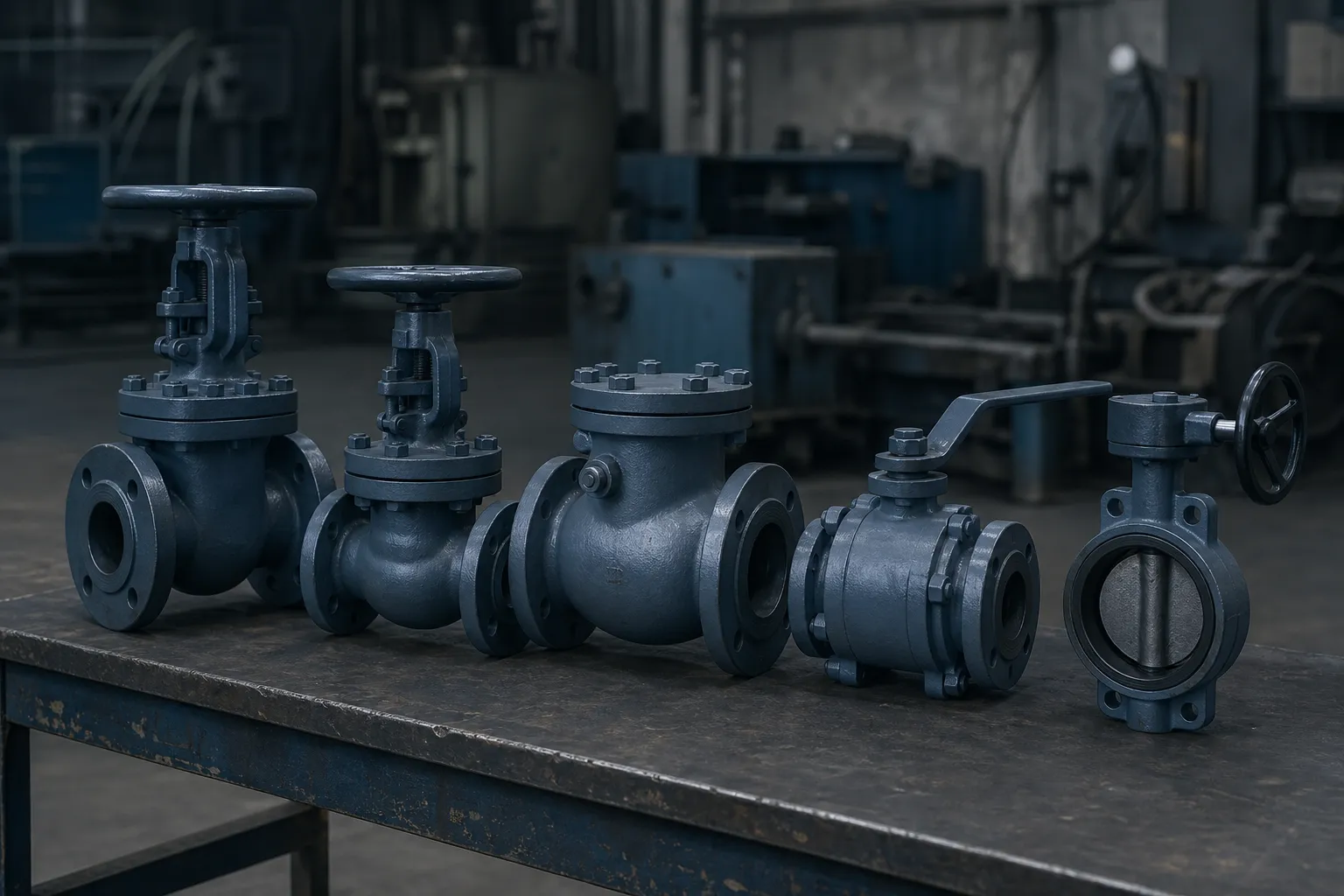
Above eight storeys, static head stops being a line on the hydraulic calculation and starts breaking hardware. Water stands at about 1 bar per 10.2 m of column — 1 kg/cm² per 10 m in the units most Indian drawings use — so the base of a 120 m tower sees close to 12 bar before a pump contributes anything. A pressure reducing valve for water line duty turns that column into usable zones. The valve alone is not the deliverable: what gets handed over is a station — isolation, strainer, PRV, gauges, bypass, drain.
Zone by static head, not by floor count
Zoning "every ten floors" is a habit, not a calculation. Floor-to-floor runs 2.9–3.3 m in residential towers and 3.6–4.2 m in commercial ones, so ten floors is anywhere between 29 m and 42 m of head. Zone in metres, then round to a floor boundary that suits the shaft.
The target is set by the fittings, not the pipe. Mixers, thermostatic cartridges, flush valves and storage geysers are comfortable between roughly 1.5 and 3.5 bar static. Past about 4 bar you get hammer at solenoid-operated appliances, singing taps, cartridge failures and geyser safety valves weeping — complaints blamed on the plumber that are really a zoning decision. IS 2065 and the CPWD plumbing specification both aim at controlled residual pressure at the fixture, not maximum pump head.
| Column above the point | Static pressure | Usual treatment |
|---|---|---|
| Up to 15 m (about 5 floors) | ~1.5 bar | No reduction; check the pump curve |
| 15–30 m (5–10 floors) | 1.5–3.0 bar | One zone, PRV at the zone inlet |
| 30–45 m (10–15 floors) | 3.0–4.4 bar | Zone PRV essential, floor PRVs at the base |
| Above 45 m | 4.4 bar and climbing | Split the riser, or reduce in two stages |
How a pressure reducing valve for water line service works
Every PRV is a self-operated throttling device: it senses its own downstream pressure and modulates a plug to hold setpoint whatever the inlet does. Two constructions dominate building services, and they are not interchangeable.
Direct-acting spring and diaphragm valves
Downstream pressure acts under a diaphragm against an adjusting spring: when demand rises the outlet sags and the spring opens the plug further. The consequence is droop: lock-up pressure, held at zero flow, sits above the pressure at full flow, so the datasheet setpoint is a curve, not a number. Bronze or DZR brass, screwed or union ends, stopping around DN 50: right for a floor branch or apartment inlet.
Pilot-operated diaphragm globe valves
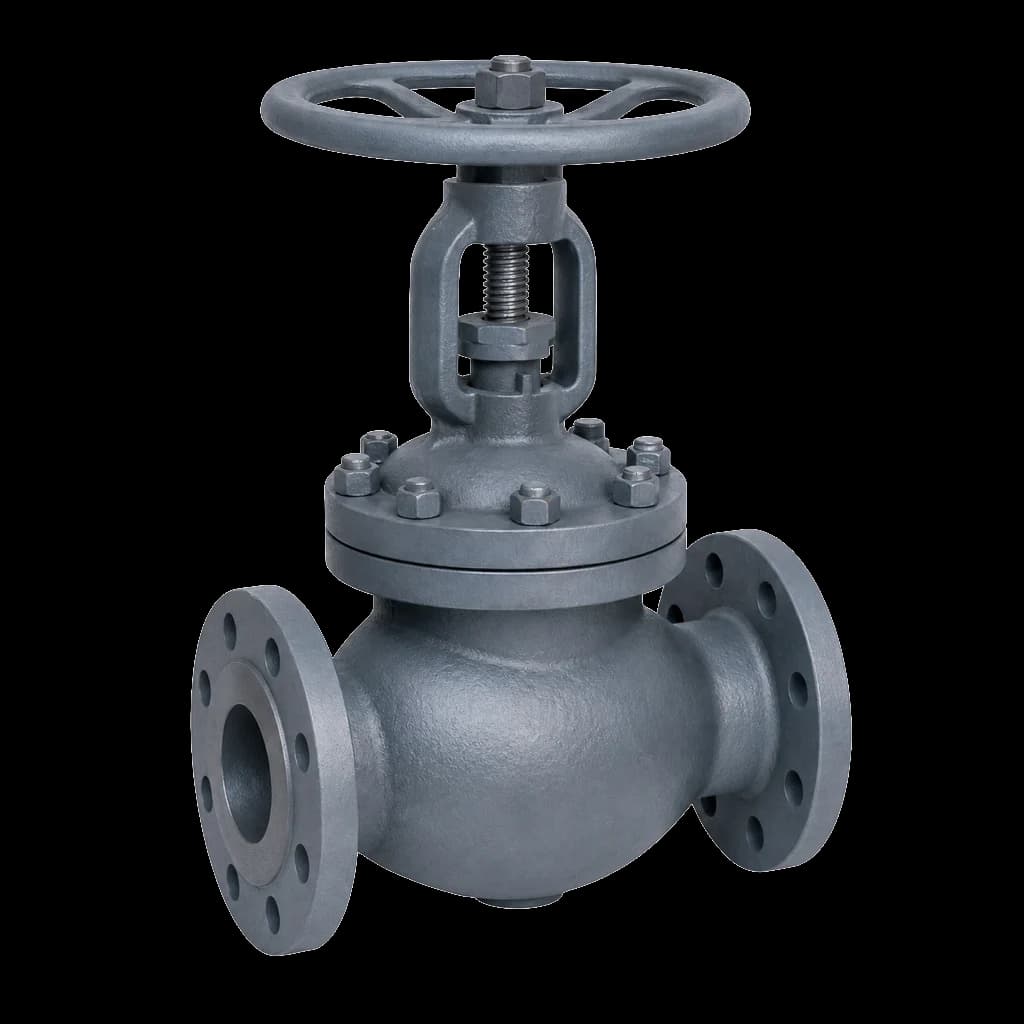
The main valve is a globe body with a diaphragm chamber over the plug, and a pilot piped from the outlet bleeds line pressure into and out of that chamber to position it. The pilot has gain, so accuracy across the flow range is far flatter and lock-up sits close to setpoint. Flanged, DN 50 upward, ductile iron or cast steel — the class that belongs at a zone inlet.
A fixed orifice or a balancing valve is not a PRV: fixed resistance absorbs pressure as the square of flow, fine at one known flow and useless when flow swings. A steam PRV is different again — see the steam service valves guide.
Size for the flow range, never for the line size
The commonest error is ordering the PRV in the line size. A DN 150 riser at 2 a.m. carries the flow of two flushes, and a valve oversized for what it sees works on the first few per cent of its travel: it hunts, it slams, it wire-draws the seat, and within a season it holds nothing. Size on Cv at the design flow and differential, then check minimum flow.
- Get the real flow band — peak demand and minimum night flow. If the ratio is worse than about 10:1, one valve will not do the job.
- Use a duty pair. Two PRVs in parallel, the small one set 0.2–0.3 bar above the large one, so it carries night and part load and hands over only when demand grows.
- Watch the pressure ratio. Water cavitates as the vena contracta approaches vapour pressure, which is why a single stage is normally held near 3:1 on absolute pressures. Take the limit off the maker's cavitation chart, not a rule of thumb.
- Two stages means two stations — give the intermediate pressure a run of pipe, a gauge and isolation.
- Never size one valve for the domestic and fire cases. Different flows, different risers, different failure philosophies.
What a PRV station actually contains
A PRV specified without its station is a warranty claim in waiting. Debris on a seat is the leading cause of a valve that will not shut, and a PRV that cannot shut over-pressurises everything below it.
| Item | Function | Specify |
|---|---|---|
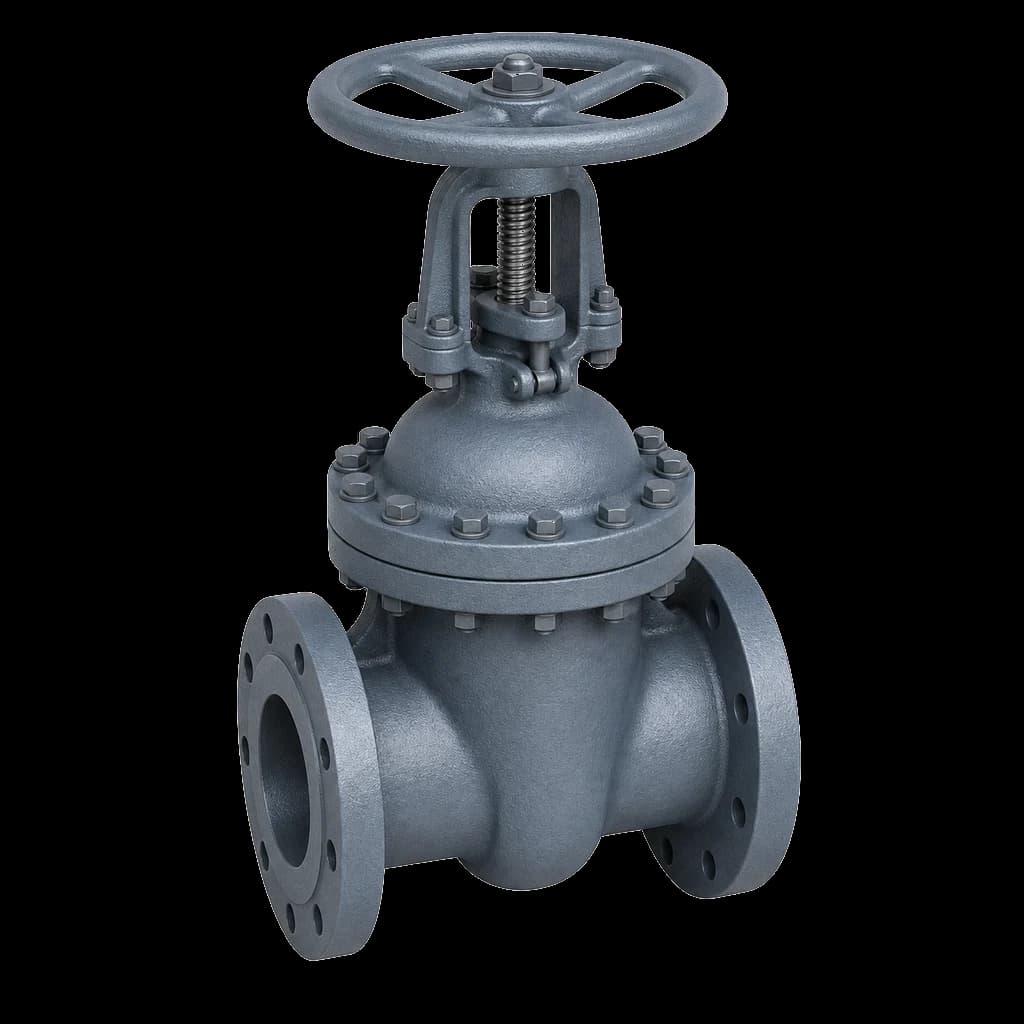
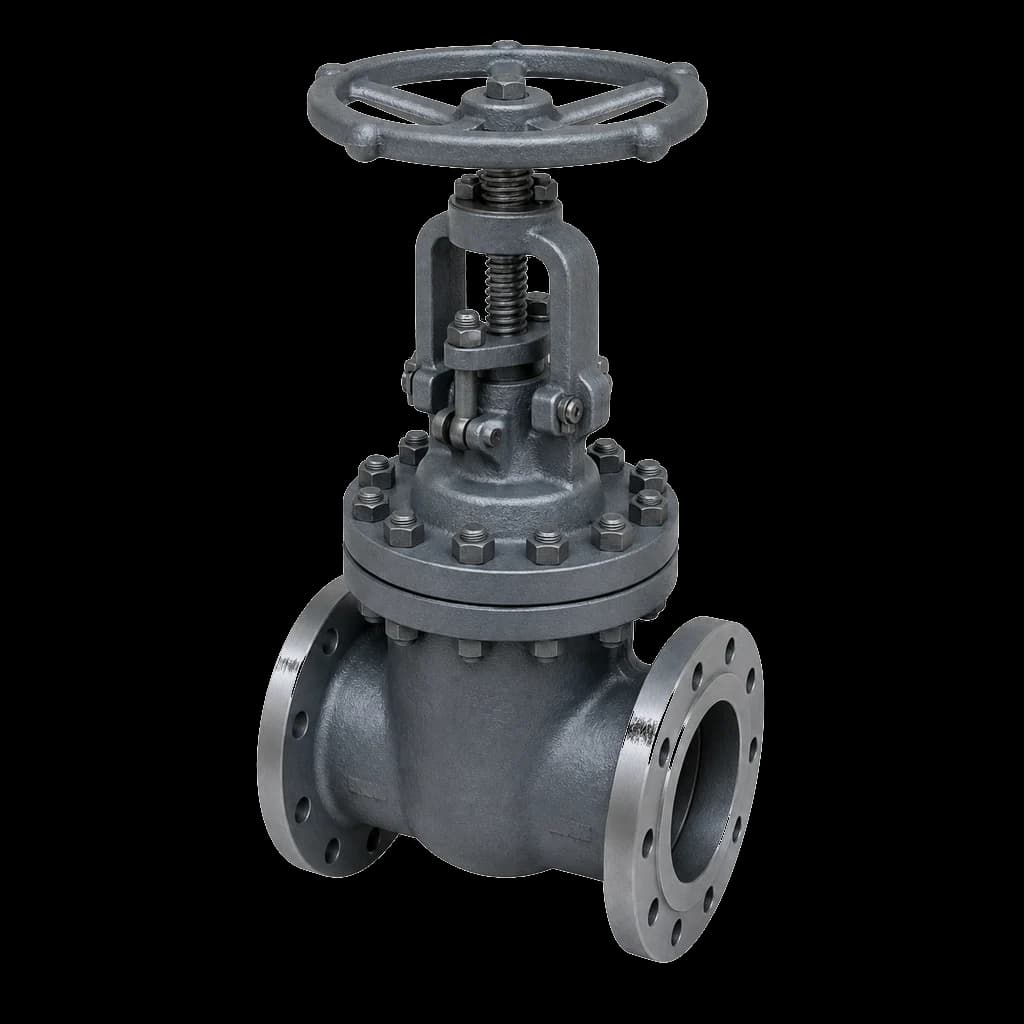
| Upstream isolation | Takes the station off line | Full-bore sluice or gate valve; butterfly on large bore |
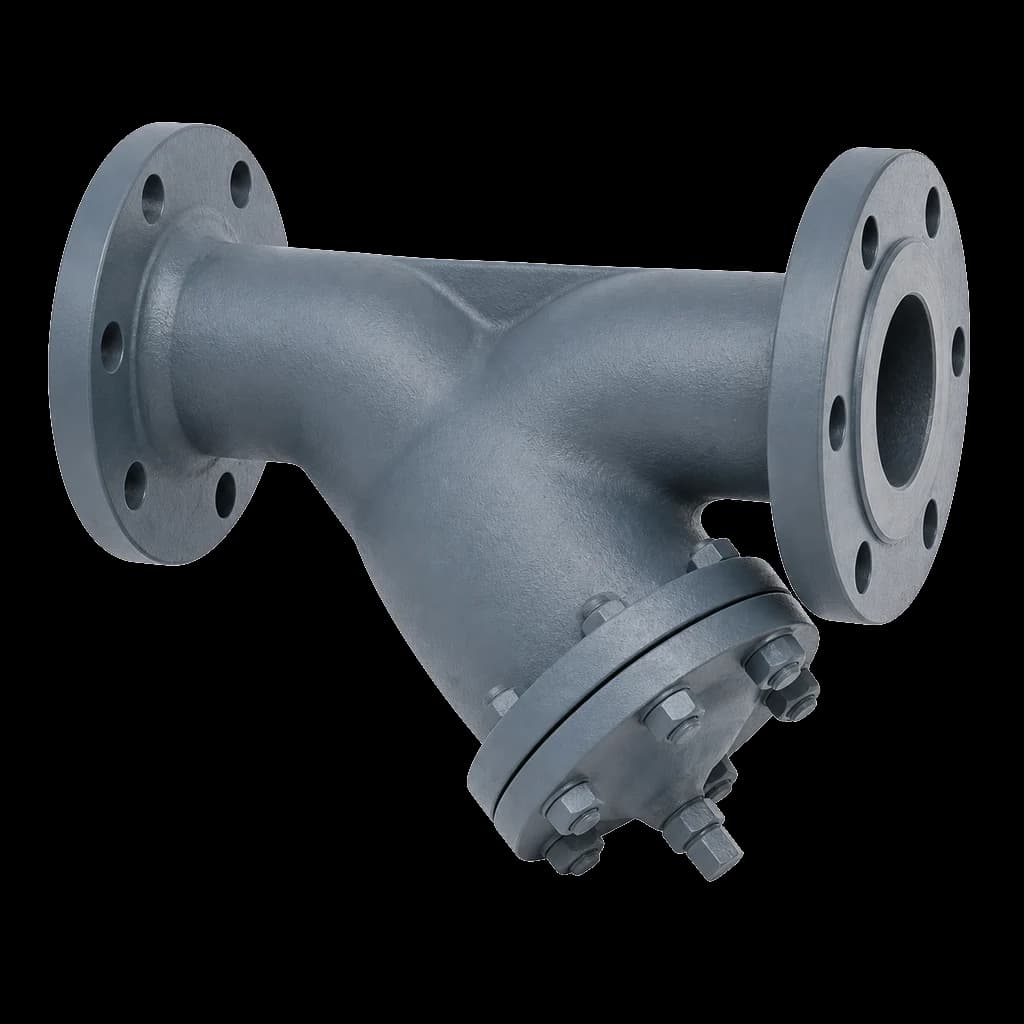
| Y-strainer with blowdown | Keeps grit off the PRV seat | Water-service mesh, SS screen, blowdown to drain |
| PRV | Holds setpoint across the flow band | Pilot-operated above DN 50, sized on Cv |
| Downstream isolation | Isolates the zone for gauging | Same type and class as upstream |
| Bypass valve | Keeps the zone live during PRV service | Globe valve — a regulating duty, not isolation |
| Gauges both sides | The only way to commission or fault-find | Isolating cock per tapping; full scale about twice working pressure |
| Downstream relief | Limits damage when the PRV fails open | Set above setpoint, below the weakest downstream fitting |
| Drain point | Flushing and draining | Low point, visible discharge |
The bypass is throttled by hand for hours while the PRV is off the line — the duty a wedge gate valve is worst at, because throttling erodes the seat faces and ruins shut-off. Globe on the bypass, gate for isolation; the reasoning is in gate vs globe vs ball valves. And the strainer: mesh too fine blinds in a week and starves the zone, too coarse passes the grit that jams the pilot — a trade-off worked through in Y-strainer sizing and mesh selection. Keep the downstream gauge and pilot tappings clear of the valve outlet, in recovered flow.
Fire risers are a different duty and a different risk
A wet riser stands at zero flow for years, then must pass full hydrant flow seconds after a landing valve is cracked open, and the failure consequence is not a maintenance ticket — it is a dry hose on the twentieth floor. NBC 2016 Part 4 and IS 3844 govern the installation, and both work to a minimum residual pressure at the topmost landing valve with an upper limit at the lower ones, because a hose crew cannot safely hold a branch fed at excessive pressure. Confirm both against the current edition and your state fire service's NOC checklist. At the lower floors the answer is a pressure-reducing landing valve to IS 5290, or an orifice plate behind a standard one — not a modulating PRV buried in the riser.
Never put a single in-line PRV in series in a wet riser without a full-bore bypass and a written, fire-officer-approved answer to what happens if it fails shut. A domestic PRV that fails closed is an inconvenience; a fire riser PRV that fails closed is a defect that survives handover, because nobody flows the riser at full rate after commissioning. The fire-fighting valves guide covers the pump room valves and ring main isolation.
Pressure sustaining valves and the over-pressure nobody planned for
A pressure sustaining valve is the mirror image on the same globe body: the pilot senses upstream pressure and throttles to protect a minimum inlet pressure, passing flow on only once that minimum is met. It earns its place at a low-zone tap-off, so lower floors drawing hard cannot starve the top zone, and on a pump discharge, holding the pump on its curve.
The related trap is thermal expansion. A PRV does not pass reverse flow, so once it closes the zone below is a sealed volume, and a storage geyser in it heats water with nowhere to expand. Pressure climbs until the geyser's safety valve lifts and weeps, and nobody ever diagnoses why. An expansion vessel absorbs it; a thermal relief valve set below the rating of the weakest fitting, not the pipe, is the cruder fix. Neither replaces the station relief, which has to pass the PRV wide open.
Materials, drilling and what gets rejected on site
For potable water, ductile iron to IS 1865 or ASTM A536 with a potable-grade fusion-bonded epoxy coating is the norm above DN 50; below that, gunmetal to IS 318 LTB-2 or DZR brass, with copper-alloy isolation and check valves to IS 778. Screens and trim in stainless: 304 on treated municipal water, 316 on borewell water carrying chlorides. EPDM for hot and cold potable duty; nitrile only where the service stays cold.
Isolation on the water side is usually a cast-iron sluice valve to IS 14846 or a resilient-seated butterfly; on the fire side, cast steel gate valves, with swing check (reflux) valves to IS 5312. Settle the flange drilling before anything is ordered: packages routinely mix IS 1538, EN 1092 and ASME B16.5 drillings on one floor, and mismatched PCDs found at installation are the most avoidable rework on a tower.
Commissioning the station, and what the RFQ must carry
Flush the riser through the bypass before the PRV is ever set. Set the valve at design flow with an outlet open, never dead-end, or you are setting lock-up and the zone runs low all day. Record both gauges, the flow condition and the setpoint on a sheet per station; on a forty-storey tower nobody remembers what was set where.
- Zone schematic with elevations, or the column height above each station.
- Peak and minimum flow per station, inlet pressure range, required outlet setpoint.
- Line size, flange standard and drilling, pressure class and end connection per item.
- Water quality: municipal, treated, borewell, or fire-tank water that has stood for years.
- Whether the station is domestic, fire or both, and which authority signs it off.
- Documentation: EN 10204 3.1 certificates, hydro test reports, third-party inspection if required.