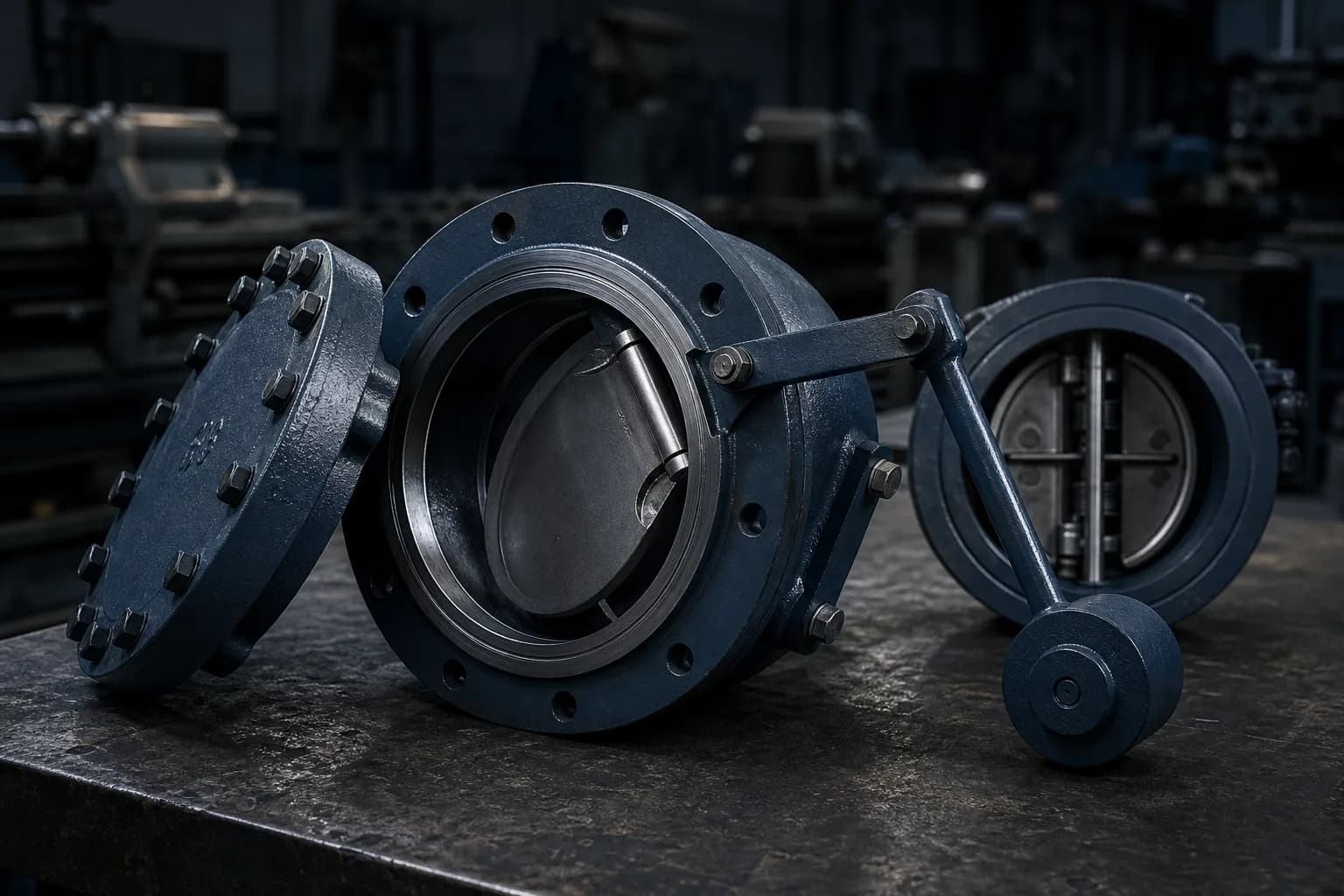
On an Indian pumping main, the swing check on the pump discharge is called a reflux valve — the term IS 5312 uses and the term every PHED, municipal and Jal Jeevan tender repeats. An API specification calls the same device a check valve; the site engineer calls it an NRV. The name is harmless. Buying it on size and PN rating alone is not. A reflux valve is the only valve in the station that decides for itself when to shut, and if it shuts late — after the water column has already turned around — it slams. The spike that follows splits flanged joints, cracks pump casings and shears holding-down bolts.
Reflux valve vs non return valve: one device, three vocabularies
Tender documents mix all three freely, and the mixing hides real specification gaps.
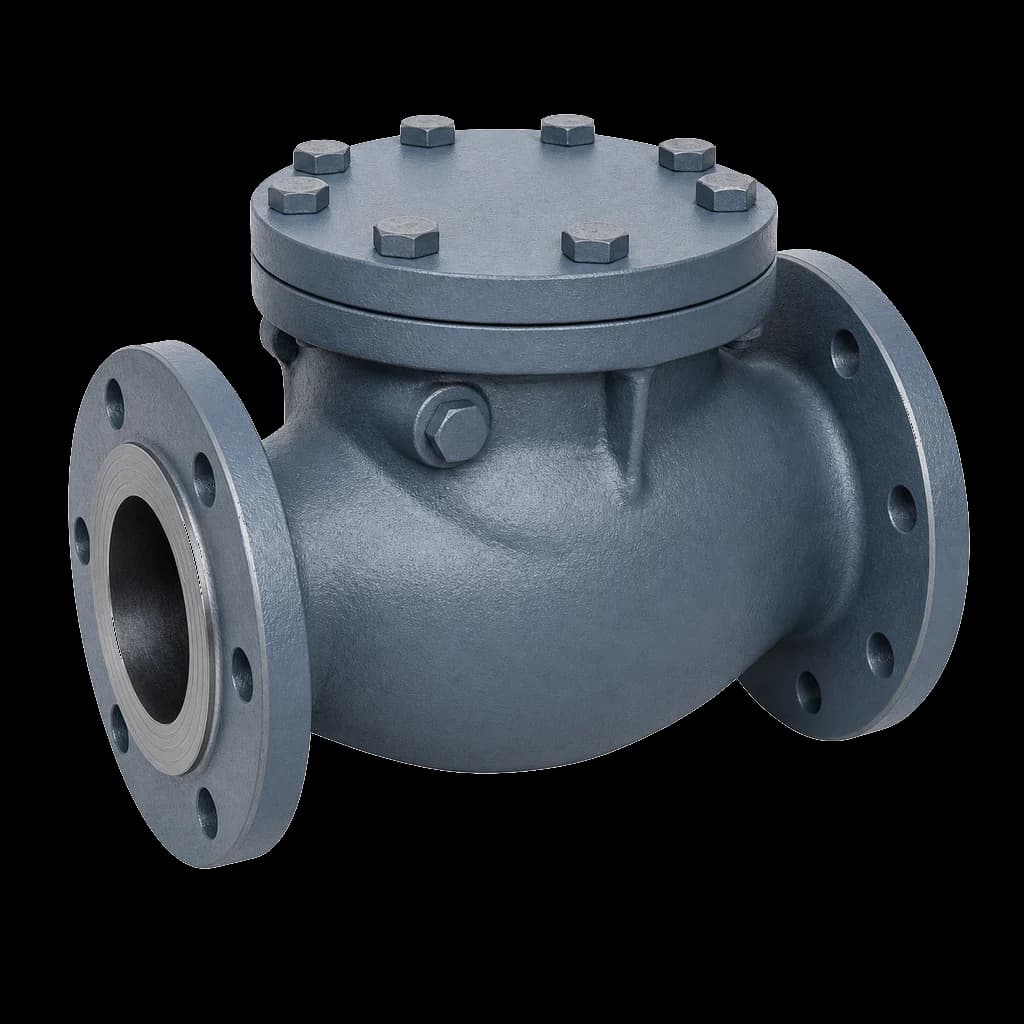
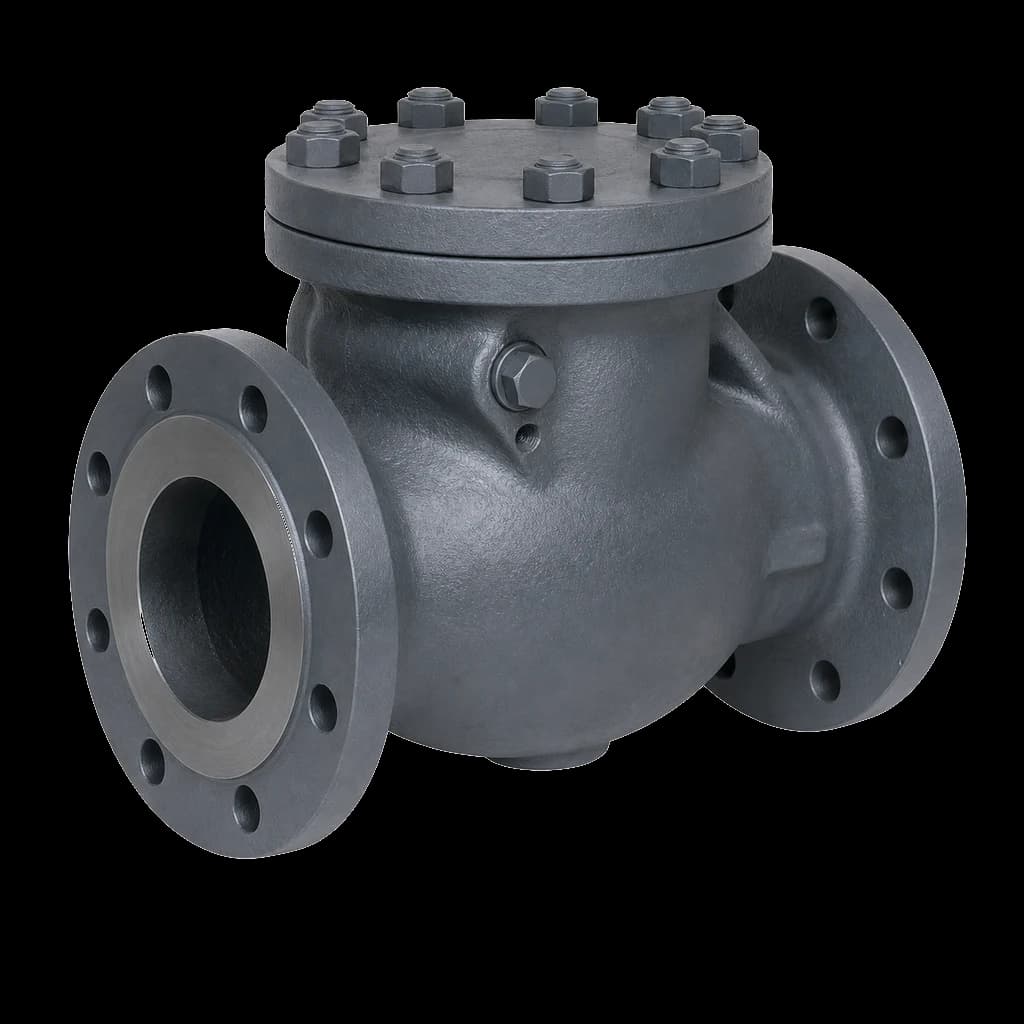
- Reflux valve — waterworks vocabulary. IS 5312 (Part 1) covers the single-door swing type; Part 2 covers the multi-door type. Typically a cast iron or ductile iron body, gunmetal seat and door facing rings, stainless hinge pin, flanged and drilled to IS 1538 (older tenders still call BS 10 Table D/E/F).
- NRV / non return valve — site and purchase shorthand. It fixes nothing: not the pattern, not the closure characteristic, not the seat material. A requisition reading only "NRV 200 NB PN 1.6" is not yet a specification.
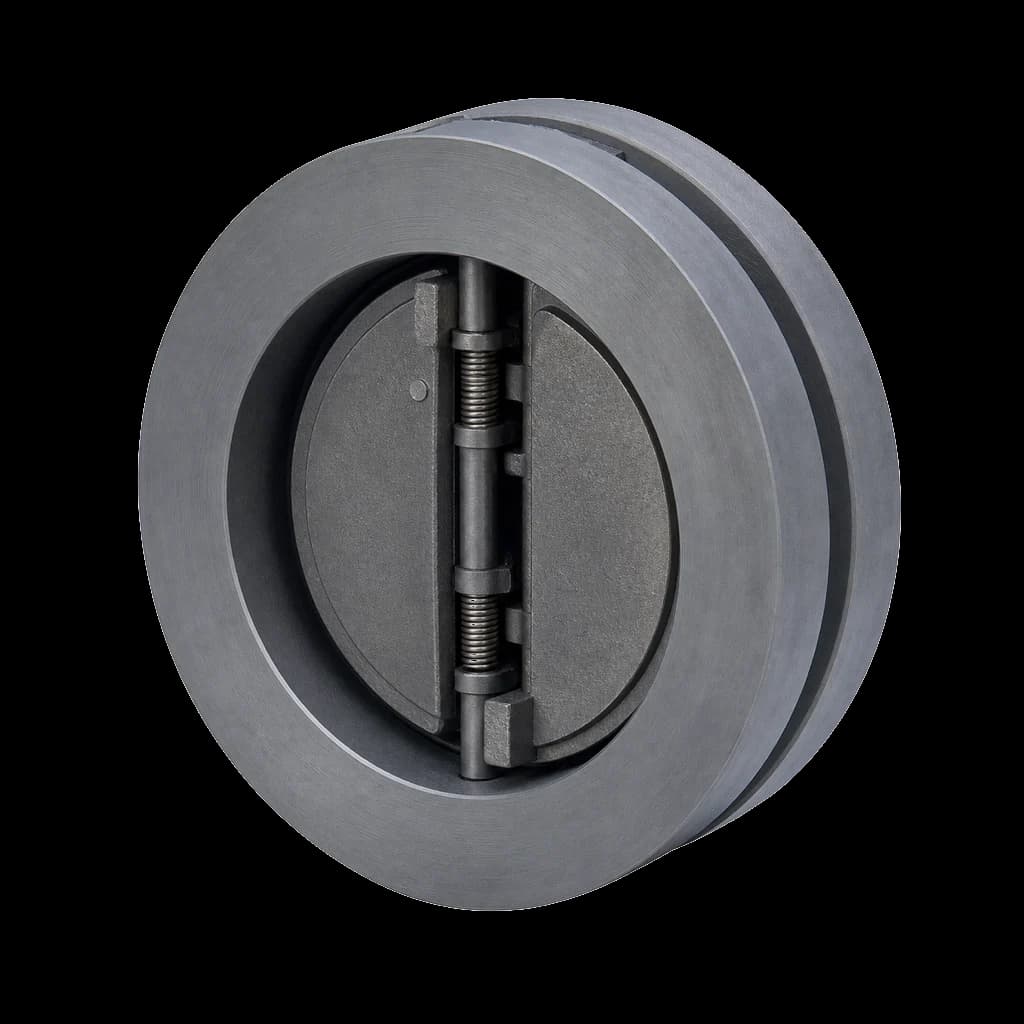
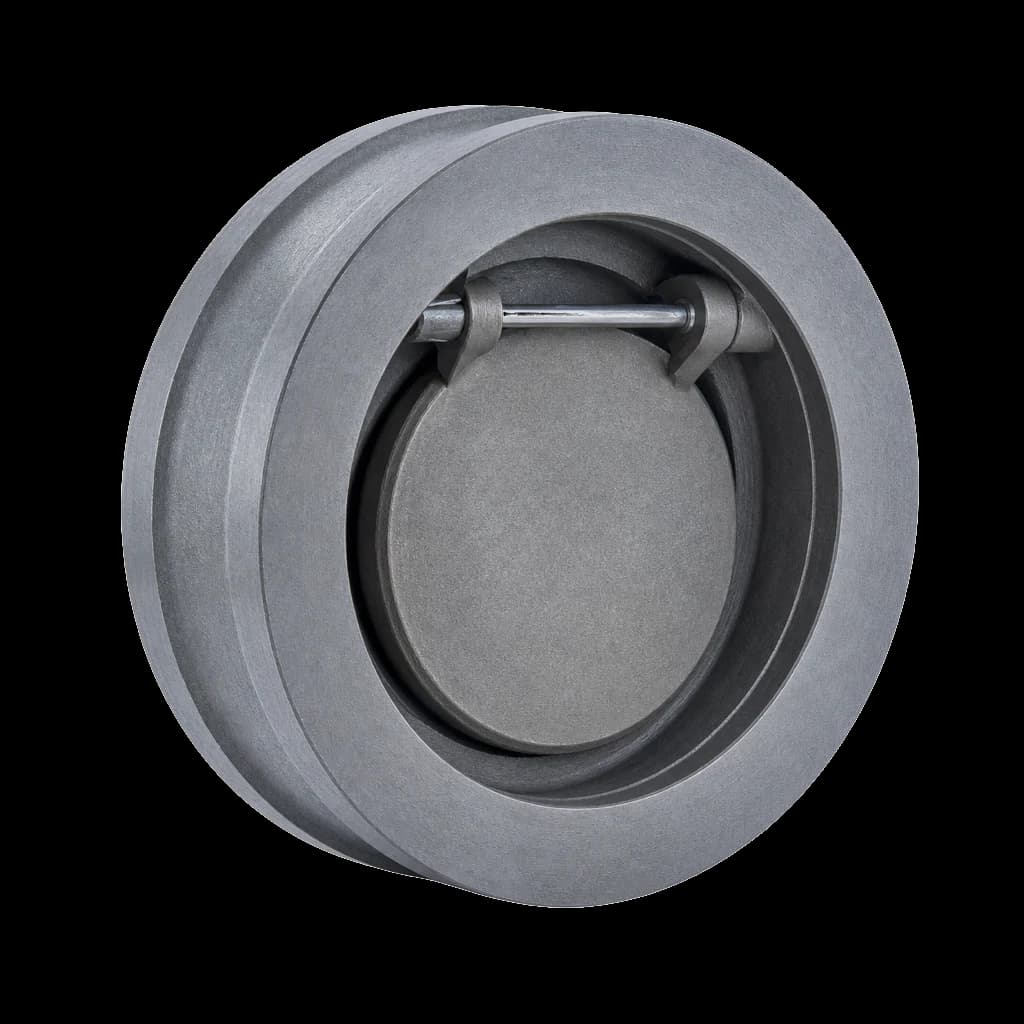
- Check valve — API/ASME vocabulary. Steel swing checks to BS 1868 or API 6D for hydrocarbon and high-class duty; spring-assisted dual plate checks to API 594; wafer disc checks to manufacturer standard.
- None of these words tells you how fast the valve closes — and that parameter, not the body material and not the PN number, decides whether you get slam.
Why check valve slam happens
When a pump trips, forward flow in the rising main decays at a rate set by the system, not by the valve. Ignoring friction, the column decelerates at g·H/L, where H is the static lift it is now fighting and L is the length of the main. A 60 m lift on a 1,200 m main gives roughly 0.5 m/s² — the column stops in a couple of seconds. The same lift on a 300 m main gives about 2 m/s², and flow is reversing in well under a second.
A single-door swing reflux valve must swing a heavy door through a long arc, and it only starts moving once the flow holding it open decays. On a high-deceleration system it is still part-open when reverse flow establishes; the returning column accelerates through the shrinking gap and drives the door shut against water already moving backwards. Slam is not caused by closing — it is caused by closing on a reverse velocity.
The number to ask the manufacturer for
Serious check valve makers publish a dynamic characteristic curve: reverse velocity at the instant of closure plotted against system deceleration. That curve, not a catalogue adjective, is how you compare a swing reflux against a spring-assisted plate valve for your main. Ask for it in the RFQ, and where a supplier cannot produce one, treat the closure claim as unverified — the kind of gap covered in our note on common valve procurement mistakes.
How big is the surge? Water hammer in pipes, in numbers
The classical Joukowsky relation gives the head rise for a sudden velocity change as Δh = a·Δv/g, where a is the pressure wave speed in the pipe. For water in steel and ductile iron mains a typically lands around 1,000–1,200 m/s; in HDPE it is far lower because the pipe wall flexes. The wave makes a full return trip in 2L/a seconds, and any closure completed inside that window is hydraulically instantaneous.
| Pipe and wave speed | Δv = 0.5 m/s | Δv = 1.0 m/s | Δv = 2.0 m/s |
|---|---|---|---|
| Steel / DI, a ≈ 1,000 m/s | ≈ 51 m | ≈ 102 m | ≈ 204 m |
| Thick-wall steel, a ≈ 1,200 m/s | ≈ 61 m | ≈ 122 m | ≈ 245 m |
| HDPE, a ≈ 400 m/s | ≈ 20 m | ≈ 41 m | ≈ 82 m |
Read that against your PN rating. PN 1.0 is 10 bar, about 102 m of water; a cast iron reflux valve on a 60 m static main is therefore working at roughly 60 percent of its rating before the pump trips, and a slam arresting only 1 m/s of reverse flow puts another 100 m on top. That is how a body cracks and how a flanged joint on a DI main pulls. Note what enters the formula: the reverse velocity at the moment of closure, not the design flow velocity. A valve that shuts while the column is still merely slowing produces no bang at all, even on a main running at 2 m/s.
Matching the valve to the main
Selection follows the line profile and the trip dynamics, not the pump size. Treat the table below as a starting position, then verify it against the supplier's dynamic characteristic curve and, on anything long or hilly, against a surge analysis.
| Duty | Line character | Sensible first choice |
|---|---|---|
| In-building booster set | Short discharge, low static lift, slow deceleration | Swing reflux, or wafer disc check where face-to-face is tight |
| Fire pump discharge | Short header, weekly test starts, approval-driven | The check pattern the hydrant standard and approving authority accept |
| Water supply rising main, 1–5 km, high lift | High deceleration, clear slam risk | Spring-assisted dual plate (API 594), or multi-door reflux |
| Long transmission main with profile peaks | Column separation possible at high points | Surge analysis first; the valve choice falls out of it |
| Parallel pumps on a common header | One unit trips into a live pressurised header | Fast-closing check on each pump branch, never one common check |
| Raw water or sewage with solids | Rag, grit and fibre fouling the seat | Full-bore swing reflux with external lever; avoid tight-clearance plates |
Geometry, not magic, is why a dual plate check beats a swing reflux on a long rising main: two half-plates on a central hinge travel a short arc, weigh a fraction of a solid door, and are driven shut by springs as forward flow decays instead of waiting for reverse flow to push them. Closure lands at or near zero flow rather than at a reverse velocity — which is all a catalogue means when it advertises a non-slam or silent check valve — and it does so in a body far shorter and lighter than a flanged swing check. The comparison is worked through in our guide to swing, dual plate and wafer disc check valves. Head loss is the trade-off: plates, hinge and stops sit in the bore permanently, and on an energy-sensitive scheme that pumping cost is real.
Lever, weight and dashpot: when the accessories earn their keep
Lever and weight is the standard Indian answer to a slamming reflux valve, and it is misunderstood more often than understood. Biasing the door towards closure does start it shutting earlier — but it also adds rotational inertia to a door that must be stopped dead at the seat, and a heavy weight far out on the lever makes the impact worse, not better. Count it as a surge measure only when it is set per the manufacturer's instruction and, on larger mains, paired with an oil or air dashpot that lets the door travel fast through most of its arc and cushions the last few degrees onto the seat. Two-stage closure is the mechanism; the weight on its own is a half-measure.
- Multi-door (IS 5312 Part 2) is the other honest answer in large bore: several small doors, each with a short arc and low inertia, closing faster than one large door.
- Never fit a lever and weight to rescue an oversized valve. A check sized on line size rather than actual velocity never opens fully, flutters against its stop, wears the hinge pin oval and then slams from part-open. Size on velocity — Indian pumping mains typically run 1–2 m/s — and confirm full opening at minimum flow, not just at duty point.
- Orientation is not optional. A swing reflux goes in a horizontal run, or vertical with flow upward only. Never install one in vertical downflow, where gravity fights closure.
- Leave straight pipe upstream. Downstream of a discharge bend or a part-open sluice valve the door sees a distorted profile and hunts; five to ten diameters is cheap insurance.
- Specify an inspection cover. On raw water and sewage duty, seat fouling is the failure you will actually meet, and a valve that cannot be opened in place gets left leaking.
Specifying a reflux valve for an Indian tender
A defensible waterworks specification names the standard, the materials, the rating, the drilling and the test evidence. IS 5312 governs the design; state the rest explicitly or the lowest bidder will read it in his own favour.
- Body: grey cast iron to IS 210 (FG 200 and above) for PN 1.0 and PN 1.6 waterworks duty, or ductile iron to IS 1865 (grade 400/15 or 500/7) where surge head, burial depth or handling demands it.
- Seat and door facing: gunmetal / leaded tin bronze to IS 318 (LTB 2), renewable on both seat and door. An integral cast seat is unrepairable at the first pitting.
- Hinge pin: stainless steel running in bronze bushes. This component decides whether the valve still works in year eight.
- Rating and drilling: state PN 1.0 or PN 1.6 explicitly, and state the flange drilling table (IS 1538, or the BS 10 table your existing pipework uses). Mismatched drilling is the commonest site delay on waterworks valves.
- Tests and documents: shell and seat hydrostatic test per the governing standard, EN 10204 3.1 mill certificates for pressure-retaining castings, and third-party inspection release where the client demands it. Ask for the flow arrow cast on the body, not painted.
The valve is not the whole surge system
Slam is a symptom of an unprotected main. The downsurge after a pump trip is the more dangerous half: pressure at profile peaks can fall to vapour pressure, the column separates, and the rejoining impact dwarfs anything the check valve contributes. Fixing the valve while ignoring the profile just relocates the failure.
- Air vessel or one-way surge tank sized by analysis — the primary protection on long, high-lift mains.
- Flywheel on the pump set to extend rundown, lowering deceleration and easing the check valve's job.
- Double-orifice air valves at profile peaks to admit air on downsurge and release it slowly; a fast-closing air valve is itself a slam source.
- Pressure relief or surge anticipation valve on the discharge header where the analysis calls for it.
- Check the suction side too — a fouled or undersized foot valve wrecks priming and NPSH long before it makes a noise; the trade-offs are in foot valve vs NRV on pump suction.
- Fire pump sets obey the same physics, with the added constraint that the whole valve set must satisfy the approving authority; see our fire fighting valves guide.
A field note to close. When an existing main starts hammering after years of quiet service, the check valve is usually the messenger rather than the culprit. Look for a hinge pin worn oval, a broken lever stop, a dashpot that has lost its oil, a pitted facing holding the door off its seat — or a changed duty point, a new pump, a raised reservoir, an extended main, that has moved the system into a deceleration regime the original check valve was never chosen for.