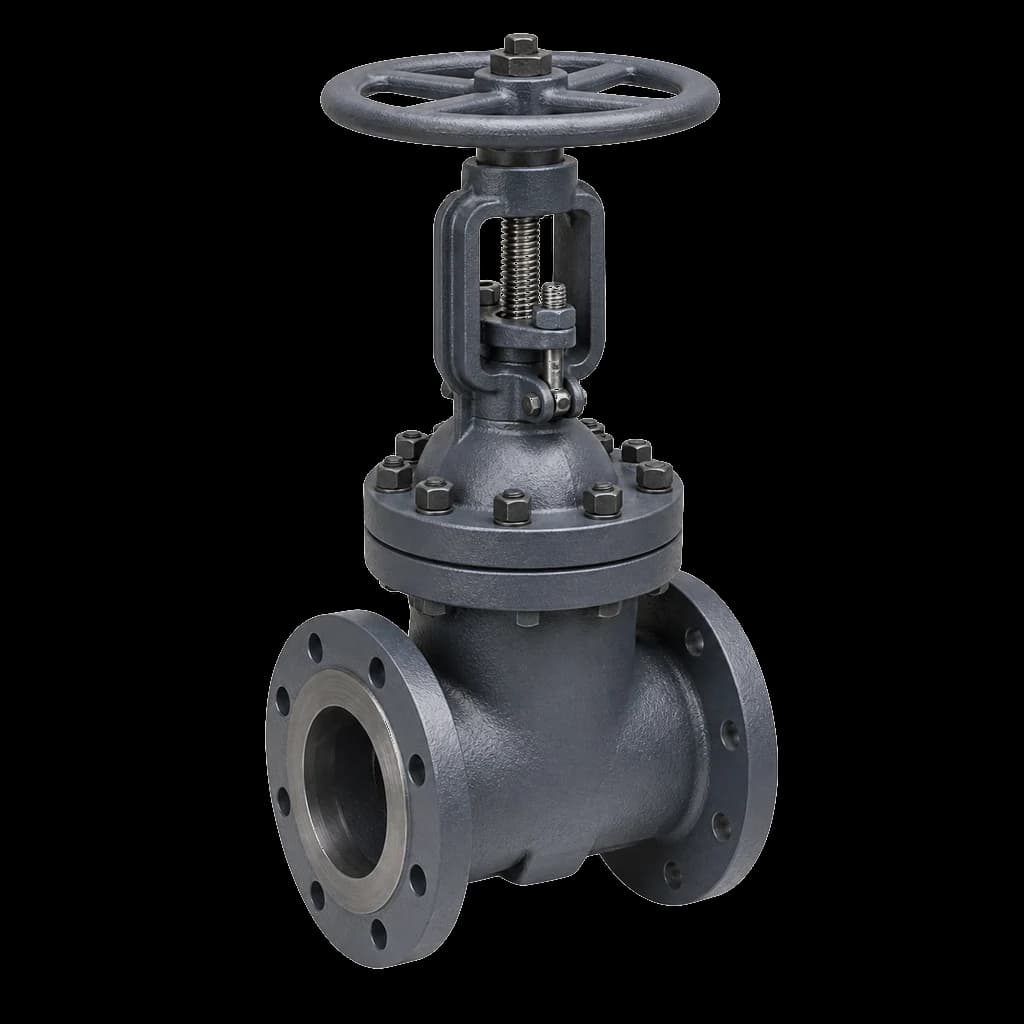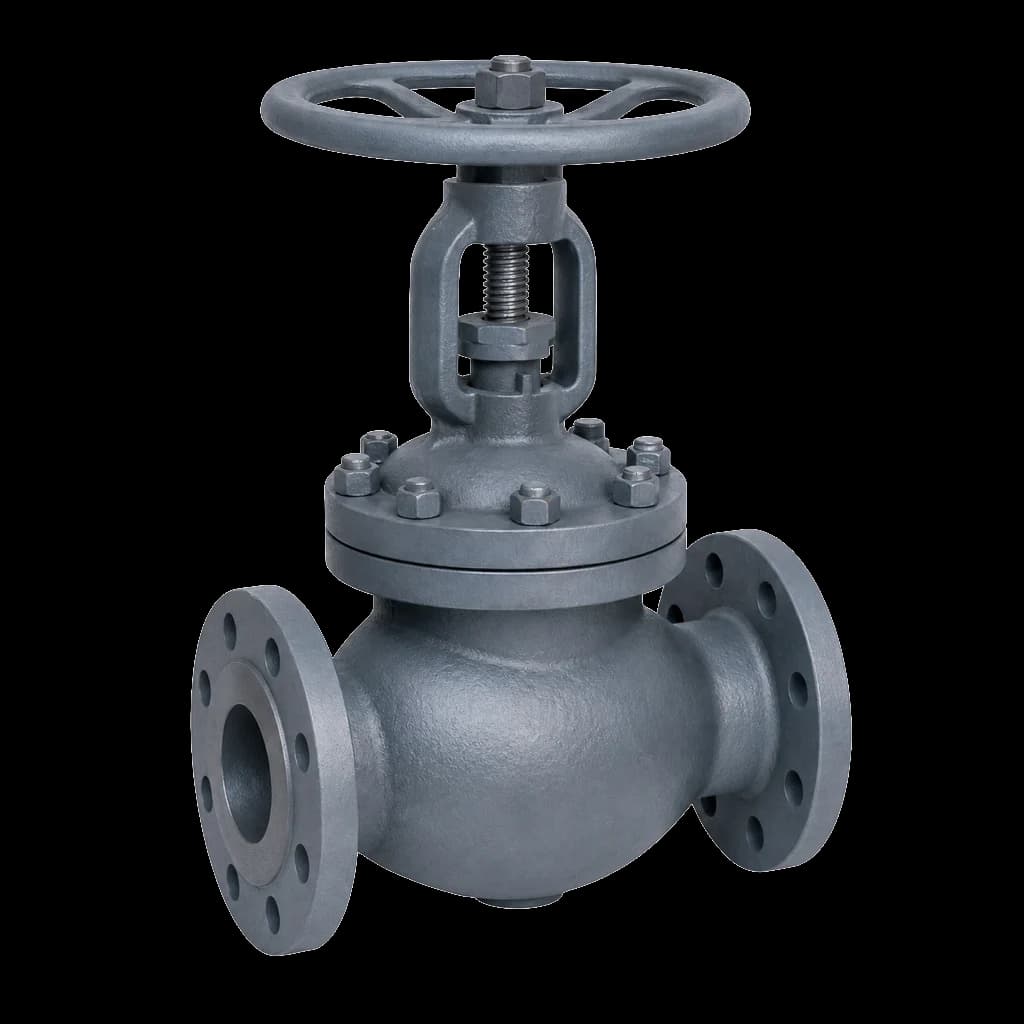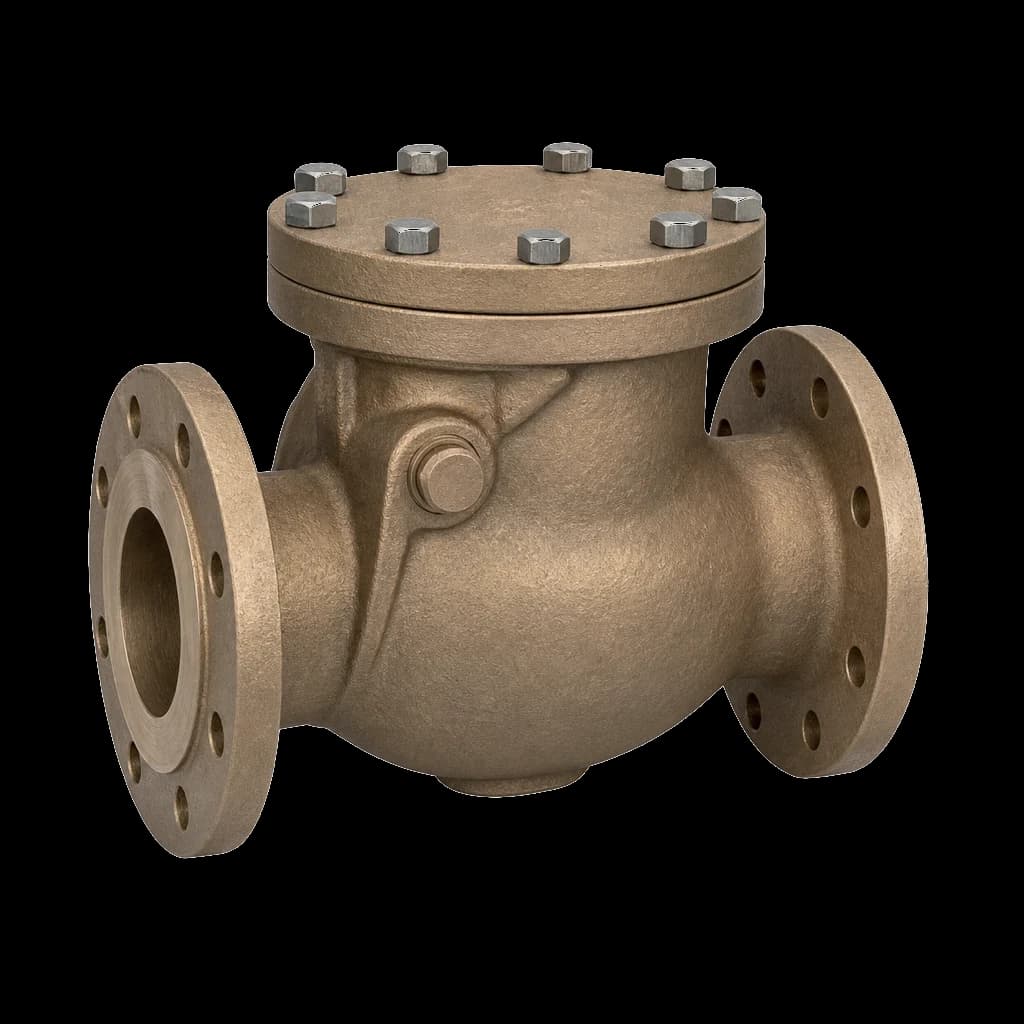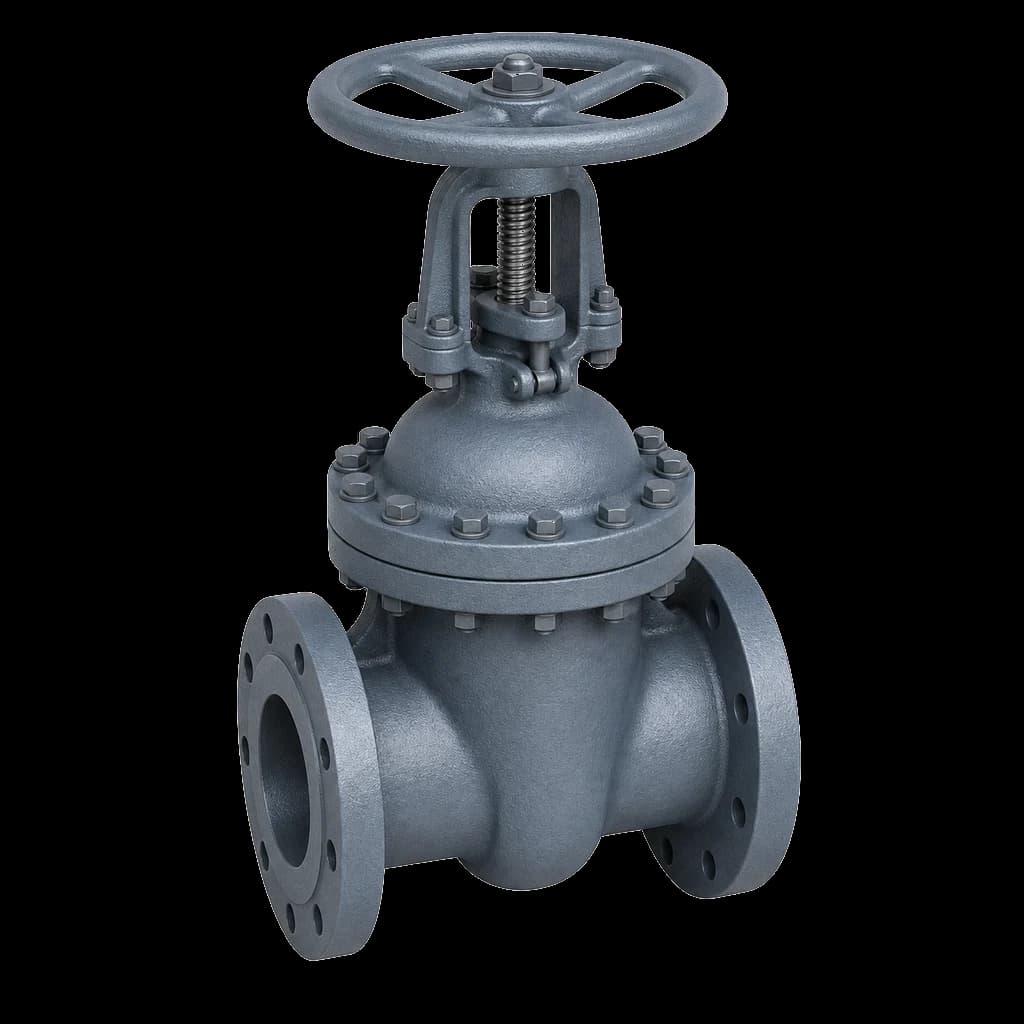
A gunmetal gate valve is among the most frequently specified and most loosely specified items in Indian water, building services and fire piping. The BOQ says "bronze valve", the store issues "brass valve", and what reaches the riser is a hot-pressed brass body that will dezincify and weep through its own wall. Gunmetal, bronze and brass are three alloy systems with three different failure modes, and IS 318, IS 778 and IS 780 exist to keep them apart.
Brass, bronze and gunmetal are not the same metal
Brass is copper and zinc, usually with 1-3% lead for machinability; free-cutting brass bar is IS 319. Bronze is copper and tin. Gunmetal is a leaded tin bronze — copper, tin, lead and zinc in the classic 85-5-5-5 proportion that IS 318 designates LTB2. Zinc is the fault line: a hot-pressed brass body carries close to 40% zinc, a gunmetal casting about 5%, and that difference decides whether the valve survives on a hot-water riser.
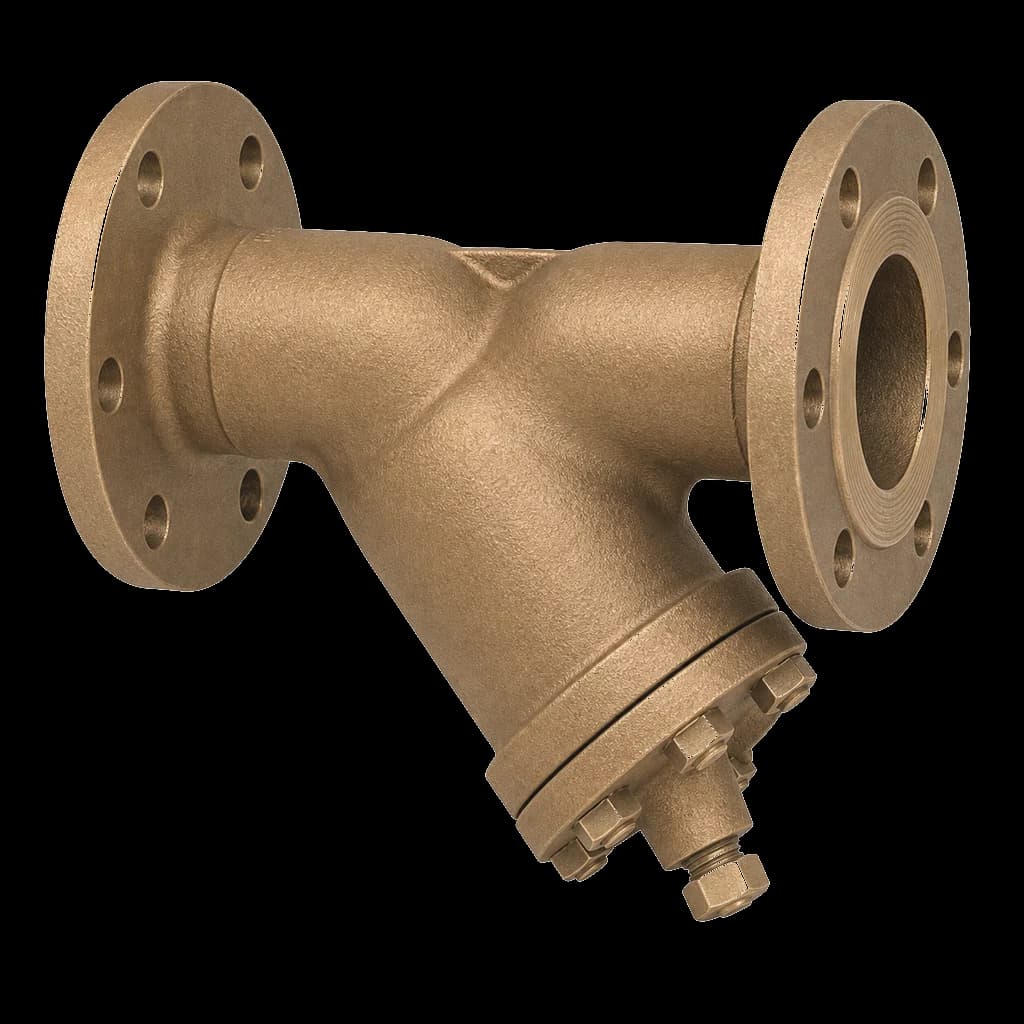
You can separate them in the stores without a spectrometer. Brass valves are hot-stamped from bar — bright yellow, thin-walled, light in the hand, with a forging parting line. Gunmetal valves are gravity or sand cast — duller, pinker, visibly heavier for the same bore, with a cast surface and a thicker waterway wall. If a 50 mm "bronze" gate valve feels light, it is brass.
| Family | Nominal make-up | Standard cited | Belongs on |
|---|---|---|---|
| Leaded brass, hot pressed | Cu 57-60, Zn balance, Pb 2-3.5 | IS 319 bar | Cold potable water, low head, small bore |
| DZR brass | Brass with arsenic inhibitor | CW602N type | Cold and warm potable water |
| Gunmetal, leaded tin bronze | Cu 85, Sn 5, Pb 5, Zn 5 | IS 318 LTB2, close to ASTM B62 | Water, hot water, low-pressure steam, trim |
| Steam bronze, higher tin | Cu, 6% or more Sn, low lead | ASTM B61 / C92200 | Small-bore steam and condensate |
| Aluminium bronze | Cu-Al-Fe-Ni, no free zinc | ASTM B148 C95800 | Seawater, brine, marine duty |
IS 318 LTB2: what a gunmetal gate valve is cast from
IS 318 covers leaded tin bronze ingots and castings, and LTB2 is the workhorse behind almost every Indian gunmetal valve body. Tin gives strength and resistance to chlorinated, oxygenated water. Lead seals the microstructure so a thin cast waterway stays pressure-tight and machines cleanly enough for an integral seat face. Zinc deoxidises the melt and takes out cost — but only about 5% of it, well below the level at which dezincification governs.
What LTB2 does not give you is strength. It is a casting alloy of modest properties, and an IS 778 valve compensates with wall thickness, not metallurgy. Anyone used to WCB and CF8M cast steel specs should recalibrate downward: gunmetal is chosen for corrosion behaviour and castability, never for pressure capability.
Marking, verification and the scrap problem
Write "gunmetal to IS 318 Gr LTB2" on the enquiry — not "gunmetal ISI", not "bronze" — and ask for the foundry's composition report against it. Mixed scrap runs the secondary copper trade, and a body re-melted from brass turnings with a little tin added will look like gunmetal and dezincify like brass. A handheld XRF check on the body, not on the handwheel, settles it at incoming inspection.
One export caveat: LTB2 carries about 5% lead by design. That is conventional in India, but it fails the weighted-average 0.25% lead ceiling of NSF/ANSI 61 and NSF/ANSI 372 that governs potable water fittings in the US and is increasingly cited in Gulf specifications.
IS 778: Class 1 and Class 2 copper alloy valves
IS 778 is the Indian specification for copper alloy gate, globe and check valves for water works purposes — a small-bore standard, offered in practice from 15 mm up to 100 mm depending on maker and type, mostly with screwed BSP ends to IS 554. It defines two duty classes, and the class is the number that matters most on a purchase order.
- Class 1 is heavy duty — thicker body and bonnet, larger stem, bigger handwheel, higher test pressure. This is what CPWD-style specifications mean by "gunmetal gate valve, heavy duty": pump discharge, hot-water risers, fire piping.
- Class 2 is medium duty — legitimate for domestic cold water at modest head. A different product, not a defect, until it is substituted into a Class 1 line item.
- Confirm test and working pressures against the maker's catalogue. A bare "IS 778" on a datasheet tells you nothing about which class was offered.
- The ISI mark is size- and class-specific. Where it is a GeM or PSU pre-qualification, check that the BIS licence scope covers what you are buying.
Type selection follows the usual logic: gate to isolate, globe to throttle, check for non-return. Do not throttle a gunmetal gate valve — the wedge and seat faces are soft, and a part-open gate will wire-draw the seat until it no longer shuts off. Those boundaries are drawn in the gate vs globe vs ball comparison.
Bronze valve on GI pipe
IS 778 valves are usually screwed straight onto galvanised pipe to IS 1239. That joint is a galvanic couple — zinc and steel are anodic to copper alloy, so the pipe corrodes at the thread while the valve stays spotless. In soft water that means a wasted pipe end and a weeping joint. Use a dielectric union where the supply is aggressive.
IS 780, IS 2906 and IS 14846: where the body goes to iron
Past 100 mm an all-copper-alloy body stops making economic sense; a 200 mm solid gunmetal valve is an expensive lump of metal with no advantage over iron. Indian practice moves to a cast iron sluice valve. IS 780 covers sluice valves for water works from 50 to 300 mm, IS 2906 from 350 to 1200 mm, and IS 14846 consolidated 50 to 1200 mm across PN 1.0, 1.6, 2.0 and 2.5 — which is why current tenders and GeM listings cite it.
The gunmetal in those valves is the wearing surface: body seat rings, wedge facing rings and usually the stem nut, carried in a grey iron body to IS 210 (typically FG 200) or ductile iron to IS 1865. Iron for containment, copper alloy for the surfaces that must not corrode shut after years standing idle. For the PN classes and testing that follow, see the IS 14846 sluice valve guide.
| Standard | Covers | Size range | Body material |
|---|---|---|---|
| IS 318 | Leaded tin bronze ingots and castings | Material standard | Gunmetal |
| IS 778 | Copper alloy gate, globe and check valves | Small bore | Gunmetal |
| IS 780 | Sluice valves for water works | 50-300 mm | Cast iron, gunmetal seating |
| IS 2906 | Sluice valves, large sizes | 350-1200 mm | Cast iron, gunmetal seating |
| IS 14846 | Sluice valves, PN 1.0 to PN 2.5 | 50-1200 mm | Iron, gunmetal seating |
| IS 5312 | Swing check (reflux) valves, single and multi-door | Water works sizes | Iron, gunmetal seating |
Dezincification: the failure mode that decides brass vs bronze
Dezincification is selective leaching: zinc dissolves out of the brass and leaves a porous copper skeleton that keeps the shape and loses the strength. The valve looks normal until a threaded end shears or a body wall weeps, and the tell is visual — a pink, copper-coloured plug where the metal should be yellow, with a white corrosion deposit bleeding from the threads. Brasses above roughly 15% zinc are susceptible, and the duplex alpha-beta grades near 40% zinc worst of all; arsenic-inhibited DZR grades resist it; gunmetal at 5% zinc is effectively immune, which is why LTB2 became the Indian default for water.
- Hot water above about 60 degC. Solar and heat-pump risers are a graveyard of brass valves. Gunmetal or DZR here, never plain brass.
- Soft, low-alkalinity or acidic water. Borewell supplies, DM water and recovered condensate accelerate zinc loss.
- Coastal and brackish duty. Chlorides drive dezincification and pitting; aluminium bronze is the honest answer for real seawater.
- Stagnant systems. Wet risers and hydrant loops hold the same water for years and must work the one time it matters — which is why fire-fighting valve specifications call up gunmetal and stainless trim, not brass.
- Ammonia in any form. Brass cracks by stress corrosion — the classic season cracking — in ammoniacal environments.
Pressure and temperature: the honest ceiling
Copper alloys lose strength with temperature faster than carbon steel, and the class marking on an MSS SP-80 bronze valve says so outright: Class 125 means 125 psi saturated steam and 200 psi cold non-shock water, oil or gas; Class 150 means 150 psi steam and 300 psi cold. IS 778 Class 1 and Class 2 are a different scheme — do not cross-map them on a submittal. Small-bore low-pressure steam and condensate suit gunmetal and higher-tin bronze, but once the line falls under IBR or exceeds the class marking, the answer is forged A105 or cast carbon steel.
Where copper alloy is the wrong answer
- Fire-safe hydrocarbon isolation. Copper alloys lose their strength well below the flame temperatures of an API 607 or API 6FA burn test, so a bronze valve cannot carry a fire-safe certification. Use steel bodies.
- Acetylene. High-copper alloys form explosive acetylides. That is a prohibition, not a preference.
- High-velocity or solids-laden water. Gunmetal seats erode and wire-draw; move to a harder trim or a resilient seat, with a strainer upstream.
- Sour service and process hydrocarbons. NACE MR0175 metallurgy and refinery piping classes sit outside copper alloy territory.
- Anything large. Past 100 mm the answer is iron or cast steel; an all-gunmetal large-bore valve buys weight, nothing else.
How to specify it so the right valve arrives
Most substitution disputes trace back to an enquiry that named a metal instead of a specification. Six lines close the gap: body material and grade (gunmetal to IS 318 Gr LTB2); valve standard and class (IS 778 Class 1); type and size; end connection (screwed BSP to IS 554, or flanged with the drilling standard stated); stem and trim where the water is aggressive; and the documents — composition report, hydrostatic test certificate, ISI licence details and EN 10204 3.1 MTC.
Above the copper alloy range, write the iron specification with the same discipline: IS 14846, the PN class, the body grade, and whether the seating is gunmetal or resilient. VKS covers the copper alloy end of the catalogue through Atam and the water-works iron end through Kartar.