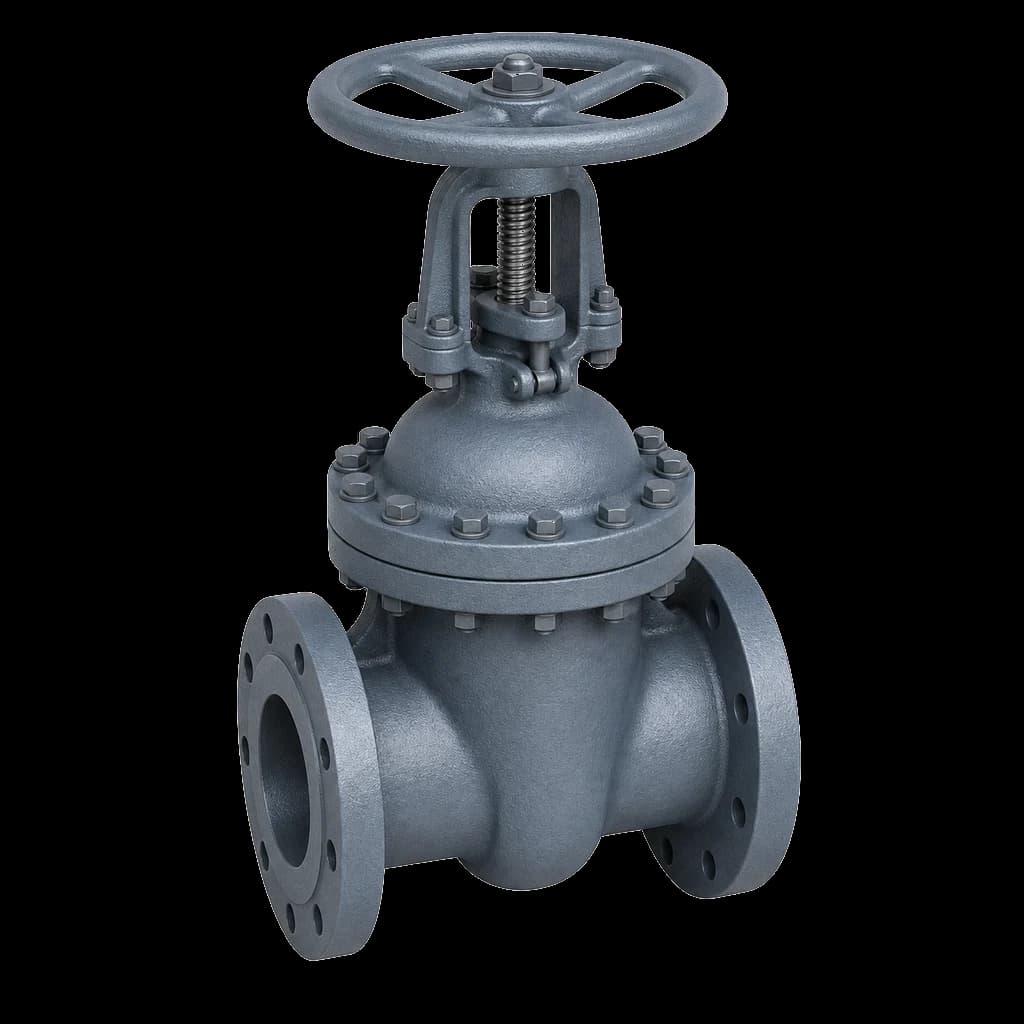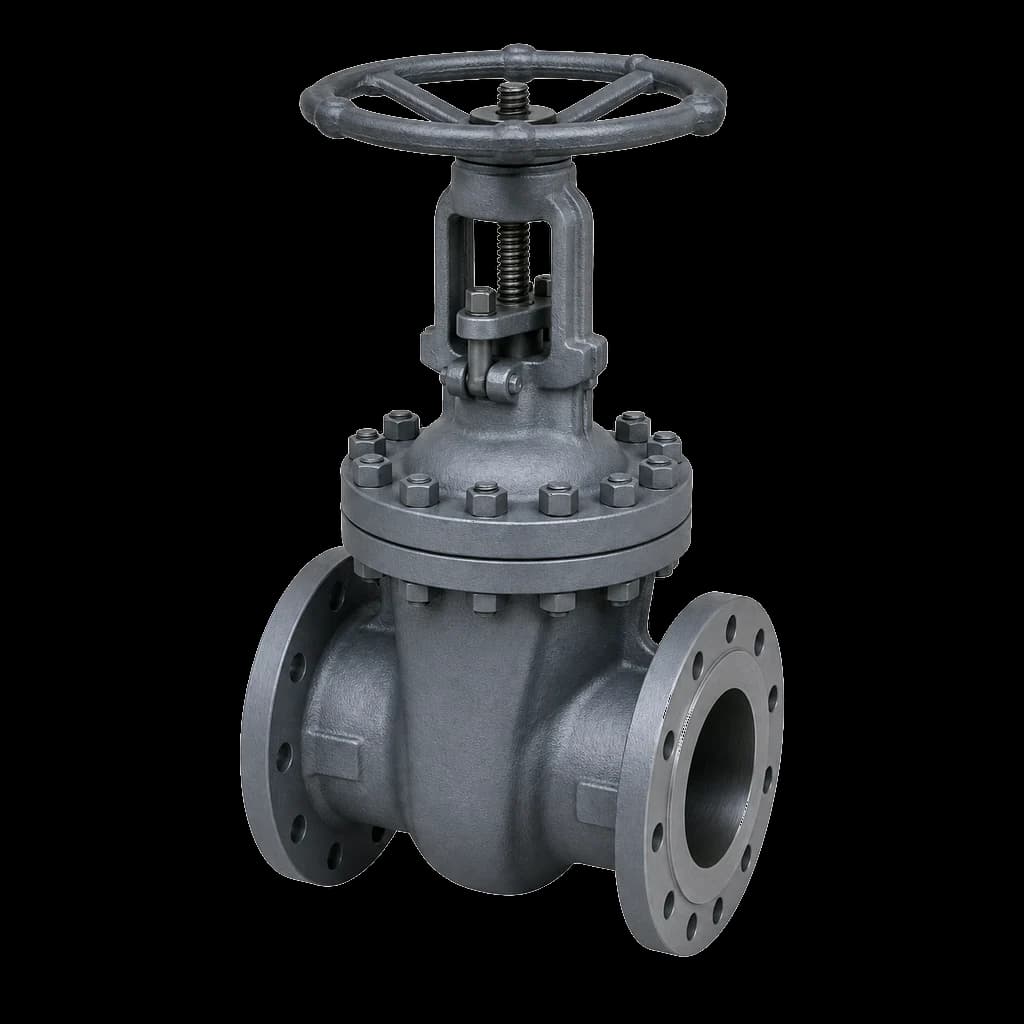
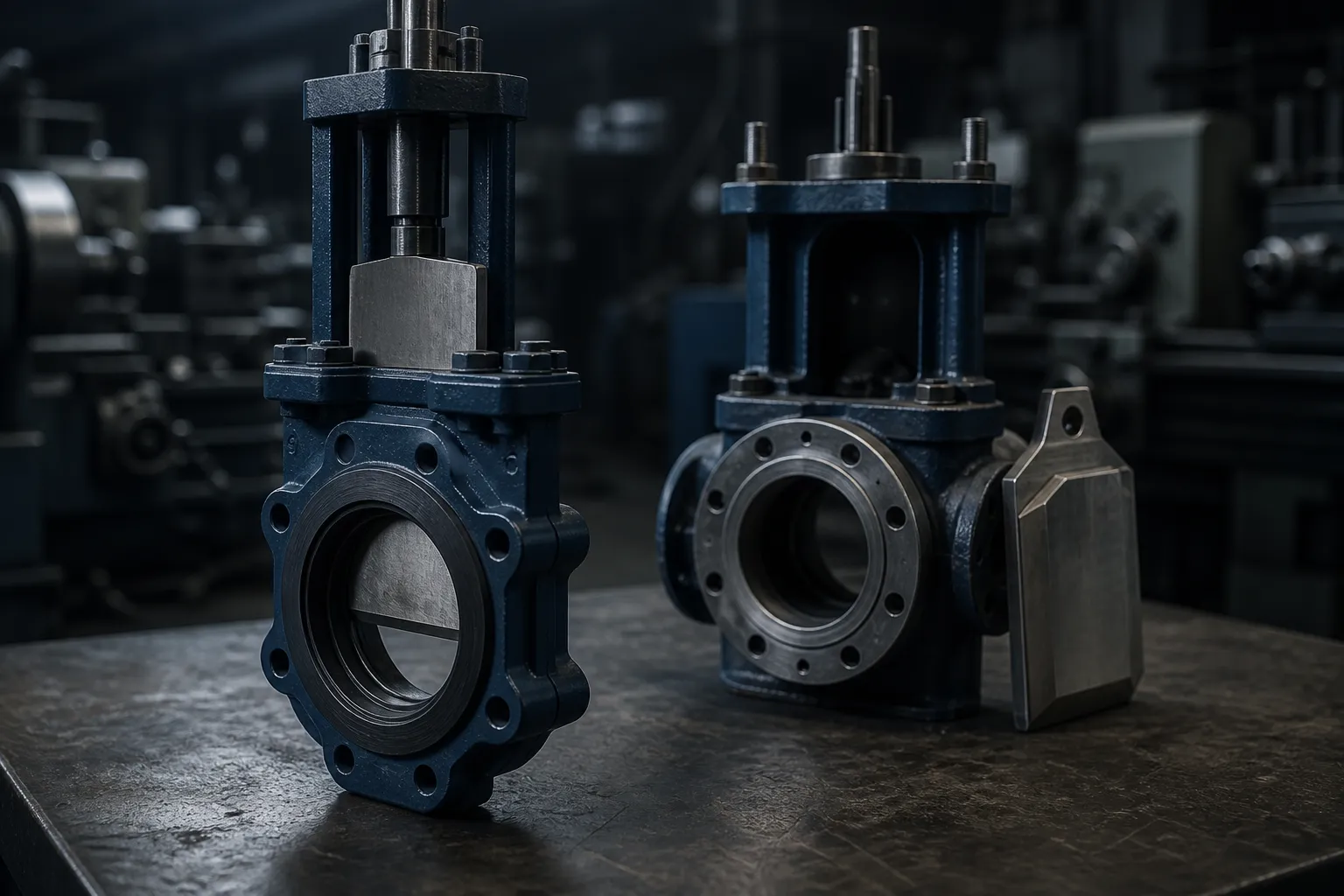
A wedge gate valve and a knife gate valve carry the same symbol on a P&ID and often the same BOQ line. In clean water that equivalence holds. Push 4% pulp stock, bottom-ash slurry, lime mud or mill scale through them and they stop being the same machine: the wedge buries a tapered disc in a bonnet the media fills, while a knife gate valve shears the solids with a bevelled plate and leaves nothing to settle into. What the media does to that cavity decides the selection; deleting it costs pressure rating.
Why a wedge gate seizes in slurry, pulp and ash
Cast steel to API 600, forged to API 602, or cast iron to IS 14846, a wedge gate seals by driving a tapered disc down between two tapered seats. That geometry demands two voids: a bonnet deep enough to swallow the whole disc, and a pocket below the seats where it lands. In clean water both are harmless. In slurry they are traps.
The bonnet fills with whatever settles out — fibre, grit, ash fines, sugar-house mud — and packs solid while the valve stands open; the seat pocket takes the coarse fraction. On the next closure the disc travels normally, then meets compacted solids in the last few millimetres — exactly where seating load should be building. Silica-bearing ash and bagasse grit score the seating faces on the way past, and no re-torquing brings shutoff back once they are scratched. Flexible wedges tolerate it worse than solid ones.
- Stalls in the last stretch of travel — compacted solids in the seat pocket, not a gearbox fault.
- Bent stems and sheared handwheel keys after operators reach for a cheater bar.
- Gland leakage. Grit carried up on the stem chews the packing; on a buried non-rising-stem sluice valve the stem nut sits in the media.
- Passing shutoff on a permit-to-work isolation — a safety failure, not a maintenance one.
- Valves left part-open because nobody trusts them to reopen, which erodes the disc edge.
What a knife gate valve does differently
A knife gate valve deletes both voids. The closure member is a flat plate, bevelled on the leading edge and thicker as size and rating climb. It does not wedge; it shears. The plate cuts through fibre bundles and displaces settled solids, then exits upward through a packing gland into open air rather than an enclosed bonnet. Nothing packs out; there is no cavity to pack.
MSS SP-81 covers that bonnetless construction for stainless steel flanged knife gate valves, MSS SP-135 the higher-pressure designs; pulp mills add TAPPI dimensional practice. The body is normally a wafer clamped between flanges, which is why a knife gate is short and light: a DN 300 Class 150 flanged wedge gate is 508 mm face to face under ASME B16.10, while the knife gate replacing it is a few tens of millimetres thick and two fitters can carry it — which changes the pipe support design on a 600 mm ash header.
| Attribute | Wedge gate valve | Knife gate valve |
|---|---|---|
| Closure action | Tapered disc wedged between two seats | Bevelled flat plate shears the media |
| Body cavity | Bonnet plus seat pocket, both collect solids | Bonnetless; the plate exits through the gland |
| Pressure rating | Class 150 to 2500 under ASME B16.34 | Derated size by size; outside B16.34 |
| Seat tightness | Metal or resilient seated, tight shutoff achievable | Resilient seats drop-tight; metal seats leak by design |
| Best media | Clean liquids, gas, steam, hydrocarbons | Fibrous stock, ash, dry bulk, abrasive slurry |
| Direction | Bidirectional as standard | Unidirectional unless specified otherwise |
| Relative cost above DN 300 | Higher — casting mass and machining | Lower, and cheaper to install |
Unidirectional, bidirectional and wafer bodies
Unidirectional knife gates and the arrow on the body
The standard knife gate is unidirectional. Its single seat sits on the downstream face and line pressure pushes the plate into it. The upstream face is open to the gate slot, which is how it tolerates solids: anything scraped off the plate falls out. Reverse the flow and it passes, while the open side weeps down the body. The direction arrow is not advisory: never use a unidirectional knife gate as a dead-end block, or where a header can back-pressurise the line.
Bidirectional and slurry-sleeve designs
Bidirectional knife gates seal on both faces, usually against a pair of opposed elastomer sleeves the plate drives between. They hold pressure either way, seal drop-tight in dead-end service, and the sleeves wipe the plate clean on every stroke — which is why sleeve-type slurry knife gates dominate ash, red mud and tailings duty. You pay in thrust: driving a plate between two sleeves takes far more force than pushing it onto one, so the actuator grows. Take seating thrust off the maker's chart.
Pressure, temperature and where the knife gate stops
No knife gate valve is an ASME B16.34 pressure-rated valve; it sits outside that standard's scope and carries no Class number. Ratings are published size by size and derate as the bore grows, because the load on the unsupported plate rises with the square of the diameter. The figures below are representative of resilient-seated unidirectional designs; every manufacturer publishes its own chart, and you specify against that, not a class.
| Nominal size | Typical maximum working pressure | Typical duty |
|---|---|---|
| DN 50–DN 300 (2"–12") | Around 10 bar | Stock lines, small slurry and ash headers |
| DN 350–DN 600 (14"–24") | Around 7 bar | Main stock and slurry lines, chest outlets |
| DN 650–DN 900 (26"–36") | Around 5 bar | Large ash headers, hopper and silo isolation |
| DN 950–DN 1200 (38"–48") | Around 3.5 bar | Low-head channels, effluent and overflow duty |
Temperature is set by the soft parts, not the body. EPDM, the default for water-borne slurry, is commonly good to around 120 °C; nitrile suits oil-bearing media but less heat; PTFE-lined seats extend the range; metal seats go higher and give up tight shutoff. None of that makes a knife gate a steam valve. A line under IBR needs a certified valve with Form III-C behind it, and hydrocarbon and fire-safe duty stays with the families in our guide to gate, globe and ball valve selection.
Seats, plates and what abrasion actually does
Abrasion works on plate, seat and body differently, and getting one right does not protect the others. A datasheet that says only "SS body" invites the cheapest seat on the shelf.
- Plate: SS 304 or SS 316, hardened or Stellite 6 hardfaced on the bevel where the media is sharp — fly ash, mill scale, sinter fines. A rounded edge stops shearing and starts jamming.
- Seat: natural rubber for abrasion life in wet slurry, EPDM for hot stock and caustic liquor, UHMWPE where a hard low-friction seat resists cutting.
- Body: ductile iron to ASTM A536 for water and ash, CF8M for corrosive stock and effluent, rubber-lined where the slurry is both abrasive and corrosive.
- Gland and wiper: PTFE-impregnated braid or graphite, a flush connection on the gland box for slurry, and a polyurethane wiper to stop the plate dragging solids into the packing.
Actuation: handwheel, bevel gear or pneumatic cylinder
A knife gate is a linear valve and its stroke is the bore plus overtravel. That fact governs actuation: a DN 400 valve needs over 400 mm of travel, which makes handwheel-and-yoke versions slow and brings bevel-gear and chainwheel operators in from about DN 300. It is also why pneumatic knife gate valves are the standard automated form — a double-acting cylinder on clean dry instrument air gives a long stroke without a gearbox, and on-off batching in pulp and sugar mills is exactly its duty.
Three details get missed at specification stage. Knife gates carry no ISO 5211 mounting pad — the actuator sits on a maker-specific yoke and pillar, so they do not swap between makes. Fit speed controls on the cylinder exhaust: a large gate slamming shut on a long slurry line generates a surge nobody designed the pipe for. And spring-return fail-safe turns impractical as cylinders grow, so a defined fail position means an air receiver and a lock-up valve. The arithmetic is in our note on sizing pneumatic actuators.
Choosing by media: stock, ash, juice and mill scale
| Media or duty | Sensible first choice | Why |
|---|---|---|
| Pulp stock at 3–6% consistency | Unidirectional wafer knife gate | Shears the fibre mat; no bonnet to pack |
| Bottom-ash and fly-ash slurry | Bidirectional sleeve-type knife gate | Abrasive, often dead-end; sleeves wipe the plate |
| Sugar-mill juice, mud and molasses | Knife gate, stainless plate and body | Sticky, fibrous, hot; wipers and flush ports |
| Raw and clarified water mains | Cast-iron sluice valve to IS 14846 | Established standard, buried duty, spares everywhere |
| Lime slurry, low velocity, non-fibrous | Rubber-lined concentric butterfly | No fibre to wrap a shaft |
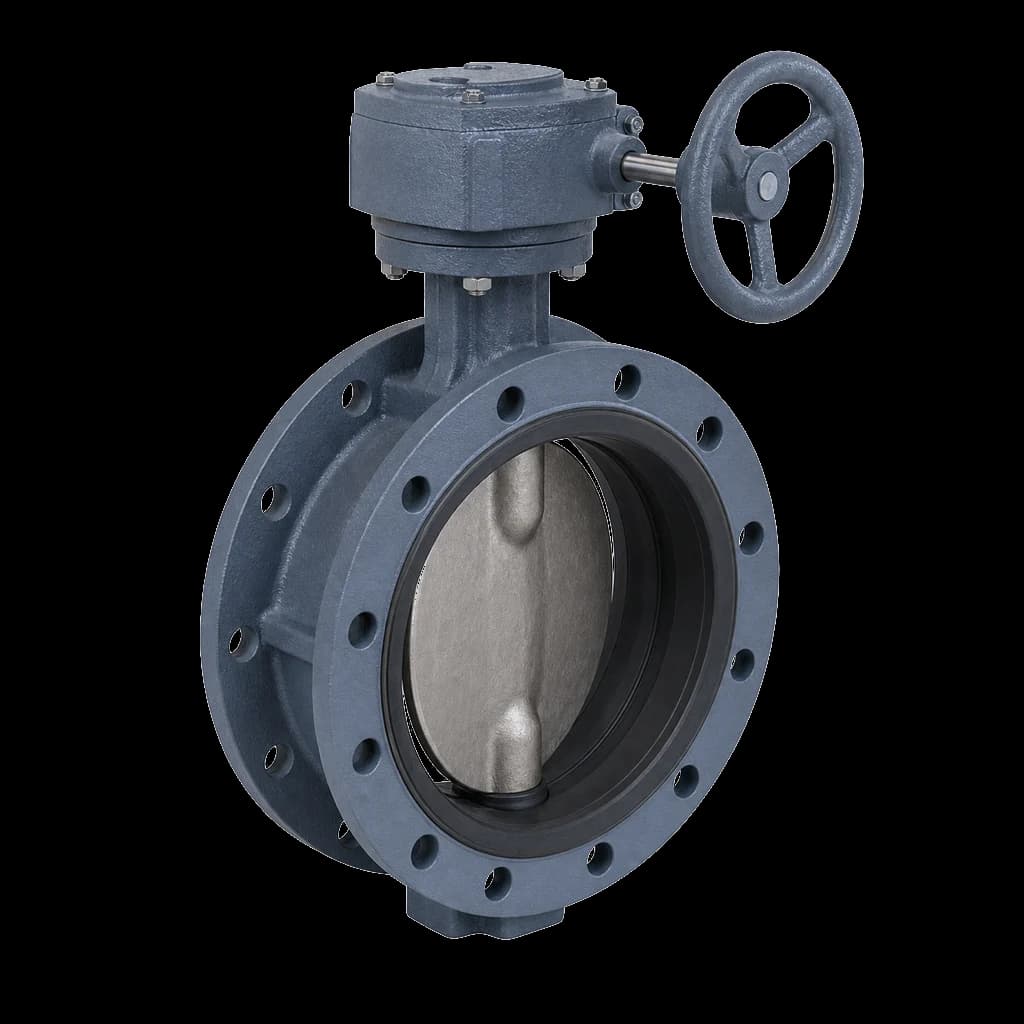
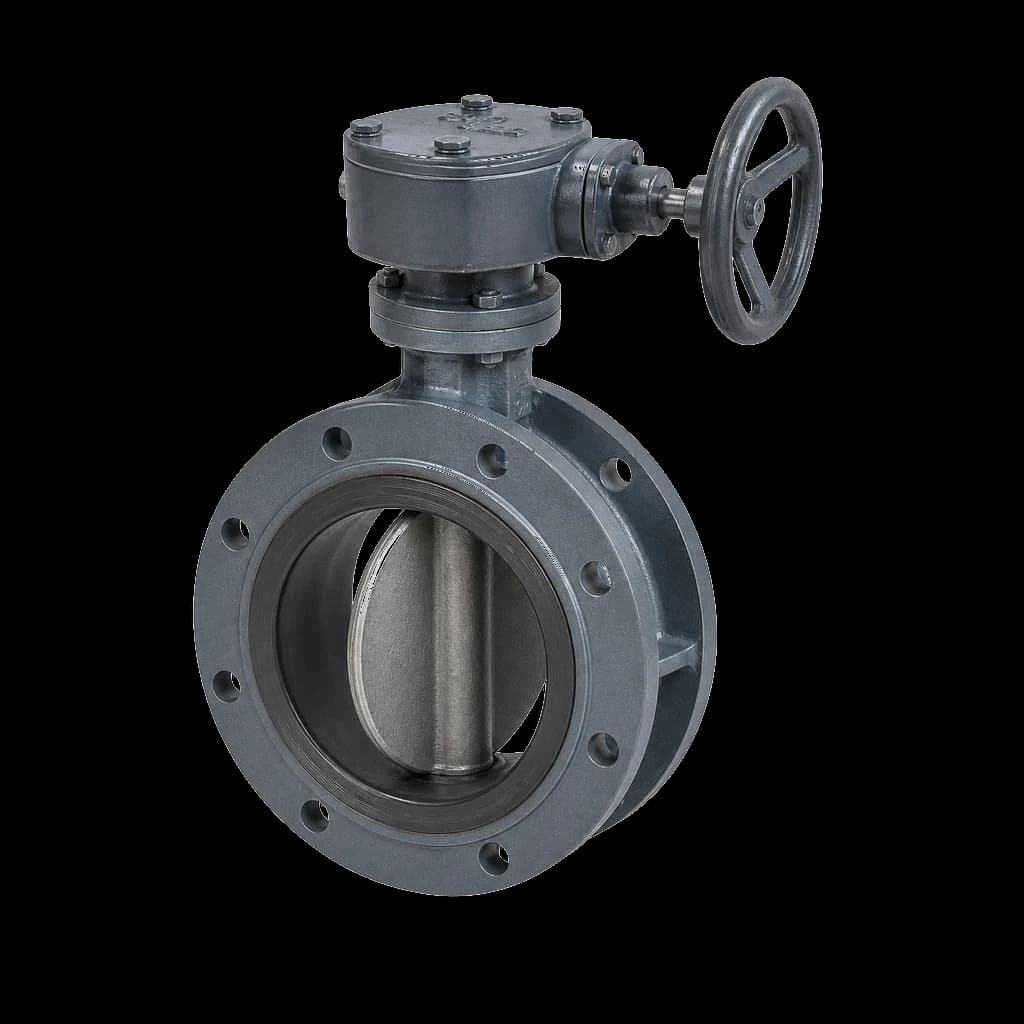
The last row needs a caveat. A rubber-lined concentric butterfly is a legitimate low-pressure slurry isolator and the cheapest thing in the large-bore range, but the disc sits in the flow permanently, so its leading edge erodes and stringy media wraps the shaft. Fibrous stock rules it out; fine non-fibrous slurry does not. Our guide to concentric and offset butterfly constructions shows where the geometry stops coping.
Installation and procurement details tenders miss
Install with the stem vertical wherever the layout allows. Horizontal mounting hangs the plate's weight on the packing, wears the gland unevenly and collects solids in the gland box; several makers derate or disclaim it, so confirm before routing is frozen. Leave headroom for the retracted plate and cylinder — over a metre on a DN 600 valve, and routinely missed on skid layouts. Never throttle a knife gate: a part-open plate in slurry is sandblasted on both faces, and the seat with it.
Most of the damage is done at BOQ stage, where a line reads "gate valve, DN 450" and a cast-iron sluice valve lands in an ash header because it is the cheapest thing matching the words. If the media carries solids, write the valve type, the direction, the seat elastomer, the plate material and hardfacing, the actuation and the gland flush connection into the specification, then call for MTCs and hydrostatic test reports at inspection. Otherwise the tender gets what it asked for, not what the plant needs; more in common valve procurement mistakes.